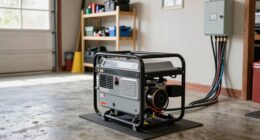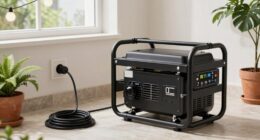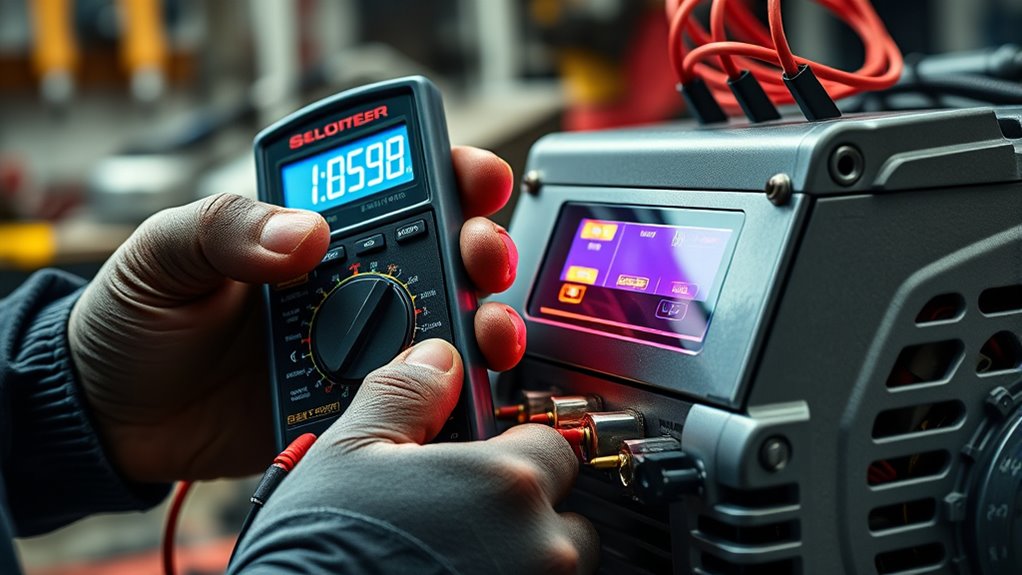

To test your generator’s output with a multimeter, first turn off the generator and set your multimeter to AC voltage or frequency mode. Carefully connect the probes to the appropriate terminals, making sure your hands stay clear of live parts. Power on the generator and check if the voltage matches the rated output (like 120V or 240V) and the frequency (50Hz or 60Hz). If readings are off, minor adjustments might be needed—continuing will help you learn how to interpret and handle these results effectively.
Key Takeaways
- Set the multimeter to AC voltage mode to measure generator outlet voltage safely and accurately.
- Connect the multimeter probes properly across the outlet terminals, ensuring correct polarity and safety.
- Use the multimeter to check that voltage readings are close to the generator’s rated output (e.g., 120V or 240V).
- Switch the multimeter to frequency (Hz) mode to verify that the generator’s frequency matches regional standards (50Hz or 60Hz).
- Record and compare readings to manufacturer specifications to identify regulation issues or irregularities.
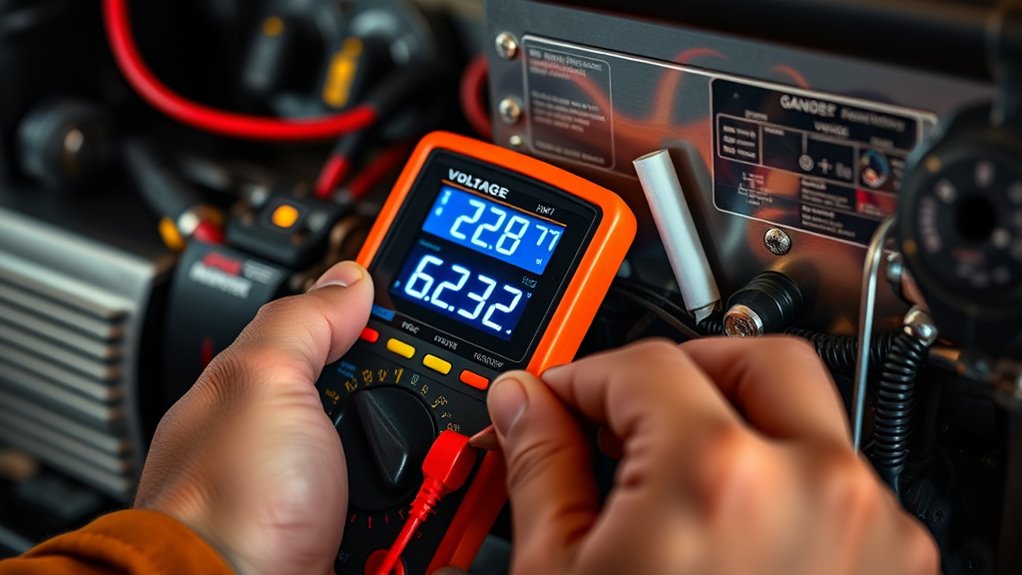
Have you ever wondered how to guarantee your generator is providing reliable power? Ensuring your generator delivers consistent and safe electricity starts with testing its output accurately. Using a multimeter to check voltage and frequency is a straightforward yet essential step. When you perform these tests, pay close attention to power quality, which refers to the stability and consistency of the electrical output. Poor power quality can lead to malfunctioning equipment, damage, or safety hazards. Therefore, accurate readings are critical to identify any irregularities and confirm that your generator operates within the manufacturer’s specifications.
Before you begin, make sure you follow safety precautions. Always wear insulated gloves and use tools rated for the voltage you’re measuring. Turn off the generator before connecting the multimeter to avoid accidental shorts or sparks. When testing, ensure the multimeter is set to the correct measurement mode—voltage (AC) for checking outlet voltage and frequency (Hz) for ensuring the generator’s output aligns with standard power requirements. Once set, carefully connect the multimeter probes to the appropriate terminals, respecting the polarity. Keep your hands clear of live connections to prevent electrical shock.
Power quality is especially important because fluctuations or deviations in voltage and frequency can cause damage to sensitive equipment or reduce the lifespan of your generator. When testing, aim for a voltage reading close to the rated output specified by the manufacturer—typically around 120V or 240V AC depending on your system. The frequency should normally read 50Hz or 60Hz, depending on your region. If readings fall outside these ranges, it indicates a problem with your generator’s regulation or control systems. In such cases, you might need to adjust the governor or consult a professional.
After completing the tests, turn off the multimeter and disconnect the probes carefully. Record your readings for future reference and comparison. Regular testing helps you catch issues early before they escalate into costly repairs or safety hazards. Remember, maintaining good power quality isn’t just about performance; it’s about safety too. If you notice irregular readings, don’t ignore them. Properly functioning generators not only keep your equipment running smoothly but also protect you and others from electrical hazards. Proper testing procedures and adherence to safety precautions ensure your generator provides reliable and safe power whenever you need it.
Top picks for "test generator output"
Open Amazon search results for this keyword.
As an affiliate, we earn on qualifying purchases.
Frequently Asked Questions
Can I Test a Generator’s Output Without Turning It On?
No, you can’t test a generator’s output without turning it on. To assess power quality and efficiency, the generator needs to be operational so you can measure the voltage and frequency accurately. Using a multimeter on a live generator guarantees you get precise readings. Without powering it up, you’ll only be able to check static components, not the actual output, making on/off testing essential for reliable results.
What Safety Precautions Should I Take During Testing?
You should wear proper safety gear, like insulated gloves and safety glasses, to protect yourself during testing. Make sure your testing environment is dry, well-ventilated, and free of clutter to prevent accidents. Always turn off the generator before connecting your multimeter, and double-check connections for correctness. Keep a safe distance from moving parts and high-voltage areas, and avoid working alone in case of emergencies.
How Often Should I Test My Generator’s Output?
Think of your generator as a trusted friend who needs regular check-ups. You should test its output at least monthly, especially before heavy use, to verify reliability. Follow your maintenance schedule and consider calibration frequency to keep readings accurate. Regular testing helps catch issues early, preventing surprises. So, make it a habit—your generator’s health depends on consistent checks, much like caring for a cherished companion.
Is a Multimeter Suitable for All Types of Generators?
A multimeter isn’t appropriate for all types of generators due to its limitations. It works well with small, portable generators but might not handle high-power or industrial units accurately. You need to check your generator’s specifications for compatibility, as some models require specialized testing tools. Always consider multimeter limitations, like maximum voltage and frequency ranges, to ensure safe and accurate readings.
What Do I Do if My Readings Are Inconsistent?
If your readings are inconsistent, don’t assume your multimeter is faulty; instead, consider calibration accuracy and troubleshoot techniques. First, ensure the multimeter is properly calibrated and functioning correctly. Then, double-check your connections and test in a stable environment. Variations can also stem from generator load changes or electrical interference. By systematically troubleshooting, you’ll identify the root cause and improve measurement reliability.
Conclusion
By using a multimeter to test your generator’s voltage and frequency, you guarantee it runs smoothly and safely. Did you know that generators that are properly maintained can last up to 20% longer? Regular testing helps catch issues early, saving you time and money. So, don’t skip these simple checks—your generator’s reliability depends on it. Stay proactive, and you’ll keep your power supply steady and dependable when you need it most.