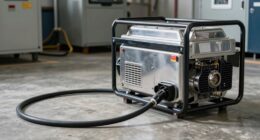
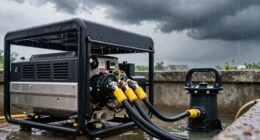
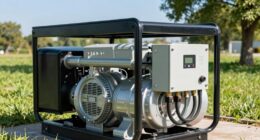
Decibel ratings show you how loud a generator is, helping you understand its impact on your environment. A lower decibel level, like around 60 dB, is comparable to normal conversation and usually acceptable in residential areas. Higher levels, such as 80 dB, can be as loud as a lawnmower and may cause discomfort or noise complaints. Knowing what these numbers mean allows you to choose the right generator for your space, and you’ll find out more about how to interpret these levels soon.
Key Takeaways
- Decibel ratings measure how loud a generator is, helping compare noise levels across models.
- Noise levels are typically measured at one meter distance, providing a standard reference point.
- A generator around 60 dB produces noise similar to a normal conversation, suitable for residential use.
- Levels above 80 dB are loud, comparable to a lawnmower, and may cause discomfort or disturbances.
- Considering environment and noise regulations ensures selecting a generator that minimizes noise impact.
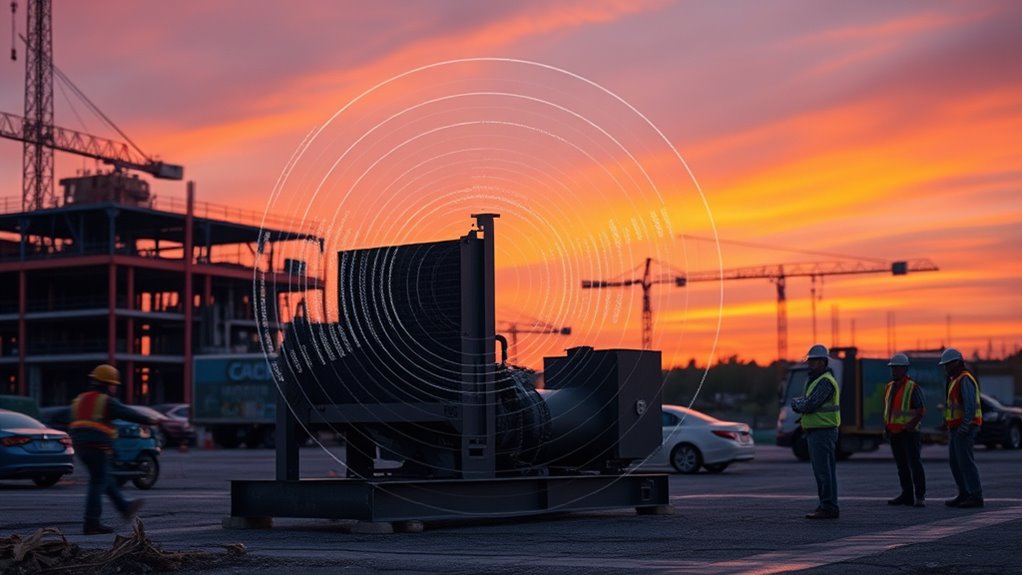
Decibel ratings are vital for understanding how loud a sound is, whether you’re choosing a new appliance or evaluating noise levels in your environment. When it comes to generators, knowing their decibel levels helps you assess how much noise they produce and how that noise might impact your daily life. Sound measurement with decibels provides a standardized way to compare different noise sources, making it easier to find a generator that fits your needs without disturbing your surroundings. Your perception of noise isn’t just about the decibel number; it also depends on the context, environment, and even your sensitivity to certain sounds.
Understanding decibel ratings can help you gauge how loud a generator will be when operating nearby. For instance, a generator rated at 60 decibels generally produces a noise level comparable to a normal conversation, which is often considered acceptable in residential areas. On the other hand, a generator producing 80 decibels can be as loud as a lawnmower, potentially causing discomfort or noise complaints if used too close to homes or quiet spaces. Recognizing these differences through sound measurement enables you to make informed decisions about where and when to run your generator, avoiding unnecessary disturbance.
A 60-decibel generator is as loud as a conversation; 80 decibels equals a lawnmower.
Noise perception varies from person to person, and the environment plays a significant role in how loud a sound feels. In an open space, a generator’s noise might dissipate quickly, making it less intrusive. In contrast, in a confined area or indoors, even a modestly loud generator can feel overwhelming. This is why understanding the decibel ratings in relation to your specific environment is vital. It helps you anticipate how the generator’s sound will be perceived, allowing you to choose models that align with your comfort levels and noise regulations. Additionally, knowing about headphone options can help you reduce noise exposure if operating a louder generator in sensitive environments.
Furthermore, awareness of sound measurement standards ensures you’re comparing apples to apples when evaluating different generators. Decibel ratings are measured at a specific distance from the sound source, usually a meter away, providing a consistent basis for comparison. Knowing this, you can determine if a generator’s noise level is suitable for your space, especially if you need to operate it during nighttime or in noise-sensitive areas.
In essence, understanding decibel ratings and how they relate to noise perception empowers you to select a generator that balances performance with comfort. It’s about knowing what to expect in terms of sound output and how that might affect your environment. By paying attention to sound measurement data, you can ensure that your generator operates within acceptable noise levels, keeping your space peaceful while still meeting your power needs.
Top picks for "understand decibel rating"
Open Amazon search results for this keyword.
As an affiliate, we earn on qualifying purchases.
Frequently Asked Questions
How Do Decibel Levels Affect Health and Safety?
Higher decibel levels from generators can harm your hearing and contribute to noise pollution impacts. Prolonged exposure to loud noise may cause noise-induced hearing loss, affecting your ability to hear clearly. It’s essential to monitor decibel levels to protect your health and safety. By reducing exposure to high noise levels, you minimize risks and prevent long-term damage, ensuring a safer environment for yourself and others nearby.
Can Decibel Ratings Vary Between Different Generator Brands?
Yes, decibel ratings can vary between different generator brands because of brand consistency and individual specifications. Each manufacturer may use different testing methods or standards, leading to slight differences in noise level ratings. When comparing generators, you should check each brand’s specifications carefully. Keep in mind that real-world noise levels can also be influenced by factors like installation, environment, and maintenance, so always consider the full context.
What Decibel Level Is Suitable for Residential Areas?
Imagine your neighborhood as a peaceful pond—loud generator noise ripples disturb that calm. For residential areas, aim for a decibel level below 60 dB; this is like a soft conversation rather than a shout. Using sound insulation and noise mitigation techniques, you can keep your generator’s hum gentle, ensuring you don’t disrupt neighbors’ tranquility while enjoying reliable power. Keep it quiet, keep the peace.
How Do Environmental Factors Influence Perceived Noise Levels?
Environmental factors like sound amplification and atmospheric interference substantially influence how you perceive noise levels. When wind, humidity, or temperature change, they can amplify or dampen sounds from your generator. Atmospheric interference, such as buildings or trees, can also reflect or absorb noise, making it seem louder or quieter. These elements affect your perception, so always consider the environment when evaluating generator noise in residential or sensitive areas.
Are There Regulations Governing Acceptable Generator Noise Levels?
Did you know that over 30 states have specific noise regulations for generators? Yes, regulations governing acceptable generator noise levels exist to protect communities. These include regulatory standards that set maximum decibel limits, often requiring noise mitigation measures like mufflers or barriers. If you operate a generator, you’re responsible for complying with local laws to avoid fines and disturbances, ensuring your equipment stays within acceptable noise levels.
Conclusion
Now that you understand decibel ratings, you can better gauge generator noise levels, much like tuning into a radio station to catch the perfect signal. Knowing what those numbers mean helps you choose a quieter, more suitable generator for your needs. Remember, lower decibel levels are like whispers in a library—quiet and unobtrusive—while higher levels can be as loud as a lawnmower. With this knowledge, you’re ready to make informed, noise-conscious decisions.