
You can soften generator noise by using strategic landscaping with dense, evergreen plants like shrubs and ground covers that absorb sound and block direct waves. Layering tall, layered greenery near your generator creates a natural barrier, enhancing noise reduction while boosting your yard’s look. Incorporating decorative fences, trellises with climbing vines, or textured stone walls adds extra soundproofing. Combining these techniques helps create a peaceful outdoor space. Explore further to discover more effective landscaping ideas for noise control.

Get backup power and energy gear delivered free — and shop member deals
- Fast, free delivery on millions of items
- Access to Prime Big Deal Days deals on October 6–7
- Prime Video, Amazon Music and more included
Key Takeaways
- Dense evergreen shrubs and layered plants absorb and deflect sound waves, reducing generator noise impact.
- Strategically placed tall, layered greenery blocks direct sound paths from outdoor living areas.
- Incorporating decorative gardens enhances aesthetic appeal while serving as natural sound buffers.
- Combining landscaping with soundproof barriers like fences or trellises creates layered noise mitigation.
- Using textured, porous materials alongside plants improves overall sound absorption and noise reduction.
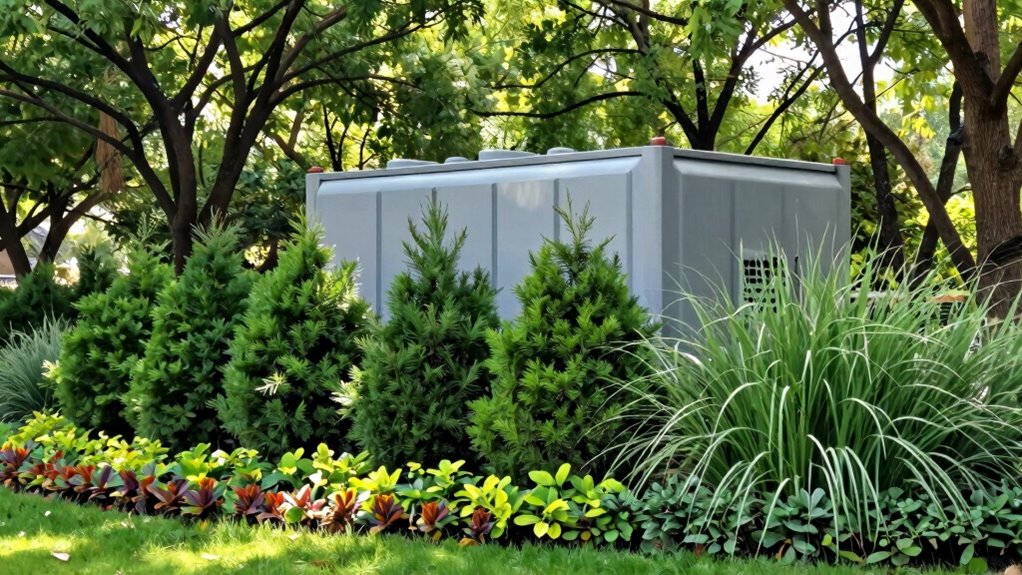
If you’re concerned about the noise from a backup generator disrupting your outdoor space, landscaping offers effective solutions. One of the most attractive ways to minimize sound is by creating a decorative garden that acts as a natural buffer. By strategically planting shrubs, flowers, and ground covers, you can absorb and deflect noise, making your yard a more peaceful retreat. Choose dense, evergreen plants that stay full year-round, providing consistent soundproofing. Incorporate tall, layered plantings to block direct sound waves from reaching your outdoor living areas. Not only do these plants help reduce noise, but they also add aesthetic value, turning an eyesore into a beautiful landscape feature.
In addition to a decorative garden, installing soundproof barriers is a proven method for controlling generator noise. You can build fences or walls designed specifically to dampen sound. These barriers don’t have to be plain or utilitarian; they can be integrated into your landscape design with decorative elements. For example, a trellis with climbing vines or a stone wall with artistic patterns can serve as both visual interest and soundproofing. The key is to select materials that absorb or deflect sound effectively—porous or textured surfaces work best. Position these barriers close to the generator, ensuring they form a solid physical and acoustic shield. Incorporating soundproofing principles can help you select the most effective materials and plant combinations for your specific space. Applying sound absorption techniques can further enhance noise reduction, making your outdoor area more tranquil. Combining a decorative garden with soundproof barriers amplifies the noise reduction effect. Planting tall, dense greenery along a sturdy privacy fence creates a layered defense, blocking sound from multiple angles. This approach not only muffles the noise but also enhances the visual appeal of your yard. Additionally, understanding the principles of soundproofing can help you select the most effective materials and plant combinations for your specific space. Incorporating alternative soundproofing methods such as acoustic panels or barriers can provide additional noise mitigation options for your landscape design.
As an affiliate, we earn on qualifying purchases.
Frequently Asked Questions
Can Specific Plants Effectively Block Generator Noise?
Yes, specific plants can effectively block generator noise, especially native species known for their sound absorption qualities. Native plants grow well and create dense barriers that absorb and deflect noise. Incorporate thick shrubs and trees, such as evergreens or dense foliage, to enhance sound absorption. By strategically planting these species around your generator, you’ll reduce noise pollution and create a quieter, more peaceful environment.
How Much Does Landscaping Typically Reduce Noise Levels?
You might find that landscaping typically reduces noise levels by about 5 to 10 decibels, thanks to sound absorption and noise mitigation. As trees, shrubs, and earthworks line your property, they create a natural barrier that dampens generator noise. Coincidentally, the more dense and strategically placed your landscaping, the more effective it is at blocking and absorbing sound, making your outdoor space quieter and more peaceful.
Are There Maintenance Concerns With Using Plants as Sound Barriers?
Yes, there are maintenance concerns with using plants as sound barriers. You need to take into account plant selection carefully, choosing species that are hardy and suitable for your climate to minimize upkeep. Regular maintenance frequency is essential to keep the plants healthy and effective at noise reduction. Pruning, watering, and fertilizing are necessary to prevent overgrowth or dieback, ensuring your landscaping continues to serve as an effective sound buffer without becoming a maintenance burden.
What Is the Best Time of Year to Plant for Noise Reduction?
You’ll want to plant during seasonal planting months in spring or early fall, ironically when nature’s growth is already busy. This timing gives your plants the best chance to thrive and mature quickly, creating a natural noise barrier faster. Plant growth slows in winter, making it less effective, while summer’s heat can stress new plants. So, aim for those ideal seasons to maximize noise reduction through healthy, well-established greenery.
Can Landscaping Improve Overall Generator Efficiency?
Yes, landscaping can improve your generator’s overall efficiency. By strategically planting shrubs and trees, you create a natural barrier that shields the generator from harsh weather, reducing strain and energy consumption. Besides, enhancing landscaping aesthetics, it offers environmental benefits like improved air quality and shade, which can help keep the generator cooler. This thoughtful landscaping not only boosts performance but also adds beauty and eco-friendly advantages to your property.
evergreen shrubs for noise reduction
As an affiliate, we earn on qualifying purchases.
As an affiliate, we earn on qualifying purchases.
Conclusion
By blending bold bushes, brilliant blooms, and barrier-building trees, you can beautifully block bothersome buzz and bring balance to your backyard. Landscaping not only creates a calming canopy but also cleverly curtails constant noise, making your space more serene. So, seize the shrubs, plant the plants, and craft a quiet corner where tranquility triumphs. With thoughtful tactics, your outdoor oasis will be your peaceful refuge from noisy generator nuisance.
decorative stone wall for soundproofing
As an affiliate, we earn on qualifying purchases.
As an affiliate, we earn on qualifying purchases.
trellis with climbing vines for noise barrier
As an affiliate, we earn on qualifying purchases.
As an affiliate, we earn on qualifying purchases.
Fall Picks
fall essentials
As an affiliate, we earn on qualifying purchases.