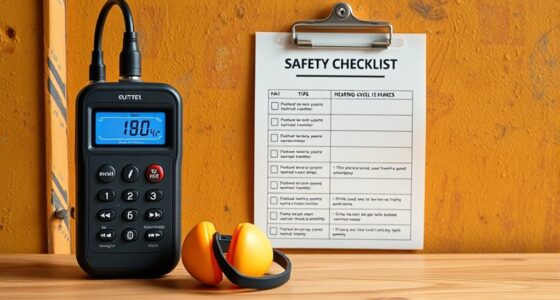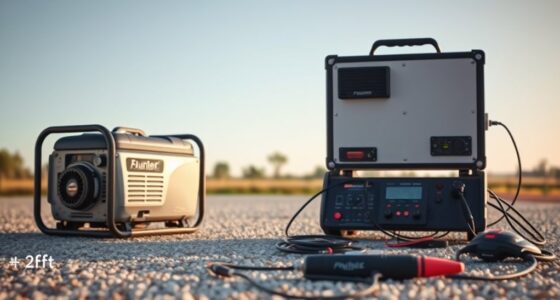

To measure your generator’s noise levels at home, start by calibrating your sound level meter with a known source to guarantee accurate readings. Choose a standard distance, like 7.5 or 10 meters, and record ambient noise before turning on the generator. Hold the meter steady, take multiple measurements, and average the results to account for fluctuations. Understanding proper techniques and standards helps you get reliable data—keep going to discover more tips for precise measurements.

Get backup power and energy gear delivered free — and shop member deals
- Fast, free delivery on millions of items
- Access to Prime Big Deal Days deals on October 6–7
- Prime Video, Amazon Music and more included
Key Takeaways
- Calibrate your sound level meter with a known reference source before measurements.
- Measure noise at a consistent distance (7.5-10 meters) from the generator in a quiet environment.
- Record ambient noise levels beforehand to isolate generator noise during analysis.
- Take multiple readings and average them to account for fluctuations in noise output.
- Compare results with regional noise standards to assess compliance and determine if mitigation is needed.
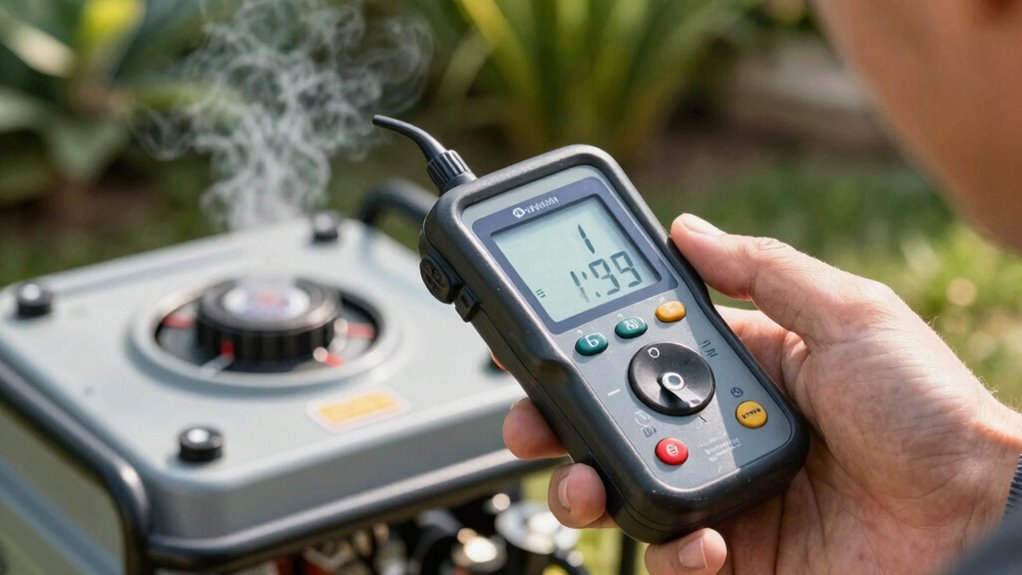
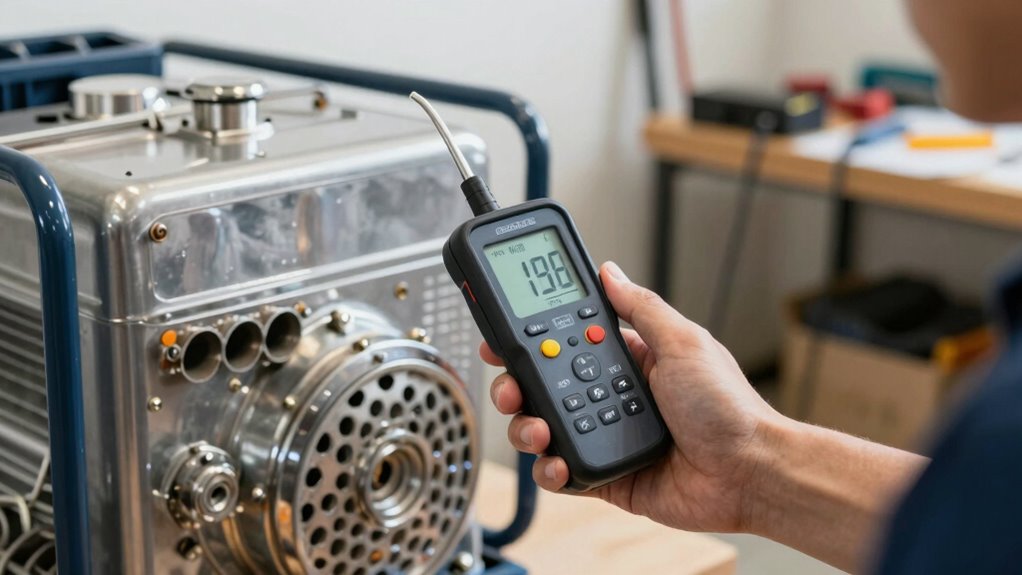
Have you ever wondered how loud your generator really is when operating outside your home? If you’re trying to figure out whether your generator stays within acceptable noise levels, it’s essential to measure its sound accurately. To do this effectively, you need to understand acoustic calibration, which ensures your measurement tools are precise, and perform a sound level comparison to see how your generator stacks up against standards or other devices. Acoustic calibration involves checking your sound level meter against a known sound source, so you can trust your readings. Without proper calibration, your measurements might be off, leading you to underestimate or overestimate how loud your generator truly is.
Once your equipment is calibrated, you’ll need to take measurements in the environment where the generator operates. Choose a spot at a standard distance, typically 7.5 or 10 meters, from the generator, as recommended by noise regulations. Make sure to record the ambient noise levels beforehand to establish a baseline. This helps you distinguish the generator’s noise from other environmental sounds, like traffic or wind. When you turn on your generator, hold the sound level meter steady at the calibrated distance, and take multiple readings to account for fluctuations. Averaging these readings provides a more accurate picture of the typical noise level. Additionally, understanding the acceptable noise levels established by regulations can help guide your assessment. Furthermore, being aware of regional noise standards can assist in determining compliance more effectively. Incorporating knowledge of sound measurement techniques can improve the accuracy of your results and provide clearer insights into your generator’s noise output. Recognizing the importance of calibration can significantly enhance the reliability of your measurements, especially when considering potential noise mitigation strategies.
sound level meter for generator noise
As an affiliate, we earn on qualifying purchases.
As an affiliate, we earn on qualifying purchases.
Frequently Asked Questions
What Is the Ideal Distance to Measure Generator Noise?
You should measure generator noise at a distance of about 10 to 15 feet for accurate results. This distance balances noise isolation and minimizes background interference. Use calibration techniques to verify your measurements are precise, accounting for any environmental factors. Keep the microphone or sound level meter steady at ear level, and avoid obstructions. Consistently measuring from this distance helps you accurately assess real-world noise levels and identify if additional noise mitigation is needed.
How Do Environmental Factors Affect Noise Measurements?
Environmental factors greatly influence noise measurements, especially regarding noise pollution and outdoor acoustics. Wind, humidity, and temperature can distort sound levels, making your readings less accurate. Surfaces like buildings, trees, and terrain can reflect or absorb noise, altering outdoor acoustics. To guarantee reliable data, measure during calm weather, avoid obstructions, and take multiple readings to account for environmental variability.
What Type of Microphone Is Best for Accurate Readings?
You should use a professional-grade, omnidirectional microphone with high sensitivity for accurate readings. Its sensitivity allows it to pick up subtle sound variations, essential for precise measurements. Make sure you perform sound calibration before taking readings to eliminate errors. A microphone with flat frequency response is ideal, as it captures noise accurately across all relevant sound levels, giving you reliable data for evaluating generator noise in your environment.
Can Smartphone Apps Reliably Measure Generator Noise?
Smartphone apps can give you a rough idea of generator noise, but their reliability is limited. Unlike calibrated devices, these apps struggle with consistent calibration methods and are affected by smartphone limitations like microphone quality and background noise. You need precise measurements for accurate results, so rely on professional tools or dedicated sound level meters instead of just an app. Your home environment demands accuracy, not just convenience.
How Often Should I Record Noise Levels for Consistent Data?
You should record noise levels regularly, ideally weekly, to guarantee consistent data. This helps you identify patterns and account for fluctuations. Use proper noise level calibration before each session to maintain accuracy. Incorporate data logging techniques by using a reliable sound level meter with recording capabilities, and keep detailed logs of each measurement. Consistent frequency and calibration ensure your data remains reliable over time.
digital sound level meter calibration kit
As an affiliate, we earn on qualifying purchases.
As an affiliate, we earn on qualifying purchases.
Conclusion
Measuring generator noise at home is like tuning a piano—precision helps you hit the right note. When I first used a decibel meter, I imagined I was a detective uncovering secrets hidden in the hum. With a little patience, you’ll grasp the true sound levels around your home, ensuring comfort and safety. Remember, understanding noise is your first step toward creating a peaceful environment—like turning down a volume knob on chaos.
professional noise measurement device
As an affiliate, we earn on qualifying purchases.
As an affiliate, we earn on qualifying purchases.
handheld decibel meter for outdoor noise
As an affiliate, we earn on qualifying purchases.
As an affiliate, we earn on qualifying purchases.
Fall Picks
fall essentials
As an affiliate, we earn on qualifying purchases.