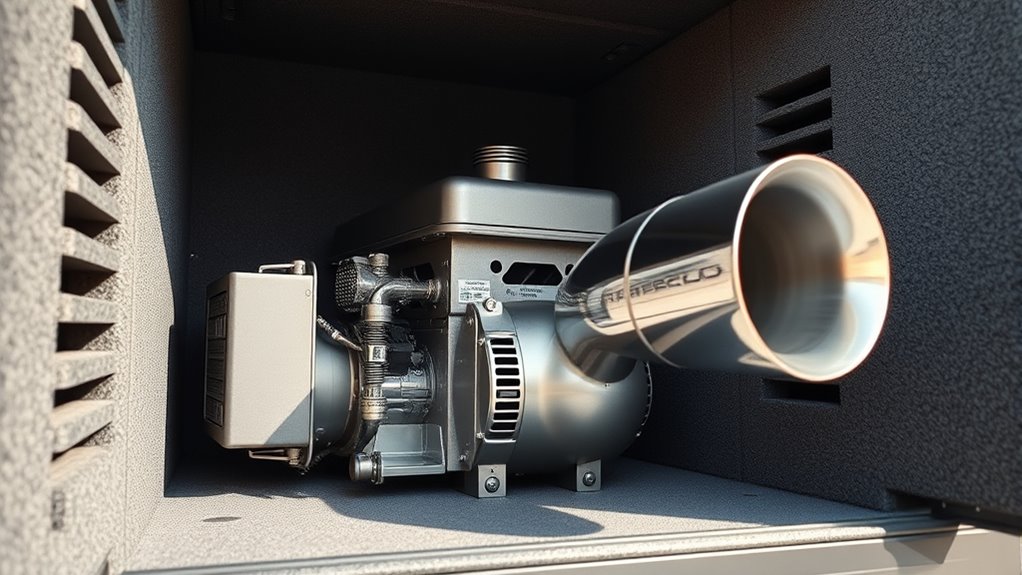

To reduce generator noise effectively, start by installing a high-quality muffler designed for your unit, which helps dampen exhaust sound. Then, enclose the generator in a well-sealed, soundproof enclosure made with sound-absorbing materials like foam or fiberglass. Combine these with vibration dampening pads beneath the generator to minimize vibrations and prevent sound transmission. For the best results, explore how combining mufflers, enclosures, and vibration control strategies can markedly cut noise levels—more tips lie ahead.

Get backup power and energy gear delivered free — and shop member deals
- Fast, free delivery on millions of items
- Access to Prime Big Deal Days deals on October 6–7
- Prime Video, Amazon Music and more included
Key Takeaways
- Install a high-quality, properly sealed soundproof enclosure with sound-absorbing materials for effective noise reduction.
- Use an appropriately rated muffler designed for your generator to dampen exhaust noise.
- Incorporate vibration dampening pads or isolators beneath the generator to minimize vibration noise transmission.
- Combine soundproof enclosures with barriers made of sound-absorbing materials for enhanced noise blocking.
- Regularly maintain and service the generator to ensure optimal operation and minimize noise from worn or damaged parts.
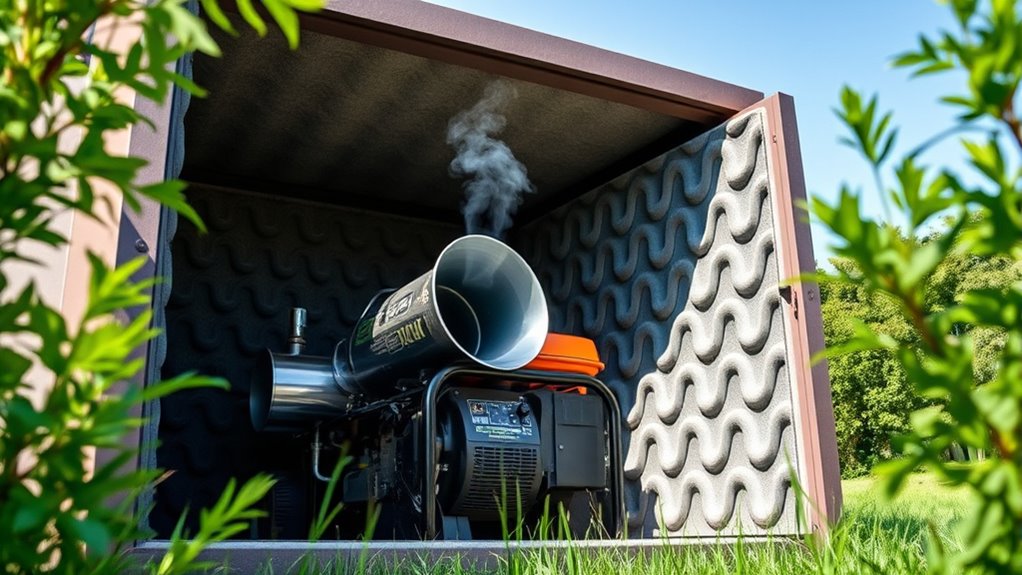
Generators can be noisy, but you don’t have to tolerate constant disturbance. There are practical ways to considerably reduce the noise that comes from your generator, and one effective approach involves using soundproof materials and vibration dampening techniques. When you’re trying to keep noise levels down, it’s essential to understand that soundproofing isn’t just about muffling sound; it’s also about preventing vibrations from transferring into surrounding structures. Vibrations often amplify noise, so by addressing both sound and vibration, you can create a much quieter environment.
Start by investing in a good quality enclosure that incorporates soundproof materials. These enclosures are designed to absorb and block sound waves, limiting the noise that escapes into your surroundings. Look for enclosures lined with dense, soundproofing foam, fiberglass, or mass-loaded vinyl. These materials are excellent at dampening sound vibrations and preventing them from traveling through walls or panels. When building or choosing an enclosure, ensure it’s well-sealed and has proper ventilation to prevent overheating without sacrificing noise reduction. Adding insulation within the enclosure creates a barrier that traps sound, making your generator much less disruptive.
Invest in a sealed, soundproof enclosure with insulation to minimize generator noise and disturbance.
Vibration dampening is equally important. Generators produce vibrations that can travel through mounting surfaces, amplifying noise. To combat this, you should incorporate vibration isolators or pads beneath the generator. These pads absorb shock and reduce the transfer of vibrations into the ground or surrounding structures. Using rubber mounts or anti-vibration pads made from dense materials like neoprene can make a noticeable difference. When vibrations are minimized, the noise level also drops because there’s less energy being transmitted through physical contact. It’s a simple, cost-effective way to make your generator operate more quietly. Additionally, understanding sound transmission principles helps in designing more effective noise reduction strategies.
Combining soundproof materials with vibration dampening solutions provides a complete approach to noise reduction. In addition to enclosures and mounting pads, you can also add barriers around the generator—like fences or barriers made with sound-absorbing materials—to further block noise from reaching neighbors or other parts of your property. Regular maintenance also helps keep noise levels down; a well-maintained generator runs more smoothly and quietly than one that’s neglected.
As an affiliate, we earn on qualifying purchases.
Frequently Asked Questions
Can Mufflers Completely Eliminate Generator Noise?
Mufflers can’t completely eliminate generator noise, but they substantially improve noise reduction. Their effectiveness depends on the muffler’s design and installation quality. While a good muffler reduces the overall sound, some noise may still be audible, especially at high engine speeds. To maximize noise reduction, combine mufflers with other methods like enclosures or sound barriers. Overall, mufflers are a valuable tool, but expecting total silence isn’t realistic.
Are There Eco-Friendly Options for Reducing Noise?
Yes, you can choose eco-friendly options for noise reduction! You might use soundproof materials like recycled foam or natural fiber insulations, which absorb sound without harming the environment. Implementing noise reduction techniques such as eco-conscious enclosures made from sustainable materials can also help. These green solutions effectively muffle generator noise while respecting the planet, making your setup quieter and more environmentally friendly.
How Often Should Mufflers or Enclosures Be Maintained?
You should inspect and maintain your mufflers and enclosures regularly, ideally following a maintenance schedule of every 3 to 6 months. During these checks, perform noise level monitoring to make certain they’re functioning effectively. If you notice increased noise or signs of wear, address issues promptly. Regular maintenance keeps noise levels low and prolongs the lifespan of your equipment, guaranteeing ideal performance and quieter operation.
Will Enclosures Affect Generator Cooling?
Enclosures can affect your generator’s cooling if you don’t consider soundproofing materials and ventilation. Properly designed enclosures include ventilation considerations, ensuring airflow isn’t restricted. You should install soundproofing materials that absorb noise but still allow for adequate cooling. Regularly check vents and fans to prevent overheating. When you balance soundproofing and ventilation, your generator stays cool while remaining quieter, optimizing performance and safety.
Do Different Generator Models Require Specific Mufflers?
Think of your generator as a unique instrument needing just the right tune. Different models, with their distinct melodies, often require specific mufflers for ideal harmony. Model compatibility guarantees you select muffler customization that fits snugly, reducing noise without sacrificing performance. By choosing the right muffler for your generator, you’ll enjoy quieter operation and maintain efficiency, all while preserving the integrity of your equipment’s soundscape.
As an affiliate, we earn on qualifying purchases.
Conclusion
By adding a muffler and enclosing your generator, you create a quiet oasis amid the hum of machinery. Imagine the gentle rustle of leaves as the noise diminishes, transforming your outdoor space into a peaceful retreat. With these simple tips, you’ll enjoy the steady power without the disruptive roar, allowing you to relax and savor the calm. Embrace these solutions, and let your environment be filled with tranquility instead of noise.
vibration dampening pads for generator
As an affiliate, we earn on qualifying purchases.
As an affiliate, we earn on qualifying purchases.
As an affiliate, we earn on qualifying purchases.
Fall Picks
fall essentials
As an affiliate, we earn on qualifying purchases.