TL;DR

Get backup power and energy gear delivered free — and shop member deals
- Fast, free delivery on millions of items
- Access to Prime Big Deal Days deals on October 6–7
- Prime Video, Amazon Music and more included
Portable inverter generators are compact, fuel-powered generators that convert electricity into stable AC power, often with less noise and better fuel economy than traditional open-frame models. Match the unit’s running and startup wattage to your appliances, check realistic runtime and sound ratings, and always operate it outdoors, well away from doors and windows, to reduce carbon monoxide risk.
A power outage can turn a quiet evening into a refrigerator full of warming food and a phone at 4 percent. A portable inverter generator can help, but only if its capacity fits what you need to run—and you use it safely.
These compact generators are designed to provide electricity for camping, remote work, and emergency backup. They are valued for their portability, comparatively quiet operation, and stable power for electronics. In this guide, you’ll learn what the inverter does, how to estimate the right size, what runtime and noise figures really mean, and which safety rules matter before you pull the starter cord.
The useful question isn’t simply, “How many watts does it have?” It’s whether the generator can handle your actual appliances, including the brief surge when a motor starts. Get that part right, and the rest of the decision becomes much clearer.
Add the running watts of appliances you plan to use together, then check the largest motor startup surge.
Treat runtime claims as load-dependent; compare models at similar load levels, not by maximum hours alone.
Check the noise rating’s measurement distance and your campground or neighborhood rules.
Operate the generator outdoors, far from doors, windows, and vents; never run it in a garage or tent.
Use the manual for fuel storage and maintenance, and hire a licensed electrician for home circuit connections.
What portable inverter generators do for your electronics
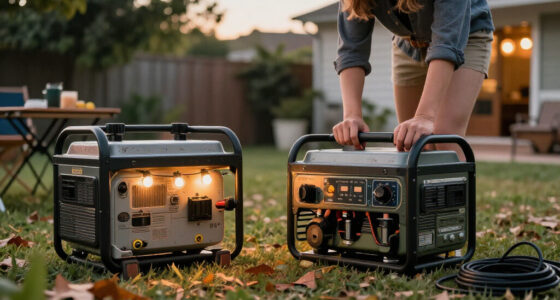
Portable inverter generators are compact fuel-powered units that make electricity and use inverter electronics to deliver steady AC power. Many models fall between 1,000 and 4,000 watts, covering needs from charging devices to running selected household appliances. That stable output is why they suit electronics better than some basic generators.
A conventional generator’s engine speed largely determines its electrical output. An inverter model first produces electricity, converts it to direct current, then electronically converts it back to alternating current at a controlled voltage and frequency. Think of the inverter as a careful sound engineer smoothing a rough recording: it helps reduce swings in the electrical signal.
Manufacturers often report total harmonic distortion, or THD, below 3 percent for inverter models. Lower distortion is generally helpful for laptops, phones, and other sensitive devices, but check the model’s manual and specifications; don’t assume all units perform identically. For example, a camper charging a laptop and camera batteries should compare the generator’s stated output quality as well as its wattage.
Some models add USB, 12-volt DC, and standard AC outlets, while others offer electric start, phone-app monitoring, or a connection for pairing compatible units. Those extras can be handy, but they don’t replace the basics: output capacity, safe placement, and the right connection method. And the first sizing mistake is easy to make.
portable inverter generator 1000 watt
As an affiliate, we earn on qualifying purchases.
As an affiliate, we earn on qualifying purchases.
How to choose enough watts without buying too much
Choose a generator by adding the running watts of the appliances you’ll use together, then allow for the highest startup surge. Motors in refrigerators, pumps, and air conditioners can briefly need more power to start than they use once running. A generator that meets only the steady load may trip its overload protection when an appliance kicks on.
- List the appliances you want to run at the same time, such as a refrigerator, phone charger, and a few lights.
- Find each device’s running and starting watts on its label, manual, or manufacturer’s website. If the label lists amps instead, check the manual for wattage guidance.
- Add the running watts for your planned combination, then compare the largest startup demand with the generator’s surge rating.
- Leave room for changes, such as adding a second device or discovering that a motor needs more startup power than expected.
For a simple camping setup, you may only need to charge phones, run LED lights, and power a small fan. A household backup plan is different: a refrigerator, sump pump, or window air conditioner can change the calculation quickly. A 2,000-watt class unit may suit modest loads, but it won’t automatically run every appliance in a home.
Make a written list before shopping and check actual appliance labels rather than guessing. If you want to power fixed home wiring, don’t connect a generator directly to a wall outlet; that can send electricity back onto utility lines. Ask a licensed electrician about a properly installed transfer switch and applicable permits. A bigger generator isn’t always the better buy—the next tradeoff is how long it can run, and how much noise it makes.
quiet inverter generator for camping
As an affiliate, we earn on qualifying purchases.
As an affiliate, we earn on qualifying purchases.
How fuel, runtime, and noise affect everyday use
Runtime depends on the fuel tank, fuel type, and how hard you load the generator. Portable inverter generators may run for roughly 3 to 12 hours per tank under varying conditions, but that range is not a promise for every model or load. Eco-mode can lower engine speed when demand is light, often reducing fuel use and noise.
Imagine a campsite where you charge a phone, run a small lamp, and use a fan. That light load may let a generator run longer than it would while powering a refrigerator or high-draw tool. Compare runtime figures at the same load percentage whenever possible; a headline claim without the test conditions tells you little about your own evening.
Many inverter generators are rated around 50 to 65 decibels, though sound readings vary by distance, load, and testing method. A quiet model can still sound like a steady hum in a silent campground, especially after dark. Before buying, check the stated measurement distance and local campground or neighborhood rules rather than relying on “quiet” in the product name.
Gasoline-only units can be straightforward to refuel, while dual-fuel models can also run on propane. Propane can store well when handled according to the cylinder maker’s directions, but its output and runtime may differ from gasoline. If a storm is approaching, decide where fuel will come from and how you’ll store it safely before the roads are icy or the station is crowded.
inverter generator for sensitive electronics
As an affiliate, we earn on qualifying purchases.
As an affiliate, we earn on qualifying purchases.
Which features are worth paying for
Pay for features that solve a real problem in your routine, not for a long list of extras. A built-in handle matters if you carry the generator from a car to a campsite; wheels may help with a heavier unit, though rough gravel can still make it awkward. Likewise, a fuel gauge is more useful during an overnight outage than decorative trim.
| Feature | When it helps | What to check |
|---|---|---|
| Eco-mode | Light loads, such as charging devices | Whether the manual explains how it changes engine speed |
| Dual fuel | You want a choice of gasoline or propane | Rated output and runtime for each fuel |
| Parallel connection | You may need more output later | Compatibility, approved cables, and combined ratings |
| App or display | You want fuel, runtime, or maintenance information | Which readings are available and whether the app needs a connection |
| Electric start | You prefer a button to a recoil pull | Battery charging and backup starting instructions |
Parallel capability can offer flexibility: two compatible generators may be linked with an approved kit to increase available output. That doesn’t mean any two units can be joined, or that the combined rating equals a simple doubling under every condition. Follow both manuals and use the manufacturer-approved equipment.
Prices commonly range from about $300 to $1,500, depending on capacity and features, but current prices and model availability change. For example, a camper who only needs device charging may get more value from a lighter, simpler unit than from a large model with an app and electric start. Check warranty terms, emissions compliance, and parts availability before you decide.
best portable inverter generator for emergency backup
As an affiliate, we earn on qualifying purchases.
As an affiliate, we earn on qualifying purchases.
How to run a generator safely at home or outdoors
Run a portable generator outdoors, never inside a home, garage, shed, or tent. Its exhaust contains carbon monoxide, an odorless gas that can be deadly. Place the generator well away from doors, windows, and vents, and follow the manufacturer’s distance and placement instructions; a cracked garage door does not make indoor operation safe.
During a power outage, set the unit on a stable, dry surface where exhaust cannot blow toward the house or a neighbor’s open window. Keep it protected from rain only with a cover made for generator use that preserves airflow. Never drape a tarp over a running machine: trapped heat and exhaust create new hazards.
Let the engine cool before refueling, and store gasoline in an approved container away from living spaces and ignition sources. Follow the manual for grounding, extension-cord ratings, weather limits, and maintenance. If you’re connecting a generator to household circuits, hire a licensed electrician to install the proper transfer equipment and check local code and permit requirements. Never backfeed a home through a dryer outlet or ordinary wall receptacle.
Use carbon monoxide alarms inside the home, and test them according to their instructions; alarms support safe operation but do not make indoor generator use acceptable. Wear suitable PPE for maintenance, and shut the generator off before servicing it. Treat exhaust and fuel with the same respect you’d give a hot stove: the machine is useful, but careless placement can turn it into a serious threat.
Keep your generator ready before the next outage
Regular checks make a generator more likely to start when you need it. Follow the owner’s manual for oil changes, air-filter cleaning, spark-plug checks, and service intervals. The right schedule depends on the model and how often you run it, so a generic calendar cannot replace the manufacturer’s instructions.
Fuel needs attention, too. Gasoline can degrade during storage, so use the manual’s guidance on fuel stabilizer, storage time, and draining or exercising the machine. A household that stores a generator through a mild winter should test it outdoors before storm season, rather than discovering a clogged carburetor on a dark, cold night.
Keep a simple log: record operating hours, oil changes, and any unusual behavior, such as rough starting or a new rattling sound. Store the manual, approved cables, and maintenance supplies together, but keep fuel in a suitable approved container in a location that follows local fire rules. Before each use, inspect cords, look for leaks, and check that the outlets and controls appear undamaged.
Noise and emissions rules vary by location, and some areas require EPA or CARB compliance for particular uses or sales. Check local requirements before purchase, especially if you live in a regulated area or plan to use the generator at a campground. A little preparation keeps the machine from becoming another thing you have to troubleshoot during an emergency.
Frequently Asked Questions
Can a portable inverter generator run a refrigerator?
Often, yes, if its running and startup wattage fit the generator’s ratings. Check the refrigerator’s label or manual for starting demand, and avoid running other high-draw appliances at the same time unless the generator has enough capacity.
Are inverter generators safe for laptops and phones?
Many models produce stable power with a stated THD below 3 percent, which is commonly suitable for sensitive electronics. Verify the specific generator’s specification and use the device charger or surge protection recommended by its manufacturer.
How long will one tank of fuel last?
Some portable inverter generators run about 3 to 12 hours per tank, but the exact time varies with tank size, fuel, and electrical load. A lightly loaded unit in eco-mode may run longer than the same generator powering a refrigerator or tool.
Can I run a generator in my garage if the door is open?
No. Generator exhaust contains carbon monoxide, which can build up indoors or enter the home even with a garage door open. Operate the unit outdoors and away from doors, windows, and vents, following its manual’s placement guidance.
Can I connect two inverter generators for more power?
Some models support parallel operation, but the units must be compatible and connected with the approved equipment. Check both manuals for combined output limits and instructions; never improvise cables or assume that two generators will always provide twice the power.
Should I choose a dual-fuel or gasoline-only model?
Choose dual fuel if having gasoline and propane options fits your storage and supply plans. Compare the output and runtime for each fuel, since performance can differ, and follow the generator and fuel-container instructions for safe storage and use.
Conclusion
Choose a generator around the appliances you’ll actually run, not the biggest wattage printed on the box. Check startup demands, realistic runtime, noise, fuel options, and the manual’s safety rules before buying.
Then test your setup outdoors on a calm day, while the lights are still on. When the next outage arrives, you’ll want a ready machine—not a mystery humming in the dark.
Fall Picks
fall essentials
As an affiliate, we earn on qualifying purchases.