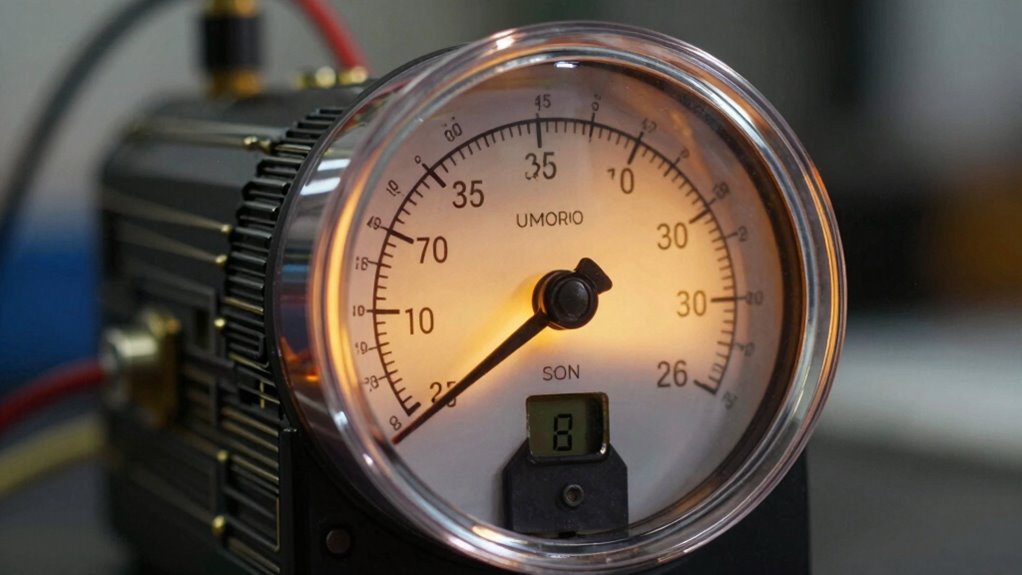
A load meter shows you the actual power your appliances draw, helping you identify energy waste and better understand your usage patterns. It distinguishes real power from apparent power, giving insights into how efficiently your devices operate. With this knowledge, you can spot appliances that consume excessive energy or operate inefficiently, allowing you to optimize your system and save on costs. Keep exploring to discover how this tool can further improve your energy management.
Key Takeaways
- Load meters measure actual power flow, revealing true energy consumption beyond apparent power.
- They help identify inefficient appliances that consume excessive power during use or idle.
- Monitoring real power highlights usage patterns and peak demand times for better energy management.
- Load meters assist in detecting abnormal power consumption, indicating potential device malfunctions.
- They enable informed decisions to optimize system efficiency, reduce waste, and save energy costs.
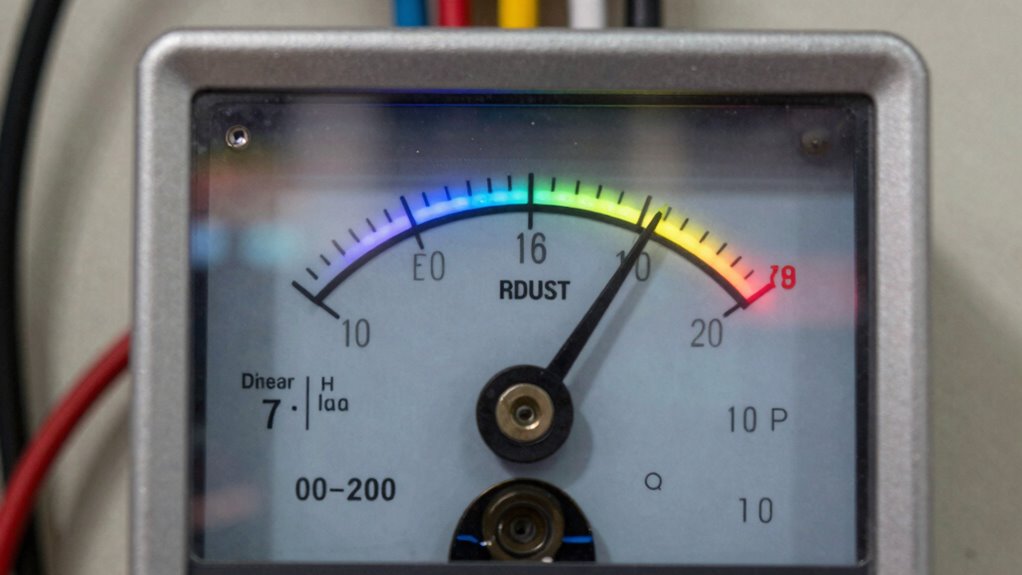
Understanding how a load meter works is essential for managing real power use effectively. When you install a load meter, you gain a clear picture of how much power your appliances and equipment draw during operation. This insight helps you identify areas where you might improve energy efficiency and reduce unnecessary power consumption. Knowing the real power consumption of various devices allows you to make smarter decisions about when and how to use them, saving you money on energy bills and decreasing your environmental impact.
Using a load meter reveals your appliances’ true power use, helping you save energy and lower costs effectively.
A load meter measures the actual power flowing through your circuits, not just the apparent power that might be indicated on a standard wattmeter. This distinction is pivotal because real power accounts for the energy that’s actually consumed to perform work, such as lighting a bulb or running a motor. When you monitor real power use, you’re better equipped to optimize your energy use, ensuring that you’re not wasting electricity on devices that draw more power than necessary or operate inefficiently. This focus on energy efficiency translates into cost savings and prolonged equipment lifespan, as devices are not strained or overused.
By observing the fluctuations in power consumption over time, you can identify patterns that reveal inefficient usage. For example, if you notice a particular appliance consumes a significant amount of power even when idle, it might be time to replace it with a more energy-efficient model or limit its operation. Similarly, when you see spikes in power draw during certain times, you can adjust your usage schedule to avoid peak periods, which often cost more and strain the power grid. This proactive approach to managing power consumption helps you reduce waste and promotes smarter energy use.
Furthermore, understanding your load meter readings helps you troubleshoot electrical issues more effectively. If a device suddenly begins consuming more power than usual, it could be a sign of malfunction or a failing component. Addressing these issues early prevents further damage and saves money on repairs or replacements. A load meter also enables you to verify whether new appliances or modifications to your electrical system are truly energy-efficient, giving you confidence that your investments lead to real savings.
Additionally, understanding the importance of power factor correction can improve the efficiency of your electrical system and reduce wasted energy. In essence, a load meter isn’t just about monitoring; it’s a tool for empowering you to optimize your energy efficiency and control your power consumption. By paying close attention to the real power data it provides, you can make informed decisions that benefit your wallet and the environment. This knowledge puts you in a better position to manage your electrical system proactively, ensuring you’re using energy wisely and responsibly.
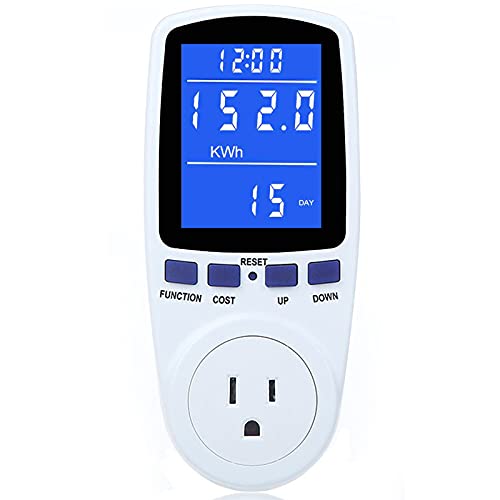
Upgraded Watt Power Meter Plug Home Electrical Usage Monitor Consumption, Energy Voltage Amps Kill Tester with Backlight, Overload Protection, 7 Modes Display
- Multiple Monitoring Parameters: Displays power, energy, volts, amps, and more
- Clear Large LCD Screen: 2.36 inch backlit display with wide viewing angles
- Adjustable Backlight Duration: Five backlight time options for convenience
As an affiliate, we earn on qualifying purchases.
As an affiliate, we earn on qualifying purchases.
Frequently Asked Questions
How Accurate Are Load Meters in Measuring Real Power?
Load meters are generally quite accurate in measuring real power, especially when they account for power factor. If your load meter includes power factor correction, you’ll get a precise reading of actual power consumption. However, measurement accuracy can vary based on the quality of the meter and its calibration. For best results, choose a reliable meter and make sure it’s properly calibrated, so you can confidently monitor your true power use.
Can Load Meters Detect Energy Wastage in Specific Appliances?
Yes, load meters can help you detect energy wastage in specific appliances. By monitoring real-time power consumption, you can identify devices that use more energy than necessary, aiding in energy conservation. With appliance monitoring, you pinpoint inefficient or faulty appliances, allowing you to take action—like repairing or replacing them—ultimately saving money and reducing your environmental impact. Load meters are valuable tools for smarter energy management at home.
Do Load Meters Work With All Types of Electrical Systems?
Load meters work with most electrical systems, but you need to take into account meter installation and system compatibility. If you have a standard residential system, a compatible load meter can usually be installed easily to monitor your energy use. However, for complex or industrial systems, you might need specialized meters or professional help to guarantee proper installation and compatibility. Always check the specifications before buying or installing a load meter.
How Often Should I Calibrate My Load Meter?
You should calibrate your load meter at least once a year to guarantee measurement consistency. Regular calibration helps detect any drift or inaccuracies that can develop over time, maintaining precise readings. If you use your load meter frequently or in critical applications, consider calibrating more often, perhaps every six months. Proper calibration ensures you get reliable data, so you can make informed decisions about your electrical system’s real power use.
Are There Portable Load Meters for Residential Use?
Think of a portable load meter as your personal energy compass, guiding you through your home’s power landscape. These handy devices are perfect for residential use, helping you monitor power consumption on the go. With them, you can identify energy inefficiencies, optimize your energy use, and boost overall efficiency. Investing in a portable load meter makes power monitoring simple and effective, empowering you to make smarter energy choices every day.

TP-Link 𝗧𝗮𝗽𝗼 Smart Plug Wi-Fi Mini, Energy Monitoring, Compatible with Alexa & Google Home & Samsung SmartThings, Timer, 15A/1800W Max, ETL Certified, 2.4G Wi-Fi Only, Tapo P115(4-Pack)
- Energy Monitoring: Track energy use with charts and stats
- Cost Estimation: Integrate with billing for cost insights
- Scheduled Operations: Automate device on/off timings
As an affiliate, we earn on qualifying purchases.
As an affiliate, we earn on qualifying purchases.
Conclusion
A load meter shows you exactly how much real power you’re using, helping you identify waste and optimize your energy habits. By paying attention to these readings, you can make smarter choices and save money in the long run. Remember, knowledge is power, and in this case, it’s the key to staying ahead of your energy game. Don’t let things slide—take control now and turn the tide in your favor before it’s too late.
Upgraded Watt Power Meter Plug Home Electrical Usage Monitor Consumption, Energy Voltage Amps Kill Tester with Backlight, Overload Protection, 7 Modes Display
- Multiple Monitoring Parameters: Displays power, energy, volts, amps, and more
- Clear Large LCD Screen: 2.36 inch backlit display with wide viewing angles
- Adjustable Backlight Duration: Five backlight time options for convenience
As an affiliate, we earn on qualifying purchases.
As an affiliate, we earn on qualifying purchases.
Upgraded Watt Power Meter Plug Home Electrical Usage Monitor Consumption, Energy Voltage Amps Kill Tester with Backlight, Overload Protection, 7 Modes Display
- Multiple Monitoring Parameters: Displays power, energy, volts, amps, and more
- Clear Large LCD Screen: 2.36 inch backlit display with wide viewing angles
- Adjustable Backlight Duration: Five backlight time options for convenience
As an affiliate, we earn on qualifying purchases.
As an affiliate, we earn on qualifying purchases.