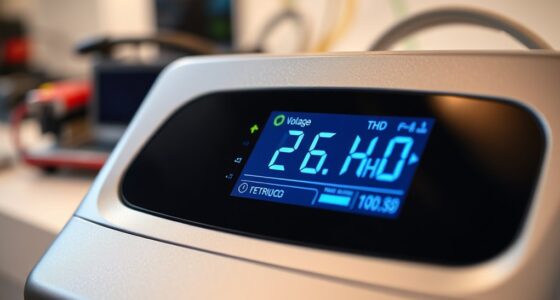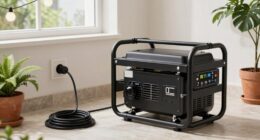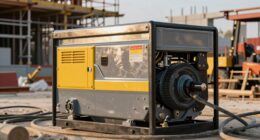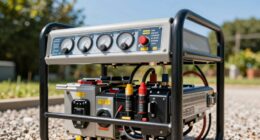
To measure your generator’s output, start by ensuring your multimeter is set to the correct AC voltage or current range. Connect the probes directly across the output terminals for voltage, or use a clamp meter around a single wire for current. Always follow safety protocols, like wearing gloves and working in a dry area. Proper calibration and accurate tool use are essential for reliable results. Keep exploring to discover detailed tips and best practices for precise measurements.
Key Takeaways
- Set the multimeter to the correct AC voltage or current range before measurement.
- Connect multimeter probes directly across generator output terminals for voltage testing.
- Use a clamp meter around a single conductor to measure current without disconnecting wires.
- Ensure the generator is properly grounded and the work area is dry for safety.
- Take multiple readings to verify consistency and record measurements for analysis.
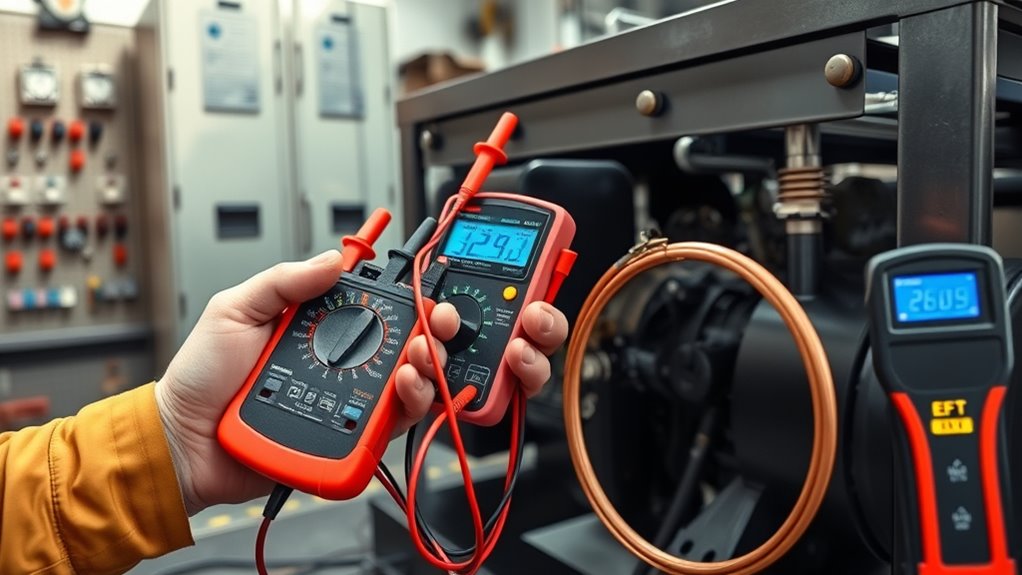
When it comes to evaluating a generator’s performance, using the right tools is essential to get accurate readings. Whether you’re troubleshooting or conducting routine checks, multimeters and clamp meters are your best options. However, before you begin, it’s crucial to prioritize safety precautions. Always wear insulated gloves and eye protection, especially when working with live electrical systems. Make sure the generator is grounded properly, and double-check that your work area is dry to prevent shocks. These safety measures aren’t just formalities—they protect you from potential hazards and ensure your measurements are safe and reliable.
Next, it’s important to verify that your tools are properly calibrated. Tool calibration ensures that your multimeter or clamp meter provides precise readings, which is vital when assessing generator output. Many digital multimeters have calibration procedures outlined in their manuals, so follow these instructions periodically, especially if you’ve dropped the device or it hasn’t been used for a while. An uncalibrated tool can give false readings, leading you to incorrect conclusions about your generator’s performance. Regular calibration maintains accuracy and keeps your measurements trustworthy, saving you time and avoiding costly mistakes down the line.
Ensure your tools are calibrated regularly for accurate generator performance assessments.
When you’re ready to measure, start by setting your multimeter to the appropriate AC voltage or current range, depending on what you need to check. For voltage measurements, connect the multimeter probes directly across the generator’s output terminals, ensuring good contact without touching exposed metal parts. For current measurements, clamp the meter around a single conductor—never around multiple wires—to get an accurate reading of the current flowing through that wire. Remember, clamp meters are excellent for non-intrusive current measurements and are especially useful when you want to avoid disconnecting wires or opening the system. Additionally, understanding the importance of contrast ratio can help you better interpret your generator’s power quality, especially in complex electrical setups.
Throughout the process, keep your hands steady and avoid touching the metal parts of the probes or clamps while the device is live. Take multiple readings if necessary to confirm consistency. If your readings seem off, consider rechecking your connections, verifying your tool calibration, and reviewing safety precautions. Never force a reading or attempt to measure beyond the specified limits of your tools; doing so can damage the equipment or cause injury. Once you’ve gathered all the data, turn off your devices, properly store your tools, and record your measurements for future reference.

AstroAI Digital Multimeter Tester 2000 Counts with DC AC Voltmeter and Ohm Volt Amp Meter; Measures Voltage, Current, Resistance, Continuity and Diode, Blue
Additional Tips – The following incorrect operations may cause the multimeter not to show results: Firstly, the plugs…
As an affiliate, we earn on qualifying purchases.
As an affiliate, we earn on qualifying purchases.
Frequently Asked Questions
Can Multimeters Measure High-Frequency Generator Outputs?
No, multimeters can’t accurately measure high-frequency generator outputs because of their limitations in high-frequency measurement. They are designed mainly for low-frequency signals and DC voltage, so attempting to measure high-frequency signals can give you inaccurate readings. For precise high-frequency measurements, you should use specialized tools like oscilloscopes or frequency analyzers. Stick with these tools to ensure your measurements are reliable and avoid damaging your multimeter.
Are Clamp Meters Suitable for Measuring DC Generator Output?
Yes, clamp meters are suitable for measuring DC generator output, especially for current measurement. They work well with inductive loading, allowing you to measure current without disconnecting the circuit. However, verify your clamp meter has a DC current measurement feature, as many only measure AC. Using it correctly helps you monitor your generator’s performance safely and accurately, even under varying load conditions.
How Do Temperature Variations Affect Multimeter Accuracy?
Temperature variations are like shifting sands that cause your multimeter’s accuracy to drift. They can lead to temperature drift, affecting measurements, so you might need to recalibrate more frequently. To maintain precision, keep your multimeter in a stable environment and check its calibration regularly. This way, you guarantee reliable readings, especially when measuring sensitive electrical parameters where temperature changes could otherwise mislead your results.
Can I Use a Multimeter to Test Generator Efficiency?
Yes, you can use a multimeter to test generator efficiency, but keep in mind it’s limited to measuring output voltage and current. To get accurate results, verify your generator is properly calibrated, and watch for voltage fluctuation, which can skew readings. For precise efficiency testing, consider additional tools like clamp meters or professional calibration, but a multimeter helps you quickly check if the generator is functioning within acceptable voltage ranges.
What Safety Precautions Are Needed When Measuring Live Generators?
When measuring a live generator, you should always prioritize safety. Make sure the generator is properly grounded to prevent electrical shocks. Wear appropriate personal protective equipment like insulated gloves and safety glasses. Use insulated tools and keep a safe distance from live parts. Before testing, turn off the generator if possible, and always follow manufacturer instructions. Staying alert and cautious minimizes risks and guarantees accurate readings.
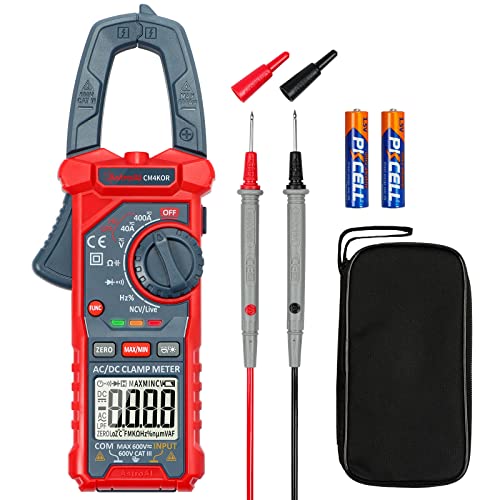
AstroAI Digital Clamp Meter Multimeter 4000 Counts Auto-ranging Amp Tester Measuring AC/DC Voltage & Current, Resistance, Capacitance, Frequency, Continuity, Live Wire Test, NCV Detection, Blue
Versatile Digital Clamp Meter: Accurately measures AC/DC Current, AC/DC Voltage, Capacitance, Frequency, Duty Cycle, Resistance, Diode, Continuity and…
As an affiliate, we earn on qualifying purchases.
As an affiliate, we earn on qualifying purchases.
Conclusion
By mastering the methods of multimeters and clamp meters, you’ll make measuring generator output simple and secure. With consistent calibration and careful caution, you can confidently capture accurate readings without complication. Remember, patience and practice promote precision, preventing problems before they start. So, step smoothly into sensing and securing your generator’s health, and let your newfound knowledge lead to safer, smarter maintenance. Stay steady, stay sharp, and let your skills shine!

Klein Tools MM325 Multimeter, Digital Manual-Ranging 600V AC/DC Voltage Tester, Tests Batteries, Current, Resistance, Diodes, and Continuity
VERSATILE FUNCTIONALITY: Measures AC/DC voltage up to 600V, 10A DC current, 2MΩ resistance; additional features include continuity, diode…
As an affiliate, we earn on qualifying purchases.
As an affiliate, we earn on qualifying purchases.

DongChu Insulated Electrician Gloves 400V,ASTM D120 Certified High Voltage Resistant Flame Retardant Work Gloves, Electrical Rubber Non-slip Prevent Shock,Large
Insulation Performance: The palm part of the work gloves is insulated, making them ideal for use as an…
As an affiliate, we earn on qualifying purchases.
As an affiliate, we earn on qualifying purchases.