

When sizing generators for compressors and pumps, you need to account for motor starting surge, which can be 5 to 7 times the rated running current. Calculate the inrush current by multiplying the motor’s rated current by its surge factor, then verify your generator can support this peak without voltage drops or trips. Properly estimating this surge helps prevent system failures. Continue exploring how to accurately determine these figures for safe, reliable operation.

Get backup power and energy gear delivered free — and shop member deals
- Fast, free delivery on millions of items
- Access to Prime Big Deal Days deals on October 6–7
- Prime Video, Amazon Music and more included
Key Takeaways
- Determine the motor’s rated current and identify the surge factor from reliable sources like Standby Generator HQ.
- Calculate the inrush current by multiplying the rated current by the surge factor to find the maximum startup load.
- Consider the startup duration to ensure the generator can sustain the peak surge without voltage drops or stability issues.
- Account for multiple motors starting simultaneously or sequentially, adding their surge currents for total capacity needs.
- Size the generator to handle the maximum inrush current plus a safety margin to ensure reliable operation during motor startups.
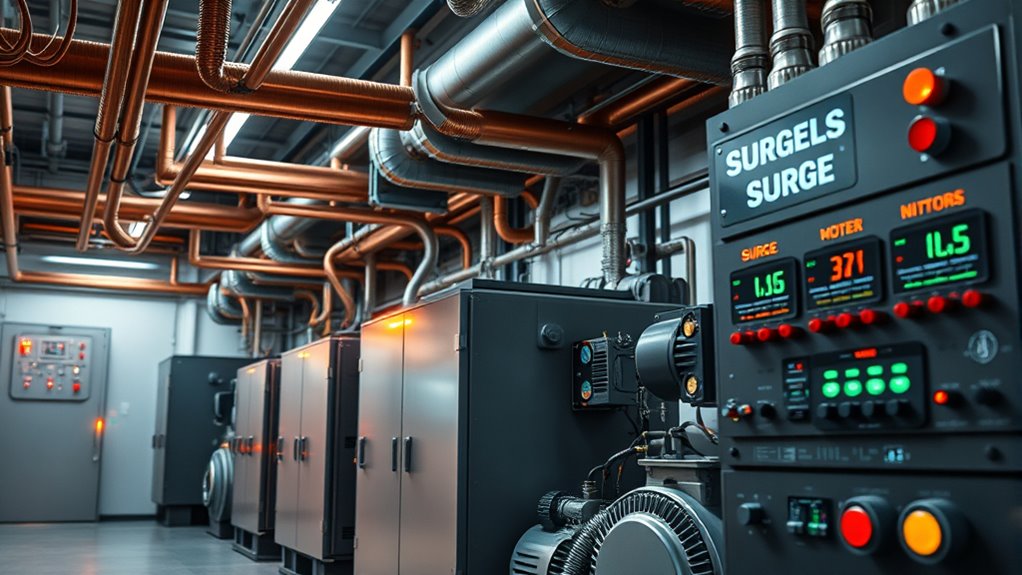
Understanding motor starting surge is essential because it directly impacts your electrical system’s stability and safety. When a motor begins to operate, it draws a much higher current than its running load, a phenomenon known as motor inrush. This initial surge can be several times greater than the motor’s rated running current, and if not properly managed, it can cause voltage drops, tripping of protective devices, or even damage to your equipment. To accurately size your generator, you need to understand the surge factor, which quantifies how much higher the starting current is compared to the motor’s normal operating current. The surge factor varies depending on the motor type, size, and load conditions but typically ranges from 5 to 7 for many industrial motors.
Calculating the motor starting surge involves evaluating the motor’s inrush current and applying the surge factor to determine the maximum load your generator must support during startup. For example, if your motor has a rated running current of 20 amps and a surge factor of 6, the initial current at startup could reach up to 120 amps. This value is critical because it influences the generator’s capacity requirements. If your generator isn’t rated to handle this peak load, it might struggle to provide stable power, leading to potential outages or equipment stress. Consequently, when planning your generator size, always multiply the motor’s rated current by its surge factor to find the worst-case starting current.
Additionally, considering the motor’s start-up duration helps refine your calculations. Most motors reach their peak inrush current within a few seconds, after which the current drops to a steady-state level. Selecting a generator that can comfortably handle the inrush without significant voltage drops ensures smooth operation. It’s also wise to factor in the possibility of multiple motors starting simultaneously or sequentially, which can compound the surge. This approach prevents underestimating the necessary capacity and keeps your system safe and reliable. Properly accounting for motor surge factors is essential in ensuring your backup power system can handle startup loads without issues.
generator for motor starting surge
As an affiliate, we earn on qualifying purchases.
As an affiliate, we earn on qualifying purchases.
Frequently Asked Questions
How Do Ambient Temperature Variations Affect Generator Sizing?
Ambient effects and temperature impact your generator sizing because higher temperatures reduce air density, lowering cooling efficiency and potentially increasing generator load. Conversely, cooler temperatures improve cooling and reduce stress on the generator. You should consider temperature variations when selecting a generator, ensuring it can handle peak loads under extreme ambient conditions. Properly accounting for ambient effects guarantees reliable operation and prevents unexpected failures during temperature fluctuations.
What Are Common Mistakes When Calculating Starting Surge Requirements?
You often overlook accounting for the initial surge when calculating starting requirements, which leads to underestimating generator size. Be cautious not to ignore factors like motor inertia and inrush current, as they substantially affect calculation accuracy. Common mistakes include using outdated data, forgetting to consider temperature effects, and assuming steady-state conditions. Guaranteeing precise calculations helps prevent generator overloads and ensures reliable startup performance for compressors and pumps.
How to Account for Variable Load Conditions in Generator Selection?
When accounting for variable load conditions, you should consider the load factor and power factor. By analyzing the load factor, you understand the average usage, helping you select a generator with sufficient capacity. Adjust for power factor to guarantee the generator can handle reactive power, preventing overloads. This approach ensures your generator operates efficiently under fluctuating conditions, avoiding undersizing or oversizing that can lead to performance issues.
Are There Specific Standards for Surge Calculations in Different Industries?
Yes, there are industry-specific surge standards and surge calculation protocols you should follow. These standards, set by organizations like IEEE, IEC, or ANSI, ensure proper generator sizing for compressors and pumps. You need to conform to these protocols to account for surge conditions accurately. By applying industry-specific surge standards, you can prevent equipment damage and optimize generator performance during startup surges, ensuring safety and efficiency in your operations.
How Does Altitude Impact Generator Capacity for Starting Surges?
Altitude impacts generator capacity for starting surges because higher elevations require altitude adjustments and generator derating. As you operate at increased altitudes, the air becomes less dense, reducing cooling efficiency and engine performance. You need to account for these factors by adjusting the generator’s capacity, ensuring it can handle surge loads without overloads. Proper altitude adjustments and derating help maintain reliable startup power for your compressors and pumps in high-altitude environments.
industrial generator capacity calculator
As an affiliate, we earn on qualifying purchases.
As an affiliate, we earn on qualifying purchases.
Conclusion
By mastering motor starting surge calculations, you guarantee your generators grow stronger and your systems stay safe. Staying sharp with sizing and surges prevents surprises, promotes peace of mind, and practically guarantees performance. With careful calculations, you can confidently conquer compressor and pump challenges, creating a consistent, controlled, and capable setup. So, stay savvy, stay secure—safeguard your system, succeed, and seize success through smart sizing and surge strategies.
As an affiliate, we earn on qualifying purchases.
backup generator for compressors and pumps
As an affiliate, we earn on qualifying purchases.
As an affiliate, we earn on qualifying purchases.
Fall Picks
fall essentials
As an affiliate, we earn on qualifying purchases.