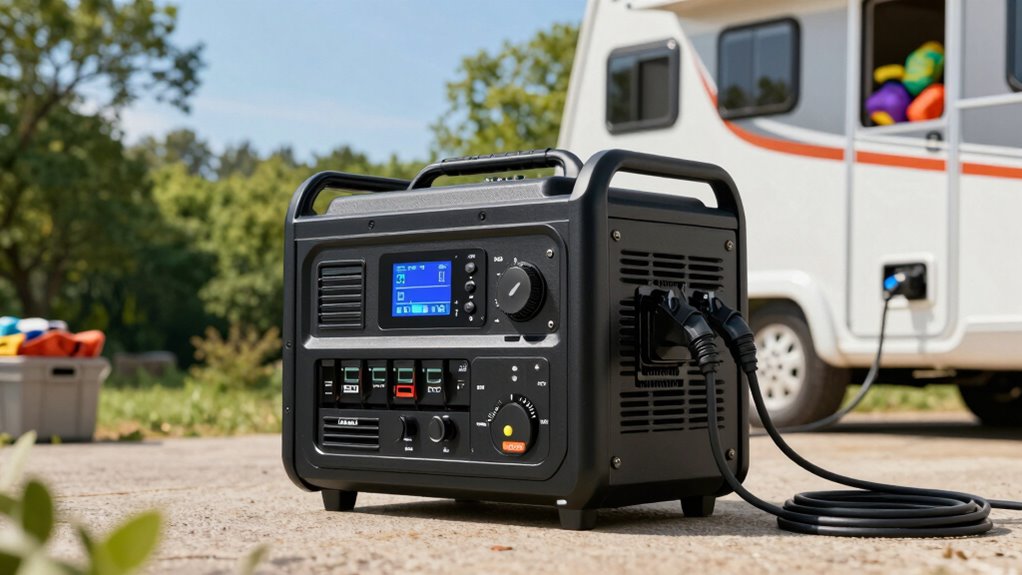

When selecting an inverter generator for RV use, key considerations include power output, noise levels, fuel efficiency, and portability. The Westinghouse 5000 Peak Watt Super Quiet Portable Inverter Generator stands out as the best overall choice, offering a solid balance of power and quiet operation. For those prioritizing versatility, the Generac 5200 Watt Dual-Fuel Portable Inverter Generator provides fuel flexibility, while the WEN 3600-Watt Dual Fuel Portable Inverter Generator with CO Watchdog is ideal for budget-conscious buyers. Each option involves tradeoffs—most notably between size, weight, and maximum power. Continue reading for a detailed breakdown of these models and how to pick the best inverter generator for your RV needs.

Get backup power and energy gear delivered free with Prime
- Fast, free delivery on millions of items
- Prime Video, Amazon Music and more included
- Member-only deals all year
Complete the kit


Key Takeaways
- The top models balance power output with noise levels to suit RV camping needs.
- Dual-fuel options offer flexibility but tend to be heavier and more complex.
- Portability is a key factor, especially for those with limited storage space.
- Inverter technology ensures cleaner power, but it can come at a higher price point.
- The best choice depends on whether you prioritize maximum power, quiet operation, or budget constraints.
| Westinghouse 5000 Peak Watt Super Quiet Portable Inverter Generator with Remote Start |  | Best Overall for Power and Convenience | Peak Watts: 5000 | Rated Watts: 3900 | Fuel Tank Capacity: 3.4 gallons | VIEW ON AMAZON | See Our Full Breakdown |
| Genkins 4500W Inverter Generator for Home and RV |  | Best Value for Clean Power and Portability | Power Output: 4500 Peak / 3700 Rated Watts | Engine: 212 cc 4-Stroke OHV | Fuel Tank Capacity: 2.11 gallons | VIEW ON AMAZON | See Our Full Breakdown |
| Generac 5200 Watt Dual-Fuel Portable Inverter Generator |  | Best for Fuel Flexibility and Safety Tech | Power Output (Gas): 3,900W running / 5,200W starting | Power Output (Propane): 3,500W / 4,700W | Runtime (Gas at 25%): up to 15 hours | VIEW ON AMAZON | See Our Full Breakdown |
| WEN 3600-Watt Dual Fuel Portable Inverter Generator with CO Watchdog |  | Best for Safety and Compact Camping Power | Power Output: 3600 surge / 2900 rated watts | Fuel Type: Gasoline, Propane | Engine Displacement: 149cc | VIEW ON AMAZON | See Our Full Breakdown |
| WEN 6800-Watt Dual Fuel RV-Ready Electric Start Portable Inverter Generator |  | Best for Heavy-Duty RV Power and Convenience | Engine: 224cc dual-fuel | Surge Watts: 6800 | Rated Watts: 5100 | VIEW ON AMAZON | See Our Full Breakdown |
| AIVOLT 4300W Inverter Generator Gas-Powered Quiet RV Generator for Camping |  | Best Overall for Lightweight Reliable Power | Wattage: 4300 watt-hours | Fuel Type: Gas | Power Source: Fuel Powered | VIEW ON AMAZON | See Our Full Breakdown |
| Oxseryn 5000-Watts Portable Inverter Generator, Gas Powered, Home Backup, RV Ready, ECO Mode, 60 lbs |  | Best for Higher Power and Home Backup | Power Output: 4000 rated, 5000 peak watts | Fuel Tank Capacity: 2 gallons | Runtime: Up to 6 hours at 50% load | VIEW ON AMAZON | See Our Full Breakdown |
| Champion 4000-Watt RV Ready Portable Inverter Generator |  | Best for Lightweight Camping and Tailgating | Weight: Less than 49 pounds | Starting Watts: 4000 | Running Watts: 3000 | VIEW ON AMAZON | See Our Full Breakdown |
| WEN 4800-Watt Dual Fuel Inverter Generator with Electric Start and CO Watchdog |  | Best for Quiet, Safe Power with Dual Fuel Flexibility | Engine: 224cc dual-fuel engine | Surge Watts (Gasoline): 4800 | Rated Watts (Gasoline): 4000 | VIEW ON AMAZON | See Our Full Breakdown |
| PowerSmart 3800 Watt Dual Fuel Inverter Generator for Camping or Home Use |  | Best Budget Dual Fuel for Versatility and Quiet Power | Power Output: 3800 starting / 3300 running watts (gas) | Noise Level: 59 dBA | Runtime: Up to 8 hours on gas, 24 hours on propane | VIEW ON AMAZON | See Our Full Breakdown |
| inverter generator for rv | Noise Level |
|---|---|
| Westinghouse 5000 Peak Watt Su | 52 dBA |
| Genkins 4500W Inverter Generat | 70 dB |
| Generac 5200 Watt Dual-Fuel Po | — |
| WEN 3600-Watt Dual Fuel Portab | 65 dB |
| WEN 6800-Watt Dual Fuel RV-Rea | — |
| AIVOLT 4300W Inverter Generato | — |
| Oxseryn 5000-Watts Portable In | 70dB at 23 feet |
| Champion 4000-Watt RV Ready Po | 64 dBA from 23 feet |
| WEN 4800-Watt Dual Fuel Invert | — |
| PowerSmart 3800 Watt Dual Fuel | 59 dBA |
More Details on Our Top Picks
Westinghouse 5000 Peak Watt Super Quiet Portable Inverter Generator with Remote Start
This model stands out for its substantial 5000 peak and 3900 rated watts, making it well-suited for larger RVs or even home backup scenarios. Compared with the WEN 6800-Watt, it offers more power but at the expense of increased size and weight, which can be a drawback for portability. Its quiet operation at 52 dBA and remote start feature provide a notable advantage for ease of use, especially during overnight camping or quiet environments. However, the 3-year warranty is shorter than some competitors like the Generac, and its bulkiness may limit mobility. This generator is best suited for those who prioritize power and comfort over portability, such as full-time RVers or homeowners needing backup power. It might be less ideal for weekend campers who need something lightweight and easy to carry.
Pros:- High peak and rated watts for demanding power needs
- Quiet operation at 52 dBA for peaceful camping
- Remote start adds convenience
- Long runtime of up to 18 hours
Cons:- Bulky and heavy for portable use
- Limited to a 3-year warranty
Best for: People who need high power output combined with remote convenience, like full-time RVers or backup power users.
Not ideal for: Campers or tailgaters seeking a lightweight, ultra-portable unit for short trips, due to its weight and size.
- Peak Watts:5000
- Rated Watts:3900
- Fuel Tank Capacity:3.4 gallons
- Noise Level:52 dBA
- Run Time:up to 18 hours
- Outlets:120V duplex, RV 30A, USB
- Start Type:Remote, Electric, Recoil
- Warranty:3 years
Our verdict“This generator is ideal for those who need serious power and don’t mind the size for home backup or large RV setups.”
Genkins 4500W Inverter Generator for Home and RV
This generator strikes a balance between power and portability, providing 4500 peak and 3700 rated watts, making it a solid choice for RVs and outdoor adventures. Unlike the Westinghouse, it offers cleaner power with less THD (<3%), which is critical for sensitive electronics like laptops and TVs. Its lightweight design at approximately 60% of the weight of larger models like the Generac makes it easier to transport, especially for weekend campers or small households. The shorter runtime of up to 8 hours on a 2.11-gallon tank is a tradeoff for its portability, and it requires manual startup, which might be less convenient. This pick is best for users who value clean power and easy handling, but it might fall short for those needing extended runtime or higher wattage.
Pros:- Produces clean, stable power safe for sensitive electronics
- Lightweight and portable
- Extended runtime for a mid-sized generator
- Multiple outlets for diverse devices
Cons:- Noise level at 70 dB may be noticeable
- Manual choke/start may be less convenient
Best for: Campers and small households who prioritize clean power and portability without sacrificing too much capacity.
Not ideal for: Heavy-duty use or full-time RVers needing long run times and higher wattage capacity, due to its limited runtime and weight.
- Power Output:4500 Peak / 3700 Rated Watts
- Engine:212 cc 4-Stroke OHV
- Fuel Tank Capacity:2.11 gallons
- Runtime:up to 8 hours
- Noise Level:70 dB
- Outlets:120V NEMA L5-30R, NEMA 5-20R
Our verdict“This generator offers a great balance of clean power and portability for casual RVers and outdoor users.”
Generac 5200 Watt Dual-Fuel Portable Inverter Generator
The Generac iQ5200 DF excels in versatility, with dual-fuel capability offering gasoline or propane, providing more options for extended trips or emergency backup. Its quiet operation and COsense technology make it safer and more user-friendly than many counterparts, including the WEN 3600, which has higher noise levels at 65 dB. While its 107 lbs weight makes it portable with wheels, it’s still heavier than some single-fuel models, requiring assistance. Runtime on propane is somewhat limited compared to gasoline, which could be a concern for long-term outages. This generator is perfect for users who want fuel options and safety features, but not the best choice if ultra-lightweight portability is a priority.
Pros:- Dual-fuel operation adds versatility
- Produces clean, safe power for sensitive electronics
- Quiet with safety features like COsense
- Built-in wheels and folding handle for mobility
Cons:- Relatively heavy and less portable
- Limited runtime on propane compared to gasoline
Best for: Campers and homeowners seeking dual-fuel flexibility with advanced safety features.
Not ideal for: Lightweight travelers or those who prefer a simple, single-fuel unit, due to its weight and complexity.
- Power Output (Gas):3,900W running / 5,200W starting
- Power Output (Propane):3,500W / 4,700W
- Runtime (Gas at 25%):up to 15 hours
- Runtime (Propane at 50%):up to 11 hours
- Weight:107 lbs
- Outlets:120V 30A, two 120V 20A
Our verdict“This generator is best for those who value fuel flexibility and safety tech over max portability.”
WEN 3600-Watt Dual Fuel Portable Inverter Generator with CO Watchdog
The WEN 3600-Watt model offers a balanced mix of safety and portability, with dual-fuel capability and a CO Watchdog sensor that automatically shuts down the unit if dangerous CO levels are detected. Its 65 dB noise level is higher than the Westinghouse but still acceptable for most camping scenarios. The lightweight design at 49 pounds makes it easy to carry, although its shorter runtime of around 5 hours on gasoline limits long outings unless supplemented with extra fuel. It’s well-suited for those who prioritize safety features, like the CO sensor, and need a lightweight power source for sensitive electronics, but less ideal for extended use or high-wattage needs. Its parallel connection capability adds flexibility for larger power demands.
Pros:- Quiet operation at 65 dB suitable for sensitive electronics
- Dual-fuel flexibility for convenience
- Lightweight and portable
- Built-in CO shutdown sensor for safety
Cons:- Limited runtime per tank
- Requires separate parallel kit for linking units
Best for: Safety-conscious campers and tailgaters needing a lightweight, dual-fuel power source.
Not ideal for: Users requiring long runtime or very high wattage output, due to limited fuel capacity and lower surge power.
- Power Output:3600 surge / 2900 rated watts
- Fuel Type:Gasoline, Propane
- Engine Displacement:149cc
- Noise Level:65 dB
- Run Time:up to 5 hours on gasoline
- Outlets:Two 120V NEMA 5-20R, TT-30R RV
Our verdict“This generator is perfect for safety-minded outdoor enthusiasts needing lightweight, dual-fuel power with essential safety features.”
WEN 6800-Watt Dual Fuel RV-Ready Electric Start Portable Inverter Generator
This generator offers a substantial 6800 surge watts and features an electric start, making it ideal for larger RVs or backup power needs. Its dual-fuel capability enhances versatility, allowing use of gasoline or propane. The inclusion of a CO shutdown sensor and multiple outlets makes it a comprehensive choice for safety and functionality. Compared with the Westinghouse, it provides higher surge capacity but at a heavier weight and larger size, which limits portability. The electric start simplifies operation, especially in emergency situations, but its complex setup and weight may be a challenge for casual users. It’s best suited for RV owners who need robust power with added convenience and safety features.
Pros:- High surge wattage suitable for large appliances
- Electric start for quick operation
- Dual-fuel flexibility with safety features
- Multiple outlets including 120V/240V options
Cons:- Heavy and less portable without assistance
- More complex setup for first-time users
Best for: RVers and homeowners needing high wattage, dual-fuel capability, and electric start for reliable backup power.
Not ideal for: Lightweight travelers or those with small RVs who prefer compact, easy-to-move units, due to its weight and size.
- Engine:224cc dual-fuel
- Surge Watts:6800
- Rated Watts:5100
- Fuel Type:Gasoline, Propane
- Receptacles:L14-30R 120V/240V, two 3-prong 120V
- Warranty:3 years
Our verdict“This generator makes the most sense for users needing high power, dual-fuel flexibility, and ease of starting, despite its size.”
AIVOLT 4300W Inverter Generator Gas-Powered Quiet RV Generator for Camping
The AIVOLT 4300W inverter generator stands out for its combination of power, portability, and quiet operation, making it a top choice for RV owners who prioritize ease of transport and safe electronics. Compared with the Champion 4000-Watt, it offers similar wattage but weighs less—just 51 pounds—facilitating easier handling. Its less than 3% THD ensures sensitive devices stay protected, while operating at a very quiet 60 dBA. However, the 5-hour runtime at 25% load is a notable limitation for longer trips, and the absence of a parallel kit means less flexibility for higher power needs. This model makes the most sense for campers or RVers who need reliable, quiet power in a portable package but are okay with supplementing with additional units for extended use.
Pros:- Stable, clean power safe for sensitive electronics
- Ultra-quiet operation at 60 dBA
- Lightweight and portable at 51 pounds
- Versatile outlets and safety protections
Cons:- Engine oil not included, requiring extra purchase
- Limited runtime of 5 hours at 25% load
- Parallel kit not included for connecting two units
Best for: RV travelers who want a lightweight, quiet generator with safe power for sensitive electronics
Not ideal for: Full-time RVers needing extended runtime or high power for multiple appliances simultaneously
- Wattage:4300 watt-hours
- Fuel Type:Gas
- Power Source:Fuel Powered
- Voltage:120 volts
- Tank Volume:0.69 gallons
- Engine Displacement:149 cc
- Engine Power Maximum:4.4 KW
- Starting Wattage:4300 watts
- Runtime:5 hours
Our verdict“Ideal for RVers seeking a portable, quiet generator that handles sensitive electronics with ease.”
Oxseryn 5000-Watts Portable Inverter Generator, Gas Powered, Home Backup, RV Ready, ECO Mode, 60 lbs
The Oxseryn 5000-Watts generator is well-suited for RV owners who need substantial power for both trips and emergency home backup. Its 4000 rated and 5000 peak watts outperform the Champion 4000-Watt, offering more headroom for running multiple appliances. Although it’s slightly heavier at 60 pounds, it remains portable enough for most RV setups. The ECO mode improves fuel efficiency, but at 70 dB, it can be noticeably louder than quieter models like the WEN 4800. Runtime of up to 6 hours at 50% load is adequate for many uses but less than the 10-hour capacity of the Champion model. This generator makes the most sense for those who need more power and a reliable backup system, despite the heavier weight and noise level.
Pros:- Provides substantial power for multiple appliances
- Clean, stable power with <5% THD
- Fuel-efficient ECO mode with fuel gauge
- Includes a 30A RV outlet for direct hookup
Cons:- Operates at 70dB, louder than some competitors
- Limited runtime of 6 hours at half load
- Relatively heavy at 60 lbs for frequent mobility
Best for: RVers needing a powerful, reliable generator for both camping and home backup
Not ideal for: Travelers prioritizing ultra-quiet operation or extended runtime without refueling
- Power Output:4000 rated, 5000 peak watts
- Fuel Tank Capacity:2 gallons
- Runtime:Up to 6 hours at 50% load
- Noise Level:70dB at 23 feet
- Weight:60 lbs
- Outlet:30A RV outlet
Our verdict“Best for RV owners who need high power output and reliable backup capabilities, accepting some noise and weight tradeoffs.”
Champion 4000-Watt RV Ready Portable Inverter Generator
The Champion 4000-Watt generator is a versatile choice for RVers who prioritize ease of transport and quiet operation. Weighing less than 49 pounds, it outshines bulkier options like the Oxseryn in portability, while still providing 4000 starting watts and 3000 running watts. Its 64 dBA noise level makes it suitable for quiet camping, and the 10-hour runtime supports extended outings. The CO Shield technology adds safety for outdoor environments. Compared to the WEN 4800, it offers less runtime but excels in portability and noise reduction. Its limited power output makes it less suitable for heavy loads or full home backup, but for lightweight camping, it’s a top pick.
Pros:- Lightweight and portable at less than 49 pounds
- Quiet operation at 64 dBA
- Multiple outlets for versatile use
- Includes safety features like CO Shield and low oil shut-off
Cons:- Limited runtime at higher loads
- Not designed for full home backup
- Parallel kit sold separately
Best for: Campers and tailgaters seeking a lightweight, quiet generator for essential appliances
Not ideal for: Full-time RVers or those needing to power multiple large appliances simultaneously
- Weight:Less than 49 pounds
- Starting Watts:4000
- Running Watts:3000
- Run Time:Up to 10 hours
- Tank Capacity:1.54 gallons
- Noise Level:64 dBA from 23 feet
Our verdict“Perfect for lightweight RV users needing a portable, quiet power source for essential devices and outdoor fun.”
WEN 4800-Watt Dual Fuel Inverter Generator with Electric Start and CO Watchdog
The WEN 4800-Watt inverter generator is a compelling choice for RV owners who value safety and dual fuel flexibility. Its quiet 62 dB operation makes it comparable to the Champion 4000, but with the added convenience of dual fuel compatibility—gas or propane—which extends runtime and flexibility. The electric start simplifies operation, especially during cold starts, and the CO Watchdog technology enhances safety. However, the weight and limited runtime of around 7 hours at half load may limit its appeal for extended trips. Compared to the PowerSmart 3800, it provides more wattage but at a slightly higher noise level and weight. It’s best suited for those who want a safe, versatile generator for camping and backup without sacrificing quietness.
Pros:- Quiet operation at 62 dB
- Dual fuel compatibility for longer use
- Electric start for easy operation
- Includes CO safety sensor and overload protection
Cons:- Weight not specified but likely heavy for frequent carrying
- Run time around 7 hours at half load
- Higher price point compared to single-fuel models
Best for: RV owners seeking a safe, dual-fuel, quiet generator with electric start and safety features
Not ideal for: Travelers who need long runtime or ultra-lightweight portability
- Engine:224cc dual-fuel engine
- Surge Watts (Gasoline):4800
- Rated Watts (Gasoline):4000
- Surge Watts (Propane):4320
- Rated Watts (Propane):3600
- Decibel Level:62 dB at quarter load
Our verdict“Ideal for RVers who value safety, dual fuel options, and quiet operation in a portable package.”
PowerSmart 3800 Watt Dual Fuel Inverter Generator for Camping or Home Use
The PowerSmart 3800 Watt inverter generator offers a budget-friendly option for RVers who want dual fuel capability and quiet operation. Operating at just 59 dBA, it’s comparable in noise to the Champion 4000 but with a slightly lower wattage ceiling—ideal for lightweight camping or backup power. Its runtime of up to 8 hours on gas and an impressive 24 hours on propane makes it versatile for extended trips, though the small 1.3-gallon tank limits continuous operation without refueling. It’s not designed for powering large loads or full home backup but excels in portability and affordability, making it a smart choice for casual campers or those seeking dual fuel convenience without high cost.
Pros:- Quiet operation at 59 dBA
- Dual fuel capability for flexibility
- Long runtime on propane
- Affordable price point
Cons:- Limited runtime on gas for larger loads
- Small tank capacity for extended use
- Lower maximum wattage limits heavier appliances
Best for: Budget-conscious RVers needing quiet, dual-fuel power for essential devices
Not ideal for: Heavy-duty RVers or those requiring extended runtime on large loads
- Power Output:3800 starting / 3300 running watts (gas)
- Noise Level:59 dBA
- Runtime:Up to 8 hours on gas, 24 hours on propane
- Tank Capacity:1.3 gallons
- Safety Features:Overload, CO sensor
Our verdict“A cost-effective, dual-fuel inverter generator suited for casual camping and backup needs with quiet operation.”

How We Picked
Products were evaluated based on key factors such as power output (wattage), noise levels, fuel efficiency, portability, and overall build quality. We prioritized models that provide reliable, clean power suitable for sensitive electronics in RVs, while also considering user-friendly features like remote start and dual-fuel capability. Our rankings reflect a combination of performance, value for money, and versatility—aiming to help different types of RV users find the best fit. Tradeoffs were also considered; for instance, higher wattage often meant increased size and weight, so we balanced these factors based on typical RV scenarios.Factors to Consider When Choosing Inverter Generator For Rv
Choosing the right inverter generator for your RV involves understanding several core factors. Beyond raw power, you’ll need to consider noise levels, fuel options, portability, and how the generator integrates with your RV’s electrical system. Making the wrong choice can lead to inconvenient compromises, such as excessive noise or insufficient power for your devices. This guide highlights essential considerations to help you avoid common pitfalls and select a model that matches your camping style and power needs.Power Output and Capacity
Select a generator with enough wattage to handle your essential appliances and electronics. For most RV users, a unit rated between 3000 to 5000 watts provides ample power for air conditioners, microwaves, and charging stations. Overestimating capacity leads to unnecessary weight and cost, while underestimating risks insufficient power, causing inconvenience or damage. Consider future needs and choose a model with a slight buffer above your current requirements to ensure reliability and flexibility.
Noise Levels
Noise is a critical factor for outdoor comfort and neighbor relations. Look for inverter generators rated below 60 decibels for quiet operation, especially if you’ll be camping in popular or quiet areas. Higher-capacity units tend to be louder, so balancing power with sound levels is key. Some models incorporate noise-reduction features like sound enclosures or mufflers, which can significantly improve your camping experience. Remember, the quietest models tend to be more expensive, but the tradeoff is a more peaceful environment.
Fuel Type and Efficiency
Most portable RV generators run on gasoline, but dual-fuel options that also use propane or natural gas offer greater flexibility and longer run times. Propane tanks are easier to store and safer for extended use, but may be less available in remote areas. Fuel efficiency varies across models; choosing a generator with ECO mode or similar features can extend runtime and save money. Also, consider how easy it is to find and refill fuel when you plan longer trips.
Portability and Size
Since space is often limited in an RV, a lightweight and compact generator can be a major advantage. Look for models with built-in handles or wheels for easier transport. Keep in mind that smaller units may offer less power, so if you need higher wattage, be prepared for a larger size. Balance your need for portability with your power demands—sometimes, a slightly heavier, more capable unit provides better value overall.
Additional Features and Reliability
Features like remote start, digital displays, and multiple outlets add convenience, especially on the road. Safety features such as CO watchdog sensors or automatic shutoff can prevent dangerous conditions. Reliability is crucial; choose brands with good reputations and solid warranties. Remember, investing in a slightly more expensive model with a proven track record can save headaches and repair costs later, especially if you rely heavily on the generator for extended trips.
Frequently Asked Questions
How much power do I need for my RV?
The amount of power depends on your specific appliances and electronics. Basic setups typically require 3000 to 4000 watts, enough for lights, TV, and small appliances. Larger RVs with air conditioning and microwave need closer to 5000 watts to operate comfortably. Always add a buffer to accommodate unexpected power surges or future equipment upgrades, ensuring your generator can handle peak loads without strain.
Is a dual-fuel inverter generator worth the extra cost?
Dual-fuel models offer greater flexibility, allowing you to switch between gasoline and propane depending on availability, cost, or safety preferences. This can be especially advantageous for extended trips or remote camping where fuel sources might be limited. However, dual-fuel generators tend to be heavier and more complex, so if portability is a priority, weigh these factors carefully. For most RV users seeking flexibility, the added convenience justifies the higher price.
How important is noise level for RV generators?
Noise level is a significant consideration, especially in campgrounds where quiet operation is appreciated or required. A generator operating below 60 decibels is generally considered quiet and less disruptive. If you plan to run the generator frequently or for extended periods, investing in a quieter model enhances your comfort and preserves good relations with neighbors. Keep in mind that quieter units often cost more, but they can greatly improve your overall camping experience.
Can I run my RV air conditioner with a small inverter generator?
Most standard inverter generators below 4000 watts struggle to power larger RV air conditioners, which often require 13,500 BTU units needing around 3000-3500 watts just for startup. To run an air conditioner reliably, look for a generator rated at least 4000 watts, with some models providing surge capacity. Alternatively, using a smaller generator with an air conditioner may cause overloads or damage, so always check your unit’s startup wattage and continuous power ratings before choosing.
What maintenance is required for inverter generators?
Regular maintenance includes checking and changing the oil, inspecting air filters, and ensuring fuel systems are clean. Running the generator periodically, even when not in use, helps prevent fuel and oil degradation. Many models feature user-friendly maintenance indicators or schedules, but consulting the manual is essential for long-term reliability. Proper upkeep extends the lifespan of your generator and ensures it performs when you need it most.
Conclusion
If you’re seeking the best overall inverter generator for RV use, the Westinghouse 5000 Peak Watt Super Quiet Portable Generator offers a strong balance of power, noise control, and reliability. For budget-conscious buyers or those needing versatile fuel options, the WEN 3600-Watt Dual Fuel Generator provides excellent value. If premium features and maximum power are your priorities, consider the Generac 5200 Watt Dual-Fuel Generator. Beginners or casual campers will appreciate models like the Champion 4000-Watt RV Ready Generator for ease of use, while heavy-duty users needing extended runtime might opt for larger capacity units like the Oxseryn 5000-Watt Portable Generator. Your choice should align with your specific power needs, budget, and camping style.