
Installing carbon monoxide detectors is your best move to stay safe during generator use. These devices detect dangerous, odorless CO before it can harm you and your family. Proper placement, like on every level and near sleeping areas, guarantees early alerts. Regular testing and maintenance keep them reliable. Remember, using detectors alongside responsible generator practices enhances your safety. Keep going to discover more tips on protecting your home from CO risks.
Key Takeaways
- Carbon monoxide detectors detect odorless, colorless CO, providing early warnings during generator use and power outages.
- Proper placement on walls or ceilings, at least five feet above the floor, ensures accurate readings and early alerts.
- Regular testing and battery replacement maintain detector reliability, preventing false alarms and ensuring safety.
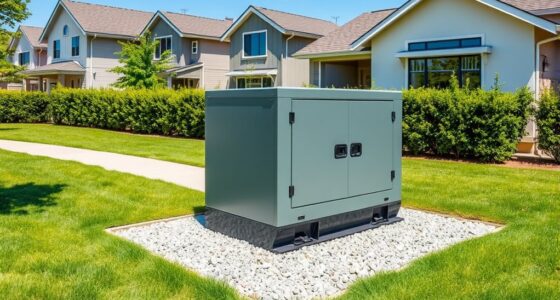
- Generators should be kept outside, away from vents and windows, to prevent CO from seeping into living spaces.
- Detectors are a vital part of safety; combine their use with proper ventilation and responsible generator operation for maximum protection.
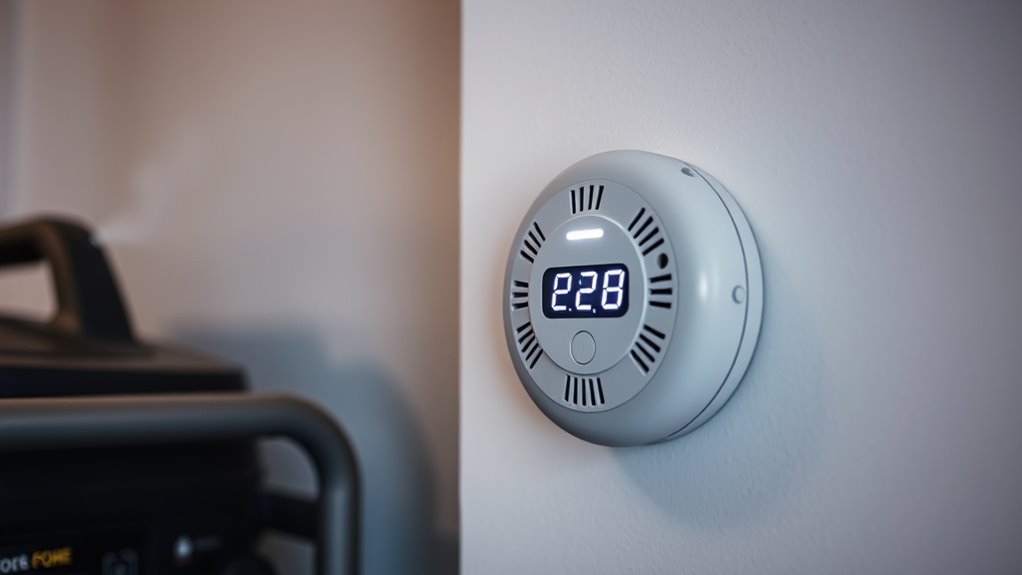
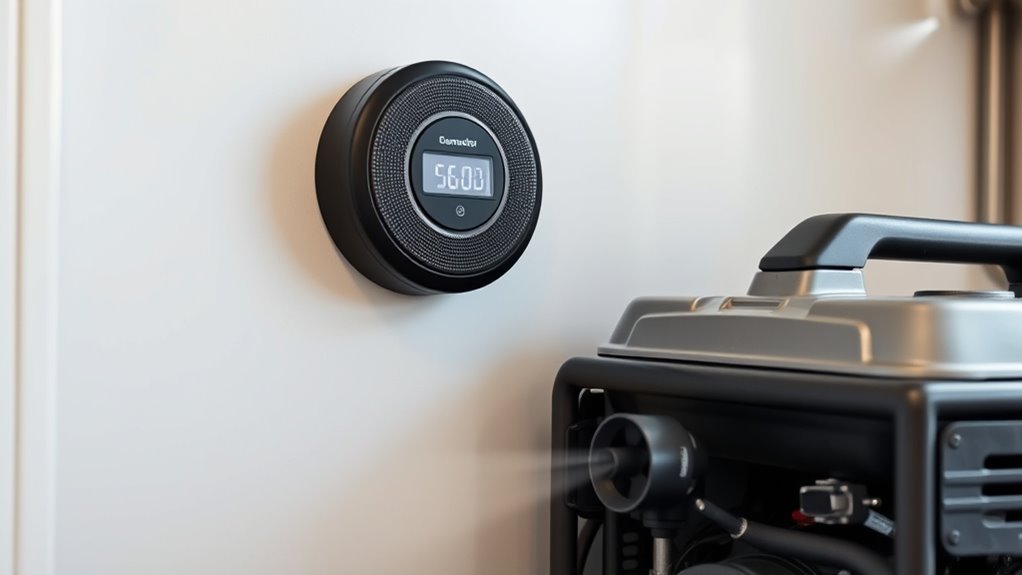
Carbon monoxide detectors are indispensable safety devices that alert you to dangerous levels of this odorless, colorless gas in your home. When you’re using a generator, especially during power outages or outdoor projects, the risk of carbon monoxide buildup increases markedly. Installing detectors properly is essential for maintaining good indoor air quality and safeguarding your safety. You need to think about detector installation as more than just placing a device on a wall; it’s about strategic placement to get accurate readings and early warnings. Detectors should be installed on every level of your home, especially near sleeping areas, so that if CO levels rise overnight, you’ll be alerted immediately. Position them at least five feet above the floor, since carbon monoxide tends to rise, and avoid installing them near vents, windows, or areas with high humidity, which can interfere with their sensitivity.
Proper placement of the detector is key to maximizing its effectiveness. When you install a detector, make sure it’s on a wall or ceiling, following the manufacturer’s instructions. This helps prevent false alarms caused by dust, humidity, or other environmental factors. Regularly check your detectors to confirm they’re functioning correctly—most units have test buttons, and batteries should be replaced annually. Remember, a working detector plays a critical role in safeguarding indoor air quality, especially when your generator is producing exhaust fumes that can seep into your home if ventilation isn’t perfect. Additionally, choosing a detector with Glycolic Acid Benefits can enhance its responsiveness and longevity, ensuring more reliable alerts over time.
In addition to installing the detector correctly, you should also consider the layout of your home and the generator’s placement. Keep your generator outside and far away from windows, doors, and vents to prevent carbon monoxide from entering your living spaces. Even with a detector installed, it’s important to maintain good ventilation and monitor for symptoms of CO poisoning, like headaches, dizziness, or nausea. Your detectors are your first line of defense, but they work best when combined with responsible generator use and good ventilation practices.
Frequently Asked Questions
How Often Should I Test My Carbon Monoxide Detector?
You should test your carbon monoxide detector at least once a month to guarantee proper detector maintenance and reliable operation. Regular testing helps you catch any issues early and keeps your safety device functioning correctly. Additionally, replace the batteries annually or as needed, and follow the manufacturer’s testing frequency recommendations. Doing so ensures your detector stays effective, providing peace of mind during generator use and other activities.
Can Smoke Detectors Also Detect Carbon Monoxide?
Smoke detectors cannot detect carbon monoxide because of their limitations. They’re designed only to sense smoke, not gases. However, combined detectors offer the benefit of alerting you to both smoke and carbon monoxide in one device, providing extra safety. Using a combined detector simplifies your safety setup and guarantees you’re protected from both hazards, giving you peace of mind during power outages or generator use.
What Is the Lifespan of a Typical CO Detector?
You should replace your carbon monoxide detector every 5 to 7 years to guarantee it functions properly. Regular detector maintenance, including testing monthly and cleaning as needed, is essential for safety. Keep an eye on the replacement schedule and follow manufacturer instructions. If your detector is nearing or past its expiration date, upgrade it immediately to stay protected against CO leaks, especially when using generators or other fuel-burning appliances.
Are There Different Types of Carbon Monoxide Detectors?
Yes, there are different types of carbon monoxide detectors. You’ll find electrochemical sensors, which offer high sensor accuracy and are common in residential detectors, and biomimetic sensors, which change color when CO is detected. Power sources vary too, with battery-operated, plug-in, or combination units. Choose one based on your setup, ensuring reliable detection and consistent power to keep you safe.
How Do I Choose the Best Location for Installation?
You should install your carbon monoxide detector at an appropriate height, following placement guidelines for maximum safety. Place it on each level of your home, ideally near sleeping areas, about 5 feet above the floor or on the ceiling for best detection. Avoid placing it near vents, windows, or doors where drafts could interfere. Proper installation height and placement ensure early warning and keep you and your family safe from CO poisoning.
Conclusion
So, are you truly prepared for the unseen danger lurking nearby? Carbon monoxide detectors are your silent guardians, waiting to alert you before it’s too late. Don’t wait until a crisis strikes—install yours today and stay vigilant. Because when it comes to your safety, silence can be deadly. Keep your home protected, stay aware, and never underestimate the power of a small device that could save your life when you least expect it.