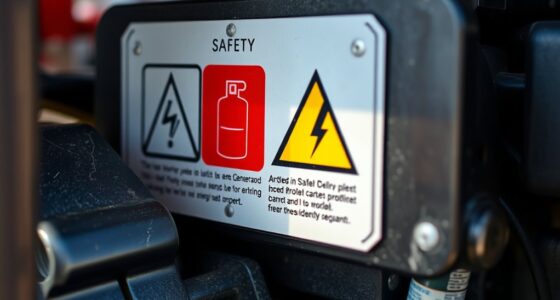
To stay safe with your generator, always operate it outdoors and away from windows or vents to prevent carbon monoxide buildup. Never run it inside a garage, basement, or enclosed space, even with doors open. Proper ventilation allows fumes to disperse into the open air, reducing health risks. Regular maintenance and fuel checks help guarantee safe, efficient operation. Keep learning these safety essentials to protect yourself and loved ones from hidden dangers.
Key Takeaways
- Always operate generators outdoors, away from windows, doors, and vents to prevent CO buildup indoors.
- Never run a generator inside enclosed spaces like garages or basements, even with doors open.
- Ensure proper ventilation to disperse CO fumes safely into open air during generator use.
- Regular maintenance, including checking for leaks and replacing filters, reduces the risk of CO hazards.
- Monitor fuel consumption and avoid overloading to prevent inefficient running and excessive dangerous fumes.
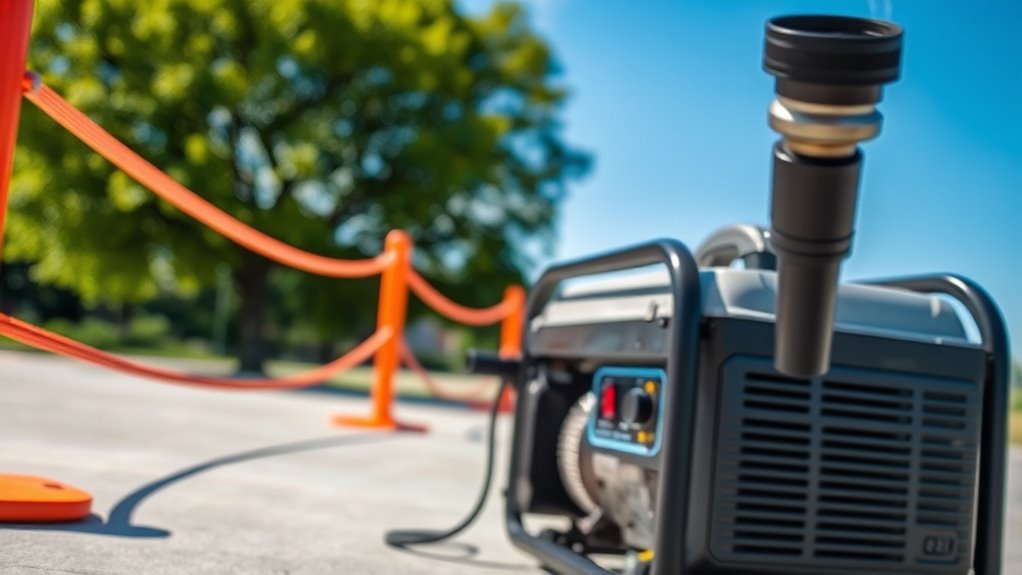
Have you ever considered the safety risks of operating a generator? One of the most dangerous hazards is carbon monoxide poisoning, which can occur silently and quickly if you don’t follow proper ventilation practices. Carbon monoxide (CO) is a colorless, odorless gas produced when a generator burns fuel. Without adequate ventilation, CO can build up in enclosed or partially enclosed spaces, posing serious health risks or even causing death. To prevent this, always guarantee your generator is placed outdoors, away from windows, doors, and vents that could direct fumes inside. Never run a generator indoors, in garages, basements, or enclosed porches, even if the doors are open. Proper ventilation is key to dispersing CO safely into the open air.
Fuel efficiency plays an essential role in safe generator operation, as running a generator excessively or inefficiently can increase the risk of CO buildup and cause unnecessary wear to the machine. You should monitor fuel consumption regularly and avoid overloading the generator, which can lead to incomplete combustion and higher emissions of CO. Keeping an eye on your fuel levels helps you plan refueling stops and prevents running the generator dry, which can cause damage and reduce fuel efficiency. In addition, choosing a generator with a good fuel efficiency rating guarantees you’re using less fuel for the same power output, lowering emissions and the risk of dangerous fumes. Making sure your generator is operating at peak efficiency not only saves you money but also minimizes the risk of hazardous emissions. Regular maintenance also ensures that your generator’s AI-powered safety features**** are functioning correctly, further reducing potential dangers.
Proper maintenance is vital for both safety and fuel efficiency. Follow the manufacturer’s maintenance tips diligently: change oil regularly, clean or replace air filters, and inspect spark plugs for signs of wear. Well-maintained generators operate more efficiently, produce fewer emissions, and are less likely to malfunction or produce dangerous fumes. Also, check for leaks or cracks in fuel lines to prevent leaks that could lead to fire hazards or dangerous fumes. Always store fuel properly in approved containers and keep it away from heat sources or open flames. Before every use, inspect your generator to guarantee all safety features are in place and functioning correctly. Proper maintenance not only extends the lifespan of your generator but helps guarantee it runs smoothly and safely every time you need it.
Top picks for "generator safety basic"
Open Amazon search results for this keyword.
As an affiliate, we earn on qualifying purchases.
Frequently Asked Questions
Can Portable Generators Be Safely Used Indoors?
No, you shouldn’t use portable generators indoors. For indoor safety, always follow ventilation guidelines and keep the generator outdoors in a well-ventilated area. Using a generator inside can lead to dangerous carbon monoxide buildup, which is deadly. Always place it away from windows, doors, and vents, and never run it indoors, including garages or enclosed spaces, to protect yourself and others from poisoning.
What Are the Signs of Carbon Monoxide Poisoning?
You should recognize symptoms of carbon monoxide poisoning like headache, dizziness, weakness, nausea, or confusion. If you notice these signs, get to fresh air immediately and seek emergency response. Don’t ignore early symptoms—they can escalate quickly, leading to unconsciousness or death. Always prioritize symptom recognition to protect yourself and others. Ventilate the area, turn off the generator, and call emergency services right away for proper medical assistance.
How Often Should Generator Ventilation Systems Be Inspected?
Did you know that improper generator ventilation can cause deadly carbon monoxide buildup? You should inspect your ventilation system regularly, ideally every three months, to guarantee it’s functioning properly. Consistent ventilation system maintenance and inspection frequency are vital for safety, especially during prolonged generator use. By staying vigilant and checking your system often, you reduce the risk of CO poisoning and keep your environment safe.
Are There Specific Locations Best Suited for Generator Placement?
You should place your generator outdoors in a well-ventilated area, away from windows, vents, and doors. Choose a location with good airflow to meet ventilation requirements and prevent dangerous carbon monoxide buildup. Keep it on a stable, level surface, and make certain it’s at least 20 feet from your home or any enclosed space. Proper outdoor placement minimizes risks and guarantees safe operation during power outages.
What Safety Gear Should Be Worn When Operating a Generator?
When operating a generator, you should wear proper personal protective equipment and safety clothing to stay safe. Always don sturdy gloves, safety glasses, and hearing protection to shield yourself from sparks, loud noise, and debris. Wearing a long-sleeved shirt and durable pants helps protect your skin. These safety measures make sure you’re prepared and minimize risks, allowing you to focus on the task while keeping yourself protected from potential hazards.
Conclusion
Remember, a generator can power your home but also pose serious risks if misused. Think of it as a double-edged sword—bringing convenience but also danger from carbon monoxide if ventilation isn’t maintained. Stay vigilant, keep it outdoors, and never run it indoors. Because safety isn’t just about avoiding harm; it’s about protecting what matters most—your loved ones. Use your generator wisely, and you’ll enjoy peace of mind alongside reliable power.