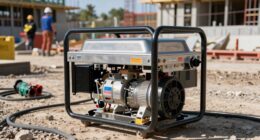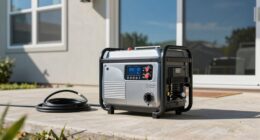
When using a generator in rain or wet conditions, make certain it’s placed on a dry, non-conductive surface and kept away from water sources. Always connect it to proper grounding systems as per manufacturer instructions, and use outdoor-rated extension cords designed for moisture. Avoid operating portable units outdoors in heavy rain unless protected by a canopy. Following these safety measures helps prevent shocks and damage—stay tuned to learn essential tips for safe operation in wet weather.
Key Takeaways
- Avoid operating portable generators outdoors in rain unless they are covered and protected from moisture.
- Use outdoor-rated, moisture-resistant extension cords and keep all connections dry and elevated.
- Ensure proper grounding of generators according to manufacturer instructions to prevent electrical shocks.
- Place portable generators on dry, non-conductive surfaces away from water sources and puddles.
- Monitor weather forecasts and postpone use during heavy rain or thunderstorms to maintain safety.
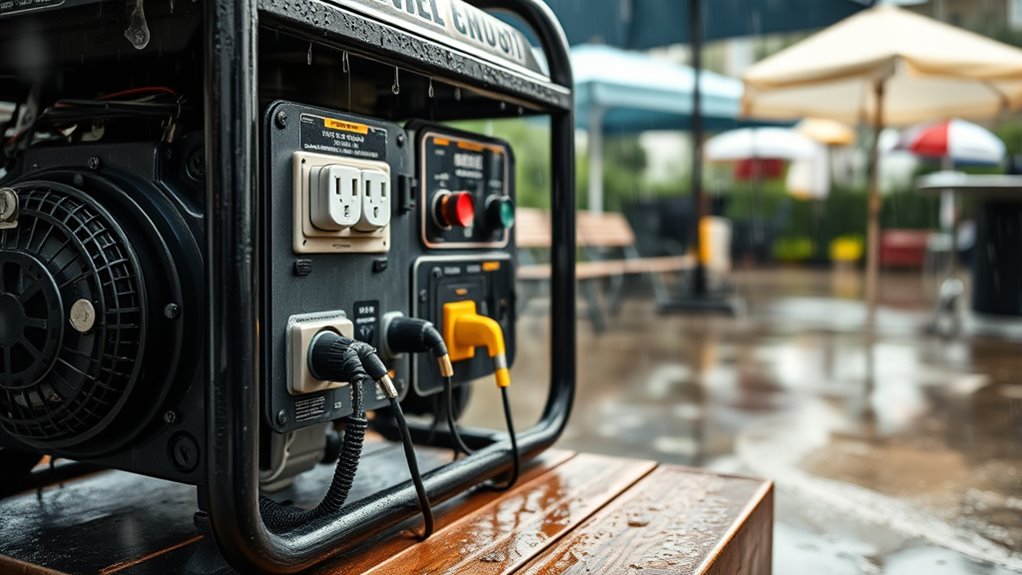
Rain and wet conditions can considerably increase the risks associated with using a generator. When moisture is present, the danger of electrical shock or short circuits rises dramatically. To stay safe, you need to understand proper grounding techniques and recognize the differences between portable and standby generators. Grounding is essential because it provides a safe path for electrical faults, preventing shocks and damage. Whether you’re using a portable unit or a standby generator, grounding techniques should never be overlooked, especially in wet weather. Portable generators typically require you to connect a grounding rod or grounding wire to an appropriate grounding point, ensuring any stray electrical current is safely directed into the ground. Standby generators, on the other hand, are usually grounded through their built-in systems, but it’s still crucial to verify proper grounding procedures according to the manufacturer’s instructions. Proper grounding not only reduces the risk of electric shock but also helps protect your appliances and the generator itself from electrical surges caused by moisture or lightning. Additionally, understanding the role of insulation and protective covers can further enhance safety during operation in adverse weather conditions.
Proper grounding is crucial in wet weather to prevent shocks and protect appliances and generators.
When it comes to choosing between portable and standby generators, your decision can influence how you manage safety in rainy conditions. Portable generators are versatile and can be moved around, but they require more careful handling regarding grounding and placement. You must keep them on a dry, non-conductive surface like a concrete slab or wooden platform and away from water, puddles, or wet grass. Never operate a portable generator in the rain or in wet conditions unless it’s fully protected by a canopy designed for outdoor use. Using extension cords in wet weather also increases risks, so ensure they are rated for outdoor use and kept off the ground as much as possible.
Standby generators are permanently installed outside, often with weatherproof enclosures, making them safer options in wet weather. They are connected directly to your home’s electrical system and have built-in grounding systems, which reduces the risk of shocks during rain or thunderstorms. However, you still need to ensure the installation is done correctly by a qualified professional to confirm proper grounding and adherence to safety standards.
In any case, always follow the manufacturer’s guidelines and local electrical codes when operating a generator in wet conditions. Keep a close eye on weather forecasts, and if heavy rain or thunderstorms are predicted, consider postponing generator use or ensuring all connections and grounding are secure. Remember, safety should always be your top priority when dealing with electrical equipment outdoors, especially in wet or rainy weather.
Top picks for "safe generator rain"
Open Amazon search results for this keyword.
As an affiliate, we earn on qualifying purchases.
Frequently Asked Questions
Can I Operate a Generator in Heavy Rain Without Protection?
You shouldn’t operate a generator in heavy rain without protection, as it’s unsafe and could cause electrical shock. Use weatherproofing tips like a covered enclosure or canopy to keep it dry. Always have an emergency shutdown procedure in place, and never bypass safety features. Ensuring proper weatherproofing and knowing how to shut down your generator quickly keeps you safe during wet conditions.
What Are the Signs of Electrical Short Circuits Caused by Moisture?
You’ll notice signs of electrical short circuits caused by moisture, such as sparks, smoke, or a burning smell. Corrosion from moisture can cause electrical malfunction, leading to flickering lights or equipment failure. You might also see visible corrosion or rust on connectors and wires. If you spot these signs, turn off the power immediately, as continued use can cause further damage or pose safety hazards.
How Often Should I Inspect My Generator for Water Damage?
As rain drips from nearby trees, you realize water intrusion detection is vital. You should inspect your generator for water damage at least once a month, especially after storms or heavy rain. Regular generator maintenance helps catch signs of water intrusion early, preventing costly damage. Keep an eye out for rust, corrosion, or moisture inside the housing, and make certain all seals are intact to protect your generator from water.
Is It Safe to Store a Generator Outside During Wet Weather?
Storing your generator outside during wet weather isn’t safe, as it exposes the equipment to moisture that can cause damage or electrical hazards. For outdoor safety, always keep your generator in a covered, dry area or use a weatherproof enclosure. Proper generator storage protects it from rain and humidity, ensuring reliable operation and reducing the risk of electrical issues or corrosion. Stay vigilant to keep your generator safe and functional.
What Precautions Should I Take When Starting a Wet Generator?
When starting a wet generator, guarantee grounding safety by verifying it’s properly grounded to prevent electrical shocks. Keep moisture prevention in mind by wiping off any water or moisture from the generator’s surfaces before starting. Always wear rubber-soled shoes and dry gloves, and avoid operating the generator if it’s still wet. These precautions help protect you from electrical hazards and ensure safe operation in wet conditions.
Conclusion
Remember, your generator is like a trusted companion that must be cared for carefully, especially in rain and wet conditions. Just as a lighthouse guides ships safely through storms, proper precautions guide you away from danger. When you respect its power and treat it with caution, you guarantee safety for yourself and others. Keep the storm’s chaos outside, and let your vigilance be the steady light that keeps everyone safe, no matter how wild the weather gets.