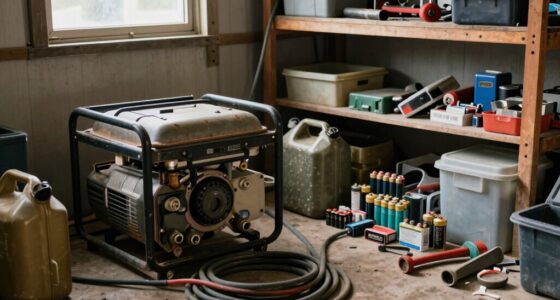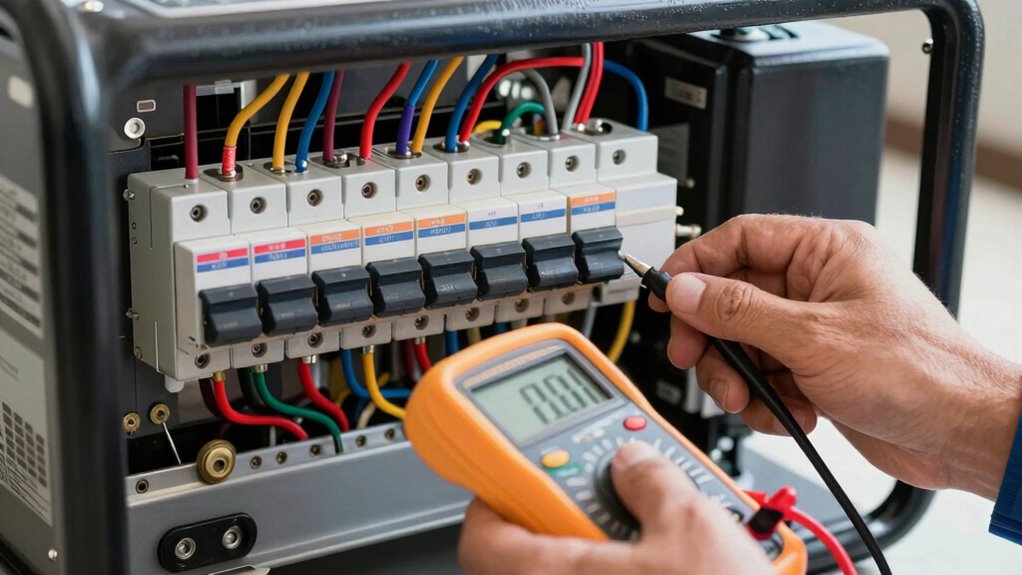

To diagnose repeated breaker trips on your portable generator, start by disconnecting all devices and reconnecting them gradually to identify overloading. Check for electrical surges by observing sudden voltage increases, which may be caused by faulty wiring or poor grounding. Inspect internal components like brushes or regulators for wear, and guarantee connections are secure. Regular maintenance can prevent issues, but if trips continue, you’ll discover essential troubleshooting steps to pinpoint the causes in the next sections.

Get backup power and energy gear delivered free with Prime
- Fast, free delivery on millions of items
- Prime Video, Amazon Music and more included
- Member-only deals all year
Key Takeaways
- Gradually reconnect devices to identify if a specific load causes breaker trips.
- Check for power surges using a multimeter or surge protector during operation.
- Inspect the generator’s internal components for wear, corrosion, or loose connections.
- Ensure proper grounding and secure wiring to prevent electrical irregularities.
- Perform regular maintenance and consult a professional if issues persist after troubleshooting.
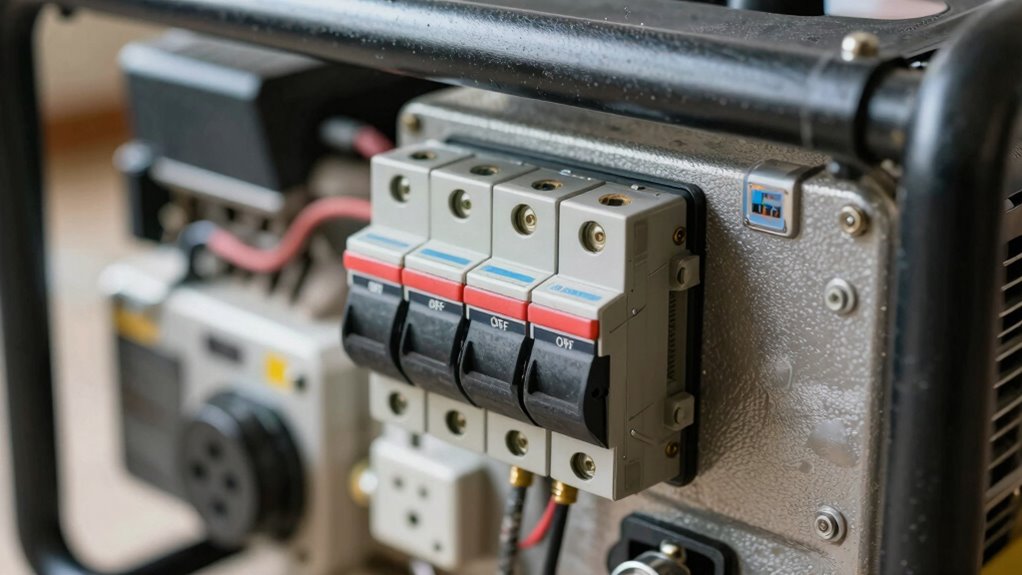
Have you ever wondered why your portable generator keeps tripping the circuit breaker? It can be frustrating, especially when you’re relying on it to power essential tools or appliances. One common reason is a power surge, which happens when there’s a sudden spike in electrical current. These surges can overload your generator’s circuits, prompting the breaker to trip as a safety measure. Your breaker is designed with overload protection to prevent damage to the generator and connected devices. When the current exceeds the breaker’s rated capacity, it automatically cuts off power. This safety feature is vital, but frequent trips indicate there’s an underlying issue that needs addressing.
To diagnose the cause, start by checking the load you’re putting on the generator. Too many devices running simultaneously can easily overload it, especially if they draw high current. For example, running multiple power tools or appliances with high startup currents can quickly exceed the generator’s capacity. To test this, disconnect all devices and then gradually reconnect them, one at a time. If the breaker trips again when a specific device is connected, that device may be drawing more power than your generator can handle, or it might be faulty.
Next, inspect the power surge aspect. Power surges can occur from sudden electrical faults or when devices with large inrush currents turn on. If your generator experiences frequent surges, it might be due to faulty wiring, poor grounding, or unstable power sources. Using a multimeter or surge protector can help identify if surges are happening during operation. If surges are detected, you’ll want to eliminate the source or add surge protection devices to safeguard your generator and connected equipment. Proper grounding is also essential, as grounding issues can significantly contribute to electrical irregularities. Additionally, fluctuations in the power supply from your source can cause your generator to trip, so ensuring a stable input is crucial. Regular maintenance and inspections can also help detect early signs of electrical component wear or damage, preventing unexpected trips.
Another factor to think about is the health of your generator. Over time, components like brushes, coils, or voltage regulators can wear out or malfunction, causing unstable output and trips. If your generator is old or has been heavily used, it might be time for maintenance or repairs. Check for signs of damage, loose connections, or corrosion, and refer to the manufacturer’s guidelines for troubleshooting or professional servicing. Ensuring the internal electrical components are functioning correctly can greatly reduce the risk of recurring issues.
Finally, always verify your generator is properly grounded and that all connections are secure. Faulty grounding or loose wiring can cause irregularities in power flow, leading to trips. Regular maintenance, correct loading, and avoiding sudden device startups will help prevent unnecessary trips and prolong your generator’s lifespan. If after these checks the problem persists, consulting a professional technician is the best next step.
Products Worth Considering

Ring Alarm 14-Piece Wireless Security System Kit

Bose SoundLink Flex Bluetooth Speaker (2nd Gen), Portable Waterproof Speaker, Black

Levoit Eleva 300X HEPA Air Purifier for Home and Bedroom
As an affiliate, we earn on qualifying purchases.
Frequently Asked Questions
Can a Faulty Ground Fault Circuit Interrupter Cause Breaker Trips?
Yes, a faulty ground fault circuit interrupter (GFCI) can cause breaker trips. If the GFCI isn’t functioning properly, it may falsely detect a ground fault or fail to trip when needed, disrupting circuit protection. This can lead to repeated breaker trips to prevent potential hazards. To fix this, test and replace the GFCI if it’s faulty, ensuring your generator’s ground fault protection works correctly and maintains safe operation.
How Often Should I Inspect My Generator’s Breaker for Wear?
You should inspect your generator’s breaker for wear during regular breaker maintenance, ideally every three to six months, depending on usage. During wear inspection, look for signs like corrosion, burns, or looseness. Frequent trips might indicate a worn or damaged breaker. Regular maintenance guarantees your generator runs safely and efficiently, preventing unexpected failures. If you notice any issues, replace the breaker promptly to avoid further electrical problems.
Are There Specific Environmental Conditions That Increase Breaker Trip Frequency?
Yes, weather conditions and humidity levels can increase breaker trip frequency. Excessive heat or cold can cause electrical components to expand or contract, stressing the breaker. High humidity creates moisture that can lead to corrosion or short circuits, triggering trips. You should store your generator in a dry, sheltered area and avoid operating it in extreme weather to prevent unnecessary breaker trips and guarantee safe, reliable performance.
Can Using Extension Cords Affect Breaker Trip Frequency?
Using extension cords can increase breaker trip frequency because they may cause power surges or voltage drops, stressing your generator’s system. Poor-quality or long cords can create resistance, leading to inconsistent power flow and triggering the breaker to trip as a safety measure. To avoid this, use the right gauge extension cords, keep connections secure, and limit high-power devices to prevent overloads and reduce breaker trips.
What Safety Precautions Should I Take Before Inspecting the Breaker?
You should definitely wear personal protective equipment like gloves and safety glasses before inspecting the breaker, as this safeguards you from potential electrical shocks. Confirm that the generator is unplugged and turned off to prevent accidental energization. Follow proper testing procedures, such as using a multimeter to check for continuity or faults, ensuring your inspection is safe and accurate. Taking these precautions helps you avoid injury and diagnose issues effectively.
Conclusion
If your portable generator keeps tripping the breaker, don’t ignore the signs. For instance, imagine you’re running your tools and suddenly the breaker trips repeatedly—this signals an underlying problem like overload or a faulty component. By diagnosing these issues early, you prevent damage and guarantee safe operation. Always inspect for loose connections, overloads, or damaged parts. Taking quick action can save you time, money, and the frustration of unexpected power loss during critical tasks.