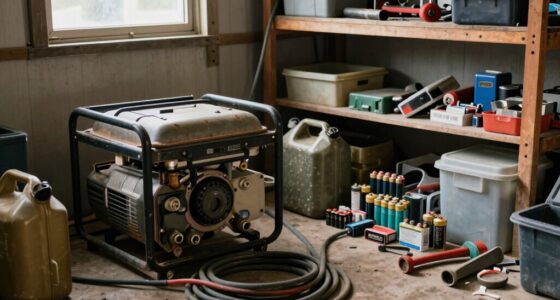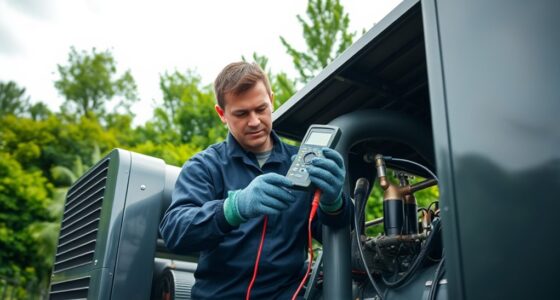
Generator surging occurs when your engine speed fluctuates, often caused by clogged filters, fuel quality issues, overloading, or a faulty governor system. To fix it, check and replace air and fuel filters, make certain your load stays within limits, and calibrate the governor. Regular maintenance and proper load management help prevent surges. If problems persist, professional help is a good idea, and there’s more to uncover if you explore further.
Open a free Amazon Business account
Business pricing, bulk buying and tax-exempt orders.
As an affiliate, we earn on qualifying purchases.
Key Takeaways
- Surging is caused by issues like dirty filters, faulty carburetors, or ignition problems affecting engine stability.
- Overloading the generator or fluctuating loads can trigger surging due to capacity exceedance.
- Regular maintenance, including cleaning filters and inspecting the fuel system, helps prevent surging.
- A properly calibrated governor maintains consistent engine speed and reduces surging incidents.
- Persistent surging may require professional diagnosis to identify internal or ignition system faults.

Have you ever experienced your generator surging unexpectedly? It can be unsettling, especially when you’re relying on it for power. Surging usually means that the generator’s output fluctuates, causing the engine to speed up and slow down erratically. This not only affects the stability of your power supply but can also lead to more serious issues if left unaddressed. One of the key factors to think about is fuel efficiency—an inefficient generator consumes more fuel, which can contribute to surging problems. Making sure your generator runs efficiently helps maintain a steady output and reduces the likelihood of surging. To do this, regular maintenance is essential. Basic maintenance tips include checking and replacing air filters, spark plugs, and fuel filters as needed. Dirty or clogged filters restrict airflow and fuel flow, causing the engine to struggle and potentially surge. Keeping the fuel system clean and free of debris is equally important; stale or contaminated fuel can cause inconsistent combustion, leading to surges. You should also inspect the carburetor periodically because a clogged or improperly adjusted carburetor can disturb the air-fuel mixture, resulting in fluctuating engine speeds. Properly maintaining these components ensures the generator runs smoothly and efficiently. Additionally, understanding the importance of projector technology can help you better grasp how stable power supply is crucial for sensitive electronic equipment.
Another common cause of surging relates to the load your generator is handling. If the load exceeds the generator’s capacity or fluctuates suddenly, it can cause the engine to surge. To prevent this, always operate within the manufacturer’s recommended load limits and avoid connecting too many appliances at once. Using a load tester can help you understand your generator’s capacity and think about you’re not overloading it. Additionally, check the governor system, which controls engine speed, to make sure it’s functioning correctly. An improperly calibrated governor can cause the engine to speed up or slow down unpredictably, resulting in surging. If you notice surging persists despite routine maintenance and load management, it might be a sign of a more complex issue, such as an ignition system problem or internal engine wear. In such cases, consulting a professional technician can save you time and prevent further damage.
generator air filter replacement
As an affiliate, we earn on qualifying purchases.
As an affiliate, we earn on qualifying purchases.
Frequently Asked Questions
Can Generator Surging Damage My Appliance?
Generator surging can potentially damage your appliance if you don’t perform regular generator maintenance. Surging indicates inconsistent power output, which might cause electrical fluctuations harmful to sensitive devices. To guarantee appliance safety, it’s essential to address surging promptly by maintaining your generator and using surge protectors. This keeps your appliances safe and prolongs their lifespan, avoiding costly repairs caused by unstable power supply.
How Often Should I Check My Generator for Surging?
Think of your generator as a vigilant guardian; you need to check it regularly to keep it strong. You should inspect for surging at least once a month, especially before storms or heavy use. Regular maintenance frequency helps catch issues early. Use troubleshooting tips like listening for irregular sounds or voltage fluctuations. By staying proactive, you make certain your generator remains reliable, protecting your home and appliances from unexpected surges.
Is Surging More Common in Certain Types of Generators?
Surging is more common in portable and older generators, especially when fuel quality is poor or load fluctuations occur suddenly. You might notice more surging if your generator isn’t running on clean, stable fuel or if you frequently change the load. To minimize surging, make certain your fuel is fresh and consistent, and avoid sudden load changes. Regular maintenance helps keep your generator running smoothly and reduces surging risks.
Can Surging Be Caused by Environmental Factors?
Think of your generator as a sailboat, sensitive to the wind. Environmental factors like weather impact and altitude effects can cause surging, as changes in air temperature, humidity, or high elevation alter fuel combustion and airflow. These conditions can make your generator fluctuate unexpectedly, much like a boat buffeted by gusts. Staying aware of weather patterns and adjusting your generator’s settings can help keep it steady, even when the environment shifts.
What Safety Precautions Should I Take During Surging Episodes?
During surging episodes, you should prioritize safety by turning off the generator if possible. Keep a fire extinguisher nearby and make sure it’s accessible in case of sparks or fire. Wear personal protective equipment like gloves and safety glasses to protect yourself from hot surfaces or debris. Avoid touching the generator’s parts until it cools down, and stay alert for any abnormal noises or smoke. Your safety comes first.
fuel filter for portable generator
As an affiliate, we earn on qualifying purchases.
As an affiliate, we earn on qualifying purchases.
Conclusion
Just as the steady rhythm of a heartbeat guarantees life’s harmony, addressing generator surging keeps your power running smoothly. By understanding the causes and applying the right solutions, you prevent chaos and restore balance. Think of it as tending to a finely tuned instrument—care and attention prevent discord. Stay vigilant and proactive, and you’ll keep your generator humming like a well-orchestrated symphony, echoing the timeless wisdom that maintenance is the key to enduring performance.
As an affiliate, we earn on qualifying purchases.
As an affiliate, we earn on qualifying purchases.
Fall yard work Picks
leaf blowers
As an affiliate, we earn on qualifying purchases.