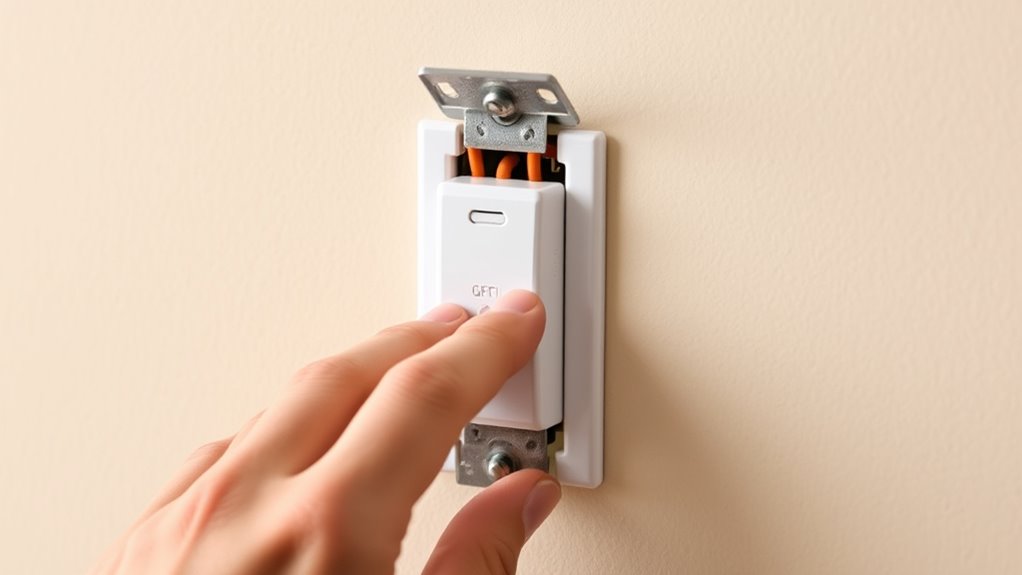

When your GFCI outlet trips, turn off the power at the breaker and carefully check all wiring connections for looseness or damage. Tighten or replace faulty wiring if needed. After confirming everything is secure, turn the power back on and press the reset button firmly until it clicks. If it still trips immediately, you may need to replace the GFCI or seek professional help. Continuing with these steps will guide you through proper troubleshooting and safe restoration.

Get backup power and energy gear delivered free — and shop member deals
- Fast, free delivery on millions of items
- Access to Prime Big Deal Days deals on October 6–7
- Prime Video, Amazon Music and more included
Key Takeaways
- Turn off the circuit breaker before inspecting or working on the GFCI outlet.
- Check wiring connections for looseness, corrosion, or damage and tighten if needed.
- Reset the GFCI by pressing the reset button firmly until it clicks.
- Test the GFCI with a tester or multimeter to confirm proper function after resetting.
- If it trips again immediately, replace the GFCI or consult a professional electrician for further diagnosis.
If your GFCI outlet trips frequently or stops working, restoring it can often resolve the issue without needing a replacement. The first step is to understand why it tripped. GFCIs are designed to protect you from electrical shocks by detecting ground faults. When they trip, it’s usually an indication of a problem somewhere in the circuit. Before attempting to reset the outlet, it’s essential to perform circuit testing to identify potential issues and guarantee safety. This involves turning off power to the outlet at the circuit breaker and inspecting for visible damage or signs of wear. Always follow safety precautions: wear insulated gloves, use a voltage tester to confirm the circuit is de-energized, and never work on live wires.
Once you’ve confirmed the power is off, remove the GFCI outlet cover to access the wiring. Carefully check the connections for looseness or corrosion, as loose wiring can cause the GFCI to trip repeatedly. After inspecting and tightening any loose connections, it’s time to perform circuit testing. Turn the circuit breaker back on and use a GFCI tester or a multimeter set to measure voltage to verify if the outlet functions correctly. If the GFCI still trips during testing, there may be an underlying wiring problem or a faulty GFCI device itself. Regular maintenance and understanding of electrical safety can help prevent future issues.
Remove the cover, check connections, and retest to troubleshoot GFCI trips effectively.
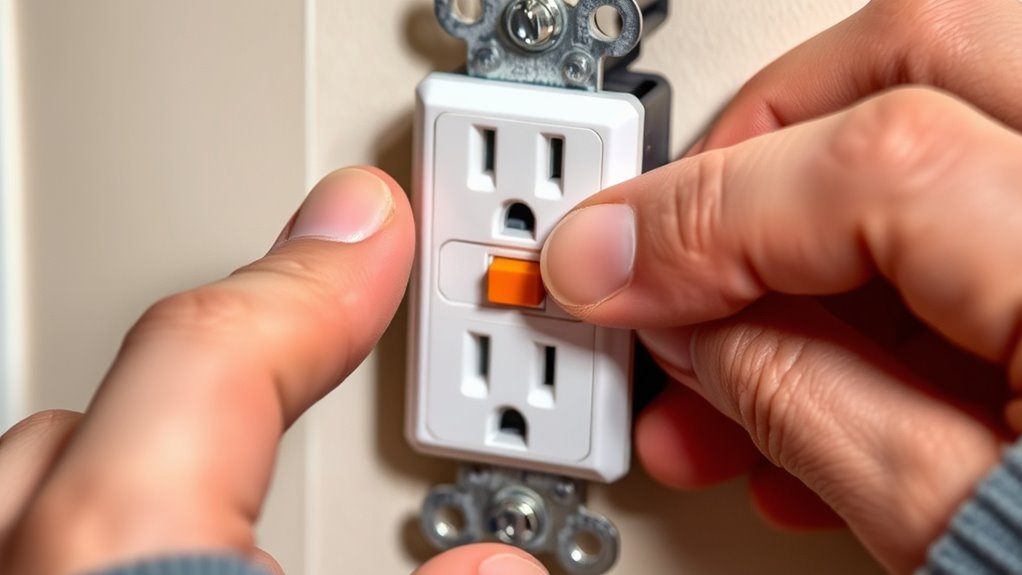
When resetting the GFCI, press the reset button firmly until it clicks into place. If it doesn’t reset or trips immediately after resetting, turn off the power again and double-check the wiring. Remember, safety precautions are paramount—if you’re unsure about wiring connections or if the outlet continues to trip after troubleshooting, it’s best to consult a professional electrician. They can perform more thorough circuit testing and diagnose hidden issues such as ground faults or damaged wiring that might not be visible.
In some cases, the GFCI may be faulty and need replacing. Before replacing, confirm that the circuit is safe and that you have the correct replacement outlet. Follow the manufacturer’s instructions carefully when installing the new GFCI, ensuring all wiring is properly connected and secure. Always test the new outlet with a GFCI tester to verify it functions correctly and trips when expected. Restoring a GFCI outlet after a trip or fault is often straightforward, but it requires careful circuit testing and adherence to safety precautions. Taking these steps can help you restore functionality while keeping you safe from electrical hazards.
As an affiliate, we earn on qualifying purchases.
Frequently Asked Questions
How Often Should I Test My GFCI Outlets?
You should test your GFCI outlets at least once a month to guarantee they’re functioning properly. Perform a quick ground fault testing by pressing the “Test” button, then press “Reset” to restore power. During outlet inspection, check for any signs of damage or wear. Regular testing helps catch issues early, keeping you safe from electrical faults and ensuring your GFCI outlets provide reliable protection.
Can I Reset a GFCI Outlet With a Breaker Trip?
Yes, you can reset a GFCI outlet with a circuit breaker trip. First, identify if a ground fault or overload caused the trip. Turn off the circuit breaker, then press the reset button on the GFCI outlet. Once reset, turn the breaker back on. If it trips again, there might be a ground fault or wiring issue that needs professional attention. Always verify safety when working with electrical systems.
What Causes GFCI Outlets to Trip Frequently?
You might notice your GFCI outlets trip frequently due to ground faults, electrical overloads, or wiring issues. When too much current flows through the circuit, or if there’s a ground fault, the GFCI detects the imbalance and trips to protect you. You’ll want to check for damaged cords, faulty appliances, or wiring problems, and avoid overloading circuits to prevent repeated trips and make certain of safety.
Is It Safe to Reset a GFCI Outlet During a Storm?
During a storm, it’s safest not to reset a GFCI outlet because electrical hazards could be present. Storm safety is vital, and resetting the outlet might expose you to shocks or further damage if there’s a hidden fault. Wait until the storm passes, and make sure power is stable before resetting. If you’re unsure, consult a qualified electrician to handle electrical hazards safely and protect yourself during stormy conditions.
Can Water Damage Affect the Gfci’s Operation?
Water intrusion can definitely affect your GFCI’s operation. When water gets inside, it can cause corrosion effects on the internal components, which may lead to malfunction or false trips. Even small amounts of moisture can compromise the outlet’s safety and reliability. If you suspect water damage, it’s best to have a qualified electrician inspect and replace the GFCI to make certain it works properly and keeps you safe.
As an affiliate, we earn on qualifying purchases.
Conclusion
Restoring a GFCI outlet after a trip is like resetting a compass to find true north—you just need to follow the steps calmly and carefully. Once you push the reset button, the outlet’s safety feature is back in place, ready to protect you again. Remember, if it trips repeatedly, it’s a sign to check for underlying issues. Think of it as the outlet’s way of waving a red flag—listen to it and stay safe.
multimeter for electrical testing
As an affiliate, we earn on qualifying purchases.
As an affiliate, we earn on qualifying purchases.
As an affiliate, we earn on qualifying purchases.
Fall Picks
fall essentials
As an affiliate, we earn on qualifying purchases.