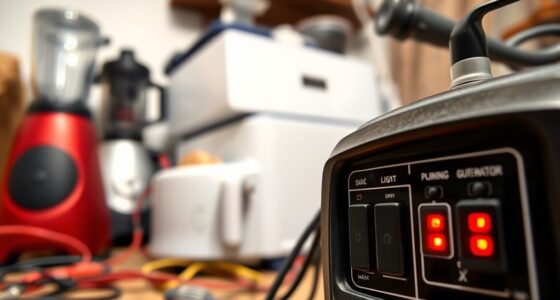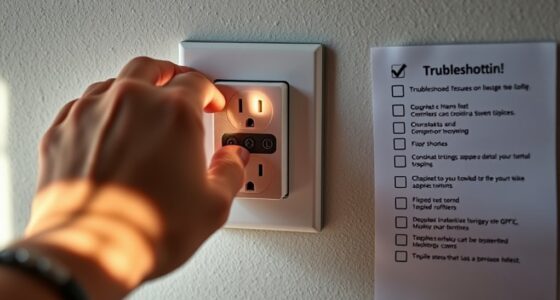

To reset overload and GFCI breakers on your portable generator, turn the breaker switch to “off,” unplug all devices, and wait a few seconds to allow the breaker to disengage. Then, firmly flip the switch back to “on” and reconnect devices gradually while monitoring for issues. make certain safety precautions like dry hands and protective gear. Continuing with proper troubleshooting steps will help you maintain safe operation and prevent future trips.
Key Takeaways
- Turn off and unplug all connected devices before resetting the breaker to reduce load and prevent damage.
- Switch the breaker to “off,” wait a few seconds to allow internal disengagement, then flip it back to “on” firmly.
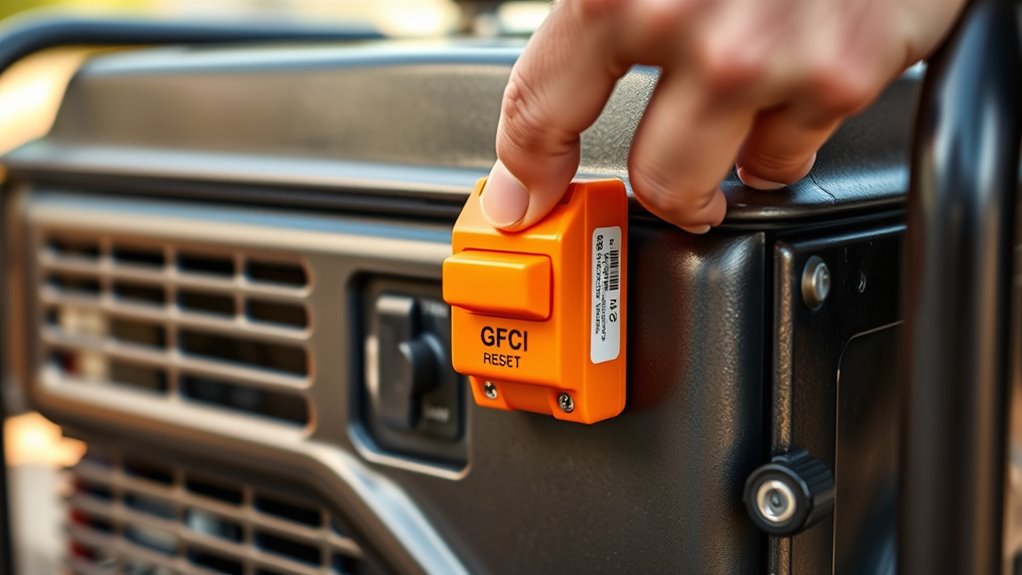
- For GFCI breakers, press the reset button after addressing any ground fault or moisture issues.
- Inspect wiring and connected devices for faults if the breaker trips immediately upon resetting.
- Regularly maintain and test breakers to ensure safe operation and prevent recurrent trips.
If your portable generator’s overload or GFCI breaker trips, it’s important to reset it properly to restore power safely. Ignoring the cause or rushing the process can lead to equipment damage or personal injury. Before attempting a reset, you should understand the significance of breaker maintenance and always follow safety precautions. Regularly inspecting and maintaining your generator’s breakers can prevent many issues, ensuring they function correctly when needed. Proper breaker maintenance involves cleaning, checking for corrosion, and testing the breakers periodically to confirm they trip at the correct thresholds. This helps avoid unexpected trips and ensures that when a genuine overload occurs, the breaker will activate to protect your equipment and you.
When a breaker trips, the first step is to turn off and unplug any connected devices. This reduces the load on the generator and minimizes the risk of causing further issues. Before resetting, take a moment to identify the reason behind the trip. Overloads often happen when too many devices draw power simultaneously or if a device malfunctions. GFCI trips usually indicate ground faults, which could be caused by damaged wiring or moisture. Address these underlying problems before resetting the breaker to prevent recurrent trips. Always wear appropriate safety gear, such as gloves and eye protection, and ensure your hands are dry when working with electrical components. Additionally, understanding the role of contrast ratio in your setup can help you better diagnose visual issues caused by electrical fluctuations.
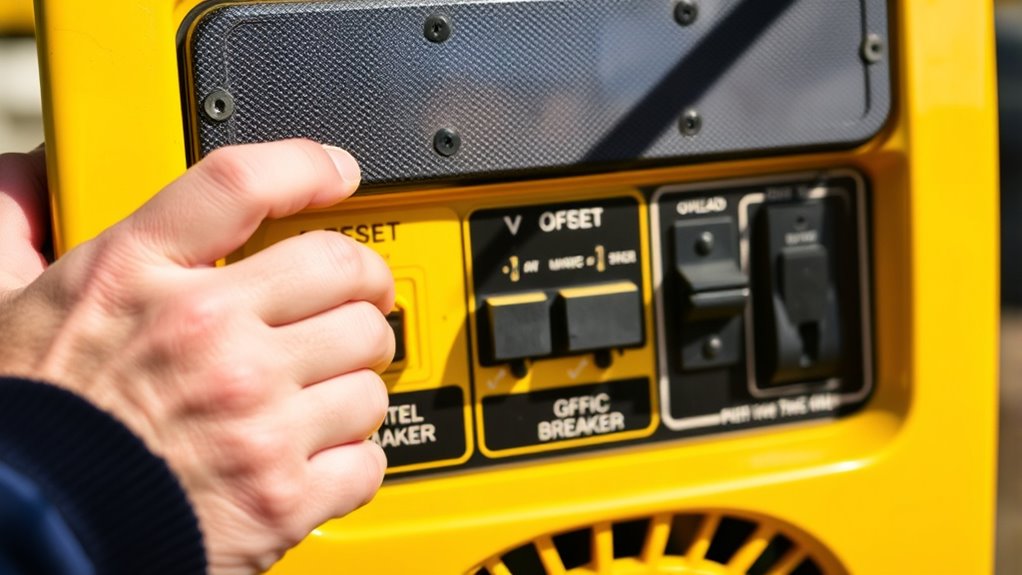
To reset the breaker, switch it to the “off” position first, then wait a few seconds. This brief pause allows the breaker to fully disengage and reset internally. Next, flip the breaker back to the “on” position firmly. If it stays on and doesn’t trip immediately, you can reconnect your devices gradually, monitoring for any signs of overload or fault. If the breaker trips again right after resetting, don’t attempt to bypass or force it. Instead, stop and troubleshoot the cause, inspecting your wiring and connected devices for faults. Continually resetting a breaker without addressing the root issue can cause it to weaken or fail prematurely.
Frequently Asked Questions
Can Resetting Breakers Damage My Generator?
Resetting breakers generally won’t damage your generator if you follow proper breaker safety and maintenance procedures. However, if you repeatedly reset a breaker without addressing the underlying issue, you risk overheating or further damage. Always identify the cause of a breaker trip, ensure your generator is well-maintained, and avoid overloading it. Proper generator maintenance and breaker safety practices help prevent damage and keep your generator running smoothly.
How Often Should I Reset Overload Breakers?
You should reset overload breakers only when necessary, ideally during routine generator maintenance or if you notice the breaker tripping frequently. Avoid resetting repeatedly without addressing the cause, as it could indicate underlying issues needing breaker troubleshooting. Typically, if the breaker trips once, investigate and resolve the problem before resetting. Regularly checking your generator and understanding breaker functions help prevent damage and ensure reliable performance.
Are GFCI Breakers Safer Than Standard Breakers?
GFCI breakers are safer than standard breakers because they detect ground faults, which are electrical leaks that could cause shocks or fires. When a ground fault occurs, GFCI breakers quickly shut off the circuit, protecting you from potential harm and improving overall circuit safety. This rapid response makes GFCI breakers especially valuable in wet or outdoor environments where ground faults are more likely, ensuring you stay safe during generator use.
What Causes Frequent GFCI Trips?
Ever wonder why your GFCI breaker keeps tripping? It’s usually caused by a ground fault, where electrical current leaks somewhere it shouldn’t. This triggers the breaker to trip as a safety measure. Sometimes, moisture or damaged wiring creates these faults, making your GFCI sensitive to minor issues. Regularly check for damaged cords or water exposure, and avoid overloading circuits, so your breaker stays steady instead of constantly tripping.
Do All Portable Generators Have Resettable Breakers?
Not all portable generators have resettable breakers, but many do for safety and convenience. When doing generator maintenance, check the breaker types included—some have resettable GFCI or overload breakers, while others might require manual replacement. Always read your generator’s manual to understand its breaker system, and make certain you know how to reset or replace breakers properly to keep your generator running safely and efficiently.
Conclusion
Think of your portable generator like a trusty steed, ready to carry you through power needs. When overload or GFCI breakers trip, it’s like the horse pausing for a breather. Just as you’d gently guide your horse back to work, resetting those breakers restores your generator’s strength. With patience and care, you keep your power flowing smoothly, riding confidently into your next adventure. Remember, a well-maintained generator is your reliable companion on every journey.