
Using generators on construction sites is essential for providing reliable power and ensuring safety when electrical access is limited or unavailable. Proper placement, noise control, and regular maintenance help minimize disturbances and extend equipment life. Always size your generator correctly and follow safety protocols to prevent accidents. Effective use of noise barriers and scheduling can reduce environmental impact. Keep exploring to discover more tips on maximizing generator safety and efficiency on your project.
Key Takeaways
- Ensure proper generator placement away from work areas and residential zones to prevent noise and safety hazards.
- Regularly inspect and maintain generators to ensure safe, reliable operation and prevent electrical faults.
- Use appropriate grounding and circuit protection to avoid electrical shocks and equipment damage.
- Implement noise mitigation measures like enclosures and barriers to protect workers and nearby communities.
- Conduct operator training on safe startup, shutdown, and emergency procedures for generator use.
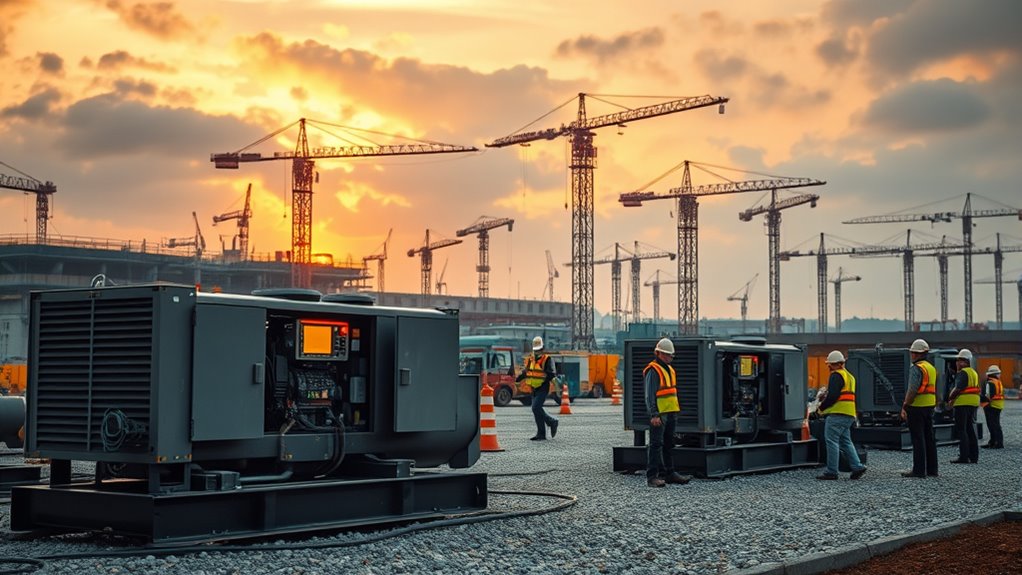
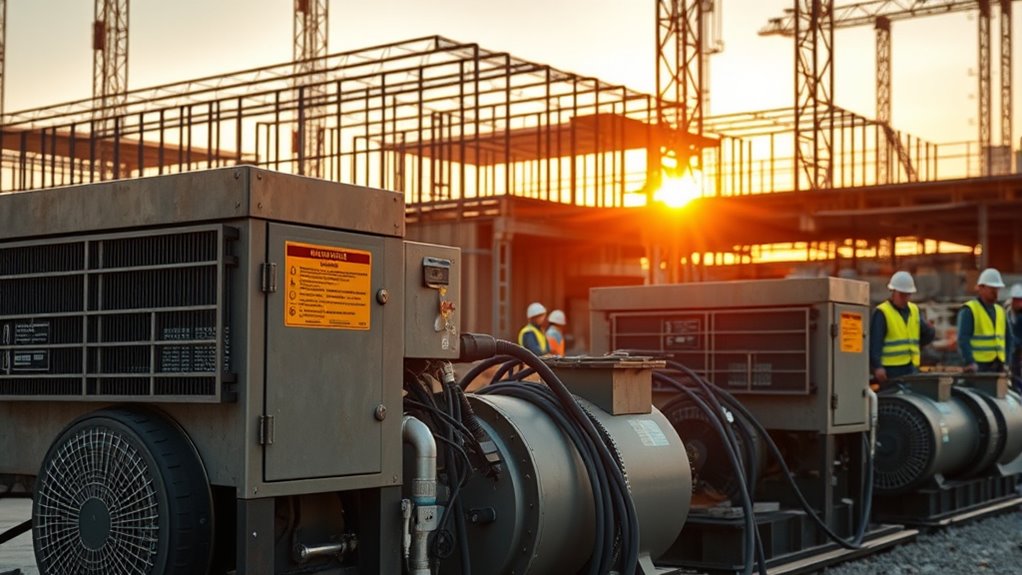
Generators are indispensable on construction sites because they provide a reliable power source where electrical infrastructure is unavailable or insufficient. When you’re working in remote locations or areas without access to the grid, having a dependable generator ensures your tools and equipment keep running smoothly. But, along with power, you need to consider how to manage noise and environmental impact, especially when operating in sensitive or populated areas.
Reliable generators ensure continuous power in remote or off-grid construction sites.
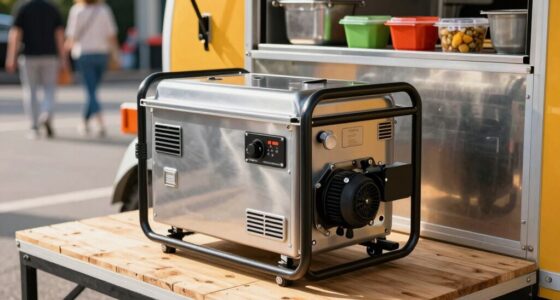
One of the main advantages of using generators in remote power situations is their portability. You can bring them directly to the site, eliminating the need for long cable runs or complex electrical hookups. This flexibility allows you to set up quickly and adapt to changing project needs. Furthermore, modern generators are designed with noise mitigation features, which help reduce sound levels, making it easier to work in noise-sensitive environments like urban construction zones or near residential areas. Noise mitigation isn’t just about comfort; it’s also essential for complying with local regulations and maintaining good community relations.
To effectively use generators for remote power and noise mitigation, you should select models with soundproof enclosures or mufflers. Proper placement is equally important—position the generator away from work areas and living spaces, ideally behind barriers or within sound-absorbing enclosures. This setup minimizes noise disturbance without compromising the generator’s performance. Additionally, consider using sound-dampening barriers around the unit, especially if you’re working in a densely populated area. These measures not only help keep noise levels down but also protect the generator from environmental elements, extending its lifespan.
Fuel efficiency and proper maintenance also play pivotal roles in managing remote power needs while keeping noise levels controlled. Regular servicing ensures the generator runs smoothly and quietly. Using the right size generator for your workload prevents overworking the unit, which can lead to increased noise and wear. When you plan your setup, think about how to maximize efficiency and reduce noise at the same time, such as by scheduling quieter operations during early mornings or late evenings. Additionally, selecting a generator with high soundproofing technology can significantly enhance noise reduction efforts.
Ultimately, integrating remote power solutions with effective noise mitigation strategies allows you to operate more responsibly and efficiently. It enables you to provide continuous power for your construction activities while respecting the surrounding environment and community. Careful planning and choosing the right equipment will make your project safer, more sustainable, and more in harmony with your surroundings.

Oxseryn Power Equipment 4400 Watts Inverter Generator Gas Powered, Portable Open Frame Generator, Low Noise with ECO Mode, RV Ready, Emergency Home Backup
- High Power Output: 4400 peak / 3400 running watts
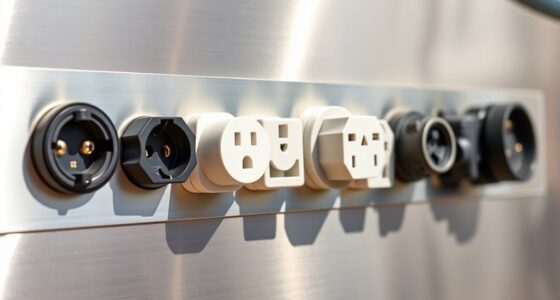
- Multiple Output Ports: 2 AC, 1 DC, RV port
- Long Runtime: Up to 14 hours at 25% load
As an affiliate, we earn on qualifying purchases.
As an affiliate, we earn on qualifying purchases.
Frequently Asked Questions
How Often Should Construction Site Generators Undergo Maintenance?
You should perform generator maintenance every 250 to 500 hours of operation or at least every three months, whichever comes first. Regular maintenance guarantees safety protocols are followed and keeps the generator running efficiently. Keep an eye on oil levels, filters, and connections. By sticking to this schedule, you reduce the risk of breakdowns and accidents, ensuring a safe work environment and reliable power supply on your construction site.
What Are the Environmental Impacts of Using Generators Outdoors?
You might think outdoor generators are convenient, but they also bring environmental concerns. The noise pollution can disturb nearby communities, and fuel emissions contribute to air pollution and climate change. While generators power your site efficiently, their emissions and noise levels highlight the need for careful planning. Using cleaner, quieter models or alternative energy sources can help reduce these impacts, making your project more environmentally responsible.
Can Portable Generators Power Large Construction Machinery?
Portable generators generally can’t power large construction machinery directly because of their limited power output. They’re best for smaller tools and equipment. To guarantee safe and efficient use, you should check the generator’s fuel efficiency and follow proper startup procedures. Always verify the power requirements of your machinery and avoid overloading the generator, as this can cause damage or safety hazards.
How Do Weather Conditions Affect Generator Performance?
Weather conditions are like a fickle wind, directly impacting your generator’s performance. When weather stability drops, generators struggle, risking power drops or shutdowns. Rain, cold, or extreme heat can also diminish fuel efficiency, making your generator work harder and consume more fuel. To stay on course, monitor weather forecasts closely, guarantee proper maintenance, and consider weather-resistant models to keep your power steady regardless of the elements.
What Are the Best Practices for Noise Control From Generators?
To control noise from your generators, focus on effective noise mitigation strategies. You should install durable generator enclosures designed to absorb sound and reduce noise levels. Keep the enclosures well-maintained and ensure proper ventilation to prevent overheating. Position generators away from sensitive areas and use barriers or landscaping to further block noise. Regularly check and maintain equipment to minimize unnecessary noise, creating a safer, quieter construction site environment.

TroyStudio Portable Sound Proof Box, 16" x 12" x 16.2" Noise Reduction Enclosure, Light Blocking Quiet Cover, Soundproof Barrier for Ultrasonic Cleaner, Air Pump, Rock Tumbler & Generator
- Dimensions and Components: 16x12x16.2-inch foldable design
- Noise Reduction Capability: Reduces noise up to 21.5dB
- Light Blocking Feature: Seals out light for peaceful sleep
As an affiliate, we earn on qualifying purchases.
As an affiliate, we earn on qualifying purchases.
Conclusion
Using generators on construction sites isn’t just about powering tools—it’s like wielding a tiny, unstoppable energy monster! When you prioritize safety and choose the right generator, you’re basically taming this beast, preventing chaos and disaster. Fail to do so, and you risk turning your site into a fireworks show of sparks and sparks of danger. So, stay vigilant, follow safety rules, and keep that generator in check—because a safe site is a happy, unstoppable construction site!

Westinghouse 4650 Peak Watt Dual Fuel Portable Generator, Remote Electric Start with Auto Choke, RV Ready 30A Outlet, Gas & Propane Powered, CO Sensor
- Power Output: 3600 Rated / 4650 Peak Watts
- Fuel Type: Gasoline and Propane
- Fuel Capacity: 4-Gallon Tank with Gauge
As an affiliate, we earn on qualifying purchases.
As an affiliate, we earn on qualifying purchases.

Generac 0J93230SSM 20Kw-22Kw SM 999 Maintenance Kit (Synthetic Oil)
- Genuine OEM Generac parts: Includes authentic Generac components
- Compatible with specific engine models: Fits designated Generac engines
- Synthetic oil included: Contains high-quality synthetic oil
As an affiliate, we earn on qualifying purchases.
As an affiliate, we earn on qualifying purchases.