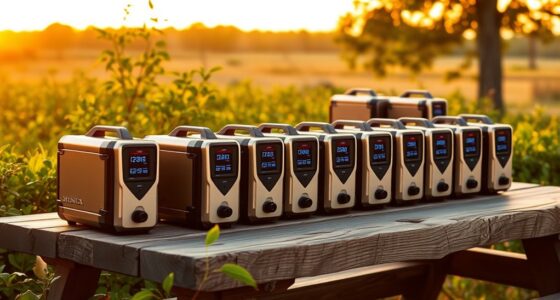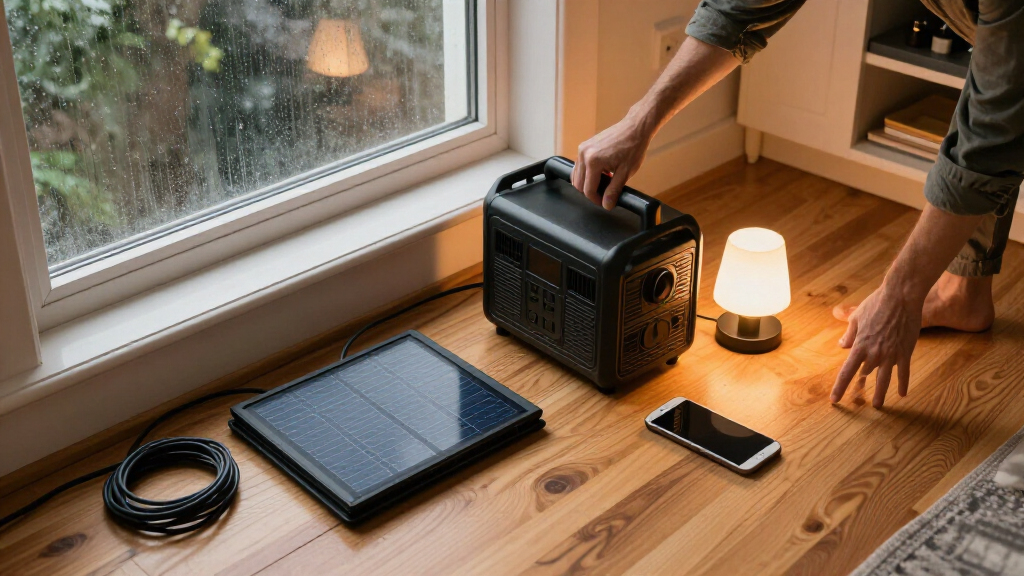
When it comes to solar generator kits for home backup, the goal is to find a reliable, efficient system that can keep your essential appliances running during power outages. The Jackery Solar Generator 1000 v2 stands out as the best overall choice due to its balance of capacity, portability, and ease of use. The OSCAL PowerMax 6000 offers massive power output for larger homes or more demanding needs, while the UDPOWER S1200 provides a compact, budget-friendly option for smaller setups. The main tradeoffs in this category involve balancing capacity, power output, portability, and price. Keep reading for a detailed breakdown of these options to find the best fit for your home backup needs.

Get backup power and energy gear delivered free — and shop member deals
- Fast, free delivery on millions of items
- Access to Prime Big Deal Days deals on October 6–7
- Prime Video, Amazon Music and more included
Complete the kit


Key Takeaways
- The top picks balance capacity and portability, with the Jackery 1000 v2 offering a versatile middle ground.
- High-capacity systems like OSCAL PowerMax 6000 are ideal for whole-house backup but come with higher costs and installation complexity.
- Size and weight matter; more powerful units tend to be bulkier, which impacts ease of setup and mobility.
- Cost varies significantly; budget-friendly options are available but may sacrifice capacity or charging speed.
- Compatibility with solar panels and expandability are key factors for long-term reliability and flexibility.


| solar generator kits for home backup | Battery capacity | Weight |
|---|---|---|
| Jackery Solar Generator 300 wi | 292Wh | 12.9 lb |
| ABOK Ark3600 Portable Power St | 3,840Wh, expandable to 11,520Wh | 92 lb |
| Jackery Solar Generator 1000 v | 1,070Wh | 23.8 lb |
| OSCAL PowerMax 6000 Solar Gene | 3,600Wh | 45.5kg |
| Jackery Explorer 2000 v2 with | 2,042Wh | 66.8 lb |
| Anker SOLIX E10 Prime Off-Grid | — | — |
| ECO-WORTHY 10KW Off Grid Solar | — | — |
| Jackery HomePower 3600 Plus wi | — | — |
| BLUETTI Elite 200 V2 Solar Gen | — | — |
| UDPOWER S1200 1190Wh Solar Gen | — | — |
| Jackery HomePower 3000 Portabl | 3072Wh | 59.5 pounds |
More Details on Our Top Picks
Jackery Solar Generator 300 with 40W Solar Panel, 292Wh, 300W AC
The Jackery Solar Generator 300 is the smallest-capacity pick here, so I’d place it in a home backup plan for phones, lights, and other low-draw essentials, rather than appliance coverage. Its 300W continuous output and 292Wh capacity are well below the Jackery Solar Generator 1000 v2, which can handle a wider range of devices and store more energy. In return, this unit weighs 12.9 pounds, making it easier to move between rooms or take along when an outage overlaps with travel. LiFePO4 cells rated for over 4,000 cycles support frequent use. The supplied 40W panel gives you a way to recharge from sunlight, but its modest capacity and output limit how much household backup it can provide.
Pros:- 12.9-pound weight is manageable for moving between rooms
- LiFePO4 battery is rated for over 4,000 charge cycles
- Includes a 40W solar panel for sunlight recharging
- AC, USB-C, USB-A, and car port support a mix of small devices
Cons:- 292Wh capacity is too small for sustained household backup
- 300W continuous output rules out many appliances
- A 40W panel can recharge slowly when sunlight is limited
Best for: Households seeking a portable backup for phones, LED lights, routers, and other low-wattage essentials
Not ideal for: Buyers who need to run refrigerators, kitchen appliances, or several devices for extended outages; its 292Wh capacity and 300W output are limiting
- Battery capacity:292Wh
- Continuous output:300W
- Starting wattage:600W
- Solar panel included:40W
- Battery chemistry:LiFePO4
- Weight:12.9 lb
- Voltage:120V
- Dimensions:15.43 × 9.92 × 11.89 in
Our verdict“Choose this Jackery for portable, short-duration backup of small essentials; pick the Jackery Solar Generator 1000 v2 if you need more capacity and appliance support.”
ABOK Ark3600 Portable Power Station with 3×200W Solar Panels
The ABOK Ark3600 suits buyers who want a system that can grow with their backup needs: its 3,840Wh base capacity expands to 11,520Wh, a larger storage range than the OSCAL PowerMax 6000’s fixed 3,600Wh battery. That extra storage can support longer outages, while the 3,600W continuous output covers more demanding loads than the Jackery Explorer 2000 v2’s 2,200W output. Three 200W panels are included for solar input. The tradeoff is physical: at 92 pounds, this is a station to place and mostly leave in position, not carry around the house. Buyers should also check how its five listed outlets fit their intended setup, since the high output alone does not guarantee enough connections for every household.
Pros:- Expandable capacity reaches 11,520Wh
- 3,600W continuous output supports higher-demand loads than the Jackery Explorer 2000 v2
- Includes three 200W solar panels
- LiFePO4 battery and five-year warranty are specified
Cons:- 92-pound weight makes frequent repositioning difficult
- Only five total power outlets are listed
- Large capacity may be more system than buyers need for brief outages
Best for: Homeowners who want expandable battery storage and included solar panels for longer outages or RV backup
Not ideal for: Buyers who need a lightweight station to move frequently or want many household devices connected at once
- Battery capacity:3,840Wh, expandable to 11,520Wh
- Continuous output:3,600W
- Starting wattage:4,500W
- Solar panels included:3 × 200W
- Battery chemistry:LiFePO4
- Total outlets:5
- Weight:92 lb
- Warranty:5 years
Our verdict“Choose the ABOK if expandable storage and included solar panels matter more than easy portability.”
Jackery Solar Generator 1000 v2 with 200W Solar Panel, 1070Wh, 1500W AC
For a household that wants a station it can carry without dropping to phone-only backup, the Jackery 1000 v2 sits between the 300Wh-class Jackery Solar Generator 300 and larger systems such as the ABOK Ark3600. Its 1,070Wh capacity and 1,500W AC output make it a more versatile choice for selected small appliances and electronics, though runtime depends heavily on the connected load. The listed 200W solar panel gives it a practical recharging option, and its 23.8-pound weight is far easier to manage than the 92-pound ABOK. That portability comes with a clear ceiling: it cannot store enough energy for prolonged whole-home backup, and its three listed outlets may require careful device rotation. I’d choose it for targeted backup, not as a substitute for a home battery system.
Pros:- 1,070Wh capacity is substantially above the Jackery Solar Generator 300
- 1,500W output supports a broader range of devices than compact stations
- Includes a 200W solar panel
- 23.8-pound weight is more manageable than the ABOK Ark3600
Cons:- Capacity is limited for long outages or several high-draw appliances
- Only three total outlets are listed
- The stated two-hour runtime is tied to an unspecified load and should not be treated as a universal estimate
Best for: People who want to move a mid-capacity station between rooms and keep selected small appliances and electronics running
Not ideal for: Households seeking extended outage coverage for multiple large appliances or whole-home backup
- Battery capacity:1,070Wh
- Continuous output:1,500W
- Starting wattage:3,000W
- Solar panel included:200W
- Battery chemistry:LiFePO4
- Total outlets:3
- Weight:23.8 lb
- Voltage:120V
Our verdict“Choose the 1000 v2 for portable backup of selected household devices when the Jackery 300 is too small and a large fixed station is too cumbersome.”
OSCAL PowerMax 6000 Solar Generator with 3×400W Solar Panels, 120V/240V Split Phase, 6000W Continuous Power, 9000W Peak, Battery Backup for Home & Emergency
The OSCAL PowerMax 6000 is the strongest match here for buyers whose backup plan calls for high output and 120V/240V split-phase power. Its 6,000W continuous rating and 9,000W peak exceed the ABOK Ark3600’s 3,600W continuous output, giving more headroom for compatible heavy loads. Three 400W solar panels are included, and the listed 2,400W solar input can make panel charging more substantial than the 200W kits in this batch. Storage is a different story: its 3,600Wh battery is fixed, while the ABOK can expand to 11,520Wh. At 45.5kg, the OSCAL is also a substantial unit, despite weighing less than the 92-pound ABOK. I’d favor it for power delivery and split-phase needs, while checking appliance compatibility and installation requirements first.
Pros:- 6,000W continuous and 9,000W peak output exceed the ABOK Ark3600 ratings
- 120V/240V split-phase output supports compatible loads
- Includes three 400W solar panels and lists 2,400W solar input
- Automatic switchover and app control are listed features
Cons:- 3,600Wh battery capacity is fixed, unlike the expandable ABOK Ark3600
- 45.5kg weight makes it difficult to move
- Two-year warranty is shorter than the ABOK’s listed five years
Best for: Homeowners who need high continuous output, 120V/240V split-phase support, and a substantial included solar array
Not ideal for: Buyers who prioritize expandable storage, easy portability, or a simple plug-and-play setup
- Battery capacity:3,600Wh
- Continuous output:6,000W
- Peak output:9,000W
- Solar panels included:3 × 400W
- Solar input:2,400W
- AC input:2,200W
- Output voltage:120V/240V split phase
- Weight:45.5kg
- Warranty:2 years
Our verdict“Choose the OSCAL when split-phase output and high wattage matter more than expandable storage or convenient handling.”
Jackery Explorer 2000 v2 with 2x200W Solar Panels, 2042Wh Portable Power Station with 2200W AC Output
The Jackery Explorer 2000 v2 offers a useful middle ground for backup buyers who need more stored energy than the 1000 v2 but do not want to jump to a 3,600Wh-plus system. Its 2,042Wh capacity and 2,200W AC output raise both storage and appliance headroom over that smaller Jackery, while remaining well below the ABOK Ark3600’s expandable ceiling. The kit includes two 200W solar panels, and the listed UPS feature suits electronics that benefit from a switchover during an outage. At 66.8 pounds, though, calling it compact does not make it easy to carry; plan where it will sit. The product data also lists three outlets, so households with several simultaneous loads may need to rotate connections or use an appropriate power strip.
Pros:- 2,042Wh capacity offers more stored energy than the Jackery 1000 v2
- 2,200W AC output provides more load headroom than the 1000 v2
- Includes two 200W solar panels
- UPS power supply feature is listed for backup use
Cons:- 66.8-pound weight makes it awkward to move often
- Three listed outlets limit simultaneous connections
- Capacity is below the ABOK Ark3600 and cannot be expanded according to the supplied data
Best for: Households wanting quiet battery backup for electronics and selected appliances, with solar panels included
Not ideal for: People who need frequent one-person transport, expandable capacity, or many built-in outlets
- Battery capacity:2,042Wh
- Continuous output:2,200W
- Solar panels included:2 × 200W
- Battery chemistry:LiFePO4
- UPS feature:Yes
- Total outlets:3
- Weight:66.8 lb
- Voltage:120V
Our verdict“Choose the Explorer 2000 v2 for a quiet, panel-included step up from mid-size backup, provided you can leave its heavy unit in place.”
Anker SOLIX E10 Prime Off-Grid Power System with Extra Battery
The Anker SOLIX E10 Prime suits homeowners building toward longer outages or off-grid use. Its 7,680W output and stated expansion path up to 90kWh offer more room to support household loads over time than the portable Jackery HomePower 3600 Plus, whose listed capacity is 3,584Wh. Solar and generator compatibility also gives the Anker more ways to replenish power when sunlight is limited. Its weatherproof NEMA 4 enclosure supports outdoor installation, which can simplify placement for a home system. That capability comes with a real setup burden: at 60.6 pounds, the unit is heavy, and its modular system may take more planning than a portable backup station. I would choose it for a home-centered expandable setup, not a quick grab-and-go outage kit.
Pros:- Expandable battery capacity stated up to 90kWh supports a system that can grow with backup needs
- 7,680W output is suited to a broader range of residential loads than compact portable stations
- Solar and generator compatibility gives buyers more charging options
- NEMA 4 weatherproof enclosure supports outdoor installation
Cons:- At 60.6 pounds, setup and repositioning may require help
- Modular system complexity may be a poor fit for casual users
- The product data describes a higher initial investment than traditional generators
Best for: Homeowners planning expandable backup for longer outages who can accommodate a heavier, modular system
Not ideal for: Renters or buyers seeking a simple, lightweight station they can carry between rooms
Our verdict“Choose the Anker if you want expandable, outdoor-capable home backup and can manage a heavier, more involved setup.”
ECO-WORTHY 10KW Off Grid Solar System Complete Kit with 9 Solar Panels and High Capacity Battery
The ECO-WORTHY 10kW kit is the most panel-focused choice in this group: it pairs a 10,000W inverter with nine 590W bifacial panels and a stated 20.48kWh battery. That package is aimed at buyers planning a fixed home installation and daily solar generation, rather than the portable emergency role of the BLUETTI Elite 200 V2. Split-phase 120V/240V output broadens its fit for household circuits, while WiFi and Bluetooth monitoring can help owners track system operation. The tradeoff is installation. Panels nearly 90 inches long and a 48V battery system call for substantial space and technical planning; this is not a station to unpack and use during an outage. I would rank it for buyers prioritizing an integrated solar array over portability.
Pros:- 10,000W continuous inverter output is designed for substantial household loads
- Nine 590W bifacial panels provide 5,310W of stated solar panel capacity
- 20.48kWh battery offers more stored energy than the portable units in this batch
- WiFi and Bluetooth monitoring provide system status access
Cons:- Large panels and system components require significant installation space
- Installation complexity may require professional help
- Fixed-kit format is less flexible to move or deploy for temporary backup
Best for: Homeowners or off-grid property owners planning a permanent solar installation with split-phase household power
Not ideal for: Apartment residents or buyers who need a ready-to-use portable backup station
Our verdict“Choose this kit for a planned, fixed off-grid home system with room for its panels and installation.”
Jackery HomePower 3600 Plus with 2x200W Solar Panels, 3584Wh, 3600W AC Output
The Jackery HomePower 3600 Plus balances substantial output with a format that can still move around the home. Its 3,584Wh capacity and 3,600W AC output give it more headroom than the UDPOWER S1200 for running higher-demand equipment, while wheels and a telescopic handle help with its 77.2-pound weight. The listed 120V and 240V parallel capability adds flexibility for backup planning, and AC, solar, and gas-generator charging offer options when conditions change. Compared with the Anker SOLIX E10 Prime, it is less oriented toward a large expandable home system; the listed expansion ceiling is 21kWh. Its weight still makes stairs and manual lifting difficult, and the solar panels may ship separately, so it is portable in a wheeled sense rather than easy to carry.
Pros:- 3,600W AC output supports higher-power devices than the UDPOWER S1200
- 3,584Wh capacity with stated expansion up to 21kWh
- AC, solar, and gas-generator charging options
- Wheels and telescopic handle ease movement across level floors
Cons:- 77.2-pound weight makes manual lifting difficult
- Solar panels may ship separately, delaying a complete solar setup
- Wheeled portability does not make it convenient for stairs or frequent carrying
Best for: Homeowners who want a wheeled backup station with substantial output for appliances and multiple charging paths
Not ideal for: Buyers who need a light station for stairs, frequent carrying, or a permanent high-capacity installation
Our verdict“Pick the HomePower 3600 Plus if you want high output and wheeled mobility for home outages, with help available for lifting.”
BLUETTI Elite 200 V2 Solar Generator with 2x200W Solar Panels – 2073.6Wh
The BLUETTI Elite 200 V2 is a compact home-backup choice for keeping selected electronics and appliances powered through interruptions. Its 2,600W AC output, 2,073.6Wh capacity, and stated ≤15ms UPS backup make it more suited to quick changeover for sensitive devices than the larger ECO-WORTHY fixed kit. TurboBoost charging is listed as reaching 80% from empty in 50 minutes, which can shorten recovery between outages when AC power returns. The tradeoff is coverage: its capacity is far below the Jackery HomePower 3600 Plus, so buyers need to prioritize which loads matter most. At 53.4 pounds, it is also substantial for a supposedly portable unit, and the solar panels ship separately. I see it as a compact backup hub, not a whole-home solution.
Pros:- 2,600W AC output with 3,900W lifting power supports a range of selected loads
- ≤15ms UPS backup is suited to devices needing quick power changeover
- Stated 0–80% charging time of 50 minutes can speed recovery from AC power
- 2,073.6Wh battery capacity with stated 6,000+ cycle life
Cons:- Capacity is lower than the Jackery HomePower 3600 Plus, limiting outage coverage
- At 53.4 pounds, it is heavy to carry regularly
- Solar panels ship separately
Best for: Households that want fast-switching backup for selected electronics and essential appliances
Not ideal for: Buyers who need to power many household circuits or want an easily carried station
Our verdict“Choose the Elite 200 V2 for fast-switching backup of prioritized devices when its limited capacity matches your outage plan.”
UDPOWER S1200 1190Wh Solar Generator Kit with 120W Panel, 1200W Power Station for Home Backup, RV, Outdoor, Emergency Power
The UDPOWER S1200 is the most approachable option here for covering a few essentials rather than trying to run a home. Its 1,190Wh LiFePO4 battery and 1,200W output are a step below the BLUETTI Elite 200 V2’s 2,073.6Wh and 2,600W, but the UDPOWER weighs 25.8 pounds and includes a foldable 120W solar panel in the kit description. That makes it easier to place in a small home or take along for occasional use. The listed <0.01-second switchover may help keep compatible devices running during an interruption. Capacity remains the defining limitation: high-draw appliances or extended outages can outlast it quickly. I would pick it for lights, routers, and smaller devices, not broad household coverage.
Pros:- 1,190Wh LiFePO4 battery is suited to essential-device backup
- 1,200W output and five outlets support several modest loads
- Foldable waterproof solar panel is included in the kit description
- Listed <0.01-second switch-over can keep compatible devices powered during an interruption
Cons:- Lower capacity and output than the BLUETTI Elite 200 V2 limit appliance coverage
- 25.8-pound weight is still substantial for frequent carrying
- Solar panel shipment may arrive separately from the power station
Best for: People in smaller homes or apartments who want a relatively compact kit for routers, lights, and a few essential devices
Not ideal for: Families seeking backup for high-draw appliances or multiple household circuits through long outages
Our verdict“Choose the S1200 for a compact, modest-load backup kit when portability and essential devices matter more than long runtimes.”
Jackery HomePower 3000 Portable Power Station with 2x200W Solar Panels, 3072Wh, 3600W AC Output
I place the Jackery HomePower 3000 as a strong pick for households that want serious backup capacity without stepping into a larger, more complex system. Its 3072Wh battery and 3600W AC output give it more headroom than the Jackery Solar Generator 1000 v2, so it can better support refrigeration, lighting, internet, and several smaller appliances at once. Compared with the Jackery HomePower 3600 Plus, it gives slightly less stored energy while keeping the same 3600W output, which makes it feel like the more balanced option when the larger model is more than a home needs. The included two 200W panels help, but solar replenishment is still modest for a battery this size. At nearly 60 pounds, this kit is best treated as semi-portable backup rather than something to carry often.
Pros:- Large 3072Wh capacity supports multiple household essentials at once
- 3600W continuous output and 7200W surge give it room for demanding loads
- LiFePO4 chemistry and 4,000-cycle rating support long-term backup use
- Hybrid AC/DC charging can refill the battery quickly when wall power is available
Cons:- At 59.5 pounds, it is heavy to lift or move frequently
- The included 400W solar array is modest for a 3072Wh battery
- It lacks 120/240V split-phase output, so it is less flexible than OSCAL PowerMax 6000 for larger home backup setups
Best for: Homeowners who want enough stored power to keep a fridge, lights, router, and small comfort devices running during outages, with solar top-up available.
Not ideal for: Households that expect to run central air conditioning, electric heat, or a full electrical panel for long stretches without frequent recharging.
- Battery Capacity:3072Wh
- Output Wattage:3600W
- Surge Power:7200W
- Battery Type:LiFePO4
- Cycle Life:4,000 cycles at 70% capacity
- Weight:59.5 pounds
- Dimensions:16 x 13 x 20 inches
- Ports:4 outlets, USB-C, DC, RV port
- Charge Time:1.7 hours via hybrid AC/DC, 2.2 hours via AC, up to 80% in 9 hours with solar panels
Our verdict“This kit makes the most sense for households that want a high-capacity, high-output solar backup for essentials without moving to a much larger or more complex system.”
How We Picked
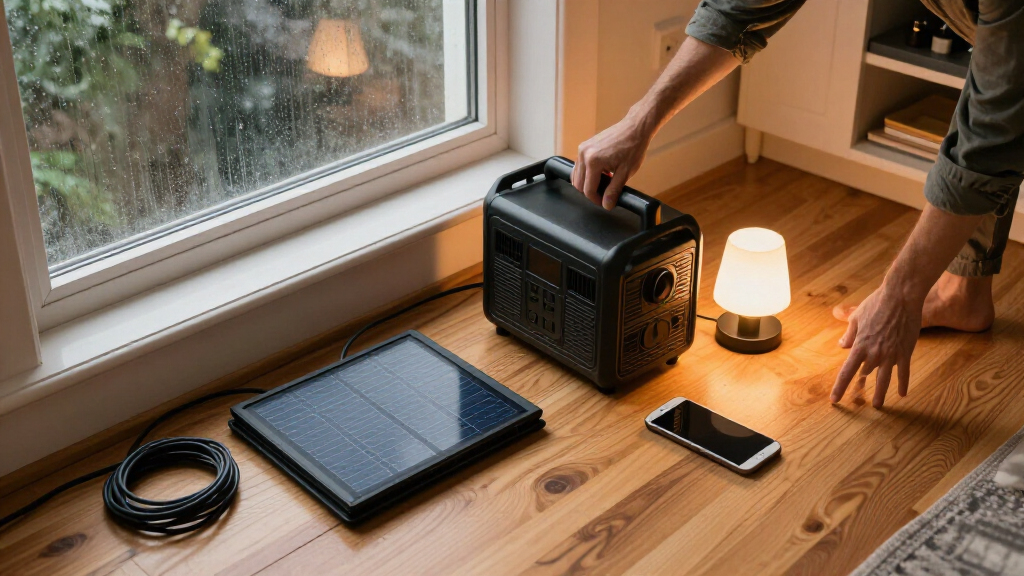
To determine the best solar generator kits for home backup, I evaluated each product based on several critical factors: power capacity (Wh), continuous and surge wattage, build quality, ease of setup, and compatibility with solar panels. Durability and safety features also played a role, especially for systems intended to power essential home appliances. I prioritized models that offer a good balance of affordability and performance, with clear advantages for home backup scenarios. The ranking reflects a combination of capacity, reliability, user-friendliness, and value, ensuring each option serves a specific type of buyer—from casual users to those needing full-home resilience.Factors to Consider When Choosing Solar Generator Kits For Home Backup
Choosing the right solar generator kit for home backup requires careful consideration of several key factors. While capacity and power output are paramount, understanding how these systems integrate into your home and their long-term usability can make a significant difference. Here are the main factors to keep in mind to make an informed purchase that truly meets your needs.Capacity and Power Output
Capacity, measured in watt-hours (Wh), determines how long your backup system can run your appliances. Power output, rated in watts (W), indicates how much immediate energy the system can deliver, especially during startup surges. For home backup, consider your essential appliances’ wattage and choose a system that can handle their combined load comfortably. Overestimating capacity can lead to unnecessary expense, while underestimating risks power shortages during outages.
Solar Panel Compatibility and Expansion
Not all systems are compatible with solar panels or support expansion. Look for kits that support multiple panels or have high wattage inputs if you plan to increase your solar array later. This flexibility can improve long-term resilience and reduce dependence on grid power, especially during extended outages. Additionally, panels with higher efficiency and durability will yield better performance over time, making initial investments more worthwhile.
Portability and Size
While larger capacity units tend to be bulkier, consider where and how you’ll use your backup system. If you need a portable solution that can be moved around or stored easily, prioritize models with lighter weight and compact design. Conversely, if your primary goal is full-home backup with minimal mobility, a larger, stationary system might make more sense, even if it’s less convenient to move.
Charging Options and Speed
Fast and flexible charging options—such as AC outlets, car chargers, and solar input—are essential for quick replenishment after outages. Systems with multiple input options can restore power faster and more reliably. Keep in mind that some systems may require specific solar panel types or have limited input wattage, which could slow down recharging during prolonged outages.
Price and Long-Term Value
Price is a significant factor, but it should be weighed against capacity, build quality, and features. Cheaper models might lack the durability or capacity needed for consistent home backup. Conversely, investing in a more expensive, high-capacity system can provide peace of mind and better long-term value, especially if it offers expandability and reliable solar compatibility. Consider your specific backup needs and budget to find the best balance.
Frequently Asked Questions
How long can a solar generator power my home during an outage?
The duration depends on the generator’s capacity and the power demand of your essential appliances. For example, a 1000Wh system could run a small refrigerator and lights for about 8-10 hours, while larger systems like the OSCAL PowerMax 6000 can sustain much longer. It’s important to calculate your total wattage needs and choose a system that exceeds your peak load to ensure reliable backup during extended outages.
Can I expand my solar generator system later if I need more capacity?
Many systems support expansion, especially those with multiple solar input ports or modular batteries. This flexibility allows you to start with a smaller setup and add panels or batteries over time as your needs grow. When shopping, verify the manufacturer’s expansion options and compatibility to avoid investing in a system that cannot scale easily.
How do I ensure my solar generator is safe and reliable for home use?
Safety features such as overload protection, short circuit protection, and proper ventilation are essential for long-term reliability. Choose models with quality build standards and certifications when available. Regular maintenance and monitoring of the system’s performance can also prevent issues, making sure your backup remains dependable when needed most.
Is it better to get a portable or stationary solar generator system for home backup?
This depends on your specific needs. Portable systems offer flexibility and ease of setup, ideal for small homes or RV use. Stationary systems are generally larger, more powerful, and better suited for whole-house backup, especially if you experience frequent outages. Consider how much space you have, your mobility needs, and your backup load to decide which type aligns best with your situation.
What is the typical lifespan of a solar generator system?
The lifespan of a solar generator mainly depends on the quality of its batteries and components. Most lithium-ion batteries last between 5 and 10 years with proper care, while high-quality systems may last longer. Regular maintenance, avoiding deep discharges, and keeping the system clean can extend its service life, providing reliable backup power over many years.
Conclusion
For those seeking a balanced, all-around solution, the Jackery Solar Generator 1000 v2 offers excellent capacity and portability for most homes. Buyers on a tighter budget or with smaller backup needs may find the UDPOWER S1200 a practical pick, while those with larger homes or demanding power needs should consider the OSCAL PowerMax 6000 for its massive output. Beginners and casual users should prioritize systems with straightforward setup and expandability, whereas experienced users might opt for high-capacity, stationary options. Ultimately, your choice depends on your specific power needs, budget, and whether you prefer mobility or full-home resilience.
As an affiliate, we earn on qualifying purchases.Fall Picks
fall essentials