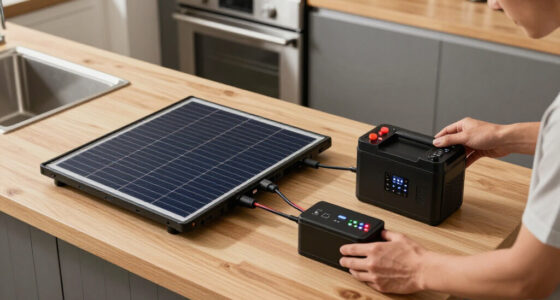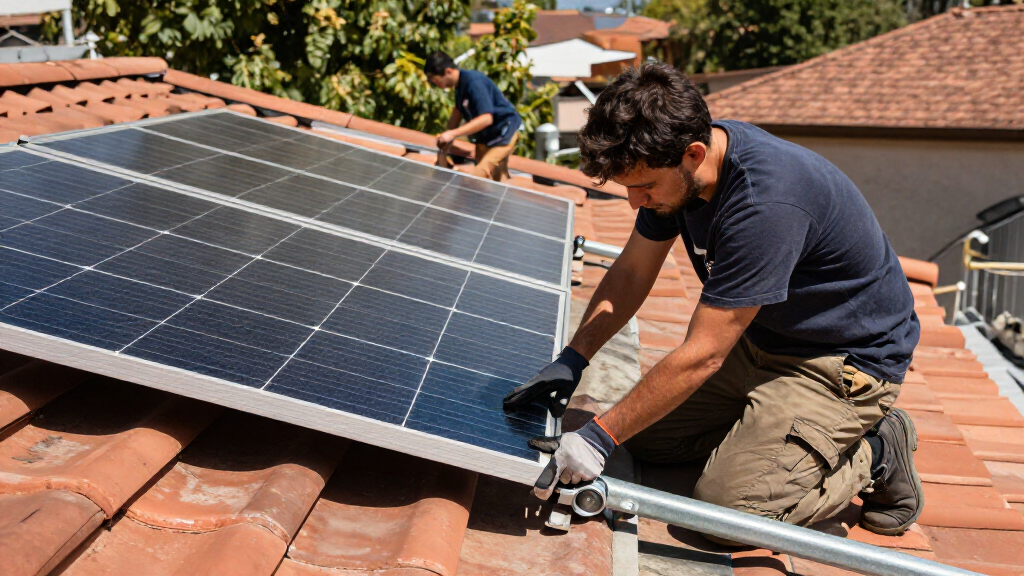
Solar panel kits for homes range from compact 12V setups to large off-grid systems with substantial battery storage. My best overall pick is the ECO-WORTHY 10kW kit with 5,310W of panels, split-phase inverter, and 20.48kWh of storage, which balances household-scale output with overnight reserves. The ECO-WORTHY 10kW kit with 4,720W of panels and a 48V 314Ah battery stands out for buyers prioritizing a larger battery bank, while the Renogy 400W kit offers a more approachable scale for small loads. The main tradeoff is between panel generation, battery capacity, and system size: a large inverter cannot make up for limited panels or storage. Read on for the full comparison and guidance on matching a kit to your home and power needs.

Get backup power and energy gear delivered free with Prime
- Fast, free delivery on millions of items
- Prime Video, Amazon Music and more included
- Member-only deals all year
Key Takeaways
- The ECO-WORTHY 10kW kit with 5,310W of panels and 20.48kWh storage is the strongest all-around balance among the listed large systems; it pairs a split-phase inverter with more panel capacity than the 2,340W options.
- Panel wattage and battery capacity solve different problems. The 32.2kWh-storage ECO-WORTHY kit favors longer reserve time, while kits with 4,720W or 5,310W of panels put more emphasis on replenishing energy.
- A 10kW inverter label does not mean a kit can generate 10kW from sunlight. Several 10kW systems in this lineup include substantially less panel capacity, so daily energy production depends on the array, sun conditions, and system losses.
- The compact 400W kits are a different category from whole-home systems. ECO-WORTHY and Renogy 12V kits suit smaller loads or learning setups, not typical whole-house backup.
- The SUNGOLDPOWER and smaller ECO-WORTHY 48V kits offer middle-ground configurations between compact 12V systems and larger 10kW packages, but buyers still need to check real load and runtime requirements.
| ECO-WORTHY 10kW Off-Grid Solar System Kit with Split-Phase Inverter, 20.48kWh Battery Storage, and 5,310W Solar Panels |  | Best Overall for Balanced Off-Grid Home Power | Continuous inverter output: 10,000W | Peak inverter output: 20,000W | AC output: 120V/240V split-phase | VIEW LATEST PRICE | See Our Full Breakdown |
| ECO-WORTHY 10 kW Off-Grid Solar System Kit with 2,340 W Solar Panels |  | Best for Compact Panel Layouts | Inverter output: 10,000W maximum continuous | AC output: 120V/240V | Solar array: 12 × 195W panels; 2,340W total | VIEW LATEST PRICE | See Our Full Breakdown |
| ECO-WORTHY 10kW Off-Grid Solar Panel Kit with 32.2kWh Battery Storage |  | Best for High Storage and Solar Capacity | Solar array: 18 × 590W panels; 10,620W total | Battery storage: 2 × 48V 314Ah LiFePO₄ batteries; 32.2kWh total | Continuous inverter output: 10,000W | VIEW LATEST PRICE | See Our Full Breakdown |
| ECO-WORTHY 400W 12V Solar Panel Kit with MPPT Controller and Bluetooth |  | Best Small-Scale Starter Kit | Kit power: 400W | System voltage: 12V | Panels: 4 × 100W monocrystalline | VIEW LATEST PRICE | See Our Full Breakdown |
| ECO-WORTHY 10kW Off-Grid Solar Panel Kit with 48V 314Ah Battery |  | Best for Battery-First Expansion | Continuous inverter output: 10,000W | Peak inverter output: 20,000W | Output voltage: 120V or 120V/240V split-phase | VIEW LATEST PRICE | See Our Full Breakdown |
| ECO-WORTHY 10kW Off-Grid Solar Kit with 4,720W Panels, 48V 314Ah Battery, and Split-Phase Inverter |  | Best for Whole-Home Off-Grid Capacity | Inverter output: 10,000W continuous; up to 20,000W peak | Solar array: 4,720W total; 8 × 590W panels | Battery: 48V 314Ah LiFePO₄ | VIEW LATEST PRICE | See Our Full Breakdown |
| Renogy 400W 12V Monocrystalline Solar Kit with 40A MPPT Charge Controller |  | Best for Small 12V Setups | System voltage: 12V | Total panel power: 400W | Panels: 4 × 100W monocrystalline | VIEW LATEST PRICE | See Our Full Breakdown |
| SUNGOLDPOWER 5000W 48V Off-Grid Solar Kit with Inverter, Six 200W Panels, and 51.2V 100Ah LiFePO4 Battery |  | Best for Expandable Inverter Capacity | Inverter power: 5,000W | AC output: 120V | Solar array: 1,200W total; 6 × 200W panels | VIEW LATEST PRICE | See Our Full Breakdown |
| ECO-WORTHY 5 kW Off-Grid Solar System Kit with 2,340 W of Panels |  | Best for a More Balanced 5kW DIY Kit | Solar array: 2,340W total; 12 × 195W panels | Panel type: Monocrystalline N-type | Inverter: 48V, 5,000W off-grid | VIEW LATEST PRICE | See Our Full Breakdown |
| ECO-WORTHY 1170W Solar Power System with 48V 3500W Inverter and 50Ah Battery |  | Best for Compact 48V Backup | Solar array: 1,170W total; 6 × 195W bifacial panels | Panel efficiency: 25% | Battery: 48V 50Ah LiFePO₄ | VIEW LATEST PRICE | See Our Full Breakdown |
| ECO-WORTHY 1200W 48V Solar Power Kit with 6 Bifacial Panels, 100Ah LiFePO4 Battery, and 3500W Inverter |  | Best Compact All-in-One Off-Grid Kit | Maximum solar power: 1,200 W | Solar panels: 6 × 195 W N-type bifacial panels | Estimated daily generation: 4.68 kWh under 4 hours of full sunlight | VIEW LATEST PRICE | See Our Full Breakdown |
| solar panel kits for home | Solar array | Battery |
|---|---|---|
| ECO-WORTHY 10kW Off-Grid Solar | 9 × 590W panels; 5,310W total | — |
| ECO-WORTHY 10 kW Off-Grid Sola | 12 × 195W panels; 2,340W total | — |
| ECO-WORTHY 10kW Off-Grid Solar | 18 × 590W panels; 10,620W total | — |
| ECO-WORTHY 400W 12V Solar Pane | — | — |
| ECO-WORTHY 10kW Off-Grid Solar | 5 × 590W panels; 2,950W total | 48V 314Ah LiFePO₄; 16.076kWh |
| ECO-WORTHY 10kW Off-Grid Solar | 4,720W total; 8 × 590W panels | 48V 314Ah LiFePO₄ |
| Renogy 400W 12V Monocrystallin | — | — |
| SUNGOLDPOWER 5000W 48V Off-Gri | 1,200W total; 6 × 200W panels | 51.2V 100Ah LiFePO₄ |
| ECO-WORTHY 5 kW Off-Grid Solar | 2,340W total; 12 × 195W panels | 51.2V 100Ah Cubix LiFePO₄ |
| ECO-WORTHY 1170W Solar Power S | 1,170W total; 6 × 195W bifacial panels | 48V 50Ah LiFePO₄ |
| ECO-WORTHY 1200W 48V Solar Pow | — | 48V 100Ah LiFePO4 |
More Details on Our Top Picks
ECO-WORTHY 10kW Off-Grid Solar System Kit with Split-Phase Inverter, 20.48kWh Battery Storage, and 5,310W Solar Panels
I’d rank this as the most balanced option for a home that needs substantial off-grid power without stepping up to the largest array in this group. Its 10kW split-phase inverter can supply 120V and 240V loads, while 20.48kWh of LiFePO₄ storage provides a useful reserve after sunlight fades. The nine bifacial panels total 5,310W, giving it more solar capacity than the 2,340W ECO-WORTHY 10 kW kit, though less than the 10,620W array in the ECO-WORTHY 32.2kWh kit. That middle ground suits households balancing daily generation, storage, and installation space. The tradeoff is substantial equipment: the panels are large, pallet-shipped, and professional installation is recommended. I’d skip it for a small backup setup or a hands-on beginner project.
Pros:- 10,000W continuous inverter output with 120V/240V split-phase support
- 20.48kWh of LiFePO₄ storage included
- 5,310W of bifacial solar panels with dual-glass construction
- Dual MPPT controllers and Wi-Fi monitoring
Cons:- Large panels require truck delivery and suitable space for handling and installation
- Professional installation is recommended, adding planning and labor needs
- Its 5,310W array is smaller than the 10,620W array in the ECO-WORTHY 32.2kWh kit
Best for: Homeowners planning a substantial off-grid system who need 120V/240V household output and a balanced combination of array capacity and battery storage.
Not ideal for: Small homes seeking a simple backup kit, or DIY beginners without access to qualified solar and electrical installation help.
- Continuous inverter output:10,000W
- Peak inverter output:20,000W
- AC output:120V/240V split-phase
- Solar array:9 × 590W panels; 5,310W total
- Panel efficiency:23.23%
- Battery storage:4 × 48V 100Ah LiFePO₄ batteries; 20.48kWh total
- Charge controllers:Dual MPPT
- Monitoring and communication:Bluetooth/Wi-Fi; CAN/RS485
Our verdict“Choose this kit for a sizable off-grid home system with a balanced panel-and-battery package, provided you can arrange professional installation.”
ECO-WORTHY 10 kW Off-Grid Solar System Kit with 2,340 W Solar Panels
This kit pairs a 10kW split-phase inverter with a comparatively modest 2,340W array, so I see it as a fit for buyers who value the inverter and configuration options more than rapid solar charging. Its twelve panels are smaller and lighter than the 590W panels in the ECO-WORTHY 10kW kit with 5,310W of panels, which may make panel placement easier when roof or ground space is divided into smaller sections. The included 10.24kWh battery, app monitoring, and four charging modes add flexibility for off-grid use. The tradeoff is the array’s lower total capacity: the stated 9.36kWh daily output assumes four hours of full sunshine, so actual production varies with conditions. Compared with the 32.2kWh kit, this one has much less storage and generation potential.
Pros:- Twelve smaller-format panels offer more placement flexibility than large 590W panels
- 10,000W inverter provides 120V/240V output
- 10.24kWh of lithium battery storage is included
- Four charging modes and Bluetooth/Wi-Fi battery monitoring
Cons:- 2,340W total panel capacity is lower than the other 10kW kits listed here
- The stated daily output depends on four hours of full sunshine
- Professional installation is recommended
Best for: Off-grid homeowners who need a 120V/240V inverter and battery system but have limited room for large-format panels or prefer smaller modules.
Not ideal for: Households with high daily energy demand or buyers seeking a large solar array and extended battery reserve from one kit.
- Inverter output:10,000W maximum continuous
- AC output:120V/240V
- Solar array:12 × 195W panels; 2,340W total
- Panel type and efficiency:N-type bifacial monocrystalline; 25%
- Battery storage:2 × 48V 100Ah lithium batteries; 10.24kWh total
- Stated daily energy output:9.36kWh under four hours of full sunshine
- Charging modes:Only Solar, Mains Priority, Solar Priority, Mains & Solar Hybrid
- Parallel inverter support:Up to 6 units
Our verdict“Pick this kit when smaller panels and charging flexibility matter more than maximizing solar generation or storage capacity.”
ECO-WORTHY 10kW Off-Grid Solar Panel Kit with 32.2kWh Battery Storage
For a household whose priority is a large off-grid energy reserve, this is the strongest match in the group: it combines 32.2kWh of battery storage with a 10,620W solar array. That gives it twice the stated panel capacity of the ECO-WORTHY kit with 5,310W of panels and more storage than the 20.48kWh model. Its 10kW split-phase inverter supports common 120V and 240V household loads, while dual MPPT controllers and Wi-Fi monitoring add system-management options. The scale is also the drawback. Eighteen panels measuring nearly 90 inches long demand considerable installation area, and delivery requires truck access. Compared with the 2,340W-panel kit, this setup is far better suited to energy-intensive homes, but it is a much larger commitment in site planning and professional installation.
Pros:- 32.2kWh of combined LiFePO₄ battery storage
- 10,620W array from eighteen 590W panels
- 10,000W continuous inverter output with 120V/240V split-phase support
- Dual MPPT controllers and Wi-Fi monitoring
Cons:- Eighteen large panels require substantial installation space
- Pallet delivery requires truck access
- Professional installation is recommended, and the stated 11,000W maximum power differs from the 10,000W continuous inverter output
Best for: Households with substantial off-grid energy needs, room for a large panel array, and a need for more stored energy than the smaller kits provide.
Not ideal for: Homeowners with limited roof or ground area, constrained delivery access, or modest power needs that do not justify a 10,620W array.
- Solar array:18 × 590W panels; 10,620W total
- Battery storage:2 × 48V 314Ah LiFePO₄ batteries; 32.2kWh total
- Continuous inverter output:10,000W
- Peak inverter output:20,000W
- Output voltage:120V or 120V/240V split-phase
- Maximum power:11,000W
- Battery charging current:Up to 200A
- Panel dimensions:89.68 × 44.65 × 1.18 in
Our verdict“Choose this kit when your home needs the largest stated solar array and battery reserve in this group and you have the space and installation support to match.”
ECO-WORTHY 400W 12V Solar Panel Kit with MPPT Controller and Bluetooth
Unlike the 10kW systems elsewhere in this roundup, this is a 12V, 400W off-grid kit for modest loads rather than whole-home power. Four 100W panels, a 40A MPPT controller, mounting brackets, and Bluetooth monitoring give a buyer the main pieces for a small standalone system. The stated average of 1.6kWh per day can suit limited uses, though output depends on sunlight and does not make this a substitute for the larger ECO-WORTHY split-phase kits. Bluetooth access helps owners check system data from a phone, but the listed range is 82 feet, so it is not a remote monitoring solution across a large property. Its 32.66kg listed weight also makes handling more demanding than the lighter individual panels in the 2,340W kit.
Pros:- Four panels provide 400W of rated solar capacity
- 40A MPPT controller supports efficient power tracking
- Bluetooth module provides system data on a mobile phone
- Mounting brackets and fuse are included
Cons:- 400W capacity is far below the 10kW household kits in this roundup
- No battery is listed as included
- Listed 32.66kg weight may make handling and installation more demanding
Best for: Owners building a modest 12V off-grid setup for limited household loads who want an included MPPT controller and phone-based monitoring.
Not ideal for: Households seeking whole-home backup, 120V/240V appliances, or enough included battery storage to power loads after sunset.
- Kit power:400W
- System voltage:12V
- Panels:4 × 100W monocrystalline
- Charge controller:40A MPPT
- Controller tracking efficiency:Up to 99%
- Stated daily generation:Average 1.6kWh, depending on sunlight
- Panel efficiency:21%
- Bluetooth range:Up to 82ft
Our verdict“Choose this kit for a small 12V solar project, not as a whole-home system or a replacement for a split-phase kit.”
ECO-WORTHY 10kW Off-Grid Solar Panel Kit with 48V 314Ah Battery
This kit puts more emphasis on stored energy than on its included panel array: one 48V 314Ah LiFePO₄ battery provides 16.076kWh, while five 590W panels total 2,950W. That combination may suit a home that needs a sizeable reserve and expects to add panels or batteries later. The inverter supports 120V/240V split-phase output, and the battery can expand to 15 units in parallel; up to six inverters can also be connected. Compared with the ECO-WORTHY 10kW kit with 5,310W of panels and 20.48kWh of storage, this one starts with less generation and storage, but offers stated battery expansion headroom. The tradeoff is a mismatch between the 10kW inverter and the relatively small included array, so buyers should plan their loads and future additions carefully.
Pros:- 16.076kWh LiFePO₄ battery with a 200A BMS
- 10,000W continuous inverter output and 120V/240V split-phase support
- Battery expansion support for up to 15 units in parallel
- Battery offers Bluetooth, Wi-Fi, and PC connectivity
Cons:- Included 2,950W array is smaller than the 5,310W array in the balanced 10kW kit
- The 10kW inverter may be more capacity than the included panels can support during solar production
- Pallet delivery and professional installation require advance planning
Best for: Off-grid homeowners who want substantial initial battery capacity, split-phase output, and a system designed for later battery or inverter expansion.
Not ideal for: Buyers who want high solar generation from the included panels alone or who cannot accommodate pallet delivery and professional installation.
- Continuous inverter output:10,000W
- Peak inverter output:20,000W
- Output voltage:120V or 120V/240V split-phase
- Solar array:5 × 590W panels; 2,950W total
- Battery:48V 314Ah LiFePO₄; 16.076kWh
- Battery management system:PACE 200A BMS
- Battery expansion:Up to 15 units in parallel
- Inverter expansion:Up to 6 inverters in parallel
Our verdict“Pick this kit if battery capacity and a path to expansion matter more than getting a large solar array in the initial package.”
ECO-WORTHY 10kW Off-Grid Solar Kit with 4,720W Panels, 48V 314Ah Battery, and Split-Phase Inverter
This kit earns its place for buyers who need both substantial storage and 120V/240V split-phase output. Its 16.076 kWh battery gives it a much larger reserve than the 5.12 kWh battery in the SUNGOLDPOWER 5000W 48V Off-Grid Solar Kit, while the 10 kW inverter can serve larger loads. Eight 590W panels provide 4,720W of rated array capacity, though that is still less solar input than the inverter’s headline output might suggest; production varies with sunlight and site conditions. Battery and inverter parallel support leave room to expand, but the system’s scale brings more planning and wiring complexity than smaller kits. Professional installation is recommended, making this a poor fit for a first-time DIY project.
Pros:- 16.076 kWh LiFePO₄ battery provides substantial stored energy for periods without sun.
- 10 kW inverter supplies 120V/240V split-phase output for compatible household loads.
- Battery supports parallel expansion, and the inverter can be paralleled with compatible units.
- Wi-Fi and other monitoring options help track battery and system status.
Cons:- Professional installation is recommended, adding complexity for buyers planning a simple DIY setup.
- The 4,720W array may not match the inverter’s full output under every load or weather condition.
- Panel output depends on sunlight and installation conditions.
Best for: Off-grid homeowners who need 120V/240V service, a large battery reserve, and a system designed for future expansion.
Not ideal for: First-time DIY installers or households with modest loads that do not need split-phase power and extensive storage.
- Inverter output:10,000W continuous; up to 20,000W peak
- Solar array:4,720W total; 8 × 590W panels
- Battery:48V 314Ah LiFePO₄
- Battery energy:16.076 kWh
- AC output:120V or 120V/240V split-phase
- Panel efficiency:25%
- Panel dimensions and weight:89.68 × 44.65 × 1.18 in; 69.9 lb each
- Expansion:Up to 15 batteries and up to 6 inverters in parallel
Our verdict“Choose this kit for a substantial off-grid home system with split-phase power and storage; skip it if you want a simple, small-scale installation.”
Renogy 400W 12V Monocrystalline Solar Kit with 40A MPPT Charge Controller
Unlike the complete off-grid systems in this roundup, the Renogy 400W kit is a panel-and-controller setup, not a package with an inverter and battery. That makes it a more focused fit for buyers building or topping up a 12V system, such as a small cabin setup, rather than powering a whole home on its own. The 40A MPPT controller and four 100W panels provide a clear starting point, while the included Bluetooth module, brackets, cables, and adapter kit reduce the separate components a buyer needs to source. Compared with the ECO-WORTHY 1170W Solar Power System, it has far less array capacity and lacks stored energy and AC conversion—but its 12V design may suit existing equipment better. Check that your battery and loads match 12V; this kit is not a direct fit for 48V systems.
Pros:- Four 100W monocrystalline panels and a 40A MPPT controller are included.
- Bluetooth module supports phone-based monitoring and adjustments.
- Z-brackets, cables, and an adapter kit help cover common installation needs.
- The 12V configuration suits compatible smaller battery systems.
Cons:- Designed for 12V systems, limiting compatibility with 48V kits and equipment.
- Does not include a battery or inverter, so it cannot operate as a complete home power system on its own.
- The listed panel materials-and-workmanship warranty is five years.
Best for: Owners of small cabins or existing 12V battery systems who want a modest solar array with a charge controller and basic monitoring.
Not ideal for: Homeowners seeking a complete off-grid package, 48V compatibility, or enough included capacity to run larger household loads.
- System voltage:12V
- Total panel power:400W
- Panels:4 × 100W monocrystalline
- Charge controller:40A MPPT
- Maximum battery voltage:32V
- Panel dimensions:41.8 × 20.9 × 1.38 in
- Included components:Bluetooth module, Z-brackets, cables, and adapter kit
- Panel warranty:5 years for materials and workmanship
Our verdict“Pick this for a compatible 12V system that needs panels and charging control, not as a standalone home solar kit.”
SUNGOLDPOWER 5000W 48V Off-Grid Solar Kit with Inverter, Six 200W Panels, and 51.2V 100Ah LiFePO4 Battery
The standout here is the pairing of a 5,000W inverter with a relatively compact 1,200W solar array and 5.12 kWh battery. That arrangement can suit buyers who want inverter capacity for suitable loads and plan to expand the PV array later: the stated maximum is 5,500W. The included six panels, battery, extension cables, and Z-brackets make it more complete out of the box than the Renogy 400W 12V kit, which lacks storage and an inverter. Still, the array is a limiting factor: the listed estimate of about 4.8 kWh per day assumes four hours of full sunlight, and actual production varies. Its 120V AC output also differs from the ECO-WORTHY 10kW split-phase kit, which supports 120V/240V. This is an expandable off-grid starter, not a high-storage whole-home package.
Pros:- Includes inverter, six panels, LiFePO₄ battery, extension cables, and mounting brackets.
- 5,000W inverter supports a larger rated load than the included 1,200W array alone can continuously replenish.
- PV input can support an array up to 5,500W, leaving room for added panels.
- Battery is rated for over 7,000 cycles and communicates with the inverter over RS485.
Cons:- The included panels total only 1,200W, well below the inverter’s 5,500W maximum PV capacity.
- The 100Ah battery offers less storage than the 16.076 kWh battery in the ECO-WORTHY 10kW kit.
- The stated daily energy estimate assumes four hours of full sunlight and will vary by conditions.
Best for: Off-grid buyers who want a 48V system with a high-rated inverter and expect to add solar panels as their needs grow.
Not ideal for: Households needing 120V/240V split-phase output, a large included solar array, or substantial battery reserves from the start.
- Inverter power:5,000W
- AC output:120V
- Solar array:1,200W total; 6 × 200W panels
- Battery:51.2V 100Ah LiFePO₄
- Estimated daily energy:Approximately 4.8 kWh under 4 hours of full sunlight
- Maximum PV array:5,500W, 500V
- Battery cycle life:Over 7,000 cycles
- Warranty:3 years
Our verdict“Choose it if you want a 48V off-grid foundation with room to add panels, but not if you need a large array or split-phase service immediately.”
ECO-WORTHY 5 kW Off-Grid Solar System Kit with 2,340 W of Panels
This kit makes a stronger case as a balanced off-grid package than the SUNGOLDPOWER 5000W kit: it includes 2,340W of panels rather than 1,200W, alongside a 5,000W inverter and a 51.2V 100Ah LiFePO₄ battery. That larger array can capture more energy when conditions allow, though it still does not equal the inverter’s rated output, and available generation depends on sun and installation. The package also includes cables and Z-brackets, with panels described as suitable for roof, ground, or shed mounting. Compared with the ECO-WORTHY 10kW 4,720W kit, this is a smaller-capacity and more DIY-oriented option, but it lacks 120V/240V split-phase output. Wiring and system setup remain the buyer’s responsibility, so the DIY positioning is not the same as a plug-and-play home installation.
Pros:- Complete package includes 12 panels, inverter, battery, cables, and Z-brackets.
- The 2,340W array is nearly twice the panel capacity of the SUNGOLDPOWER kit in this roundup.
- LiFePO₄ battery chemistry is suited to repeated deep-cycle use.
- Panels are described as suitable for roof, ground, or shed mounting.
Cons:- The 2,340W array is below the inverter’s 5,000W rating, limiting solar input relative to its output capacity.
- DIY wiring and installation require planning and appropriate electrical knowledge.
- The 51.2V 100Ah battery offers less storage than the ECO-WORTHY 10kW kit’s 16.076 kWh battery.
Best for: DIY-minded cabin or off-grid homeowners who want a packaged 48V system with more included solar capacity than a 1,200W starter array.
Not ideal for: Buyers who need professional-installation support, 120V/240V split-phase output, or a large battery reserve for extended low-sun periods.
- Solar array:2,340W total; 12 × 195W panels
- Panel type:Monocrystalline N-type
- Inverter:48V, 5,000W off-grid
- Battery:51.2V 100Ah Cubix LiFePO₄
- Output voltage:120V
- Panel dimensions:58.86 × 26.18 × 1.18 in
- Panel weight:21.9 lb
- Included components:Inverter, battery, 12 panels, cables, and Z-brackets
Our verdict“Pick this for a DIY 48V off-grid setup with a comparatively larger included array, but look elsewhere for split-phase power or extensive storage.”
ECO-WORTHY 1170W Solar Power System with 48V 3500W Inverter and 50Ah Battery
Among the larger off-grid kits here, this one takes a compact backup-oriented approach: six 195W bifacial panels, a 48V 50Ah battery with 2,560Wh of usable energy, and a 3,500W inverter. Wi-Fi monitoring, a built-in 80A MPPT controller, and 20ms UPS switching make it better suited to supported backup loads than a bare panel-and-controller package like the Renogy 400W kit. The tradeoff is limited storage: a high-power appliance can use the battery reserve quickly, and the 1,170W array is modest beside the 2,340W ECO-WORTHY 5kW kit. Its stated 4.68 kWh generation assumes four hours of full sunlight, so buyers should not treat that figure as guaranteed. Choose it for a smaller 48V system with monitoring and UPS features, not as a substitute for a high-storage whole-home installation.
Pros:- Complete kit includes bifacial panels, battery, inverter, cables, and mounts.
- Built-in 80A MPPT controller and Wi-Fi monitoring reduce the need for separate control equipment.
- 20ms UPS switching supports quick changeover for compatible backup loads.
- LiFePO₄ battery is rated for more than 4,000 cycles.
Cons:- Usable battery energy is 2,560Wh, which may run down quickly with sustained high loads.
- The 1,170W panel array is smaller than the 2,340W array in the ECO-WORTHY 5kW kit.
- The stated 4.68 kWh generation assumes four hours of full sunlight and varies with conditions.
Best for: Homeowners building a compact 48V backup system for selected loads who value built-in MPPT, Wi-Fi monitoring, and UPS switching.
Not ideal for: Households needing long backup runtimes, high daily solar production, or the larger storage and array capacity of the ECO-WORTHY 5kW kit.
- Solar array:1,170W total; 6 × 195W bifacial panels
- Panel efficiency:25%
- Battery:48V 50Ah LiFePO₄
- Usable battery energy:2,560Wh
- Inverter output:3,500W; 7,000W surge
- AC output:110/120V
- MPPT controller:Built-in 80A
- UPS switching time:20ms
Our verdict“Choose this for compact 48V backup with monitoring and UPS switching, but skip it if you need long runtimes or a larger solar array.”
ECO-WORTHY 1200W 48V Solar Power Kit with 6 Bifacial Panels, 100Ah LiFePO4 Battery, and 3500W Inverter
This kit earns its place for buyers who want a matched panel, battery, and inverter system without stepping up to the larger storage packages elsewhere in the roundup. Its six 195W bifacial panels are rated for 1,200W total, while the 48V 100Ah LiFePO4 battery and 3,500W inverter form a self-contained off-grid setup. The inverter’s Wi-Fi monitoring and 20ms backup switching add useful oversight and fast changeover for supported backup loads. Compared with the ECO-WORTHY 1170W Solar Power System with 48V 3500W Inverter and 50Ah Battery, this version provides twice the stated battery capacity, though it also has a larger panel array. The tradeoff is scale: estimated generation of 4.68 kWh assumes four hours of full sunlight, and the 110/120V output is off-grid rather than a whole-home grid-tie solution. Its one-year warranty is also limited.
Pros:- Includes six panels, a 48V 100Ah LiFePO4 battery, inverter, and accessories.
- Bifacial N-type panels have a stated 25% cell conversion efficiency.
- Built-in 80A MPPT controller and Wi-Fi monitoring simplify system oversight.
- 20ms backup switching and a slim battery designed to fit a 3U server rack.
Cons:- The 4.68 kWh daily generation estimate assumes four hours of full sunlight.
- Designed for off-grid 110/120V AC output, not a grid-tied whole-home system.
- The listed warranty is one year, and shipments may arrive in multiple packages.
Best for: Homeowners building a modest off-grid or backup setup who want panels, a 48V battery, and inverter included in one kit.
Not ideal for: Households seeking grid-tied whole-home power or substantial multi-day storage; the 100Ah battery and stated daily generation are better suited to limited loads.
- Maximum solar power:1,200 W
- Solar panels:6 × 195 W N-type bifacial panels
- Estimated daily generation:4.68 kWh under 4 hours of full sunlight
- Cell conversion efficiency:25%
- Battery:48V 100Ah LiFePO4
- Inverter:3,500 W; 7,000 W peak; 110/120V AC output
- MPPT charge controller:80 A, built into the inverter
- Backup switching time:20 ms
- Warranty:1 year
Our verdict“Choose this kit for a compact, bundled off-grid setup with more battery capacity than ECO-WORTHY’s 1170W system, but skip it if you need grid-tied service or extensive storage.”
How We Picked
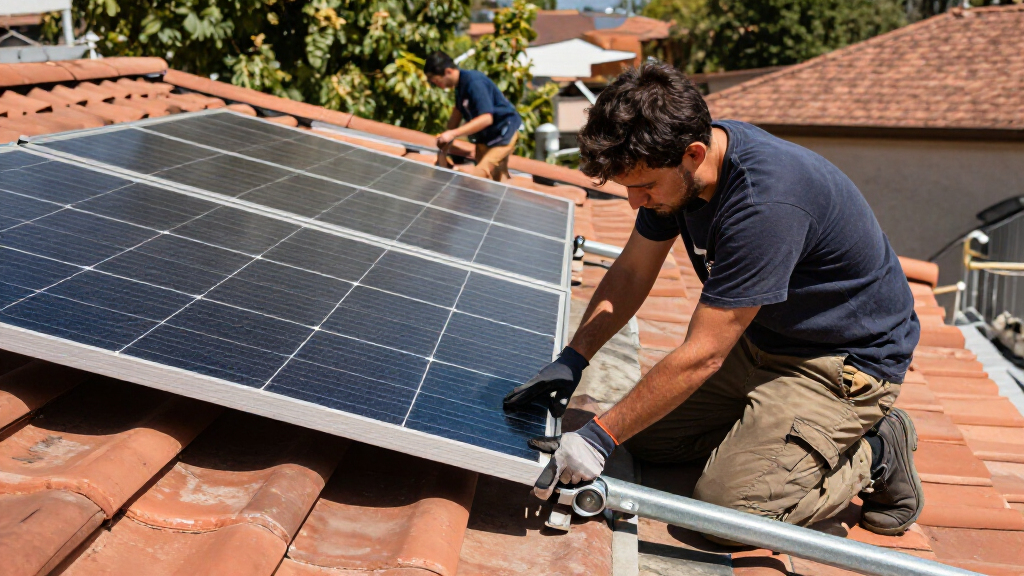
I compared the 11 kits by the factors that shape their usefulness at home: solar array capacity, battery storage, inverter rating and voltage, system configuration, and the likely scale of loads each can support. I gave more weight to kits that pair meaningful panel output with usable storage and a clear path to running household circuits, rather than treating a large inverter rating as proof of whole-home capability. I also considered whether a kit’s size and voltage make sense for the buyer it appears to target, from small 12V applications to larger 48V off-grid setups.
The ranking reflects those differences, not a claim that one package suits every house. The ECO-WORTHY 10kW kit with 5,310W of panels ranks first for its balance of generation, storage, and split-phase configuration; systems with more battery or more panels earn distinct roles when they better serve a particular need. Compact kits rank lower for whole-home use but remain useful for smaller loads. Since the listed products are off-grid or standalone-style packages, grid connection, code compliance, installation, and compatibility must be confirmed separately before purchase.
Factors to Consider When Choosing Solar Panel Kits For Homes
Before choosing a kit, I would start with the home’s actual energy needs rather than its headline inverter rating. The following factors help distinguish a system that can support your intended circuits from one that only looks large on a spec sheet.
Size the System Around Daily Energy Use
List the appliances and circuits you want to run, then estimate their daily energy use in kilowatt-hours. A refrigerator, lights, communications gear, and a few outlets present a very different demand from electric cooking, space heating, or a well pump. Pay attention to both energy over a day and the highest loads running at the same time. Buyers often choose a kit from its inverter rating alone, but that rating describes power delivery rather than how much energy the panels can make each day. Add room for cloudy weather and seasonal changes, and decide which loads can be switched off during a shortfall.
Match Panel Output to Sun and Roof Space
Panel wattage sets a ceiling on how quickly a system can harvest energy, but actual production varies with location, season, shade, orientation, and temperature. A larger array can recharge batteries faster and support more daytime use, yet it needs more clear mounting area and suitable wiring. Do not assume the package’s panel total will meet a household’s daily consumption just because its inverter is rated for several kilowatts. Check roof orientation and shading, or plan a ground mount if the roof is a poor fit. Allow space for safe access, setbacks, and future maintenance rather than covering every available surface.
Choose Battery Capacity for the Runtime You Need
Battery capacity determines how much energy can be stored for evening use or outages, while panel output determines how quickly that reserve can be replenished. Estimate the hours or days of backup you want and the loads that must remain on during that period. A large battery paired with a modest array may take longer to refill, while a high-output array with limited storage can leave little energy for nighttime. Confirm the battery chemistry, usable capacity, charging limits, and temperature requirements; the headline capacity may not equal energy available at the outlets. For homes with frequent cloudy spells, a plan for reduced consumption or another charging source matters as much as nominal storage.
Check Inverter Output, Voltage, and Household Loads
Inverter wattage and voltage affect which appliances and circuits a kit can serve. Motors, pumps, and compressors can draw a brief startup surge well above their running demand, so check surge capacity as well as continuous output. Split-phase capability can be relevant for homes with 120V and 240V loads, but buyers should verify the exact output configuration and wiring requirements. A 12V setup is often more appropriate for smaller systems, while larger 48V systems can suit higher power demands; neither voltage alone guarantees compatibility. Have an electrician confirm the home’s panel, grounding, disconnects, and circuit plan before connecting equipment.
Decide Whether Off-Grid Operation Fits Your Home
Off-grid kits are designed around independent power, so they should not be assumed to connect directly to a utility service or feed energy back to the grid. Grid-tied and hybrid projects can involve different inverters, utility approvals, transfer equipment, and local rules. A common mistake is buying a standalone kit for a grid-connected home without first checking whether the inverter supports the intended arrangement. If backup power is the goal, decide whether you need selected critical circuits or broader service during an outage. Ask the manufacturer or installer for a written compatibility plan before committing to a particular package.
Compare the Full Installation and Expansion Plan
A kit may include major components without covering every item needed for a safe, permitted installation. Confirm whether mounting hardware, cables, fuses, breakers, disconnects, combiner equipment, and monitoring components are included or must be sourced separately. Check warranty terms, technical support, replacement battery availability, and whether later expansion is supported by the inverter and charge controller. Buying a bigger package can make sense when the home has clear future demand, but extra equipment adds mounting, wiring, and configuration work. Get a qualified installer’s review of the complete bill of materials before treating a kit as ready to install.
Frequently Asked Questions
Can any of these kits power an entire house?
Not automatically. Whole-home support depends on daily energy use, peak and startup loads, panel production, battery capacity, and the inverter’s output configuration. The larger 48V and 10kW packages are closer to household-scale systems than the 400W kits, but their panel and battery combinations still determine how long they can support loads. Homes with electric heating, cooking, or vehicle charging may need more generation and storage than a kit provides. Have a qualified designer compare the system with your measured consumption and required circuits.
Is a 10kW inverter enough reason to choose a kit?
No. The inverter rating describes the power it may deliver under specified conditions, not the amount of energy the solar panels produce or the battery can store. In this lineup, some 10kW systems pair that inverter class with only 2,340W of panels, while other kits provide substantially more array capacity. If the panels cannot generate enough energy across the day, a powerful inverter will not solve the shortfall. Compare inverter output, panel wattage, battery capacity, and your expected loads as one system.
Should I choose more battery storage or more solar panels?
Choose based on the gap you need to solve. More battery storage can extend nighttime use and provide a larger reserve during outages, while more panels can increase daytime generation and help refill storage. A battery-heavy kit may still struggle to recover after cloudy days if its array is too small; a panel-heavy kit may have limited after-dark runtime if storage is modest. Estimate both your daily energy use and the length of backup you want. The best balance varies with local sun, household schedules, and whether another charging source is available.
Can I connect an off-grid kit to my utility-connected home?
Possibly, but the product label alone does not confirm that the system is suitable for grid connection or utility export. Off-grid inverters, hybrid inverters, and grid-tied equipment have different operating modes and safety requirements. A utility-connected home may need approved equipment, permits, inspections, and a correctly installed transfer or interconnection arrangement. Do not connect a kit to household wiring or the utility service without confirming the inverter’s specifications and local requirements. Ask a licensed electrician or solar installer to review the exact model and intended use.
Are the 400W 12V kits suitable as a home’s main solar system?
They are generally better suited to limited loads, small buildings, or supplemental power than to a typical home’s main electricity supply. A 400W array has far less generation capacity than the larger 48V systems in this roundup, and a 12V setup may not fit higher household loads efficiently. It can make sense for lights, small electronics, or a modest backup use when expectations are kept narrow. Before buying, estimate the daily energy use of the devices you plan to run and account for sun conditions and battery storage. If you need to power standard household circuits, compare larger systems and get a load-based design.
Conclusion
For most buyers comparing these packages, I would start with the ECO-WORTHY 10kW kit with 5,310W of panels and 20.48kWh of storage as the best overall balance of array size, battery reserve, and split-phase configuration. My best value pick is the ECO-WORTHY 5kW kit with 2,340W of panels for buyers whose loads are more limited and who do not need a 10kW-class setup; its smaller scale is also a tradeoff, not a substitute for whole-home capacity. For a best premium choice focused on stored energy, look at the ECO-WORTHY 10kW kit with 32.2kWh of battery storage, while recognizing that storage alone does not guarantee fast recharging. The best option for beginners is the Renogy 400W 12V kit for small, clearly defined loads, not a full house. If your priority is a larger battery bank paired with substantial panel output, compare the ECO-WORTHY 10kW kit with 4,720W of panels and a 48V 314Ah battery; for compact 48V systems, consider the SUNGOLDPOWER or smaller ECO-WORTHY packages after checking their production and runtime against your load plan.