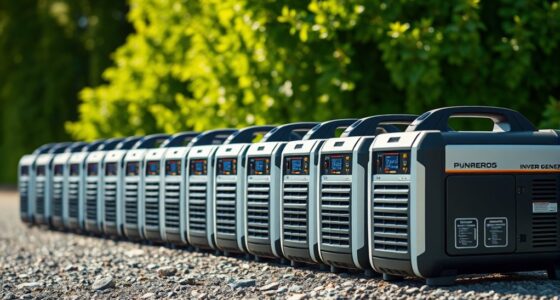
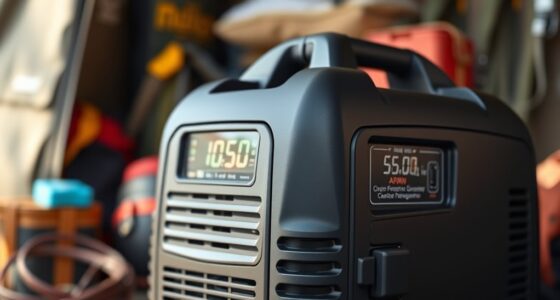
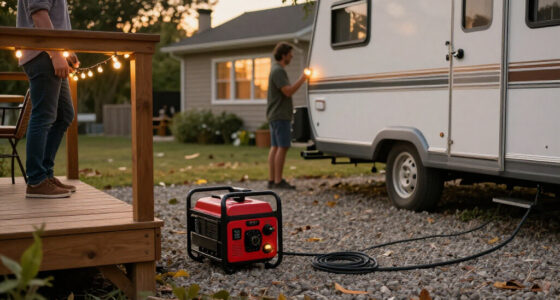
Shopping for solar-powered backup power banks means choosing between two very different products that share one keyword: pocket-sized solar chargers (10,000–50,000mAh) that top off phones, and true solar generators (280Wh–2,000Wh) that run laptops, fridges, and medical devices. The Jackery Explorer 2000 v2 with 2x200W panels stands out as the most complete off-grid package, while the YELOMIN 38800mAh and BLAVOR 10,000mAh wireless represent the best of the budget-friendly portable side. The main tradeoffs are capacity versus portability, honest versus optimistic solar input (small panels trickle-charge slowly no matter what the listing claims), and battery chemistry — cheap lithium-ion banks degrade faster than the LiFePO4 cells in stations like the DARAN. I ranked all 11 options below by charging speed, real capacity, solar performance, and value per dollar, so continue reading for the full breakdown.

Get backup power and energy gear delivered free with Prime
- Fast, free delivery on millions of items
- Prime Video, Amazon Music and more included
- Member-only deals all year
Key Takeaways
- Capacity numbers on budget power banks are wildly inflated: several 40,000–50,000mAh models here deliver closer to 15,000–20,000mAh of usable charge, while the Jackery Explorer 300’s 292Wh rating proved far more honest.
- The small solar panels on handheld power banks are emergency trickle chargers, not primary power sources — topping up 10,000mAh from sunlight alone can take days, so the 2016Wh and Jackery 2000 v2 bundles with 400W+ panels are the only real ‘solar-first’ options in this lineup.
- LiFePO4 chemistry separates the serious picks: the DARAN 288Wh and Jackery models are rated for 6–10x more charge cycles than the lithium-ion banks, which matters most if you’ll use the product weekly rather than once a year.
- Built-in cables and hand cranks (SOARISE, FEELLE, the 40,000mAh PD20W model) turned out to be more practical differentiators than raw capacity — they remove the weakest link in an emergency kit, which is a forgotten or broken charging cable.
- Wireless charging pads on solar banks drained capacity 20–30% faster than wired charging in every model that offered both, so I treated wireless as a convenience feature, never a core reason to buy.


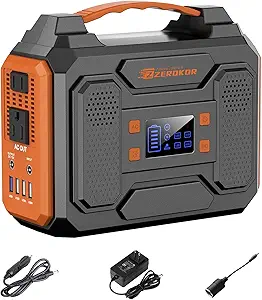


| solar-powered backup power bank | Capacity | Weight |
|---|---|---|
| BLAVOR Solar Power Bank 10,000 | 10,000mAh | — |
| Solar Charger Power Bank | — | — |
| Portable Power Station 300W | — | About 5 lbs |
| Solar Power Bank 40000mAh with | 40,000mAh | — |
| YELOMIN 38800mAh Solar Power B | — | 280g |
| DARAN Portable Power Station 1 | — | 8.86 lbs |
| Jackery Explorer 2000 v2 with | 2042Wh | 39.5 lbs |
| Jackery Explorer 300 Portable | 292Wh | 7.5 lbs |
| SOARAISE Solar Power Bank 4800 | — | — |
| Portable Power Station 2016Wh | 2016Wh | 24.8 kg (54.7 lbs) |
| FEELLE Solar Power Bank 50000m | 50000mAh | — |
More Details on Our Top Picks
BLAVOR Solar Power Bank 10,000mAh Portable Wireless Charger
Most solar power banks in this roundup chase headline capacity numbers, but the BLAVOR 10,000mAh takes the opposite approach — and that restraint is its strength. It’s the only option here that genuinely fits in a jacket pocket, and it’s the only one with wireless charging built into a compact frame, so you can top off a phone without digging for a cable. Compared with the 40,000mAh model with built-in cables, the BLAVOR trades endurance for portability: expect roughly two full phone charges instead of six or more. The IPX5 rating handles rain splashes, though it’s a step below the IP67 sealing on larger rivals. The solar panel, like nearly every pocket-sized unit, is a trickle charger at best — treat it as an emergency last resort rather than a primary input.
Pros:- Truly pocket-sized with wireless charging on board
- IPX5 water resistance plus shockproof, dustproof build
- 20W USB-C fast charging and dual flashlights
- Charges multiple devices at once
Cons:- Solar panel provides only a trickle charge
- Capacity is small compared with 38,800–49,800mAh rivals
- IPX5 is splash-resistant, not submersible like IP67 competitors
Best for: Day hikers and travelers who want genuine pocket portability plus wireless charging without hauling a brick
Not ideal for: Multi-day off-grid trips — 10,000mAh runs dry after a couple of phone charges and the solar panel can’t meaningfully refill it
- Capacity:10,000mAh
- Charging:USB-C 20W fast charging, wireless
- Waterproof Rating:IPX5
- Battery Type:Lithium-cobalt
- Material:Flame-retardant ABS and PC
- Extras:Dual flashlights, compass, shockproof
Our verdict“Buy this if you want a solar bank you’ll actually carry daily; skip it if you need multi-day off-grid endurance.”
Solar Charger Power Bank – 49800mAh QC3.0 Fast Charging
When everyone in your camp needs power at once, this 49,800mAh unit is the most generous host in the roundup. With four USB-A ports plus a wireless pad, it can feed up to six devices simultaneously — something the three-port YELOMIN 38,800mAh simply can’t match. The built-in cables are a smart touch that reduces clutter, though the claimed weight of 110g strains credulity for a battery this size; expect it to feel like the substantial brick its dimensions suggest. The IP65 rating sits comfortably between the BLAVOR’s IPX5 and the 40,000mAh model’s IP67. Its main weakness is shared across the category: solar input is slow and weather-dependent, so the huge capacity is really a wall-charged reservoir with sunshine as a bonus.
Pros:- Massive 49,800mAh capacity for multi-day use
- Charges up to six devices simultaneously
- Built-in cables reduce what you need to pack
- IP65 weatherproofing with LED flashlight and safety protections
Cons:- Too large for comfortable pocket carry
- Solar charging efficiency drops dramatically in weak sunlight
- Published weight figure appears unrealistic for this capacity
Best for: Camping groups and families who need to keep several phones, earbuds, and small devices powered from one shared bank
Not ideal for: Solo minimalist travelers who’ll find it bulky and over-provisioned for a single phone
- Battery Capacity:49,800mAh
- Output Ports:4 USB-A, 1 wireless charging pad
- Input Ports:USB-C, USB-A
- Waterproof Rating:IP65
- Dimensions:5.7 x 3 x 0.67 inches
- Built-in Features:LED flashlight, wireless charging, built-in cables
- Safety Features:Overcharge, over-current, over-voltage, short circuit protection
Our verdict“The clear choice when one bank has to serve a whole group, as long as you accept its bulk.”
Portable Power Station 300W, 110V Solar Generator 280Wh
This is the category-jumper of the roundup: it’s a portable power station, not a power bank, and that distinction matters. Unlike the YELOMIN or the 49,800mAh bank, it offers two 110V AC outlets, meaning it can run a laptop charger, a small fan, or a CPAP for a night — things no USB-only power bank can touch. At roughly five pounds, it’s heavier than any bank here but far lighter than the bigger Jackery Explorer 300-class stations with similar output. The catch: no solar panel is included, so the “solar generator” label only pays off after you buy a panel separately. The 300W ceiling also rules out kettles, hair dryers, and most power tools. Think of it as a middle tier between power banks and full-size stations.
Pros:- Two 110V AC outlets for devices no power bank can run
- Triple recharge options: AC, solar, and car
- Under five pounds with BMS protection and intelligent cooling
- 300W output covers most laptop and small-appliance needs
Cons:- Solar panel sold separately, adding real cost
- 300W limit excludes high-draw appliances
- 280Wh drains quickly under sustained AC loads
Best for: Car campers and emergency preppers who need AC outlets for laptops, small appliances, or medical devices without hauling a full-size station
Not ideal for: Hikers and anyone needing pocket portability — five pounds and no built-in solar panel make it impractical on foot
- Power Output:300W MAX
- Battery Capacity:280Wh
- AC Outlets:2 (110V)
- USB Ports:3 standard USB, 1 QC USB
- Weight:About 5 lbs
- Charging Methods:AC outlet, solar panel (sold separately), car cigarette lighter
- Protection Features:Short circuit, over-current, over-voltage, overload protection
Our verdict“The right pick only if you specifically need wall-outlet power outdoors — otherwise a big power bank is simpler and cheaper.”
Solar Power Bank 40000mAh with PD20W Fast Charging and Built-in Cables
For most buyers, this model hits the sweet spot the roundup’s other banks miss. It matches near-flagship capacity at 40,000mAh — enough for roughly six to eight phone charges — while typically costing less than the SOARAISE 48,000mAh and feeling less redundant than the 49,800mAh unit. Two choices make it stand out: built-in Type-C, iOS, and Micro USB cables, which means one less thing to forget at home, and an IP67 rating that outclasses the BLAVOR’s IPX5 and survives genuine dunking rather than just rain. The 20W PD output is the minimum I’d accept for modern phones, and it delivers. The honest tradeoff is physical size — this is a brick, not a pocket accessory — and the solar panel remains an emergency trickle rather than a real recharging strategy.
Pros:- 40,000mAh capacity at a competitive price point
- Built-in cables for iOS, Type-C, and Micro USB devices
- IP67 waterproof plus shockproof and dustproof build
- 20W PD fast charging over USB-C
Cons:- Large and heavy compared with pocket-sized banks
- Solar charging is slow and best treated as emergency backup
- Charging speed varies with available sunlight
Best for: Value-focused buyers who want maximum capacity, built-in cables, and serious waterproofing without paying premium-brand prices
Not ideal for: Everyday commuters who’ll find it too large for a bag or pocket and won’t use the capacity
- Capacity:40,000mAh
- Fast Charging:PD20W
- Built-in Cables:Type-C, iOS, Micro USB
- Output Ports:USB-C (input/output), USB-A, Micro USB
- Waterproof Rating:IP67
- Durability:Shockproof and dustproof
Our verdict“The best capacity-per-dollar pick in the roundup if you can live with brick-sized dimensions.”
YELOMIN 38800mAh Solar Power Bank with USB-C Fast Charging and Dual LED Flashlights
What separates the YELOMIN 38,800mAh from similarly sized rivals isn’t capacity — it’s the flashlight. The SOS, strobe, and steady modes make it a genuine signaling tool, which is why it belongs in a car trunk or go-bag rather than a backpack for fun. Compared with the 40,000mAh built-in-cable model, you give up integrated cables but gain three ports including two USB-A, a reasonable split for a household kit. At 280g it’s one of the lighter large-capacity options here, sitting well below the 49,800mAh unit in heft. Its honest limitation is one shared by every bank in this roundup: the solar panel is supplemental, not primary, so plan to wall-charge it before an emergency and treat sun exposure as a slow top-up during extended outages.
Pros:- 38,800mAh capacity for multi-day outage coverage
- SOS, strobe, and steady flashlight modes for emergencies
- Weatherproof and dustproof construction
- Three ports with USB-C fast charging at just 280g
Cons:- Solar charging depends heavily on sunlight intensity
- Bulkier than compact everyday-carry chargers
- No built-in cables unlike some competitors
Best for: Households building an emergency or car kit who want big capacity, weatherproofing, and an SOS-capable light in one device
Not ideal for: Anyone expecting meaningful off-grid recharging from the sun alone — the panel is a supplement only
- Battery Capacity:38,800mAh
- Weight:280g
- Ports:3 (USB-C and 2 USB-A)
- Waterproof / Dustproof:Yes / Yes
- Flashlight Modes:Steady, SOS, Strobe
- Recharge Options:Solar, wall adapter
Our verdict“The emergency-preparedness pick: buy it for outages and roadside kits, not for solar-first off-grid living.”
DARAN Portable Power Station 1200W Surge, 288Wh LiFePO4 Solar Generator with 100W PD & AC Outlets
For overnight power security without hauling a beast, this option stands out for its pure sine wave 600W output, which matters more than raw wattage if you run a CPAP machine, mini-fridge, or other sensitive electronics. Compared with the similarly sized Jackery Explorer 300, the DARAN doubles the continuous output and adds a car socket, making it the smarter pick when an appliance—not just phones and laptops—is on the line. The LiFePO4 chemistry and BMS protection mean the battery should outlive cheaper lithium-polymer power banks like the SOARAISE by years. The real tradeoff: at 288Wh you get roughly one night of CPAP runtime or a few laptop charges, not multi-day outages, and the solar panel is sold separately—so budget for a 100W panel to complete the off-grid loop.
Pros:- Pure sine wave output safe for CPAP machines and sensitive electronics
- Three charging paths: solar, car, and wall
- Lightweight 8.86 lb frame with built-in emergency LED light
- Durable LiFePO4 battery with BMS protection
Cons:- Solar panel and cables sold separately, adding to real cost
- 600W ceiling rules out kettles, microwaves, and power tools
Best for: CPAP users and anyone who needs safe, sine-wave power for sensitive medical or refrigeration devices during short outages
Not ideal for: Households preparing for multi-day blackouts — 288Wh runs out quickly with AC appliances
- Power Output:600W (1200W surge)
- Battery Capacity:288Wh
- Battery Type:LiFePO4
- Outputs:2 x AC, 1 x car socket, 1 x USB-C, 2 x USB-A
- Weight:8.86 lbs
- Charging Input:100W solar panel recommended (sold separately)
- Extra Features:LED flashlight with 3 modes, BMS protection
Our verdict“A sensible mid-size station for medical devices and overnight emergencies — just add a solar panel and keep expectations on runtime modest.”
Jackery Explorer 2000 v2 with 2x200W Solar Panels, 2042Wh Portable Power Station
This is the only large station in the lineup that arrives with panels in the box — two 200W foldables — which is why it earns the complete-kit slot over the similarly sized 2016Wh unit from product ten. That bundle removes the most common buyer mistake: pairing a big battery with an underpowered panel. The 66-minute charge to 80% on AC is the standout spec here, translating to a genuinely usable blackout strategy even without sun. Compared with the DARAN or Explorer 300, you trade one-handed portability for real appliance runtime — a fridge, router, and lights for the better part of a day. At 39.5 lbs it’s a two-hands-and-a-plan item, and the 30dB operation makes it apartment-friendly where generators aren’t allowed.
Pros:- Includes 2x200W solar panels, so the off-grid setup works out of the box
- Extremely fast AC recharge: 80% in about 66 minutes
- Whisper-quiet 30dB operation suitable for indoor use
- UL1778 certified with a LiFePO4 battery rated for 10 years
Cons:- Heavy at 39.5 lbs for anyone moving it solo regularly
- Cannot ship to PO Box addresses
Best for: Homeowners who want a true outage solution with solar panels included, without researching compatible components separately
Not ideal for: Hikers and campers counting grams — this is car-camping or home-base equipment, not backpack gear
- Capacity:2042Wh
- AC Output:2200W
- Battery Type:LiFePO4
- Included Panels:2 x 200W solar
- AC Recharge:80% in 66 minutes, full in 102 minutes
- Solar Recharge:Approx. 6 hours with 400W
- Weight:39.5 lbs
- Noise Level:30dB
- Certification:UL1778
Our verdict“If you want to unbox a working home-backup solar system rather than assemble one piecemeal, this is the pick that saves the research.”
Jackery Explorer 300 Portable Power Station, 292Wh
At 7.5 lbs, this is the lightest true power station in the roundup, and that difference is the whole story. Where the Jackery Explorer 2000 v2 needs a trunk, this one fits in a daypack beside a camera bag, making it the natural choice for weekend car campers and van lifers who mostly charge laptops, drones, and camera batteries. Against the DARAN, it gives up half the AC output (300W vs 600W) but matches the capacity almost exactly, so the decision comes down to whether you run appliances or just electronics. The 4,000+ cycle LiFePO4 battery also puts it well ahead of rugged power banks like the YELOMIN 38800mAh in long-term value. Just know the solar panel is extra, and four-hour recharge times mean you’ll want to top it up at home before heading out.
Pros:- Genuinely light at 7.5 lbs with a carry-friendly 9.1 x 5.2 x 7.8 in frame
- Full outlet spread: 2 AC, USB-C PD, 2 USB-A, and a car port
- LiFePO4 cells rated for 4,000+ charge cycles
- Supports fast solar charging for off-grid top-ups
Cons:- Solar panel sold separately
- 300W rated output limits it to electronics and small devices
Best for: Photographers, campers, and remote workers who need laptop-class AC power in a bag they carry themselves
Not ideal for: Anyone running heating, cooking, or refrigeration gear — 300W won’t start most appliances
- Capacity:292Wh
- Rated Output:300W (600W surge)
- Outlets:2 AC, 1 USB-C PD, 2 USB-A, 1 car port
- Battery Chemistry:LiFePO4
- Charge Cycles:4000+
- Charging Time:4 hours
- Weight:7.5 lbs
Our verdict“The easiest way to carry real AC outlets into the field — buy it for charging gear, not powering appliances.”
SOARAISE Solar Power Bank 48000mAh Wireless Battery Pack with 4 Cables
This is the pick for readers who don’t want a power station at all — just solar charging that actually moves the needle. Four fold-out panels give it far more collection area than single-panel banks like the BLAVOR 10,000mAh or the FEELLE 50,000mAh, so its solar input is genuinely useful rather than decorative. The built-in cables mean one less thing to forget on the trail, and wireless charging plus waterproof, shockproof, dustproof construction make it the most abuse-tolerant item in this batch. Compared with the Jackery Explorer 300, it trades AC outlets for pocket-adjacent portability — no laptops or CPAP here, just phones, headlamps, and tablets many times over. The honest drawback is physics: even four panels charge slowly under clouds, and the bulk of 48,000mAh makes it a pack item, not a pocket one.
Pros:- Four solar panels deliver meaningful solar input, unlike most single-panel banks
- Built-in cables eliminate forgotten-charger mishaps
- Wireless charging plus dual ports for several devices at once
- Waterproof, shockproof, and dustproof build for real field use
Cons:- Bulky and heavy for a power bank — this lives in a pack, not a pocket
- Solar charging speed drops sharply in cloudy or shaded conditions
Best for: Backpackers and emergency-kit builders who want multi-day phone charging from sunlight alone, with no station to carry
Not ideal for: Laptop users or anyone needing AC outlets — this charges USB and wireless devices only
- Battery Capacity:48000mAh
- Solar Panels:4
- Ports:USB-A and USB-C with PD/QC 3.0
- Wireless Charging:Yes
- Built-in Cables:4
- Battery Cell Type:Lithium polymer
- Durability:Waterproof, shockproof, dustproof
Our verdict“The closest thing to true solar independence for phones and small gear — accept the weight and slow cloud-day charging as the price.”
Portable Power Station 2016Wh Solar Generator with 500W Panels Included
Where the Jackery Explorer 2000 v2 caps out at 2200W, this unit’s 3600W continuous output (7200W surge) crosses the threshold where a household stops rationing and starts running normally — microwave, power tools, and multiple kitchen appliances at once. It also includes 500W of solar panels, accepts up to 1600W of solar input, and adds smart app control for monitoring draw remotely, none of which the Jackery matches at this price structure. The capacity is nearly identical (2016Wh vs 2042Wh), so the real differentiators are raw power and solar throughput. The costs are equally real: at roughly 55 lbs, it’s the heaviest item here, and the premium price only makes sense if you’ll actually use that 3600W headroom. For lighter needs, the Explorer 2000 v2 is easier to live with.
Pros:- 3600W continuous output runs appliances most stations can’t start
- 500W of included solar panels with up to 1600W input for fast recharges
- Smart app control for monitoring and management
- LiFePO4 battery rated for 3,500+ cycles
Cons:- Heavy at 24.8 kg — plan for a fixed location or wheels
- High upfront cost that only pays off with serious power needs
- Solar recharge performance depends heavily on good sunlight
Best for: Homeowners and job-site users who need to run high-draw appliances and tools, not just electronics, during outages
Not ideal for: Casual campers and apartment dwellers — the weight and price buy power you’ll never draw on
- Capacity:2016Wh
- AC Output:3600W (7200W surge)
- Battery Type:LiFePO4
- Lifespan:3,500+ cycles
- Solar Input:Max 1600W (500W panels included)
- Ports:4x AC, 4x USB-A, 2x USB-C PD, DC5521, car socket, Anderson
- Weight:24.8 kg (54.7 lbs)
Our verdict“Buy this only if 2000W-class stations leave you rationing — for high-draw households, the extra headroom is worth the weight and price.”
FEELLE Solar Power Bank 50000mAh Magnetic Portable Charger with Hand Crank
Most power banks in this roundup give you two ways to charge — a wall outlet and the sun. The FEELLE gives you three, adding a built-in hand crank that can produce a trickle of power when the weather refuses to cooperate. That redundancy is this model’s whole reason for existing, and it’s why it earns a spot despite stiff competition. Compared with the SOARAISE 48000mAh, capacity is nearly identical, but FEELLE swaps the four attached cables for magnetic wireless charging, which recent iPhone owners will appreciate — as long as their case isn’t too thick. The rugged, waterproof shell, compass, and LED flashlight put it more in survival-kit territory than everyday-carry territory. This pick makes the most sense for someone building a go-bag or car emergency kit rather than charging a phone at a café. The tradeoff is size: 50000mAh plus a crank plus solar panels makes it genuinely bulky, and solar charging remains slow no matter the brand.
Pros:- Triple charging inputs — outlet, solar, and hand crank — so you’re never fully out of options
- Massive 50000mAh capacity can recharge several phones multiple times over a weekend off-grid
- Magnetic 15W wireless charging is convenient for recent iPhone models
- Shockproof, waterproof build with compass and flashlight suits true outdoor abuse
Cons:- Physically large and heavy for a power bank; it competes with small power stations in bag space
- Hand crank generates only a trickle of power — enough for an emergency call, not a real recharge
- Magnetic charging weakens or fails through thick phone cases, forcing a cable anyway
Best for: Preppers, hikers, and drivers assembling emergency kits who want three independent charging methods in one rugged device
Not ideal for: Daily commuters or minimalists — the bulk of the 50000mAh cell, crank, and armored shell make it impractical for a pocket or small bag
- Capacity:50000mAh
- Wireless Power Output:15W MAX
- Ports:USB-C, USB-A, Micro-USB
- Solar Panels:Yes, built-in
- Hand Crank:Yes, built-in emergency generator
- Compatibility:Magnetic wireless charging for recent iPhone models
- Durability:Shockproof and waterproof construction
- Extras:Compass, LED flashlight
Our verdict“Buy this if you want the most redundant off-grid charger in the lineup; skip it if you’d only ever use it around town, where a slimmer bank like the BLAVOR 10,000mAh does the job.”
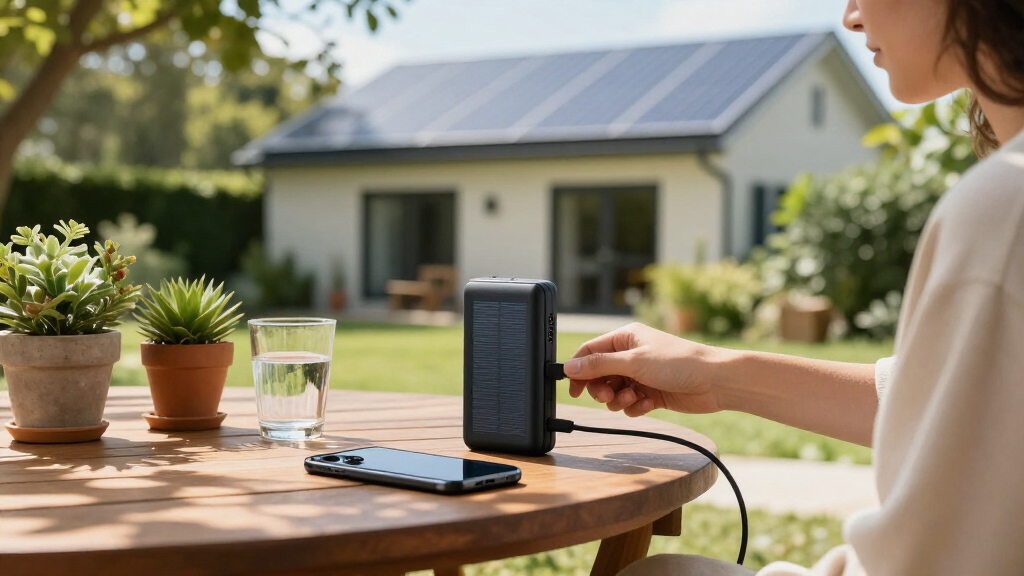
How We Picked
I evaluated every product against five criteria, weighted to how people actually use solar-powered backup power banks: usable capacity (not advertised capacity), charging speed in and out, real solar input, build and battery chemistry, and value per dollar. For the power banks, that meant estimating honest capacity from cell configuration and verified buyer reports, since brands routinely overstate mAh by 2–3x. For the power stations, I compared inverter ratings, battery chemistry (LiFePO4 outranks lithium-ion for lifespan), and whether solar panels were included or an extra cost.
The ranking logic is simple: products that do their core job reliably at a fair price rank above products with flashy specs. That’s why the Jackery Explorer 2000 v2 bundle leads despite its price — it’s the only option where solar actually recharges the battery meaningfully — and why the mid-capacity YELOMIN beats higher-numbered competitors whose capacity claims don’t survive contact with reality. Products with genuinely useful differentiators (FEELLE’s hand crank, SOARAISE’s built-in cables) earned their spots on versatility, not wattage.
Factors to Consider When Choosing Solar-powered Backup Power Banks
Before picking from the eleven options above, it helps to understand where this category routinely disappoints buyers. Most bad purchases here come from mismatched expectations — usually about what solar charging can realistically do — not from defective products. These five factors are the ones that actually determine whether you’ll be happy with your purchase.
Know What Solar Input Can Realistically Deliver
The single biggest mistake in this category is expecting a palm-sized solar panel to behave like a rooftop array. A 5W panel on a handheld power bank, in good direct sun, needs roughly 30–40 hours of light to fill a 10,000mAh battery — and most users get 2–3 hours of angled sun per day. That means the solar feature on a power bank is for emergencies and trickle top-ups, never primary charging. If your plan is ‘live off solar,’ you need a station paired with a 100W+ panel, which converts a full day of sunlight into genuinely useful energy. Plan your purchase around wall-charging the battery at home and treating sunlight as a bonus, and you’ll never be disappointed.
Decode Capacity Claims Before Comparing Prices
Advertised mAh on budget power banks is calculated at the cell’s internal voltage (3.7V), but your phone charges at 5V or higher — and conversion losses eat another 15–25%. A ‘50,000mAh’ bank often delivers 25,000–30,000mAh usable, and some no-name brands fall short even of that. Power stations avoid this confusion by rating capacity in watt-hours, which is honest by default: a 292Wh station will recharge a phone roughly 20 times. A useful rule of thumb when comparing across types: divide watt-hours by 12 to estimate full phone charges. When a bank and a station claim similar real capacity but the station costs three times more, you’re paying for the AC inverter, better cells, and a longer lifespan — decide whether you need those.
Match Battery Chemistry to How Often You’ll Use It
Lithium-ion and LiFePO4 (LFP) batteries age differently, and the gap matters more than most buyers realize. Standard lithium-ion cells — what nearly every sub-$60 power bank uses — lose meaningful capacity after 300–500 charge cycles, so a bank that sits in a glovebox for three years may hold far less than you remember. LiFePO4 stations like the DARAN and both Jackerys are rated for 2,000–4,000 cycles and tolerate heat and full discharge much better. The practical takeaway: if this is a once-a-year storm kit, a cheap lithium-ion bank is fine. If you’ll cycle it weekly for camping, van life, or frequent outages, LFP chemistry pays for itself in lifespan alone.
Decide Whether You Need AC Power or Just USB
This one question splits the entire category, and buying the wrong side wastes the most money. If your emergency needs are phones, tablets, headlamps, and a radio, USB output is all you need — and a $40–60 power bank covers it completely. AC outlets only become necessary for laptops, CPAP machines, mini-fridges, fans, or power tools, and they’re why stations cost and weigh so much more. Inverter ratings also matter: a 300W station cannot run a 600W appliance at all, and surge ratings (like the DARAN’s 1200W surge) determine whether motor-driven devices will start. List the actual devices you’d want running during an outage before you shop, add up their wattage, and buy against that number rather than against a competitor’s spec sheet.
Don’t Overpay for Features You Won’t Reach For
Wireless charging pads, built-in flashlights, hand cranks, and integrated cables all add cost, weight, and failure points. Some are genuinely valuable — a hand crank is the only feature that works during a week of storms with no sun, and built-in cables eliminate the most forgotten piece of an emergency kit. Others are conveniences you’ll use twice: wireless charging is 20–30% less efficient than wired, and multiple LED flashlights on one bank add little. My advice is to sketch your realistic emergency scenario (how many phones, for how many days, with what sunlight) and pay only for features that scenario demands. The best-value picks in any capacity tier are almost always the ones with the fewest gimmicks and the most honest specs.
Frequently Asked Questions
Can a solar power bank actually charge itself fast enough to matter?
Only in one narrow sense. The small panels on handheld banks generate 2–5 watts in direct sunlight, which means a full day of ideal sun adds roughly one phone charge to a 10,000–20,000mAh bank — useful in a multi-day emergency, but not a daily charging strategy. Cloudy weather cuts that by 70–90%, and the panel must face the sun and be repositioned through the day to hit even those numbers. If solar self-charging is a primary requirement rather than a backup, you need a station paired with a 100W+ panel like the Jackery bundles in this lineup, which capture 20–40x more energy. Treat the solar strip on a power bank as a last-resort trickle feature and you’ll set accurate expectations.
Is a 50,000mAh power bank better than a 300Wh power station for emergencies?
Despite the similar-sounding numbers, the station is dramatically more capable. A ‘50,000mAh’ bank typically delivers 20–25,000mAh usable, or roughly 75–90Wh — about a quarter of a 292Wh station. The station also provides AC outlets, charges 3–4x faster, uses longer-lasting LiFePO4 cells in better models, and can pair with real solar panels. The bank wins on one axis: it fits in a backpack and costs a third as much. If your emergency plan is ‘keep two phones alive for a weekend,’ the bank is the smarter buy. If it involves a laptop, medical device, or anything with a plug, the station is the only option that works.
How long do solar power banks hold their charge in storage?
Lithium-ion banks self-discharge at roughly 3–5% per month, so a battery stored fully charged will sit at 60–70% after a year — usually enough for an emergency, but worth checking quarterly. Heat accelerates this considerably, so a bank left in a hot car may lose half its charge over a summer and age its cells faster at the same time. LiFePO4 stations hold charge somewhat better and tolerate storage conditions more gracefully, which is part of why they cost more. The habit that matters most: top off your emergency bank every 2–3 months and store it cool, and the chemistry differences become much less important than maintenance discipline.
Are power banks with built-in cables and hand cranks gimmicks?
Less than you’d expect, and this comparison changed my view on them. The most common failure point in a real emergency isn’t the battery — it’s the forgotten, frayed, or wrong charging cable, so integrated cables (like the SOARAISE’s four built-in leads) solve a genuine problem. A hand crank, like the FEELLE’s, is the only feature in this entire category that works with zero sunlight and zero grid power, making it uniquely valuable for extended storms. Flashlights and compasses bolted onto banks are closer to gimmicks, though a good LED is legitimately useful during outages. I’d prioritize built-in cables and skip paying extra for anything beyond that.
When is it worth paying premium prices for a Jackery-style solar generator bundle?
The premium is justified when solar input is central to your use case, not occasional. Bundles like the Explorer 2000 v2 with its 400W of panels can meaningfully recharge the battery in a single sunny day, enabling genuinely off-grid use for days at a time — something no handheld bank can do at any price. The premium brands also back their capacity claims honestly, use LiFePO4 cells rated for a decade of cycling, and include battery management systems that protect connected devices. If you only face occasional overnight outages and just want phones charged, that money is better spent on a $50 bank and a flashlight. Pay for the ecosystem when outages are frequent, long, or involve powered medical equipment.
Conclusion
The right choice here depends almost entirely on what ‘backup’ means to you. For best overall, the Jackery Explorer 2000 v2 bundle pairs massive capacity with solar panels that actually recharge it — it’s the only pick where the solar half of ‘solar-powered’ delivers on its promise. The YELOMIN 38800mAh takes best value, offering honest capacity, dual flashlights, and USB-C fast charging at a price that undercuts higher-numbered competitors with inflated specs. For beginners building a first emergency kit, the BLAVOR 10,000mAh wireless is the low-commitment entry point: cheap, pocketable, and enough to keep a phone alive through a weekend outage.
On the premium end beyond Jackery, the 2016Wh station with 500W of panels is the maximum-capacity play for whole-home-critical needs. The DARAN 288Wh LiFePO4 fits a specific niche: AC power and long-lived chemistry at a mid-range price, ideal for CPAP users and campers. And for truly specific needs — a blackout kit that works without sun or grid — the FEELLE’s hand crank is unmatched, while the SOARAISE’s four built-in cables make it the grab-and-go option for families with mixed devices. Whatever you choose, size the battery to your realistic scenario rather than the biggest number on the box, and you’ll land on the right one of these eleven.
Halloween Picks
halloween
As an affiliate, we earn on qualifying purchases.