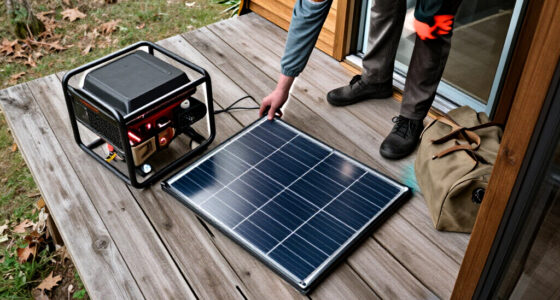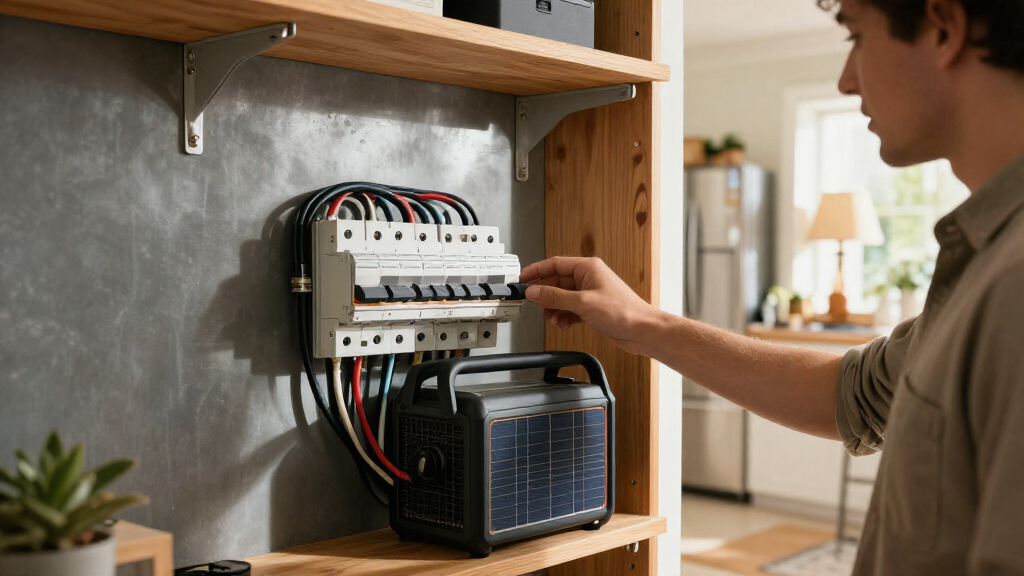

For most buyers seeking a solar generator transfer switch, I’d start with the Nature’s Generator 50A 12-circuit manual switch for its balance of capacity and circuit coverage. The Renogy 30A automatic switch is a better fit for compatible pure sine wave inverter setups that need automatic source switching, while the Briidea 4-circuit kit suits smaller, clearly defined backup loads. The main tradeoffs are how many circuits you need, whether your power station supports the switch’s voltage and current, and whether manual or automatic operation fits your setup. Higher-amperage models can serve larger systems, but they are not automatically a match for a portable solar generator. Read on for the full comparison and guidance on choosing a switch that fits your equipment and backup plan.

Get backup power and energy gear delivered free with Prime
- Fast, free delivery on millions of items
- Prime Video, Amazon Music and more included
- Member-only deals all year
Complete the kit


Key Takeaways
- The Nature’s Generator 50A, 12-circuit model is the strongest all-around fit in this lineup when you want broader circuit coverage than the 6-circuit switches without stepping up to a 100A or 200A unit.
- Amperage alone does not establish compatibility. A 100A or 200A switch may be far beyond a portable solar generator’s output, so matching source voltage, current, phase, and wiring matters more than choosing the largest rating.
- The Renogy 30A automatic switch serves a distinct use case: it is aimed at compatible pure sine wave inverter setups, while most listed options are manual switches requiring the user to operate the source selection.
- Smaller circuit-count models can be the more practical choice. The Briidea 4-circuit kit and 30A 6-circuit switches may suit a short list of essential loads better than a higher-capacity panel with circuits you will not use.
- Prewired and kit-based designs may simplify the purchase, but not remove electrical planning. Buyers still need to confirm installation requirements, enclosure suitability, and whether the selected loads stay within the generator’s continuous output.
| 100A 220V AC Automatic/Manual Transfer Switch, 2-Pole |  | Best for Automatic 220V Source Switching | Operating voltage: 220V AC | Switching modes: Automatic and manual | Transfer time: 0.05 seconds | VIEW LATEST PRICE | See Our Full Breakdown |
| 50A 10-Circuit Manual Generator Transfer Switch, 240V, Surface Mount |  | Best for Clearly Labeled 10-Circuit Backup | Operating voltage: 240V | Circuit support: Up to 10 circuits | Operation mode: ON-OFF-ON | VIEW LATEST PRICE | See Our Full Breakdown |
| Nature’s Generator 30A 6-Circuit Manual Transfer Switch, 120V |  | Best Complete Kit for 120V Circuits | Operating voltage: 120V | Wattage: 3,600 W | Circuit capacity: 6 circuits | VIEW LATEST PRICE | See Our Full Breakdown |
| DSGSANO 50A 10-Circuit Manual Generator Transfer Switch |  | Best for Flexible Backup and Off-Grid Setups | Model: A5 | Voltage: 240V | Circuit support: Up to 10 circuits | VIEW LATEST PRICE | See Our Full Breakdown |
| Tzechkii 200A Manual Generator Transfer Switch, 120/240V, 48,000W |  | Best for High-Capacity Whole-Home Switching | Maximum current: 200A | Power capacity: 48,000W | Voltage: 120/240V | VIEW LATEST PRICE | See Our Full Breakdown |
| Nature’s Generator 50A Manual Transfer Switch, 12-Circuit, 120/240V |  | Best for Broad Circuit Coverage | Operation: Manual | Operating voltage: 120/240 V | Maximum power: 12,000 W | VIEW LATEST PRICE | See Our Full Breakdown |
| MUJURUR 100 Amp Manual Transfer Switch, 24,000W, 120/240V, NEMA 3R | 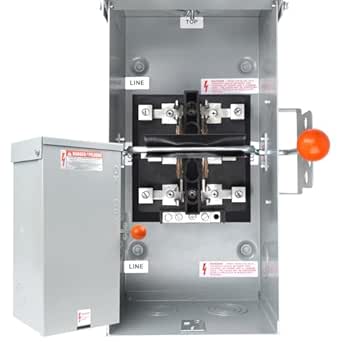 | Best for Outdoor 100A Source Switching | Model: DTTS-100A | Operation mode: ON-OFF-ON manual | Operating voltage: 240 V | VIEW LATEST PRICE | See Our Full Breakdown |
| Renogy 30A Automatic Transfer Switch for Pure Sine Wave Inverters |  | Best Automatic Switch for RV and Off-Grid Systems | Model: RTS1230 | Input and output voltage: 120 V AC | Switching delay: 20–30 seconds when switching to generator power | VIEW LATEST PRICE | See Our Full Breakdown |
| NUWJBYE 30-Amp 6-Circuit Manual Generator Transfer Switch Kit, 120V | 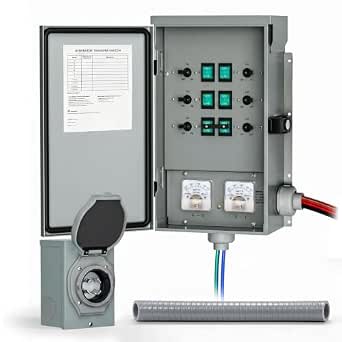 | Best for Monitoring a Small 120V Backup Panel | Voltage: 120 V | Wattage: 3,600 W | Circuit capacity: 6 circuits | VIEW LATEST PRICE | See Our Full Breakdown |
| Briidea 4-Circuit Generator Transfer Switch Kit, 15 A, 120 V, Indoor/Outdoor, IP67 |  | Best Compact Pick for Four Circuits | Model: HITS-01 | Operation: Manual | Operating voltage: 120 V | VIEW LATEST PRICE | See Our Full Breakdown |
| 100A Manual Generator Transfer Switch, 120/240V, 24,000W | 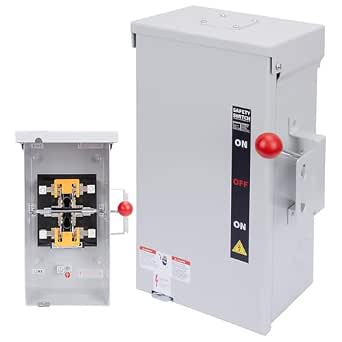 | Best High-Capacity Manual Pick | Brand: Sekelo | System voltage: 120/240V | Stated maximum capacity: 24,000W | VIEW LATEST PRICE | See Our Full Breakdown |
| 100 A, 110 V Automatic/Manual Dual Power Transfer Switch, 2-Pole |  | Best for 110V Automatic Changeover | Operating voltage: 110V AC | Poles: 2 | Operation modes: Automatic and manual | VIEW LATEST PRICE | See Our Full Breakdown |
| 63A 120/240V Prewired Manual Generator Transfer Switch |  | Best Prewired 120/240V Manual Option | System voltage: 120/240V | Maximum wattage: 15,000W | Circuit breakers: Three 63A breakers | VIEW LATEST PRICE | See Our Full Breakdown |
| JOTTAELE 2-Pole Automatic Transfer Switch, 63A, 110V |  | Best Compact Automatic 110V Pick | Model: CB-2P 63A 110V | Operating voltage: 110V | Poles: 2 | VIEW LATEST PRICE | See Our Full Breakdown |
| solar generator transfer switch | Operating voltage |
|---|---|
| 100A 220V AC Automatic/Manual | 220V AC |
| 50A 10-Circuit Manual Generato | 240V |
| Nature’s Generator 30A 6-Circu | 120V |
| DSGSANO 50A 10-Circuit Manual | — |
| Tzechkii 200A Manual Generator | — |
| Nature’s Generator 50A Manual | 120/240 V |
| MUJURUR 100 Amp Manual Transfe | 240 V |
| Renogy 30A Automatic Transfer | — |
| NUWJBYE 30-Amp 6-Circuit Manua | — |
| Briidea 4-Circuit Generator Tr | 120 V |
| 100A Manual Generator Transfer | — |
| 100 A | 110V AC |
| 63A 120/240V Prewired Manual G | — |
| JOTTAELE 2-Pole Automatic Tran | 110V |
More Details on Our Top Picks
100A 220V AC Automatic/Manual Transfer Switch, 2-Pole
For a solar generator setup that needs to switch between two 220V AC sources without relying solely on a person being present, this 2-pole model is the most automation-focused pick here. It offers automatic and manual modes and lists a 0.05-second transfer time, plus voltage thresholds that can prompt a change when supply voltage strays outside set limits. That differs from the Nature’s Generator 30A 6-Circuit Manual Transfer Switch, which puts circuit selection in the user’s hands and is aimed at 120V loads. The tradeoff is compatibility: this switch is specified for 220V systems and a PZ30 distribution-box installation, not as a general-purpose household transfer panel. I would verify the generator’s output, system voltage, and installation requirements with an electrician before choosing it; the listed wattage alone does not establish compatibility with a particular solar generator.
Pros:- Automatic and manual modes allow source switching with or without user intervention.
- Listed 0.05-second transfer time supports rapid switching when the primary source has an abnormality.
- Overvoltage and undervoltage thresholds include separate recovery values.
- Two-pole design is specified for 220V AC systems.
Cons:- 220V-only specification limits fit with many household circuits and solar generator outputs.
- Installation is intended for a PZ30 distribution box rather than a broadly described transfer panel.
- The 22,000 W rating does not by itself confirm compatibility with a generator, wiring, or load.
Best for: Owners of a compatible 220V solar generator or backup source who want automatic source monitoring as well as a manual mode.
Not ideal for: Buyers with standard 120V circuits, a 120/240V panel, or no PZ30 distribution-box installation; the listed 220V configuration may not match their system.
- Operating voltage:220V AC
- Switching modes:Automatic and manual
- Transfer time:0.05 seconds
- Poles:2
- Frequency:50/60 Hz
- Wattage:22,000 W
- Undervoltage threshold / recovery:175V / 195V
- Overvoltage threshold / recovery:260V / 240V (±5V)
Our verdict“Choose this for a professionally checked 220V system where automatic source switching matters more than broad household-circuit compatibility.”
50A 10-Circuit Manual Generator Transfer Switch, 240V, Surface Mount
This switch suits buyers who want to choose which household circuits receive generator power rather than switch an entire home at once. Its 50A, 240V rating and support for up to 10 selected circuits give it a different job from the Nature’s Generator 30A 6-Circuit Manual Transfer Switch, which is limited to six 120V circuits. Marked wires and circuit labels can make identification and maintenance more straightforward, while the surface-mount enclosure gives installers a defined panel location. Operation is manual, using an ON-OFF-ON arrangement, so someone must change the source rather than relying on automatic monitoring like the 100A 220V AC Automatic/Manual Transfer Switch. This is an indoor unit, and wiring work must meet local electrical codes; professional installation is recommended. I would confirm the generator’s 240V, 50A output and the selected circuits’ requirements before buying.
Pros:- Supports up to 10 selected circuits for more load choices than six-circuit manual models.
- Marked wires and circuit labels help identify connections during installation and maintenance.
- ON-OFF-ON manual control makes the source-selection process explicit.
- Surface-mount dimensions are specified, giving installers a defined footprint.
Cons:- Manual operation requires someone to switch sources when utility power fails or returns.
- Intended for indoor use, so it is not a direct fit for an exposed outdoor location.
- Requires electrical wiring work and local-code compliance; professional installation is recommended.
Best for: Homeowners with a compatible 240V, 50A generator who want labeled, manual control over as many as 10 selected indoor circuits.
Not ideal for: Buyers seeking automatic switching, outdoor installation, or a transfer panel for a 120V-only generator.
- Operating voltage:240V
- Circuit support:Up to 10 circuits
- Operation mode:ON-OFF-ON
- Control type:Manual
- Mounting:Surface mount
- Dimensions:11.75 × 4.5 × 11 in
- Intended use:Indoor
Our verdict“Pick this for labeled, manual backup of up to 10 indoor circuits when your generator matches its 240V, 50A requirements.”
Nature’s Generator 30A 6-Circuit Manual Transfer Switch, 120V
Among these five, this is the most ready-to-configure option for a 120V, 30A portable-generator setup: the package includes an L5-30P inlet, a 30A cord, and pre-wired components, rather than requiring buyers to source those parts separately. Its six manual circuit selectors let a household prioritize chosen loads, while illuminated rocker switches make the selected state easier to see. Compared with the 50A 10-Circuit Manual Generator Transfer Switch, it handles fewer circuits and a lower stated capacity, but its included connection hardware and UL listing offer a more defined kit for compatible 120V use. It is still a manual, indoor wall-mount installation, not an automatic solution or an outdoor panel. Check the generator connection carefully: the listed compatibility specifies an L14-30 outlet, while the included inlet is L5-30P, so confirm the required connection arrangement before purchase.
Pros:- Includes an L5-30P power inlet, 30A cord, and pre-wired components.
- Supports manual selection across six circuits for load prioritization.
- Illuminated rocker switches make circuit positions easier to see.
- UL listing and a steel enclosure provide specified safety and enclosure details.
Cons:- Limited to 120V and 30A, with lower capacity than the 50A 10-circuit options.
- Manual circuit selection requires user action when changing sources.
- Indoor installation only; generator outlet and inlet compatibility should be confirmed before purchase.
Best for: Solar-generator owners building a compatible 120V, 30A indoor backup setup who want a six-circuit manual panel with inlet and cord included.
Not ideal for: Buyers needing 240V support, more than six circuits, automatic transfer, or an outdoor-rated enclosure.
- Operating voltage:120V
- Wattage:3,600 W
- Circuit capacity:6 circuits
- Operation mode:OFF-NONE-ON
- Mounting:Wall mount
- Included connection components:L5-30P 30A power inlet and 30A power cord
- Specification:UL
Our verdict“Choose this kit for a compatible 120V setup where included connection parts and clear manual circuit controls matter more than higher capacity.”
DSGSANO 50A 10-Circuit Manual Generator Transfer Switch
The DSGSANO A5 is the closest alternative to the 50A 10-Circuit Manual Generator Transfer Switch in this group: both list 240V, 50A, and up to 10 circuits, with compact surface-mount dimensions. Its stated use also reaches beyond household backup to RV and off-grid applications, which may appeal to buyers planning a fixed system around varied backup sources. Marked wires help identify connections, but the product information gives fewer installation aids than the competing 50A model, which specifically calls out circuit labels and an ON-OFF-ON control arrangement. Neither is automatic, and this unit’s terminal connection means it is not a plug-in alternative to a portable generator connection kit. Buyers should confirm panel and generator compatibility and have installation handled by someone competent with electrical wiring; the listing itself recommends professional help for inexperienced users.
Pros:- Supports up to 10 circuits at a stated 240V and 50A.
- Marked wires help identify connections during wiring.
- Listed for backup, RV, and off-grid applications.
- Compact 11.75 × 4.5 × 11-inch dimensions suit installations with limited space.
Cons:- Manual operation offers no automatic source changeover.
- Terminal connections require wiring work rather than a simple plug-in setup.
- Installation requires electrical knowledge, and professional installation is recommended for inexperienced users.
Best for: Experienced installers planning a 240V, 50A, 10-circuit manual transfer setup for home backup, RV, or off-grid use.
Not ideal for: First-time DIY buyers who need a clearly documented plug-in kit, an automatic switch, or a smaller 120V circuit solution.
- Model:A5
- Voltage:240V
- Circuit support:Up to 10 circuits
- Connection type:Terminal
- Mounting:Surface mount
- Dimensions:11.75 × 4.5 × 11 in
- Intended applications:Backup, RV, and off-grid power
Our verdict“Consider this for a compact, manually controlled 10-circuit 240V setup when an experienced installer can verify its fit for your system.”
Tzechkii 200A Manual Generator Transfer Switch, 120/240V, 48,000W
This is the lineup’s high-capacity choice: a 200A manual double-throw switch rated for 120/240V and listed at 48,000W, with a NEMA 3R galvanized-steel enclosure for indoor or outdoor use. That makes it a different class of equipment from the 50A 10-circuit panels, which focus on selected circuits rather than this switch’s broader service-level capacity. The outdoor enclosure, wiring lugs, lock hole, and grounding position add practical installation details, but the large rating does not mean a solar generator can supply the full listed load. A generator’s output and the home’s electrical design remain limiting factors. This switch is also manual, so it will not change sources on its own like the 100A 220V automatic/manual model. I would treat it as a professional installation project and verify system compatibility before purchase.
Pros:- 200A rating and listed 48,000W capacity suit high-current transfer applications.
- 120/240V specification supports a broader system format than 120V-only models.
- NEMA 3R galvanized-steel enclosure is specified for indoor or outdoor use.
- Includes wiring lugs, a lock hole, and a grounding position.
Cons:- Manual double-throw operation requires someone to move the switch.
- The 200A capacity is not evidence that a solar generator can power the connected loads.
- Installation and compatibility checks call for experienced electrical professionals.
Best for: Homeowners with a professionally designed 120/240V backup system who need a high-current manual switch and an indoor/outdoor-rated enclosure.
Not ideal for: Solar-generator owners seeking a compact, plug-in, circuit-selective kit or automatic changeover; the 200A capacity may exceed the source and requires professional system matching.
- Maximum current:200A
- Power capacity:48,000W
- Voltage:120/240V
- Operation:Manual double-throw
- Material:Galvanized alloy steel
- Dimensions:7.4 × 5.1 × 14.5 in
- Included components:Transfer switch and wiring lugs
Our verdict“Choose this only for a professionally matched, high-current 120/240V backup installation where an outdoor-rated enclosure is needed.”
Nature’s Generator 50A Manual Transfer Switch, 12-Circuit, 120/240V
For a solar generator setup that needs to serve several household circuits, I’d put the Nature’s Generator 50A ahead of smaller 120V kits. It supports up to 12 circuits, configurable as twelve 120V or six 240V circuits, so buyers can match the panel layout to the loads they intend to back up. The included CS6375 inlet, inlet box, power cord, and pre-wired parts also make this a more complete package than the Briidea 4-Circuit Kit.
The tradeoff is that this is an indoor-only steel enclosure, and its manual operation means selecting circuits by hand when backup power is needed. Its 50A capacity is useful only when the generator and installation are properly matched; it does not make a solar generator capable of supplying more power than its own output allows. I’d choose it for planned, panel-based backup, not for automatic source changes or outdoor mounting.
Pros:- Supports up to 12 circuits with flexible 120V or 240V configurations.
- Includes a CS6375 inlet, inlet box, 50A power cord, and pre-wired components.
- Steel enclosure is designed for wall mounting.
- UL listed.
Cons:- Indoor-use design limits placement options.
- Manual operation requires switching circuits by hand.
- Its 50A rating does not increase the output capacity of a connected solar generator.
Best for: Homeowners pairing a compatible 50A-capable backup source with a panel and needing manual control across a mix of 120V and 240V circuits.
Not ideal for: Buyers who need an outdoor-rated switch, automatic source changes, or a compact 120V-only solution for a small number of loads.
- Operation:Manual
- Operating voltage:120/240 V
- Maximum power:12,000 W
- Circuit capacity:12 circuits; configurable as twelve 120V or six 240V circuits
- Inlet connector:CS6375, 50A
- Enclosure and mounting:Steel; wall mount; indoor use
- Dimensions:13 x 9 x 4 in
- Certification:UL listed
- Included components:Conduit, cable clamps, inlet box, 50A power cord
Our verdict“Choose this for broad, manually managed household circuit coverage when the installation is indoors and the backup source can support the planned loads.”
MUJURUR 100 Amp Manual Transfer Switch, 24,000W, 120/240V, NEMA 3R
The MUJURUR 100A serves a different purpose from circuit-by-circuit kits: it is a manual source switch for a high-capacity utility and backup setup, rather than a compact transfer panel such as the NUWJBYE 6-Circuit Kit. Its NEMA 3R galvanized-steel enclosure is designed for outdoor exposure, while the lock hole and grounding point add practical details for a fixed installation. The stated 24,000W capacity suits systems designed around a 100A, 120/240V supply, but a solar generator still limits the actual available output.
This is a relatively simple ON-OFF-ON manual switch, not an automatic transfer device and not a prewired, selected-circuit kit. I’d treat the manufacturer’s recommendation for professional installation seriously: high-current wiring and source isolation are not a casual DIY task. Compared with the indoor Nature’s Generator 50A model, this one favors outdoor enclosure protection and higher stated capacity, at the cost of a more demanding installation and less circuit-level detail in the supplied product data.
Pros:- NEMA 3R galvanized-steel enclosure is designed for outdoor conditions.
- Supports manual switching between utility service and a backup source.
- Includes a lock hole and dedicated grounding point.
- Accepts wire up to 3 AWG.
Cons:- Professional electrician installation is recommended.
- Manual lever operation offers no automatic source transfer.
- The listed 100A capacity may exceed what many portable solar generators can supply.
Best for: Owners of a professionally designed 100A backup system who need a wall-mounted manual source switch in an outdoor location.
Not ideal for: Solar-generator owners seeking a small, prewired selected-circuit panel, automatic switching, or a clearly documented compact enclosure.
- Model:DTTS-100A
- Operation mode:ON-OFF-ON manual
- Operating voltage:240 V
- Wattage:24,000 W
- Enclosure:Galvanized steel; NEMA 3R
- Maximum wire size:3 AWG
- Mounting:Wall mount
- Warranty:10 years, as stated by the manufacturer
Our verdict“Pick this for an outdoor, professionally installed 100A source-switching setup, not as a plug-and-play solar-generator circuit kit.”
Renogy 30A Automatic Transfer Switch for Pure Sine Wave Inverters
If I wanted a solar-based system to switch sources without someone moving a lever, the Renogy RTS1230 would be the specialist pick here. It automatically switches between two 120V AC sources, and its 20–30 second delay before generator power is selected gives startup time for the incoming source. That makes it a better fit for an RV or off-grid arrangement than the manual Briidea 4-Circuit Kit, which is built around manually controlled circuits rather than automatic source selection.
The distinction matters: this is not a 120/240V household transfer panel, and its 3,600W rating sets a firm ceiling for supported loads. It is compatible with Renogy 1000W, 2000W, and 3000W pure sine wave inverters, plus other brands’ battery inverters, but buyers should verify their system’s electrical compatibility. The ABS housing is intended for dry, ventilated locations; outdoor installation needs a separate waterproof enclosure, unlike the weather-resistant inlet supplied with the NUWJBYE kit.
Pros:- Automatically switches between two 120V AC sources.
- 20–30 second delay supports generator startup before transfer.
- Compatible with specified Renogy pure sine wave inverters and other brands’ battery inverters.
- Lightweight ABS housing supports wall or floor mounting.
Cons:- Outdoor installation requires a separate waterproof enclosure.
- Limited to 120V AC and 3,600W.
- Requires a dry, well-ventilated mounting location.
Best for: RV and off-grid owners with compatible 120V inverter and generator or shore-power sources who want automatic source switching.
Not ideal for: Households needing 120/240V service, selected branch-circuit management, or a switch mounted outdoors without additional weather protection.
- Model:RTS1230
- Input and output voltage:120 V AC
- Switching delay:20–30 seconds when switching to generator power
- Compatibility:Renogy 1000W, 2000W, and 3000W pure sine wave inverters; other brands’ battery inverters
- Material:Heat-resistant, corrosion-proof ABS
- Dimensions and weight:8 x 8 x 3 in; 2.4 lb
- Mounting and location:Wall or floor mount; dry, well-ventilated location
- Certification:ETL
Our verdict“Choose the Renogy for automatic 120V source changes in a compatible RV or off-grid system, rather than household 120/240V circuit backup.”
NUWJBYE 30-Amp 6-Circuit Manual Generator Transfer Switch Kit, 120V
The NUWJBYE 30A kit stands out for buyers who want a small set of 120V circuits and a direct view of what the backup source is doing. Its six individual toggles let the user choose which loads to energize, while LED indicators and a mechanical watt meter help monitor circuit status and generator draw. That makes it more informative at the panel than the simpler Briidea kit, which covers only four circuits and does not list a watt meter.
Its boundaries are just as clear: this is a manual, 120V-only switch for portable generators up to 3,600 running watts, not a route to whole-home 120/240V backup. Factory prewiring can reduce assembly work, but the six circuit pairs still need to be wired into the installation, so it is not a no-skill plug-in device. The NEMA 3R inlet box is weatherproof; that should not be mistaken for proof that the indoor transfer switch itself belongs outdoors.
Pros:- Six individually controlled circuits support selective load management.
- LED indicators show active circuits.
- Mechanical watt meter helps track generator load.
- Factory-prewired switch and NEMA 3R inlet box are included.
Cons:- Limited to 120V generators up to 3,600 running watts.
- Manual switching requires the user to select circuits.
- Installation still requires wiring six circuit pairs.
Best for: Owners of a 120V portable generator who want manual control and visible load monitoring across as many as six selected circuits.
Not ideal for: Buyers needing 240V loads, automatic switching, more than 3,600 running watts, or a transfer setup without circuit wiring.
- Voltage:120 V
- Wattage:3,600 W
- Circuit capacity:6 circuits
- Operation:Manual toggle control
- Inlet box:NEMA 3R weatherproof
- Indicators and meter:LED circuit indicators; mechanical watt meter
- Wiring:Factory prewired
- Material and dimensions:Stainless steel; 13 x 9 x 4 in
- Certification:ETL listed
Our verdict“Choose this when six manually selected 120V circuits and an onboard watt meter matter more than 240V capacity or automatic operation.”
Briidea 4-Circuit Generator Transfer Switch Kit, 15 A, 120 V, Indoor/Outdoor, IP67
For a modest solar generator or compatible 15A portable generator, I’d favor the Briidea HITS-01 when space and weather protection matter more than circuit count. Its compact four-circuit, 120V design is a more contained fit than the six-circuit NUWJBYE kit, and the IP67-rated metal casing is specified for indoor or outdoor use. Pre-labeled wiring and the included 10-foot power cord also give buyers a more self-contained kit than the Nature’s Generator 50A switch, which is built for a much larger, indoor installation.
The smaller footprint comes with a strict capacity limit: it is made for 15A, 120V generators, so it is not a substitute for a 30A or 50A transfer setup and cannot serve 240V loads. Manual operation means no automatic source transfer, and professional installation is recommended for anyone unsure about electrical work. I’d choose this for a few essential loads, not for broad household coverage or a system expected to expand.
Pros:- IP67-rated metal casing is specified for indoor and outdoor use.
- Compact 5 x 4 x 3 in wall-mount form.
- Prewired with labeled wiring.
- Includes a 10 ft, 14 AWG power cord.
Cons:- Limited to compatible 15A, 120V generators.
- Four circuits provide less coverage than the NUWJBYE six-circuit kit.
- Manual operation and electrical installation may require professional help.
Best for: Owners of a compatible 15A, 120V source who need a compact, weather-protected manual switch for up to four essential circuits.
Not ideal for: Buyers who need 240V service, more than four circuits, a higher-capacity generator connection, or automatic switching.
- Model:HITS-01
- Operation:Manual
- Operating voltage:120 V
- Circuit capacity:4 circuits
- Compatible source:15A, 120V generators
- Casing:Powder-coated metal; IP67
- Power cord:10 ft, 14 AWG
- Dimensions:5 x 4 x 3 in
Our verdict“Pick the Briidea for a compact, weather-protected four-circuit setup when a 15A, 120V capacity is enough.”
100A Manual Generator Transfer Switch, 120/240V, 24,000W
For buyers who want a high-capacity, manual source changeover, this Sekelo switch is the most fitting choice in this group. Its 120/240V rating and stated 24,000W capacity give it more headroom than the 63A prewired manual switch, which is rated for up to 15,000W. The galvanized-steel NEMA 3R enclosure is specified for indoor or outdoor use, while the lockout mechanism and arc shield add practical safety features. Those features do not make installation a DIY task: the product recommends a professional, and solar generator compatibility still depends on the source and installation matching the electrical system. The tradeoff is manual operation by lever, so it will not change sources automatically like the 110V automatic models. I’d choose it for a properly designed 120/240V backup setup where capacity matters more than automatic response.
Pros:- 120/240V operation with a stated 24,000W capacity.
- Galvanized-steel NEMA 3R enclosure is specified for indoor or outdoor use.
- Arc shield, lockout mechanism, and designated grounding position support safer installation and operation.
- Manual double-throw design allows selection between utility and backup power.
Cons:- Requires manual lever operation rather than automatic source switching.
- Professional installation is recommended because of electrical hazards.
- The supplied information does not specify circuit-by-circuit capacity or compatibility with particular solar generator models.
Best for: Owners planning a professionally installed 120/240V backup system who need more stated capacity than a 63A transfer switch offers.
Not ideal for: Buyers seeking automatic changeover, or anyone who cannot confirm that their solar generator, electrical service, and installation are compatible with this switch.
- Brand:Sekelo
- System voltage:120/240V
- Stated maximum capacity:24,000W
- Switch type:Manual double-throw
- Phase:Single-phase or three-phase (as listed)
- Enclosure:Galvanized steel, NEMA 3R
- Safety features:Arc shield, lockout mechanism, and grounding position
- Part number:SK020
Our verdict“Choose the Sekelo if you need a high-capacity 120/240V manual switch and are prepared to have a qualified professional confirm the system match and install it.”
100 A, 110 V Automatic/Manual Dual Power Transfer Switch, 2-Pole
This DIN-rail switch suits buyers whose priority is automatic response on a 110V system, not broad 120/240V home coverage. It monitors voltage and is specified to change sources in 0.05 seconds when the main supply becomes abnormal; manual selection is available when the owner wants control. Compared with the JOTTAELE 2-Pole Automatic Transfer Switch, its stated changeover time is shorter, and its undervoltage and overvoltage thresholds are spelled out. That makes its operating behavior easier to evaluate, but the rating is specifically 110V AC, so buyers should not assume it fits a standard 120/240V backup panel. It is also described as intended for infrequent switching. For a solar setup, the inverter and wiring need to match the switch’s voltage and system design; this is not a universal household transfer solution.
Pros:- Automatic and manual source selection in one switch.
- Specified 0.05-second changeover time.
- Voltage monitoring includes undervoltage and overvoltage thresholds.
- DIN-rail mounting and screw terminals suit installations designed for that format.
Cons:- 110V AC specification may not match common 120/240V home backup systems.
- Described as designed for infrequent switching.
- Solar inverter compatibility depends on the full system voltage and wiring, which the supplied data does not detail.
Best for: Buyers with a compatible 110V AC installation who want voltage-monitored automatic switching and a manual override.
Not ideal for: Homeowners seeking a 120/240V transfer switch or frequent source cycling, since this model is specified for 110V and infrequent switching.
- Operating voltage:110V AC
- Poles:2
- Operation modes:Automatic and manual
- Changeover time:0.05 seconds (stated)
- Frequency:50/60 Hz
- Undervoltage thresholds:85V threshold; 95V recovery
- Overvoltage thresholds:145V threshold; 130V ±5V recovery
- Mounting and terminals:DIN rail; screw terminals
Our verdict“Pick this switch for a compatible 110V installation where fast, voltage-triggered automatic changeover matters more than 120/240V flexibility.”
63A 120/240V Prewired Manual Generator Transfer Switch
This wall-mount model is the more approachable manual choice for buyers who want prewired connections and a defined 15,000W ceiling for a 120/240V backup setup. Its three 63A breakers and interlock are intended to stop both sources from being connected at once, while the prewired copper connections and grounding terminal can simplify the electrician’s installation work. Compared with the Sekelo 100A manual switch, it offers less stated capacity, but its 10 × 9.5 × 3.9-inch dimensions and pre-drilled mounting holes give buyers a clearer sense of the wall-mounted package. It remains a manual switch, not an automatic solar backup controller, and the stated capacity may limit which loads can be supplied together. The manufacturer recommends professional installation, and buyers should have an electrician verify the solar source and panel arrangement before purchase.
Pros:- Three 63A breakers with an interlock to prevent simultaneous connection to both sources.
- Prewired copper connections and a grounding terminal can simplify installation work.
- Pre-drilled mounting holes and a clamshell design support wall mounting and access.
- 120/240V system rating and a stated maximum capacity of 15,000W.
Cons:- Manual ON-OFF operation does not provide automatic backup response.
- The 15,000W ceiling is lower than the Sekelo 100A switch’s stated 24,000W capacity.
- Professional electrician installation is recommended, and solar compatibility depends on the specific system.
Best for: Homeowners with a 120/240V system who want a prewired manual switch for a professionally planned backup setup capped at 15,000W.
Not ideal for: Buyers needing automatic switching or capacity above 15,000W; the Sekelo 100A option has a higher stated capacity.
- System voltage:120/240V
- Maximum wattage:15,000W
- Circuit breakers:Three 63A breakers
- Operation:Manual, ON-OFF
- Circuit type:2-way
- Mounting:Wall mount
- Dimensions:10 × 9.5 × 3.9 inches
- Connections and materials:Prewired copper connections; copper, metal, and plastic
Our verdict“Choose this prewired switch if a 15,000W limit fits your planned loads and you want a manual 120/240V setup installed by an electrician.”
JOTTAELE 2-Pole Automatic Transfer Switch, 63A, 110V
The JOTTAELE is a compact wall-mount option for a 110V system that needs automatic return to normal power as well as backup changeover. It can switch to a reserve source, including a generator or photovoltaic inverter, in about two seconds, then return when normal power comes back. That is a simpler, more compact proposition than the DIN-rail 100A automatic/manual switch, but its stated response is slower and it does not list that model’s voltage-monitoring thresholds. Its small 6 × 5.31 × 4.33-inch dimensions may suit a limited mounting area; the plastic body and IP00 rating, however, mean buyers should not treat it as a weather-protected outdoor enclosure. The 110V rating also rules it out for many 120/240V home backup plans. I’d shortlist it only after an electrician confirms the inverter, load, and installation environment are suitable.
Pros:- Supports normal and reserve sources, including a photovoltaic inverter.
- Automatically switches to reserve power and returns when normal power is restored.
- Offers automatic and manual control.
- Compact 6 × 5.31 × 4.33-inch wall-mount format.
Cons:- About two-second transfer is slower than the 0.05-second figure listed for the DIN-rail 110V switch.
- 110V rating limits suitability for 120/240V household systems.
- IP00 rating specifies no ingress protection, so the switch needs a suitable protected installation location.
Best for: Owners of compatible 110V systems who want a compact switch that automatically changes to a reserve source and returns to normal power.
Not ideal for: Buyers needing 120/240V service, a faster specified changeover, or an enclosure with stated ingress protection for exposed locations.
- Model:CB-2P 63A 110V
- Operating voltage:110V
- Poles:2
- Frequency:50/60 Hz
- Transfer speed:About 2 seconds
- Control:Automatic and manual
- Mounting and terminals:Wall mount; screw terminals
- Dimensions and protection:6 × 5.31 × 4.33 inches; IP00
Our verdict“Choose the JOTTAELE for a compact, protected 110V installation where automatic backup and return are useful and a roughly two-second changeover is acceptable.”

How We Picked
I ranked these solar generator transfer switches by how clearly their ratings and design can serve a realistic backup-power setup. I weighed circuit count, amperage and voltage information, manual versus automatic operation, stated inverter compatibility, enclosure or mounting details, and whether the product is presented as a kit or prewired unit. For solar generator use, a switch’s fit with the power source and selected loads matters more than a large headline rating.
The order favors products with a useful balance of circuit coverage and a defined use case, then options that serve narrower needs such as automatic switching, compact load selection, or higher-capacity systems. A larger-rated switch is not ranked higher just for its capacity: without a clear match to a generator’s output and installation, extra capacity can add cost and complexity without improving backup performance. Product names and listed specifications are used as supplied; buyers should confirm details with the manufacturer and a qualified electrician before installation.
Factors to Consider When Choosing Solar Generator Transfer Switches
I’d choose a switch by starting with the power source and the loads you want to keep running, then checking installation and operating details. These broader points help avoid buying a switch whose rating looks impressive but does not suit your solar generator or home wiring.
Match the Switch to the Generator’s Output
Start with the solar generator or inverter’s stated AC output, not the transfer switch’s maximum rating. The source must support the voltage, phase, and current expected by the switch and the connected circuits. A 100A or 200A model does not make a smaller portable power station capable of supplying that current. Check both continuous output and any surge limits against the loads you plan to run. If the product listing does not make compatibility clear, confirm it with the manufacturer before buying. An electrician can also check that the selected source connection and wiring are suitable for the equipment.
Choose Circuits by Backup Priorities
Count the individual circuits you actually want powered during an outage rather than choosing a switch by circuit count alone. A refrigerator, selected lighting, communications equipment, and a few outlets may call for a different arrangement than a plan that includes more rooms or fixed appliances. More circuits provide flexibility, but they also make it easier to exceed the generator’s available output if several loads run at once. List each intended load and its running and startup demand before settling on a circuit layout. For a short essentials list, a compact 4- or 6-circuit option can be easier to plan around. Avoid assuming that every connected circuit can draw its maximum at the same time.
Decide Whether Manual or Automatic Switching Fits
A manual switch gives the user direct control over which source feeds selected circuits, but someone must operate it when power conditions change. Automatic switching may reduce that hands-on step, though it only helps when the switch is compatible with the inverter and the way the system is wired. Do not assume that an automatic transfer switch works with every solar generator just because its amperage seems suitable. Check what sources it monitors, how it responds to a source interruption, and whether the inverter maker approves the pairing. Manual operation can be a sound choice when you want a straightforward, deliberate changeover. Automation is most useful when the whole system has been designed and verified to work together.
Check Voltage, Poles, and Load Type
Confirm whether your intended backup circuits are 120V only or include 120/240V loads, then match the switch’s listed voltage and pole arrangement. A switch described as 120V or 110V should not be treated as interchangeable with a 120/240V model without checking its wiring diagram and application. Some major appliances require 240V, while many essential household loads use 120V. The wrong assumption can leave an intended appliance unsupported or create an unsafe installation. Also check whether the product is intended for generator input, inverter input, or a specific type of source. When the listing leaves those details unclear, ask a qualified electrician rather than inferring compatibility from the title.
Treat Installation and Enclosure Details as Part of the Fit
Transfer switches connect to household electrical wiring, so a kit or prewired label does not by itself mean the work is suitable for DIY installation. Review mounting style, enclosure rating, location limits, and the manufacturer’s installation instructions before choosing a unit. An IP67 or NEMA 3R designation may be relevant to where an enclosure can be placed, but it does not replace checking the full product instructions or local electrical rules. Surface-mount and prewired formats can affect how the work fits your existing panel and available space. Ask an electrician to confirm the required permits, wiring, and safe source isolation for your jurisdiction. Planning those details before purchase can prevent selecting a unit that cannot be installed as intended.
Pay for Capacity or Features You Can Use
A higher-current switch or larger circuit count is useful only when your generator, wiring, and backup plan can make use of it. Paying for capacity well beyond the power source may add installation demands without letting you run more equipment. On the other hand, a narrowly sized switch can limit future changes if you expect to add circuits or replace your generator with a higher-output system. Compare the cost of a simple manual setup against the practical benefit of automatic operation or a kit format, rather than treating extra features as automatic upgrades. Keep room for startup surges and simultaneous loads, but base the plan on actual appliance requirements. The best fit is the one that supports your intended loads safely without relying on unused capacity as a substitute for system planning.
Frequently Asked Questions
Can I connect any solar generator to a transfer switch with a matching amp rating?
No. A matching amperage number does not confirm that the generator and switch are compatible. You also need to check output voltage, phase, continuous current, connection method, and the transfer switch’s intended source type. The generator must support the loads connected to the selected circuits, including startup surges. If any of those details are unclear, ask the manufacturer or a qualified electrician to verify the pairing before installation.
Should I choose a 120V switch or a 120/240V switch for home backup?
Choose based on the circuits and appliances you intend to power, not on a general assumption that a higher voltage is better. Many household essentials use 120V, while some appliances require 240V. Your solar generator must also supply the appropriate output for the switch and those loads. Review appliance labels and the generator’s output specifications together. If your plan includes 240V equipment, have an electrician confirm that the source and switch arrangement can support it.
Is an automatic transfer switch a better choice than a manual one for solar backup?
Automatic operation is not automatically better; it is useful when the switch is designed to work with your inverter and the system’s source behavior. A manual model gives you direct control but requires you to operate the switch when changing sources. For a solar generator, compatibility is especially important because inverter outputs and operating modes vary. Check whether the manufacturer names compatible inverter types and explains how source changes are handled. If those details are absent, a manual switch may be easier to evaluate, but installation still needs professional review.
How many circuits should I put on a solar generator transfer switch?
Base the count on the essential circuits you want available during an outage, then check their combined demand against the generator’s output. More circuits can make a system flexible, but they do not increase the power the generator can deliver. A shorter list of priority loads may work better with a compact switch than a larger model with unused circuits. Include appliance startup demand and think about which loads might run at the same time. If the intended loads exceed the source capacity, reduce the list or choose a more suitable power system rather than relying on the switch to resolve the mismatch.
Can I install a generator transfer switch myself if it comes as a kit or is prewired?
A kit or prewired design may simplify some preparation, but it does not remove the hazards of connecting equipment to a home electrical panel. Installation rules, permits, grounding, source isolation, and wiring compatibility can vary by location and system. Incorrect work can create shock or fire risks and may damage the generator or household equipment. Read the manufacturer’s instructions and check local requirements before purchasing. I recommend having a qualified electrician confirm the design and complete or inspect the installation.
Conclusion
For the best overall balance, I’d choose the Nature’s Generator 50A 12-circuit manual switch when its ratings match the generator and installation; it offers broader circuit coverage than the 6-circuit options without jumping to the lineup’s 100A or 200A models. The best value in practical scope is the Nature’s Generator 30A 6-circuit switch for buyers backing up a smaller set of 120V essentials. For beginners with a short load list, the Briidea 4-circuit kit is the more contained option to investigate, though installation still calls for electrical expertise. The best premium-capacity direction is the Tzechkii 200A manual switch only for a verified, appropriately sized system; its rating is not a reason to pair it with an undersized portable generator. For automatic operation with a compatible inverter, look at the Renogy 30A automatic switch. Before choosing any of them, confirm voltage, output capacity, circuit demand, and installation fit with the manufacturer and a qualified electrician.