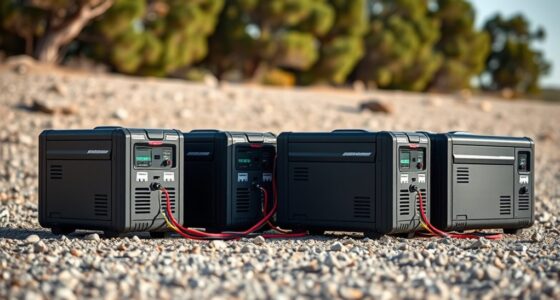

The right solar inverter for home backup depends on one question above all: do you want an inverter alone, or a complete system with battery storage included? For most homeowners, the ECO-WORTHY PowerMega 48V 314Ah system with 10kW hybrid inverter stands out as the best overall pick because it bundles a large LiFePO4 battery, active BMS, and app-based monitoring into one package, eliminating the compatibility guesswork. If you already own batteries, the POWLAND 12000W hybrid inverter offers the most raw capacity and parallel scalability for whole-home coverage, while the Ampinvt 5000W is the smarter entry point for partial-circuit backup on a budget. The main tradeoffs in this category are upfront cost versus expandability, 24V versus 48V system architecture, and integrated versus DIY component matching. Read on for the full breakdown of all 14 options and which one fits your home’s specific backup needs.

Get backup power and energy gear delivered free with Prime
- Fast, free delivery on millions of items
- Prime Video, Amazon Music and more included
- Member-only deals all year
Key Takeaways
- All-in-one systems like the ECO-WORTHY PowerMega and 10240Wh power stations won out for most buyers because pre-matched battery and inverter pairs eliminate the voltage, protocol, and sizing mismatches that plague DIY builds.
- The 10kW-class inverters (SUNGOLDPOWER, ECO-WORTHY Liber, POWLAND) cluster at similar prices, and what separates them is parallel support limits and surge behavior on motor loads like well pumps and refrigerators — not headline wattage.
- 24V models like the SUMRY 4000W and 3600W units cost far less but double your cable and battery current demands, making them a false economy for anything beyond a few essential circuits.
- UL1741 listing on the SUNGOLDPOWER 10,000W UL1741 model matters more than most specs if you plan grid interaction or insurance compliance — several cheaper units here skip it entirely.
- Battery-free designs like the POWLAND 12000W offer the cheapest path to high wattage, but only if you already own or plan to source a compatible 48V battery bank separately.
| SUNGOLDPOWER 10,000W DC 48V UL1741 Solar Inverter with Dual MPPT, Parallel Support, and Built-in Charger |  | Best Overall for Whole-Home Backup | Power Output: 10,000W continuous, 20,000W peak | Voltage: 48V DC input, 120/240V split-phase or 120V single-phase output | Battery Charging: 200A max | VIEW LATEST PRICE | See Our Full Breakdown |
| ECO-WORTHY Liber 10,000W DC 48V Solar Inverter with Dual MPPT and Parallel Support |  | Best Value for Off-Grid Power | Wattage: 10,000W continuous, 20,000W peak | Input Voltage: 48V DC | Output: 120/240V AC, pure sine wave, 60Hz | VIEW LATEST PRICE | See Our Full Breakdown |
| SUMRY Hybrid Solar Inverter 4000W DC24V to AC120V Pure Sine Wave Power |  | Best Compact Backup for Essentials | Power Output: 4000W continuous, 8000W peak | Input Voltage: 24V DC | Output: 120V AC, pure sine wave, 60Hz | VIEW LATEST PRICE | See Our Full Breakdown |
| ECO-WORTHY PowerMega 48V 314Ah LiFePO4 Energy Storage System with 10kW Hybrid Inverter |  | Best All-in-One Premium System | Energy Storage: 16.1 kWh (48V, 314Ah LiFePO4) | Inverter Power: 10 kW hybrid | Cycle Life: 9,000+ cycles at 80% DoD | VIEW LATEST PRICE | See Our Full Breakdown |
| SUNGOLDPOWER 10,000W 48V Solar Inverter with Built-in 2 MPPTs and WiFi | | Best for Remote Monitoring | Power Output: 10,000W continuous, 20,000W peak | Voltage: 48V DC input, 120V/240V settable output | MPPT Controllers: 2 | VIEW LATEST PRICE | See Our Full Breakdown |
| Ampinvt 5000 Watt 48V to 120V Pure Sine Wave Solar Inverter with MPPT Charger and Parallel Support |  | Best for Scalable Off-Grid Builds | Power: 5000W continuous, 10,000W peak | Input Voltage: 48V DC | Output: 120V AC pure sine wave, 60 Hz | VIEW LATEST PRICE | See Our Full Breakdown |
| 4200W Solar Hybrid Inverter 24V to 110V Pure Sine Wave with MPPT and WiFi |  | Best Budget Hybrid Starter | Power: 4200W continuous, 8400W surge | Input Voltage: 24V DC | Output: 110V AC pure sine wave | VIEW LATEST PRICE | See Our Full Breakdown |
| ECO-WORTHY 48V Home Backup Power Station with 5120Wh LiFePO4 Battery and 5000W Inverter |  | Best Complete Starter Kit | Battery Capacity: 5120Wh (51.2V 100Ah LiFePO4) | Inverter Power: 5000W pure sine wave | Output Voltage: 120V AC | VIEW LATEST PRICE | See Our Full Breakdown |
| POWLAND 12000W Hybrid Solar Inverter with WiFi, 48V DC to 120V/240V AC, Battery-Free Design, Dual 200A MPPT, Parallel Up to 6 Units |  | Best Premium Whole-Home Powerhouse | Power: 12,000W | Voltage Conversion: 48V DC to 120V/240V AC split-phase | MPPT: Dual 200A | VIEW LATEST PRICE | See Our Full Breakdown |
| ECO-WORTHY 48V Home Backup Power Station with 10240Wh Battery and 10KW Inverter |  | Best High-Capacity All-in-One | Inverter Power: 10,000W continuous, 20,000W surge | Battery Capacity: 10240Wh (two 51.2V 100Ah LiFePO4) | Output Voltage: 120V AC pure sine wave | VIEW LATEST PRICE | See Our Full Breakdown |
| SUNGOLDPOWER 10,000W 48V Solar Inverter with Dual MPPTs and Pure Sine Wave |  | Best Inverter-Only Pick for Whole-Home Power | Continuous Output: 10,000W (20,000W peak) | System Voltage: 48V DC | Output: 120V/240V split-phase, 60Hz pure sine wave | VIEW LATEST PRICE | See Our Full Breakdown |
| ECO-WORTHY Powermega 48V 314Ah LiFePO4 Battery Pack with 10kW Hybrid Inverter |  | Best Complete Whole-Home Energy System | Battery Configuration: 2x 48V 314Ah LiFePO4 | Total Energy: 30kWh+ | Inverter Power: 10kW hybrid | VIEW LATEST PRICE | See Our Full Breakdown |
| ECO-WORTHY 48V Home Backup Power Station with 10240Wh LiFePO4 Battery and 5000W Inverter |  | Best Balanced Backup for Essentials | Inverter Output: 5000W continuous (10,000W peak) | Battery Capacity: 2x 51.2V 100Ah LiFePO4 (10,240Wh) | Output Voltage: 120V AC, 60Hz pure sine wave | VIEW LATEST PRICE | See Our Full Breakdown |
| SUMRY Hybrid Solar Inverter Charger 3600W DC24V to AC110V |  | Best Budget All-in-One for Small Systems | Continuous Output: 3600W (7200W peak) | System Voltage: 24V DC | Output: 110V/120V AC, 60Hz pure sine wave | VIEW LATEST PRICE | See Our Full Breakdown |
More Details on Our Top Picks
SUNGOLDPOWER 10,000W DC 48V UL1741 Solar Inverter with Dual MPPT, Parallel Support, and Built-in Charger
For buyers who want true whole-home backup capability, this option stands out as the most complete package in this lineup. The 10,000W continuous output with 20,000W peak handles startup surges from well pumps and air conditioners that would trip smaller units like the SUMRY 4000W. What separates it from the nearly identical SUNGOLDPOWER WiFi model is the UL1741 listing, which matters if your utility or insurer asks questions about your installation. Dual MPPT controllers with a 500V open-circuit ceiling give flexible panel placement, and parallel support for up to six units means you can grow into three-phase or higher-capacity systems later instead of starting over. The tradeoff is real: setup is genuinely technical, and the size and weight demand a dedicated mounting wall and likely an electrician.
Pros:- UL1741 certification adds legitimacy for utility and insurance requirements
- 200A charging and dual MPPTs maximize harvest and recharge speed
- Parallel expansion up to 6 units protects your investment as needs grow
- Works with every common battery chemistry, including lithium and battery-free operation
Cons:- Installation realistically requires an electrician or serious DIY electrical experience
- Large and heavy, demanding significant wall space and sturdy mounting
- Price is not clearly listed, making budget comparison difficult upfront
Best for: Homeowners building a scalable whole-home backup system who want certified equipment they can expand later
Not ideal for: Renters or anyone backing up just a fridge and a few lights — the capacity and installation complexity are overkill
- Power Output:10,000W continuous, 20,000W peak
- Voltage:48V DC input, 120/240V split-phase or 120V single-phase output
- Battery Charging:200A max
- MPPT Controllers:2 (500VDC max open circuit)
- Parallel Support:Up to 6 units
- Battery Compatibility:AGM, Sealed, Gel, Flooded, Lithium, Battery-free
- Communication:CAN, USB, RS485
Our verdict“If whole-house backup with room to expand is the goal, this is the inverter to build around — provided you budget for professional installation.”
ECO-WORTHY Liber 10,000W DC 48V Solar Inverter with Dual MPPT and Parallel Support
Compared with the SUNGOLDPOWER UL1741 unit, the ECO-WORTHY Liber delivers the same headline numbers — 10,000W pure sine wave, 20,000W peak, dual MPPT, six-unit parallel — at what is typically a friendlier price, which is why it earns the value slot. The split-phase 120V/240V output is the key draw here, letting you run 240V appliances like dryers or well pumps that a 120V-only unit such as the SUMRY 4000W simply cannot touch. Its A+ standby power shutoff rating also matters more than it sounds for off-grid cabins, where idle draw slowly drains batteries overnight. The honest tradeoff: it is strictly off-grid. If there is any chance you will want grid interaction later, or you want the UL listing for peace of mind, the SUNGOLDPOWER above justifies its premium.
Pros:- 10kW with 120V/240V split-phase output runs large household appliances
- Parallel support up to 6 units keeps the system scalable
- Dual MPPT controllers improve harvest on arrays with varied orientation
- Low standby draw preserves battery charge in off-grid setups
Cons:- Not grid-tie capable, closing the door on future net metering
- Installation demands electrical expertise or a professional
- Physical footprint of roughly 24 by 18 inches requires dedicated space
Best for: Off-grid cabins, workshops, and rural homes that need big 240V-capable power without grid-tie ambitions
Not ideal for: Anyone hoping to eventually tie into utility power or sell energy back — this unit is off-grid only
- Wattage:10,000W continuous, 20,000W peak
- Input Voltage:48V DC
- Output:120/240V AC, pure sine wave, 60Hz
- MPPT Controllers:2
- Parallel Support:Up to 6 units
- Standby Rating:A+ power shutoff
- Dimensions:24.41″L x 17.52″W x 5.12″H
Our verdict“The smart pick for pure off-grid builders who want full-size split-phase power without paying for certifications they won’t use.”
SUMRY Hybrid Solar Inverter 4000W DC24V to AC120V Pure Sine Wave Power
Not every backup need is a whole-house project. The SUMRY 4000W makes the list because it right-sizes the job: keeping a refrigerator, lights, internet, and a medical device running through an outage. Where the 10kW units demand a 48V battery bank and serious electrical work, this model runs on a simpler 24V system and delivers 4000W with 8000W peak — enough surge headroom for a fridge compressor. Its hybrid design pulls from solar, utility, and battery simultaneously, so it can act as a pass-through charger during normal times rather than sitting idle like a traditional backup inverter. The built-in MPPT at 98% efficiency and the tempered-glass LCD panel make day-to-day monitoring pleasant. Compared to the ECO-WORTHY PowerMega, it is a fraction of the cost and complexity, but it will not run 240V loads or an entire household.
Pros:- 24V system keeps battery bank costs and complexity lower than 48V setups
- Hybrid design blends solar, grid, and battery power automatically
- Built-in 98% MPPT charge controller eliminates a separate component
- Compact footprint at under 18 inches tall fits tighter mounting spaces
Cons:- 4000W limit cannot handle whole-home or 240V appliance loads
- Menu system and settings have a learning curve for first-time owners
- At 7.5 kg, mounting still requires a solid wall, not a shelf
Best for: Homeowners and small-cabin owners who only need critical circuits backed up and want a simpler 24V battery setup
Not ideal for: Households wanting to run HVAC, well pumps, or 240V appliances — the wattage and 120V-only output rule those out
- Power Output:4000W continuous, 8000W peak
- Input Voltage:24V DC
- Output:120V AC, pure sine wave, 60Hz
- Power Sources:Solar, utility, and battery
- Charge Controller:Built-in MPPT, 98% efficiency
- Display:LCD with touch buttons
- Weight:7.5 kg (16.5 lbs)
Our verdict“The right-sized choice when the goal is riding out an outage with essentials running, not re-powering the entire house.”
ECO-WORTHY PowerMega 48V 314Ah LiFePO4 Energy Storage System with 10kW Hybrid Inverter
Every other pick here is just an inverter — you still have to source, wire, and match a battery bank. The PowerMega bundles a 314Ah LiFePO4 battery (16.1kWh usable) with a 10kW hybrid inverter in one cabinet, which is why it sits at the premium end of this lineup. That single box can realistically carry a typical home through an overnight outage without any sun. Compared with buying the SUNGOLDPOWER UL1741 inverter plus separate batteries, the integration advantage is real: an active-balancing BMS, built-in breaker, and fire suppression work together rather than relying on your wiring to coordinate them. The 9,000+ cycle life and 10-year warranty also change the math on long-term cost. But this is a 293-pound, truck-delivered cabinet, and it locks you into ECO-WORTHY’s ecosystem — mixing in third-party components later is off the table.
Pros:- 16.1kWh of storage plus 10kW output in a single pre-integrated cabinet
- 9,000+ cycles and a 10-year warranty make it a decade-scale investment
- Active balancing BMS, breaker, and fire suppression built in
- WiFi and Bluetooth monitoring with real-time data from a phone
Cons:- 293-pound cabinet requires truck delivery and a substantial dedicated space
- Locked into ECO-WORTHY’s ecosystem for future expansion
- Initial setup and configuration can overwhelm non-technical buyers
Best for: Buyers who want a turnkey, high-capacity backup system and are willing to pay a premium to avoid building one from parts
Not ideal for: Tinkerers planning to expand with mixed-brand batteries or inverters — the integrated design limits compatibility
- Energy Storage:16.1 kWh (48V, 314Ah LiFePO4)
- Inverter Power:10 kW hybrid
- Cycle Life:9,000+ cycles at 80% DoD
- Warranty:10 years
- Communication:RS485, CAN, RS232, WiFi, Bluetooth
- Safety:Active balancing BMS, circuit breaker, fire suppression, alarms
- Weight:293.2 lbs
Our verdict“The closest thing to an appliance-style home backup you can buy in this category — pay the premium, skip the engineering.”
SUNGOLDPOWER 10,000W 48V Solar Inverter with Built-in 2 MPPTs and WiFi
This model is essentially the sibling of the UL1741 SUNGOLDPOWER above, with one difference that defines its role: built-in WiFi monitoring. For a vacation cabin, a rental property, or a backup system in an outbuilding, being able to check battery voltage, charging status, and fault alerts from your phone means the difference between peace of mind and a surprise dead bank three hours from home. The core hardware matches the premium sibling — 10,000W output, dual MPPTs, 200A charging, and broad battery compatibility including lithium — so performance is not the compromise here. The compromise is certification: without the UL1741 listing, this unit is harder to justify where inspectors or utilities are involved, and its value depends entirely on whether remote visibility matters to you. If you will never check an app, the certified version is the better buy.
Pros:- WiFi connectivity delivers remote status, charging data, and fault alerts
- Full 10kW output with dual 200A-capable MPPTs matches the premium models
- Settable 120V/240V output adapts to single- or split-phase needs
- Supports AGM, sealed, gel, flooded, and lithium batteries
Cons:- Lacks the UL1741 certification of its sibling, limiting permitted installations
- Setup still requires solid technical knowledge despite the friendlier monitoring
- Bulky and heavy relative to smaller inverters like the SUMRY 4000W
Best for: Owners of remote cabins or second homes who need to monitor their power system from afar
Not ideal for: Grid-adjacent installations subject to inspection — the lack of a UL listing compared to its sibling creates approval headaches
- Power Output:10,000W continuous, 20,000W peak
- Voltage:48V DC input, 120V/240V settable output
- MPPT Controllers:2
- Battery Charging:200A max
- Battery Compatibility:AGM, Sealed, Gel, Flooded, Lithium
- Connectivity:WiFi, USB, RS485
- Protection:Over-voltage, over-current, overload, PV and AC input protection
Our verdict“Choose this over the certified SUNGOLDPOWER when off-site visibility matters more than a listing sticker — otherwise stick with the UL version.”
Ampinvt 5000 Watt 48V to 120V Pure Sine Wave Solar Inverter with MPPT Charger and Parallel Support
This Ampinvt unit stands out as a true all-in-one power hub, folding the inverter, MPPT charge controller, battery charger, and auto-transfer switch into a single chassis. Compared with the ECO-WORTHY 5120Wh Power Station, it ships without a battery — which is exactly the point: buyers choose their own bank, and the 100A PV charging current plus 500V max solar input give serious array flexibility that pre-bundled kits can’t match. The parallel support for up to 6 units means a modest start can grow into a 30kW system later. The tradeoff is real, though: setup demands genuine electrical know-how, the 19.7-inch-tall enclosure is anything but portable, and the thinner review history means buyers are leaning on specs rather than crowd wisdom.
Pros:- Four functions in one unit: inverter, MPPT controller, charger, and auto-transfer switch
- Parallel operation up to 6 units for future expansion
- 100A max PV charging current handles large solar arrays
- Multiple work modes and battery chemistry support
Cons:- Complex setup that rewards technical experience and punishes guesswork
- Large and heavy — strictly a fixed-installation unit
- Limited detailed user reviews to draw confidence from
Best for: DIY off-grid homeowners who already own or plan to spec their own 48V battery bank and want room to expand over time
Not ideal for: Anyone wanting a plug-and-play backup box — no battery is included and configuration requires technical comfort
- Power:5000W continuous, 10,000W peak
- Input Voltage:48V DC
- Output:120V AC pure sine wave, 60 Hz
- Max PV Input:5500W, up to 500Vdc
- Max PV Charging Current:100A
- Parallel Support:Up to 6 units
- Dimensions:13.4″L x 5.6″W x 19.7″H
Our verdict“This is the pick for hands-on builders who see a solar system as a long-term project, not a one-click purchase.”
4200W Solar Hybrid Inverter 24V to 110V Pure Sine Wave with MPPT and WiFi
Running on a 24V battery platform rather than 48V, this hybrid inverter makes an already affordable entry point even cheaper to build around, since 24V lithium batteries cost noticeably less than their 48V counterparts. Against the Ampinvt 5000W, it gives up some headroom but keeps the essentials: pure sine wave output, a 120A MPPT that accepts up to 500V of PV input, and WiFi monitoring that most starter inverters at this price skip entirely. The 8400W surge rating covers refrigerator and well-pump startup spikes that kill cheaper modified-wave units. Two caveats matter: the PV input needs at least 130VDC to run without a battery attached, and the IP21 rating confines it to clean, dry indoor spaces — no garage corners with dust or damp.
Pros:- Lower-cost 24V battery platform reduces total system price
- 8400W surge handles motor startup spikes
- WiFi remote monitoring included at a budget price point
- High 120A MPPT current supports surprisingly large PV arrays
Cons:- Needs at least 130VDC PV input to operate without a battery
- IP21 protection limits it to clean, dry indoor installs
- Narrow -10°C to 50°C operating window for unconditioned spaces
Best for: First-time solar buyers building a small 24V backup system for essentials like a fridge, lights, and router
Not ideal for: Whole-house backup seekers — 4200W on a 24V platform won’t carry heavy loads, and the IP21 housing rules out harsh environments
- Power:4200W continuous, 8400W surge
- Input Voltage:24V DC
- Output:110V AC pure sine wave
- PV Input:Up to 500V
- MPPT Current:120A
- Battery Compatibility:24V lithium
- Monitoring:WiFi, RS485, RS232
- Protection Rating:IP21
Our verdict“The smartest low-cost way to dip into hybrid solar backup, provided the install stays indoors and the loads stay modest.”
ECO-WORTHY 48V Home Backup Power Station with 5120Wh LiFePO4 Battery and 5000W Inverter
This is the everything-in-the-box option: a 51.2V 100Ah LiFePO4 battery paired with a 5000W pure sine inverter, so there’s no battery shopping or chemistry-matching to do. Next to the 4200W budget hybrid, the jump buys you UL-certified cells (UL1973 and UL1741 — the certifications that matter for insurance and inspection), double the storage, and app-based monitoring over Bluetooth and WiFi. The 5120Wh capacity translates to roughly a full day of refrigerator, internet, lights, and device charging before solar recharge. Expansion is the quiet strength here: up to 6 parallel inverters and 32 batteries. The frustrations are logistical rather than technical — components arrive in separate shipments that can stagger arrival dates, and the accessory list is vague enough that buyers should confirm cabling before install day.
Pros:- Matched 5120Wh LiFePO4 battery and 5000W inverter arrive as one system
- UL1973 and UL1741 safety certifications
- Bluetooth and WiFi smart monitoring
- Expandable to 6 parallel inverters and 32 batteries
Cons:- Separate shipping per component can delay and complicate setup
- Expansion wiring adds real installation complexity
- Sparse documentation on included accessories
Best for: Homeowners who want a certified, matched battery-plus-inverter backup system without assembling components piecemeal
Not ideal for: Impatient buyers or urgent pre-storm purchases — split shipments and multi-box setup can drag out the timeline
- Battery Capacity:5120Wh (51.2V 100Ah LiFePO4)
- Inverter Power:5000W pure sine wave
- Output Voltage:120V AC
- Communication:Bluetooth, WiFi, CAN/RS485
- Parallel Support:Up to 6 inverters, 32 batteries
- Certifications:UL1973, UL1741
Our verdict“The most confidence-inspiring entry point for certified home backup, as long as split shipments and a hands-on install don’t scare you off.”
POWLAND 12000W Hybrid Solar Inverter with WiFi, 48V DC to 120V/240V AC, Battery-Free Design, Dual 200A MPPT, Parallel Up to 6 Units
At 12,000W with split-phase 120V/240V output, the POWLAND is the only unit in this lineup that can genuinely run a whole house, central AC included — the 5000W-class options like the Ampinvt or ECO-WORTHY kits simply can’t start a 240V compressor. Its battery-free design is the differentiating trick: excess solar feeds straight to the grid, so you can deploy solar backup now and add a 48V LiFePO4 or lead-acid bank later when budget allows. The dual 200A MPPT swallows enormous arrays, and six-unit parallel scaling tops out at 72,000W. Add an IP65 weatherproof rating — versus the 4200W hybrid’s IP21 — and outdoor mounting becomes viable. The honest cost: this demands professional-grade installation, a hefty mounting spot, and grid infrastructure that supports interconnection. It’s a project, not a purchase.
Pros:- 12,000W split-phase 120V/240V output runs 240V appliances
- Battery-free operation lets solar go live before batteries are bought
- IP65 weatherproof housing allows outdoor installation
- Scales to 72,000W across 6 parallel units
Cons:- Installation realistically requires a professional
- Heavy and bulky — needs dedicated mounting space
- Depends on compatible solar array and grid infrastructure
Best for: Owners of large homes or RV setups planning whole-house solar with 240V appliances and phased battery expansion
Not ideal for: Renters, apartment dwellers, or anyone without an electrician — installation complexity and grid requirements rule out casual use
- Power:12,000W
- Voltage Conversion:48V DC to 120V/240V AC split-phase
- MPPT:Dual 200A
- Battery Compatibility:48V LiFePO4 and lead acid (optional)
- Parallel Units:Up to 6 (72,000W total)
- Weatherproof Rating:IP65
- Cooling:Dual fan, 45dB
- Efficiency:99.9%
Our verdict“If the goal is true whole-home backup rather than essentials-only, this powerhouse justifies its complexity — for everyone else it’s overkill.”
ECO-WORTHY 48V Home Backup Power Station with 10240Wh Battery and 10KW Inverter
Think of this as the big sibling of the 5120Wh ECO-WORTHY kit: two 100Ah LiFePO4 batteries and a 10,000W inverter delivering double the runtime and double the output for households that found 5kW too tight. Ten kilowatts covers simultaneous heavy loads — well pump, oven, HVAC fan, and electronics — while the 20,000W surge rating shrugs off motor startup. The UL1973/UL1741 certifications carry the same insurance-friendly weight as the smaller kit, and parallel expansion keeps the ceiling high. Compared with the POWLAND 12000W, it trades 240V split-phase capability for something POWLAND doesn’t offer: batteries in the box from day one. The pain points are cost and logistics — this is a meaningful upfront investment, components arrive across multiple shipments, and wiring two batteries plus a 10kW inverter is not a beginner Saturday project.
Pros:- 10240Wh of UL-certified LiFePO4 storage included
- 10,000W continuous with 20,000W surge for heavy simultaneous loads
- Bluetooth and WiFi monitoring out of the box
- Parallel-ready for future capacity growth
Cons:- High initial investment compared with smaller kits
- Multiple shipments can fragment delivery
- Two-battery plus inverter setup challenges non-technical installers
Best for: Families in outage-prone areas who need multi-day runtime for heavy 120V loads and want batteries included upfront
Not ideal for: Budget-conscious buyers or light-load households — the smaller 5120Wh ECO-WORTHY kit covers essentials at roughly half the capacity commitment
- Inverter Power:10,000W continuous, 20,000W surge
- Battery Capacity:10240Wh (two 51.2V 100Ah LiFePO4)
- Output Voltage:120V AC pure sine wave
- Certifications:UL1973, UL1741
- Monitoring:Bluetooth, WiFi
- Parallel Support:Yes, for increased power
- Dimensions:20.55″L x 17.13″W x 5.63″H
Our verdict“The strongest choice when overnight batteries and big runtime matter more than 240V support — buy it if the budget and the loads justify it.”
SUNGOLDPOWER 10,000W 48V Solar Inverter with Dual MPPTs and Pure Sine Wave
For buyers who already own batteries and just need raw conversion muscle, this SUNGOLDPOWER 10kW unit is the strongest inverter-only option in this lineup. Its dual MPPT controllers let you split panels across two orientations — morning sun on an east array, afternoon sun on a west array — which meaningfully improves daily harvest compared with single-controller models like the SUMRY 3600W. The 120V/240V split-phase output matters if you want to run well pumps, dryers, or central AC during an outage, something the 120V-only ECO-WORTHY 5000W station cannot do.
The tradeoff is that this is a component, not a system. Unlike the ECO-WORTHY Powermega, no batteries arrive in the box, so your total cost climbs once you add storage. At 54 pounds and 26 inches wide, wall-mounting it alone is a two-person job, and configuring the charging modes and time-slot settings rewards buyers with wiring experience.
Pros:- 10kW continuous output with 20kW surge handles whole-home loads including 240V appliances
- Dual MPPT controllers optimize harvest from arrays in different orientations
- Works with nearly every battery chemistry, including lithium, AGM, gel, and flooded
- Time-slot charging lets you prioritize cheap or solar-generated power
Cons:- Large and heavy — installation requires significant wall space and two people
- Complex configuration that assumes comfort with electrical setups
- No included storage, so budget separately for batteries
Best for: Homeowners with existing battery banks who need whole-home, split-phase backup power from a large solar array
Not ideal for: First-time solar buyers — the batteryless design and technical setup mean you’ll piece together a system rather than unbox one
- Continuous Output:10,000W (20,000W peak)
- System Voltage:48V DC
- Output:120V/240V split-phase, 60Hz pure sine wave
- Solar Charging:Dual built-in MPPT controllers
- Battery Compatibility:AGM, sealed, gel, flooded, lithium, or battery-free
- Communication:CAN, USB, RS485
- Weight / Size:54 lbs; 26″ x 17.9″ x 4.9″
Our verdict“Buy this if you already have storage and need serious split-phase inverter capacity; skip it if you want an all-in-one kit.”
ECO-WORTHY Powermega 48V 314Ah LiFePO4 Battery Pack with 10kW Hybrid Inverter
This is the closest thing in the roundup to a turnkey whole-home power plant: two 314Ah LiFePO4 batteries plus a matching 10kW hybrid inverter, delivering over 30kWh of storage — enough to run a typical house through a full day and night of outage. Compared with pairing the SUNGOLDPOWER 10kW inverter with separately sourced batteries, you get matched components that communicate over CAN out of the box, plus an active balancing BMS and fire suppression that most DIY assemblies lack.
The 9000+ cycle rating at 80% depth of discharge translates to roughly two decades of daily cycling, which is why the upfront price is easier to justify. The tradeoffs are logistical and practical: this ships on a pallet by freight, possibly in multiple deliveries, and the sheer scale of the system means beginners will want an installer. Buyers who only need fridge-and-lights backup should look at the smaller ECO-WORTHY 5000W station instead.
Pros:- Over 30kWh of matched storage and inverter in one package — no compatibility guessing
- 9000+ cycles at 80% DoD for roughly 20+ years of daily use
- Bluetooth and WiFi monitoring with real-time data from the app
- Active balancing BMS, circuit breaker, and fire suppression built in
Cons:- Freight delivery on a pallet, potentially split across multiple packages
- Two batteries plus an inverter make DIY installation unrealistic for beginners
Best for: Off-grid homeowners or outage-prone households wanting a matched 30kWh-plus system they won’t outgrow
Not ideal for: Apartment dwellers or anyone needing modest backup — it’s oversized, freight-shipped, and wasted on small loads
- Battery Configuration:2x 48V 314Ah LiFePO4
- Total Energy:30kWh+
- Inverter Power:10kW hybrid
- Cycle Life:9000+ cycles at 80% DoD
- Monitoring:Bluetooth, WiFi, RS485/CAN/RS232
- Safety:Active balancing BMS, circuit breaker, fire suppression, alarms
- Delivery:Palletized freight, may arrive in multiple packages
Our verdict“If your goal is true whole-home energy independence in one purchase, this system makes the most sense; smaller needs belong on smaller kits.”
ECO-WORTHY 48V Home Backup Power Station with 10240Wh LiFePO4 Battery and 5000W Inverter
Sitting between the entry-level 5120Wh ECO-WORTHY station and the massive Powermega, this kit hits a sweet spot for outage insurance rather than off-grid living. Its 10.24kWh capacity comfortably runs a refrigerator, internet, lights, and a furnace through an overnight outage, and the UL1973 and UL1741 certifications give it a safety pedigree that uncertified inverters in this roundup can’t match — a real factor if an inspector or insurer ever looks at your setup.
What sets it apart from the Powermega is expandability without initial overkill: start with 10kWh and scale up to 32 batteries and 30kW AC output as needs grow. The compromise is power — at 5000W continuous on 120V only, it won’t drive 240V appliances like the SUNGOLDPOWER 10kW can. At 223.8 pounds, plan its final resting spot before delivery, because it isn’t moving afterward.
Pros:- UL1973 and UL1741 certified for safety and code compliance
- 10.24kWh of LiFePO4 storage covers essential loads through extended outages
- Expandable up to 32 batteries and 30kW AC output
- Bluetooth and WiFi monitoring from a phone
Cons:- 223.8 pounds and bulky — position it once and leave it
- Professional installation recommended for proper integration
- 120V-only output at 5000W limits heavy appliances
Best for: Suburban homeowners who want certified, app-monitored backup for essential circuits and room to expand later
Not ideal for: Whole-house power seekers — 5000W on 120V won’t run 240V appliances like well pumps or electric dryers
- Inverter Output:5000W continuous (10,000W peak)
- Battery Capacity:2x 51.2V 100Ah LiFePO4 (10,240Wh)
- Output Voltage:120V AC, 60Hz pure sine wave
- Certifications:UL1973 (battery), UL1741 (inverter)
- Expandability:Up to 32 batteries and 30kW AC output
- Monitoring:Bluetooth and WiFi
- Weight:223.8 lbs
Our verdict“This is the pick for buyers who want certified, right-sized backup today with a credible expansion path tomorrow.”
SUMRY Hybrid Solar Inverter Charger 3600W DC24V to AC110V
At roughly the size of a small suitcase and about 19 pounds, the SUMRY 3600W is the entry point of this roundup — and its biggest selling point is that everything is inside one box. The 120A MPPT charge controller and 100A AC charger mean a first-time buyer can wire panels and a battery to a single unit rather than matching separate components like the SUNGOLDPOWER 10kW demands. The battery-free operating mode is a genuinely useful trick: run directly off solar during the day and add storage later when budget allows.
The limits are real, though. A 24V system voltage means higher currents and thicker cabling than the 48V ECO-WORTHY options, and 3600W of 110V output covers essentials only — fridge, lights, TV — not a whole house. The LCD keeps you informed, but if you want app-based remote monitoring like the Powermega offers, that module costs extra. Compared with the 4000W SUMRY sibling, this model trades a little headroom for a lower price.
Pros:- Inverter, MPPT controller, and AC charger in a single affordable unit
- Battery-free operation lets you start solar-only and add storage later
- Pure sine wave output safe for sensitive electronics
- LCD display for at-a-glance monitoring and configuration
Cons:- 24V system requires thicker, costlier cabling than 48V alternatives
- Remote monitoring module sold separately
- Output limited to essentials — no whole-home coverage
Best for: Budget-conscious DIYers building a small cabin, garage, or essentials-only backup system
Not ideal for: Whole-home backup buyers — 3600W at 110V can’t carry heavy or 240V loads
- Continuous Output:3600W (7200W peak)
- System Voltage:24V DC
- Output:110V/120V AC, 60Hz pure sine wave
- Solar Charging:Built-in 120A MPPT controller
- AC Charging:100A built-in battery charger
- Display:LCD
- Weight / Size:8.5 kg; 13.8″ x 4.3″ x 16.5″
Our verdict“The smart choice for a first small solar project; step up to a 48V system the moment whole-home backup is the goal.”

How We Picked
I evaluated every option in this lineup against what actually determines satisfaction in a home backup setup: usable surge capacity for motor loads, battery integration, monitoring quality, and total installed cost rather than sticker price. Inverters that support parallel operation ranked higher because home backup needs grow, and scalability protects your initial investment. I also weighed system voltage — 48V architectures handle more power with less loss and cheaper cabling than 24V, which pushed the larger 48V units up the order for serious backup duty.
Ranking also reflected who each product serves. All-in-one systems with matched LiFePO4 batteries scored well on safety and simplicity, while bare inverters earned their positions through wattage-per-dollar and flexibility for owners who already have storage. Certification status, WiFi/Bluetooth monitoring, and warranty coverage acted as tiebreakers between otherwise similar 10kW models from SUNGOLDPOWER, ECO-WORTHY, and POWLAND.
Factors to Consider When Choosing Solar Inverter For Home Backup
Choosing a solar inverter for home backup involves more than matching wattage to your appliances. These are the factors that most often separate a system that carries your home through an outage from one that trips offline when it matters most.Continuous Wattage Versus Surge Capacity
The number on the box is continuous output, but the number that decides whether your system works is surge capacity. Refrigerator compressors, well pumps, and furnaces can draw two to three times their running wattage for a second or two at startup — an inverter without adequate surge headroom will shut down on these loads even when the math looks fine on paper. A common mistake is sizing the inverter to average household draw instead of startup spikes. If you plan to run a pump or HVAC component, look for surge ratings of at least double the continuous rating, and favor pure sine wave output without exception — modified sine wave inverters can damage motors and electronics over time.
Integrated System Versus Separate Components
Buying an inverter, battery, and panels from different vendors can save money upfront but creates real compatibility risk. Battery communication protocols vary between brands, and a mismatched lithium battery may charge at the wrong voltage or refuse to discharge below a conservative threshold. All-in-one packages like the ECO-WORTHY power stations sidestep this entirely, which is why they dominate for first-time buyers. The DIY route makes sense only if you’re comfortable reading spec sheets closely and confirming the inverter’s charge profile matches your battery’s BMS requirements before purchase.
24V Versus 48V System Voltage
System voltage is one of the most underappreciated decisions because it affects everything downstream: cable gauge, battery bank configuration, and expansion limits. At 24V, a 4000W inverter pulls over 160 amps from the battery bank, demanding thick, expensive cabling and tight connections. At 48V, the same power draw is halved, which means cheaper wiring, less voltage drop, and cooler-running components. My guidance is simple: any backup plan beyond a few circuits or a small cabin should be 48V from day one, because converting later means replacing the inverter and reconfiguring the batteries.
Hybrid Functionality and Monitoring
A true hybrid inverter manages solar input, battery charging, and grid pass-through simultaneously, letting the system sell surplus power back or prioritize solar during outages. WiFi and Bluetooth monitoring sound like luxuries until an outage hits and you can’t tell whether you’re drawing from battery or solar — app-based visibility lets you manage loads in real time instead of guessing. Models with dual MPPT trackers also outperform single-tracker units on complicated roofs with partial shading or multiple panel orientations. Check whether monitoring is local-only or cloud-dependent, since cloud apps become blind spots during internet outages.
Battery Chemistry and Storage Sizing
Nearly every quality system in this category now uses LiFePO4 chemistry, and for good reason: it tolerates deep daily cycling far better than lead acid and lasts three to four times as long. The mistake most buyers make is oversizing the inverter while undersizing the battery — a 10kW inverter paired with 5kWh of storage can drain its bank in under 30 minutes at full load. A practical starting point is enough storage to run essential circuits overnight, typically 5–10kWh for refrigeration, lights, and communication devices. Lead acid remains a valid budget choice for infrequent outages, but the math favors lithium for any regular cycling.
Certification, Wiring, and Permitting
If your backup system connects to your home’s electrical panel or the grid, listing matters. UL1741 certification is what many jurisdictions and insurers look for, and non-listed equipment can complicate permits or void homeowners insurance claims after an electrical fire. Transfer switching is another hidden requirement: you need either an automatic transfer switch or a generator interlock kit to prevent back-feeding the grid, which is dangerous to utility workers and illegal in most areas. Budget for a licensed electrician for any hardwired installation — the $300–$800 labor cost is cheap insurance against a $10,000 mistake.
Frequently Asked Questions
What size solar inverter do I need to back up my whole house?
Most American homes can run essential loads — refrigerator, lights, internet, furnace fan, and a few outlets — on a 5000W inverter with 5–10kWh of battery storage. Whole-home coverage including air conditioning, electric water heating, or a well pump typically requires the 10–12kW class, which is where the POWLAND 12000W and the ECO-WORTHY PowerMega 10kW systems in this roundup earn their price premium. Before buying anything, walk through your home and add up the running wattage of what you genuinely need during an outage, then double it for motor startup surges. Sizing to your actual essential loads rather than your service panel’s rating is the single biggest money-saver in this category.
Are all-in-one power stations better than buying an inverter and battery separately?
For most homeowners, yes — integrated systems like the ECO-WORTHY power stations remove the biggest failure point in DIY setups: battery-to-inverter communication mismatches. When a lithium battery’s BMS and the inverter’s charge controller disagree on voltage or current limits, you get premature shutdowns, chronic undercharging, or worse. Separate components do win on cost per watt if you already own compatible batteries or want to expand gradually with golf cart or server rack cells. The practical dividing line is experience level: first-time buyers should choose integrated, while anyone comfortable programming charge parameters can save real money going modular.
Can I run a 12000W inverter like the POWLAND without buying batteries right away?
The POWLAND’s battery-free design means the inverter itself doesn’t require a proprietary battery pack, but that doesn’t mean it produces backup power without storage. During a grid outage, your loads run from whatever DC source feeds the inverter — batteries, solar panels through the MPPT trackers, or both. With sufficient solar array and daytime sun, you can technically operate loads without a battery, but you’ll lose power every time a cloud passes and have nothing after dark. The smarter approach is starting with a modest 48V battery bank and adding capacity later, which the POWLAND’s parallel support and generic battery compatibility make straightforward.
Is a 24V inverter like the SUMRY models good enough for home backup?
A 24V system handles a focused list of essentials — a refrigerator, some lights, a modem, and a CPAP machine — reasonably well, and the SUMRY 3600W and 4000W units cost hundreds less than comparable 48V hardware. The catch is electrical: at 3600W, a 24V bank delivers 150-plus amps, which demands very thick cabling, pristine connections, and careful fusing, and voltage drop still eats into performance on longer wire runs. If your backup ambitions might grow past a few circuits, the 24V savings evaporate because you’ll replace everything to move up. Choose 24V only if you’re certain your needs are permanently small, such as a cabin or a single critical circuit.
Do these inverters work during a grid outage automatically?
Hybrid models with grid-tie pass-through — like the SUNGOLDPOWER UL1741 unit and the ECO-WORTHY Liber — switch to battery power when the grid drops, usually within a fraction of a second, so sensitive electronics stay on. The speed and reliability of that transfer is exactly what certifications like UL1741 validate, and it’s a genuine reason to pay more for listed equipment. Non-hybrid, off-grid-only inverters have no grid connection to switch from, so outages are irrelevant to them but they can’t charge from utility power either. Whichever type you choose, the installation needs a proper transfer switch or interlock so the system never back-feeds the grid while running on battery.
Conclusion
After comparing all 14 options, my recommendations break down cleanly by buyer type. For best overall, the ECO-WORTHY PowerMega 48V 314Ah with 10kW hybrid inverter delivers the most complete home backup solution — matched battery, serious power, and app monitoring in one purchase. The best value pick is the Ampinvt 5000W with MPPT and parallel support, which covers essential circuits at roughly a third of the cost of the big systems and grows with you. Best premium goes to the POWLAND 12000W for buyers who already have or plan a large 48V battery bank and want six-unit parallel scalability for genuine whole-home coverage.
For beginners, the ECO-WORTHY 48V Home Backup Power Station with 5120Wh battery and 5000W inverter is the safest starting point — plug-and-play storage with no component matching required, and the larger 10240Wh versions await if your needs expand. For specific needs, the SUNGOLDPOWER UL1741 model is the clear choice where code compliance and grid interaction are non-negotiable, while the SUMRY 3600W suits small cabins and single-critical-load setups on tight budgets. Match the pick to your load list, voltage ambitions, and how much of the installation you’re willing to manage yourself, and you’ll end up with a system that holds up when the grid doesn’t.