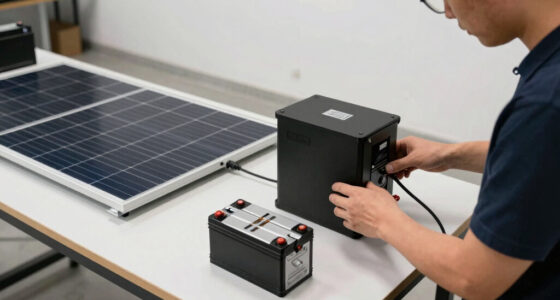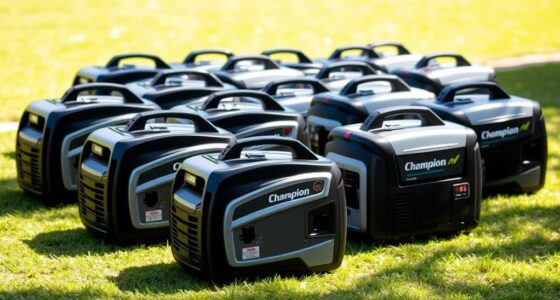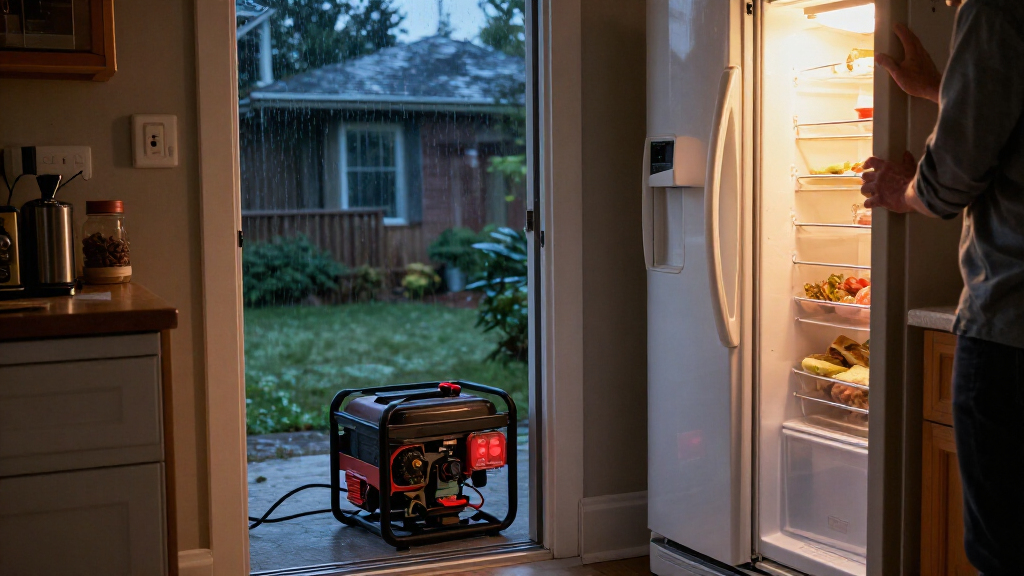
For refrigerator backup, I’d put the PowerSmart 4000-Watt Portable Inverter Generator first for its useful balance of capacity and portability; the WEN DF680iX stands out for dual-fuel flexibility, while the EF ECOFLOW DELTA 3 Max offers quiet, fuel-free operation. The right choice depends on your refrigerator’s startup demand, how long you need it powered, and whether you can safely store and run a fuel generator outdoors. Smaller models may suit a fridge alone, while larger units add headroom for other essentials at the cost of greater size and fuel use. Battery power stations avoid exhaust and engine maintenance but have finite stored energy. Read on for the full comparison and help matching a backup option to your needs.

Get backup power and energy gear delivered free with Prime
- Fast, free delivery on millions of items
- Prime Video, Amazon Music and more included
- Member-only deals all year
Complete the kit


Key Takeaways
- Mid-size inverter generators lead this roundup for fridge-only backup: the PowerSmart 4000-Watt model offers a practical capacity-and-portability balance without jumping to the largest, heavier units.
- Dual fuel is most useful when fuel choice matters: the WEN DF680iX and Westinghouse iGen12000DFc let buyers plan around available gasoline or propane, though fuel switching does not replace checking runtime and outlet compatibility.
- More peak watts do not automatically mean a better refrigerator backup: the Westinghouse WGen9500DF and larger inverter models make more sense when a fridge shares power with other high-demand appliances.
- Battery stations serve a different purpose: the EF ECOFLOW DELTA 3 Max and Jackery 1000 v2 avoid engine noise and exhaust, but their stored energy limits how long they can run a refrigerator without recharging.
- The lineup spans very different sizes and power sources: compact 2,800-watt-class generators favor simpler, lighter backup plans; 4,000- to 6,800-watt models offer more headroom, and the largest units suit broader household loads rather than fridge-only use.
| PowerSmart 4000-Watt Gas-Powered Portable Inverter Generator |  | Best Overall for Refrigerator Backup | Running wattage: 3,200 watts | Starting wattage: 3,800 watts | Fuel: Gasoline | VIEW LATEST PRICE | See Our Full Breakdown |
| Oxseryn 2800-Watt Portable Inverter Generator |  | Best Compact Pick | Running wattage: 2,000 watts | Peak wattage: 2,800 watts | Engine: 79.8 cc, 4-stroke OHV | VIEW LATEST PRICE | See Our Full Breakdown |
| Genkins 2800W Portable Inverter Generator |  | Best for Clean Output | Running wattage: 2,000 watts | Starting wattage: 2,800 watts | Engine: 79 cc, 4-stroke OHV | VIEW LATEST PRICE | See Our Full Breakdown |
| Generac GP3300i 3,300-Watt Gas-Powered Portable Inverter Generator |  | Best Safety-Focused Pick | Running wattage: 2,500 watts | Starting wattage: 3,300 watts | Fuel: Unleaded gasoline | VIEW LATEST PRICE | See Our Full Breakdown |
| Westinghouse iGen12000DFc Dual-Fuel Portable Inverter Generator with Remote Electric Start |  | Best for Whole-Home Backup | Running wattage, gasoline: 9,000 watts | Peak wattage, gasoline: 12,000 watts | Running wattage, propane: 8,100 watts | VIEW LATEST PRICE | See Our Full Breakdown |
| Westinghouse WGen9500DF Dual-Fuel Portable Generator, 12,500-Watt Peak, Remote Electric Start |  | Best for Whole-Home Backup | Fuel: Gasoline or propane | Gasoline output: 12,500 peak watts; 9,500 running watts | Propane output: 11,200 peak watts; 8,500 running watts | VIEW LATEST PRICE | See Our Full Breakdown |
| Oxseryn 4400-Watt Gas-Powered Inverter Generator |  | Best Compact Inverter for a Refrigerator | Fuel: Gasoline | Output: 4,400 peak watts; 3,400 running watts | Engine: 4-stroke | VIEW LATEST PRICE | See Our Full Breakdown |
| WEN 6800-Watt Dual-Fuel Inverter Generator with Electric Start and CO Shutdown Sensor (DF680iX) |  | Best Dual-Fuel Inverter Pick | Fuel: Gasoline or propane | Gasoline output: 6,800 surge watts; 5,100 rated watts | Propane output: 6,000 surge watts; 4,500 rated watts | VIEW LATEST PRICE | See Our Full Breakdown |
| Genkins 8000W Portable Inverter Generator with Electric Start |  | Best for Refrigerator Plus Heavy Loads | Fuel: Gasoline | Output: 8,000 starting watts; 6,500 rated watts | Engine: 327cc, 4-stroke OHV | VIEW LATEST PRICE | See Our Full Breakdown |
| Oxseryn 4400W Gasoline Inverter Generator with ECO Mode |  | Best Lightweight Budget-Style Backup | Fuel: Gasoline | Output: 4,400 peak watts; 3,400 running watts | Engine: 208cc, 4-stroke | VIEW LATEST PRICE | See Our Full Breakdown |
| Genkins 4500W Gas-Powered Inverter Generator with 30A Outlet |  | Best for Higher-Draw Refrigerator Setups | Peak wattage: 4,500 watts | Engine: 212 cc four-stroke OHV | Fuel tank: 2.11 gallons | VIEW LATEST PRICE | See Our Full Breakdown |
| PowerSmart 4300-Watt Portable Gas Generator with Inverter Technology |  | Best for Longer Light-Load Runs | Starting wattage: 4,300 watts | Running wattage: 3,500 watts | Engine: 223 cc four-stroke | VIEW LATEST PRICE | See Our Full Breakdown |
| EF ECOFLOW DELTA 3 Max Portable Power Station, 2048Wh LiFePO4 Battery |  | Best Premium Quiet Backup | Battery capacity: 2,048Wh | Battery type: LiFePO4 (LFP) | Output wattage: 2,400 watts | VIEW LATEST PRICE | See Our Full Breakdown |
| Jackery Solar Generator 1000 v2 with 200W Solar Panel, 1024Wh LiFePO4 Battery |  | Best Solar-Ready Compact Backup | Battery capacity: 1,024Wh | Battery chemistry: LiFePO4 (LFP) | AC output: 1,500 watts | VIEW LATEST PRICE | See Our Full Breakdown |
| Genkins 4200W Portable Inverter Generator |  | Best Compact Gas Generator | Starting wattage: 4,200 watts | Running wattage: 3,200 watts | Engine: 149.3 cc four-stroke OHV | VIEW LATEST PRICE | See Our Full Breakdown |
| inverter generators for refrigerator backup | Runtime | Fuel tank | Weight | Engine |
|---|---|---|---|---|
| PowerSmart 4000-Watt Gas-Power | Up to 8 hours | 1.3 gallons | 50.7 pounds | — |
| Oxseryn 2800-Watt Portable Inv | Up to 9 hours at 25% load | 1.1 gallons | 39–40 pounds, depending on listing | 79.8 cc, 4-stroke OHV |
| Genkins 2800W Portable Inverte | Up to 7 hours at 25% load in description; specs also list 8 hours | 1.45 gallons | 48 pounds | 79 cc, 4-stroke OHV |
| Generac GP3300i 3,300-Watt Gas | Up to 7 hours at 25% load; up to 4.5 hours at 50% load | 1.06 gallons | 59.5 pounds | — |
| Westinghouse iGen12000DFc Dual | Up to 19 hours at 25% load | Listed as 7.9 or 9.8 gallons | — | 457cc, 4-stroke OHV |
| Westinghouse WGen9500DF Dual-F | Up to 12 hours | 6.6 gallons | — | 457cc, 4-stroke OHV |
| Oxseryn 4400-Watt Gas-Powered | Up to 14 hours at 25% load | 2 gallons | 57 pounds | 4-stroke |
| WEN 6800-Watt Dual-Fuel Invert | Up to 6.1 hours at half load on gasoline; up to 9 hours at half load on a 20-pound LPG tank | — | — | 224cc |
| Genkins 8000W Portable Inverte | 8 hours; load condition not specified | 3.7 gallons | 112 pounds | 327cc, 4-stroke OHV |
| Oxseryn 4400W Gasoline Inverte | Up to 14 hours at 25% load with ECO mode | 2 gallons | 56 pounds | 208cc, 4-stroke |
| Genkins 4500W Gas-Powered Inve | Up to 8 hours at half load | 2.11 gallons | 56 lbs | 212 cc four-stroke OHV |
| PowerSmart 4300-Watt Portable | Up to 12 hours at 25% load | 1.9 gallons | 68 lbs | 223 cc four-stroke |
| EF ECOFLOW DELTA 3 Max Portabl | — | — | — | — |
| Jackery Solar Generator 1000 v | — | — | 23.4 lbs | — |
| Genkins 4200W Portable Inverte | Up to 8 hours at half load | Listed as 1.45 gallons in description and 0.55 gallons in specifications | Listed as 46 lbs in description and 26 lbs in specifications | 149.3 cc four-stroke OHV |
More Details on Our Top Picks
PowerSmart 4000-Watt Gas-Powered Portable Inverter Generator
For a refrigerator plus a few smaller essentials, the PowerSmart strikes a useful balance: its 3,200 running watts give more room for a fridge’s startup surge and additional household loads than the Oxseryn 2800-Watt, which runs at 2,000 watts. Its output has under 3% THD, and the 120V 30A outlet adds flexibility for compatible connections. At 50.7 pounds, it is also far easier to move than the much larger Westinghouse iGen12000DFc. The tradeoff is endurance: its 1.3-gallon tank supports up to eight hours, so extended outages call for refueling. I’d choose it for a practical mix of capacity and portability, not for unattended, all-night operation. Like every gasoline generator here, it must run outdoors, well away from doors and windows.
Pros:- 3,200 running watts provide more headroom than the Oxseryn 2800-Watt for refrigerator startup and additional small loads.
- Under 3% THD is suited to sensitive electronics.
- At 50.7 pounds, it is substantially easier to carry than the Westinghouse iGen12000DFc.
- Eco Mode, a 30A twist-lock outlet, and USB ports add useful flexibility.
Cons:- The 1.3-gallon tank means more frequent refueling during an extended outage.
- Gasoline-only operation offers less fuel flexibility than the Westinghouse iGen12000DFc.
- Must be operated outdoors, away from enclosed or partially enclosed spaces.
Best for: Households needing to run a refrigerator and a few smaller 120V loads with a generator one person can move.
Not ideal for: Buyers seeking long stretches between refills or backup for several large appliances; the small tank and 3,200 running watts limit those plans.
- Running wattage:3,200 watts
- Starting wattage:3,800 watts
- Fuel:Gasoline
- THD:Under 3%
- Fuel tank:1.3 gallons
- Runtime:Up to 8 hours
- Weight:50.7 pounds
- Noise:Under 59 dBA at 23 feet
Our verdict“Choose the PowerSmart for portable refrigerator backup with useful extra wattage, but look to a larger-tank model for longer runs between refills.”
Oxseryn 2800-Watt Portable Inverter Generator
The Oxseryn is the lightest practical choice in this group for a buyer who values easy handling over spare capacity. At about 40 pounds, it is easier to carry than the 48-pound Genkins GK2000 and the 50.7-pound PowerSmart. Its 2,000 running watts can suit a refrigerator when the appliance’s running draw and startup surge fit the generator’s limits, but leave less room for other loads than the PowerSmart’s 3,200 watts. The Oxseryn adds USB-C, ECO mode, and parallel capability, and its stated runtime reaches nine hours at 25% load. That figure is tied to a light load, so it should not be treated as a guarantee while running a fridge. I’d favor it for a compact backup setup, not a whole-kitchen plan.
Pros:- About 40 pounds, making it easier to carry than the Genkins GK2000 or PowerSmart.
- Under 3% THD supports sensitive electronics.
- USB-C, USB, AC, and DC outputs serve a range of small devices.
- Parallel capability can add capacity with a compatible second unit.
Cons:- 2,000 running watts leave less room for other loads than the PowerSmart.
- Up to nine hours is specified at only 25% load, not as a refrigerator-specific runtime.
- Weight is listed as both 39 and 40 pounds, and the warranty is one year.
Best for: Apartment or small-home owners who need a light, easy-to-store generator for one refrigerator and minimal extra loads.
Not ideal for: Buyers who want to run several appliances alongside a refrigerator or need substantial startup headroom; its 2,000 running watts are the lowest in this batch.
- Running wattage:2,000 watts
- Peak wattage:2,800 watts
- Engine:79.8 cc, 4-stroke OHV
- Fuel:Gasoline
- THD:Less than 3%
- Fuel tank:1.1 gallons
- Runtime:Up to 9 hours at 25% load
- Weight:39–40 pounds, depending on listing
Our verdict“Pick the Oxseryn when low weight and compact storage matter more than running a refrigerator alongside multiple household appliances.”
Genkins 2800W Portable Inverter Generator
The Genkins GK2000 stands out for its specified less-than-2% THD, the lowest distortion figure among these five products. That gives buyers a clear reason to choose it over the Oxseryn 2800-Watt, whose stated THD is under 3%, while both offer 2,000 running watts and 2,800 peak watts. For refrigerator backup, the key limitation is capacity: 2,000 running watts may cover one suitable refrigerator, but leave little room for other appliances once startup demand is accounted for. Its low-oil shutdown and overload protection add practical safeguards, and a 30A AC outlet offers a connection option absent from the Oxseryn’s listed outlets. Runtime data conflict: the description says up to seven hours at 25% load, while the specs also list eight. I’d plan conservatively rather than rely on the higher figure.
Pros:- Less than 2% THD is the lowest stated distortion figure in this batch.
- Includes low-oil shutdown and overload protection.
- Two household AC outlets, a 30A AC outlet, USB ports, and a parallel port offer connection flexibility.
- Two-year warranty matches the PowerSmart’s stated coverage.
Cons:- 2,000 running watts provide less extra-load capacity than the PowerSmart.
- At 48 pounds, it is heavier than the Oxseryn despite similar output.
- Runtime is inconsistently listed as up to seven or eight hours at 25% load.
Best for: Buyers prioritizing a low stated distortion figure and built-in protection for a modest refrigerator-backup setup.
Not ideal for: Anyone who needs a lightweight carry or enough output to run a refrigerator and several other appliances; it weighs 48 pounds and provides 2,000 running watts.
- Running wattage:2,000 watts
- Starting wattage:2,800 watts
- Engine:79 cc, 4-stroke OHV
- Fuel:Gasoline
- THD:Less than 2%
- Fuel tank:1.45 gallons
- Runtime:Up to 7 hours at 25% load in description; specs also list 8 hours
- Weight:48 pounds
Our verdict“Choose the Genkins GK2000 for its especially low stated THD and protection features, provided its limited running wattage suits your refrigerator and other loads.”
Generac GP3300i 3,300-Watt Gas-Powered Portable Inverter Generator
The Generac GP3300i is a sensible middle ground for buyers who want more output than the Oxseryn or Genkins 2,000-watt models without stepping up to a large backup unit. Its 2,500 running watts and 3,300 starting watts offer useful headroom for a refrigerator, though the PowerSmart still provides more continuous output at 3,200 watts. The differentiator is COsense carbon-monoxide monitoring with automatic shutdown, a notable safety feature for outdoor operation. It does not make indoor or enclosed use safe; the generator still needs to run outdoors and away from openings. Economy Mode adjusts engine speed to reduce fuel use and noise, but the 1.06-gallon tank and up-to-seven-hour figure at 25% load point to regular refueling. At 59.5 pounds, it is also heavier than the PowerSmart and Oxseryn, and its parallel kit is sold separately.
Pros:- 2,500 running watts exceed the Oxseryn and Genkins 2,000-watt models.
- COsense monitors carbon monoxide and can shut the generator down automatically.
- Economy Mode can reduce engine speed, fuel use, and noise at lighter loads.
- Includes a 120V 30A twist-lock outlet and two USB-A ports.
Cons:- The 1.06-gallon tank and stated runtime make it less suited to long runs without refueling.
- At 59.5 pounds, it is heavier than the PowerSmart and Oxseryn.
- Recoil start only; parallel kit is sold separately.
Best for: Homeowners who want a mid-output inverter with carbon-monoxide monitoring for outdoor refrigerator backup.
Not ideal for: Buyers seeking the lightest unit, electric start, or longer intervals between refills; this model is relatively heavy, recoil-start only, and has a small tank.
- Running wattage:2,500 watts
- Starting wattage:3,300 watts
- Fuel:Unleaded gasoline
- THD:Less than 3%
- Fuel tank:1.06 gallons
- Runtime:Up to 7 hours at 25% load; up to 4.5 hours at 50% load
- Weight:59.5 pounds
- Starting method:Recoil pull-start with PowerDial
Our verdict“Choose the Generac if carbon-monoxide monitoring and midrange output matter more than lighter weight, electric start, or longer refueling intervals.”
Westinghouse iGen12000DFc Dual-Fuel Portable Inverter Generator with Remote Electric Start
The Westinghouse iGen12000DFc is in a different capacity class from the other picks: its 9,000 running watts on gasoline or 8,100 on propane can support a refrigerator alongside many more household loads. That is far beyond the PowerSmart’s 3,200 running watts, making this a better fit for broader outage coverage than simple fridge backup. Its dual-fuel operation, remote and electric start, and transfer-switch-ready outlets add flexibility when the generator will serve as a home backup hub. The costs in practicality are size and complexity: a 457cc engine and wheeled frame are less convenient to store and move than the compact Oxseryn, and the listed tank capacity conflicts between 7.9 and 9.8 gallons. The stated 19-hour runtime applies at 25% load, not at full output. I’d reserve it for buyers who will use its substantial capacity.
Pros:- 9,000 running watts on gasoline provide much more capacity than the other products in this batch.
- Gasoline and propane operation allow a choice of available fuel.
- Remote and electric start simplify operation compared with recoil-start models such as the Generac GP3300i.
- Transfer-switch-ready outlets and a digital display support broader home backup use.
Cons:- Its 457cc engine and wheeled frame make it bulkier than compact options such as the Oxseryn.
- Fuel tank capacity is inconsistent in the supplied information: 7.9 or 9.8 gallons.
- The 19-hour runtime is specified at 25% load, not at the unit’s full output.
Best for: Homeowners planning to power a refrigerator, other household essentials, and compatible transfer-switch circuits during extended outages.
Not ideal for: Buyers needing only a portable solution for one refrigerator; its high output, large engine, and wheeled size are more than that task requires.
- Running wattage, gasoline:9,000 watts
- Peak wattage, gasoline:12,000 watts
- Running wattage, propane:8,100 watts
- Peak wattage, propane:11,000 watts
- Fuel:Gasoline and propane
- THD:Less than 3%
- Engine:457cc, 4-stroke OHV
- Runtime:Up to 19 hours at 25% load
- Fuel tank:Listed as 7.9 or 9.8 gallons
Our verdict“Choose the Westinghouse for broad, dual-fuel household backup rather than a compact generator dedicated to refrigerator duty.”
Westinghouse WGen9500DF Dual-Fuel Portable Generator, 12,500-Watt Peak, Remote Electric Start
For refrigerator backup alongside several other household loads, the WGen9500DF’s 9,500 running watts on gasoline give it far more headroom than the Oxseryn 4400-Watt inverter generators, which are better suited to a fridge and a smaller set of essentials. Its gasoline-or-propane flexibility is useful when one fuel is harder to get, and remote or push-button starting can simplify operation during an outage. The tradeoff is scale: this 457cc generator is a much larger, heavier-duty choice than a compact inverter unit, and the supplied data does not state inverter technology or a noise level. I’d choose it for broad home backup, not just keeping one refrigerator cold. Minimal assembly is also required before use.
Pros:- Up to 9,500 running watts on gasoline offers substantial capacity for refrigerator backup plus other household loads.
- Runs on gasoline or propane, giving owners a choice of fuel.
- Remote electric, push-button electric, and recoil starting provide multiple ways to start it.
- Up to 12 hours of stated runtime on gasoline and a 6.6-gallon tank support extended operation.
Cons:- Its 457cc engine makes it a comparatively large choice for backup limited to a refrigerator.
- The supplied specifications do not identify inverter technology or a noise level.
- Minimal assembly is required before use.
Best for: Households that want to run a refrigerator alongside multiple other appliances and value gasoline-or-propane fuel options.
Not ideal for: Buyers seeking a compact, quiet inverter generator solely for a refrigerator; its large engine and unspecified inverter technology make it a poor fit for that priority.
- Fuel:Gasoline or propane
- Gasoline output:12,500 peak watts; 9,500 running watts
- Propane output:11,200 peak watts; 8,500 running watts
- Engine:457cc, 4-stroke OHV
- Fuel tank:6.6 gallons
- Runtime:Up to 12 hours
- Starting methods:Remote electric, push-button electric, and recoil
- Outlets:6; includes transfer-switch-ready and RV-ready outlets
Our verdict“Choose the WGen9500DF if refrigerator backup is part of a larger household power plan and its size is acceptable.”
Oxseryn 4400-Watt Gas-Powered Inverter Generator
The Oxseryn OXOG10 is a more targeted refrigerator-backup pick than the much larger Westinghouse WGen9500DF: its 3,400 running watts provide a substantial buffer for a fridge and a few additional essentials, without stepping up to a large home generator. At 57 pounds, it is also easier to move than the 112-pound Genkins GK8000IE. ECO mode and a stated runtime of up to 14 hours at 25% load may help stretch fuel when demand is light, though that runtime is tied to a low-load condition, not a guarantee for heavier use. The 2-gallon tank can mean more frequent refills during a prolonged outage, and its open-frame design offers less enclosure than a closed-frame unit. The one-year warranty is also shorter than the WEN DF680iX’s three-year coverage.
Pros:- 3,400 running watts provide headroom beyond refrigerator-only backup.
- Inverter technology is specified for powering sensitive electronics.
- At 57 pounds, it is far easier to move than the Genkins GK8000IE.
- ECO mode and up to 14 hours of runtime at 25% load support lighter, fuel-conscious operation.
Cons:- The 2-gallon fuel tank may require frequent refills during extended or heavier use.
- The open-frame design offers less enclosure and weather protection than a closed-frame generator.
- The one-year warranty is shorter than the WEN DF680iX’s three-year limited warranty.
Best for: Buyers who want a portable inverter generator for a refrigerator and a few modest loads, with a 30A RV outlet available for other uses.
Not ideal for: Households planning to power many large appliances or run through a long outage without refueling; its 3,400 running watts and 2-gallon tank limit that use.
- Fuel:Gasoline
- Output:4,400 peak watts; 3,400 running watts
- Engine:4-stroke
- Fuel tank:2 gallons
- Runtime:Up to 14 hours at 25% load
- Weight:57 pounds
- Outlets:2 × 120V AC, 1 × 30A RV, 1 × 12V DC
- Warranty:1 year
Our verdict“Pick the OXOG10 for portable refrigerator backup with useful extra capacity, provided you can manage its small tank and open-frame construction.”
WEN 6800-Watt Dual-Fuel Inverter Generator with Electric Start and CO Shutdown Sensor (DF680iX)
The WEN DF680iX combines inverter output with gasoline-or-propane operation, making it a more flexible refrigerator-backup option than the gasoline-only Oxseryn OXOG10. It supplies 5,100 rated watts on gasoline or 4,500 on propane, enough capacity to pair a refrigerator with additional selected essentials, while its CO shutdown sensor and low-oil and low-fuel shutdowns add automatic safeguards. The listed harmonic distortion is low, a useful specification for owners also powering sensitive electronics. Compared with the Westinghouse WGen9500DF, the WEN has less output but is explicitly an inverter generator and includes a telescoping handle and wheels. Its runtime is modest on gasoline—up to 6.1 hours at half load—and the parallel kit is sold separately.
Pros:- Dual-fuel operation provides gasoline and propane choices.
- Inverter output with stated low total harmonic distortion suits sensitive electronics.
- CO, low-oil, low-fuel, and overload protections provide several automatic safeguards.
- Wheels and a telescoping handle aid movement.
Cons:- Gasoline runtime is up to 6.1 hours at half load, so extended use may involve refueling.
- The parallel connection kit is sold separately.
- Its output is lower than the Westinghouse WGen9500DF for buyers powering a larger set of household loads.
Best for: Households seeking an inverter generator with gasoline and propane options, added safety shutdowns, and capacity for a refrigerator plus selected essentials.
Not ideal for: Buyers who need very long gasoline run intervals or the greatest available output; its stated half-load runtime is limited and the larger Westinghouse offers more running watts.
- Fuel:Gasoline or propane
- Gasoline output:6,800 surge watts; 5,100 rated watts
- Propane output:6,000 surge watts; 4,500 rated watts
- Engine:224cc
- Runtime:Up to 6.1 hours at half load on gasoline; up to 9 hours at half load on a 20-pound LPG tank
- Noise level:64 dB at quarter load
- Outlets:120V/240V L14-30R, two 120V NEMA 5-20R, 120V TT-30R RV, 12V DC, two 5V USB
- Safety features:CO shutdown, low-oil and low-fuel shutdown, overload protection
- Warranty:3-year limited warranty
Our verdict“Choose the DF680iX if you want dual-fuel inverter power and safety features for refrigerator backup, and can work within its runtime and capacity.”
Genkins 8000W Portable Inverter Generator with Electric Start
With 6,500 rated watts, the Genkins GK8000IE is the capacity-focused inverter in this group: it gives a household more room to run a refrigerator alongside several other loads than the WEN DF680iX or either Oxseryn 4400-watt model. Its listed pure sine-wave output is aimed at sensitive electronics, and electric start plus a digital display can make operation more straightforward. The cost of that extra capacity is portability. At 112 pounds, it is a substantial step up from the 57-pound OXOG10, despite its telescopic handle and tires. The stated eight-hour runtime has no listed load condition, so I would not treat it as an eight-hour promise at full output. It is gasoline-only, unlike the dual-fuel WEN and Westinghouse.
Pros:- 6,500 rated watts provide more stated running capacity than the WEN DF680iX and Oxseryn 4400-watt models.
- Pure sine-wave output is described as suitable for sensitive electronics.
- Electric start, digital display, overload protection, and low-oil shutdown support operation and monitoring.
- Telescopic handle and two tires assist transport.
Cons:- At 112 pounds, it is much heavier than the 57-pound Oxseryn OXOG10.
- The eight-hour runtime specification does not state the load condition.
- Gasoline-only operation lacks the fuel flexibility of the WEN DF680iX and Westinghouse WGen9500DF.
Best for: Households that need refrigerator backup plus several substantial loads and can keep a 112-pound generator in a fixed or easily accessible location.
Not ideal for: Anyone prioritizing easy solo transport, propane operation, or a clearly specified runtime at a known load.
- Fuel:Gasoline
- Output:8,000 starting watts; 6,500 rated watts
- Engine:327cc, 4-stroke OHV
- Fuel tank:3.7 gallons
- Runtime:8 hours; load condition not specified
- Noise level:62 dBA at 23 feet
- Weight:112 pounds
- Outlets:240V NEMA L14-30R, 120V NEMA L5-30R, two 120V NEMA 5-20R
Our verdict“Choose the GK8000IE when refrigerator backup must cover several additional loads and moving a 112-pound unit is manageable.”
Oxseryn 4400W Gasoline Inverter Generator with ECO Mode
The Oxseryn EDOG10 keeps the formula simple: 3,400 running watts, inverter technology, and a 56-pound frame for buyers who want refrigerator backup without handling a large generator like the Genkins GK8000IE. Its stated runtime reaches 14 hours at 25% load with ECO mode, which may suit light use, but that figure is not a forecast for heavier demand or a full outage workload. The similar OXOG10 also lists 4,400 peak and 3,400 running watts, and its description specifies a 30A RV outlet; the EDOG10’s outlet listing is less specific, giving only an RV port. It runs on gasoline alone, while the WEN DF680iX adds propane capability and a longer warranty. The EDOG10’s noise specification is under 72 dBA at 23 feet, not a quiet-operation claim.
Pros:- 3,400 running watts provide capacity beyond a refrigerator alone.
- Inverter technology and ECO mode suit lighter backup demand.
- At 56 pounds, it is lighter than the Genkins GK8000IE and slightly lighter than the OXOG10.
- Fuel gauge, low-oil shutdown, and overload protection add practical operating features.
Cons:- The 2-gallon tank may require refills during extended operation.
- The stated 14-hour runtime applies at 25% load with ECO mode.
- Gasoline-only operation offers less fuel flexibility than the WEN DF680iX.
Best for: Buyers wanting a relatively light inverter generator for a refrigerator and modest additional loads, with ECO mode for low-load operation.
Not ideal for: People needing propane backup, a quieter specified sound level, or a clearly documented 30A RV receptacle.
- Fuel:Gasoline
- Output:4,400 peak watts; 3,400 running watts
- Engine:208cc, 4-stroke
- Fuel tank:2 gallons
- Runtime:Up to 14 hours at 25% load with ECO mode
- Noise level:Under 72 dBA at 23 feet
- Weight:56 pounds
- Outlets:Two 120V AC, one 12V DC, one RV port
- Warranty:1 year
Our verdict“Pick the EDOG10 for portable, light-load refrigerator backup if gasoline is suitable and you do not need a specifically identified 30A RV outlet.”
Genkins 4500W Gas-Powered Inverter Generator with 30A Outlet
The 3,700 rated watts give this Genkins more headroom than the PowerSmart 4300, which is rated at 3,500 running watts, useful when a refrigerator starts up while other household essentials are connected. Its pure sine wave output below 3% THD is intended for sensitive electronics, and the L5-30R outlet offers a 30A connection option. At 56 pounds, it is lighter than the 68-pound PowerSmart, but the open-frame steel construction offers less enclosure and is rated at 70 dB from 7 meters. The stated runtime is up to eight hours at half load; actual refrigerator runtime depends on cycling and any added loads. I’d choose it for wattage headroom, not quiet operation or easy starting: it requires a manual pull start and choke.
Pros:- 3,700 rated watts offer more running capacity than the PowerSmart 4300.
- Pure sine wave output with less than 3% THD is suited to sensitive electronics.
- L5-30R and 5-20R outlets provide a 30A connection and a household outlet.
- Low-oil shutdown and overload protection add basic operating safeguards.
Cons:- Open-frame construction and the stated 70 dB noise level make it less suited to noise-sensitive locations.
- Pull starting with a manual choke takes more effort than an electric-start setup.
- The stated eight-hour runtime is at half load, not a guarantee for a refrigerator and other connected loads.
Best for: Households seeking a gasoline inverter with substantial running-watt capacity for a refrigerator plus a few additional essentials, and who can manage a pull start.
Not ideal for: People who need a quieter enclosed generator, electric starting, or a low-effort backup setup; its open frame and manual choke are tradeoffs.
- Peak wattage:4,500 watts
- Engine:212 cc four-stroke OHV
- Fuel tank:2.11 gallons
- Runtime:Up to 8 hours at half load
- Output:120V pure sine wave; THD below 3%
- Outlets:1 × NEMA L5-30R; 1 × NEMA 5-20R
- Weight:56 lbs
- Noise level:70 dB at 7 meters
Our verdict“Choose this Genkins if you want more running-watt headroom than the PowerSmart 4300 and can accept open-frame noise and pull starting.”
PowerSmart 4300-Watt Portable Gas Generator with Inverter Technology
The PowerSmart’s standout is its stated up to 12 hours at 25% load, which may suit a refrigerator backup plan when the generator is not heavily loaded and refueling intervals matter. That figure uses a lighter load than the Genkins 4500’s eight-hour half-load rating, so the numbers are not a direct runtime contest. Its 3,500 running watts and under-3% THD output make it a capable option for a refrigerator alongside some additional devices, while Eco mode can match engine operation to demand. The digital display and multiple outlet types add practical flexibility. Compared with the Genkins, it weighs more at 68 pounds and has less rated wattage, but it offers parallel capability. It still needs outdoor operation, and heavy loads can shorten runtime sharply.
Pros:- Stated runtime reaches up to 12 hours at 25% load.
- 3,500 running watts and less than 3% THD suit appliance and electronics backup.
- Eco mode and a digital display help manage operation and monitor the unit.
- Parallel capability allows connection to a compatible generator with the appropriate setup.
Cons:- The 12-hour figure is specified at only 25% load and may be shorter with a refrigerator and other appliances.
- At 68 pounds, it is heavier than the Genkins 4500 and Genkins 4200.
- Gasoline operation requires outdoor placement and regular refueling during extended outages.
Best for: Buyers who expect to run a refrigerator at a light load for extended periods and value a display, Eco mode, and parallel-ready capability.
Not ideal for: People prioritizing the lightest generator or maximum running-watt headroom; the Genkins 4500 is lighter and rated for more running watts.
- Starting wattage:4,300 watts
- Running wattage:3,500 watts
- Engine:223 cc four-stroke
- Fuel tank:1.9 gallons
- Runtime:Up to 12 hours at 25% load
- Output quality:THD below 3%
- Outlets:Four; includes 120V 30A L5-30R, 120V 20A 5-20R duplex, and 12V 8A DC port
- Weight:68 lbs
- Features:Eco mode, digital display, parallel ready, low-oil shutdown
Our verdict“Pick the PowerSmart if long intervals at a light load matter more than low weight or the higher running-watt rating of the Genkins 4500.”
EF ECOFLOW DELTA 3 Max Portable Power Station, 2048Wh LiFePO4 Battery
For refrigerator backup where quiet, fuel-free operation matters more than indefinite runtime, the DELTA 3 Max is the strongest fit in this group. Its 2,048Wh LiFePO4 battery and 2,400W output provide stored power without a running gasoline engine, unlike the Genkins 4500 and PowerSmart 4300. A transfer time under 10 ms can support a quick backup handoff, while app monitoring and charging from AC or optional solar add flexibility. The manufacturer lists a 10-hour runtime, but that figure should not be treated as a refrigerator-specific guarantee: compressor cycling and other connected devices affect duration. Fast charging can restore 80% in about 1.13 hours, though solar panels are not included. Its main compromise is finite stored energy; without a recharge source, a long outage will outlast it.
Pros:- LiFePO4 battery stores 2,048Wh without a gasoline engine running.
- 2,400W output and a transfer time under 10 ms suit backup use and sensitive electronics.
- Can charge from 0% to 80% in about 1.13 hours, according to the product data.
- App monitoring and optional solar charging provide ways to manage and replenish power.
Cons:- Battery capacity is finite, so extended outages require recharging or additional power sources.
- Solar panels are optional and are not listed among the included components.
- The listed 10-hour runtime is not specified for a refrigerator load.
Best for: Households that want quiet, indoor-compatible stored power for a refrigerator during shorter outages and can recharge from AC or add solar equipment.
Not ideal for: People preparing for prolonged outages without a charging source or buyers who need gasoline-style continuous operation and replenishment.
- Battery capacity:2,048Wh
- Battery type:LiFePO4 (LFP)
- Output wattage:2,400 watts
- X-Boost output:Up to 3,400 watts
- Charging time:0–80% in approximately 1.13 hours
- Transfer time:Less than 10 ms
- Outlets:3
- Dimensions:9.4 × 12 × 19.44 inches
- Warranty:5 years
Our verdict“Choose the DELTA 3 Max for quiet, rechargeable refrigerator backup with quick transfer, but not as a stand-alone answer to a long outage.”
Jackery Solar Generator 1000 v2 with 200W Solar Panel, 1024Wh LiFePO4 Battery
The Jackery bundle pairs a 1,024Wh LiFePO4 power station with a 200W solar panel, giving buyers a way to recharge without relying only on household AC. Its 1,500W output and 3,000W surge rating offer less capacity than the EcoFlow DELTA 3 Max’s 2,400W output, so I’d favor the EcoFlow for higher-demand combinations and the Jackery for a more compact, solar-equipped setup. A 10ms UPS switchover and two pure sine wave AC ports suit backup use, though the listed two-hour runtime is not specific to refrigerator operation. Emergency charging can reach full capacity in 50 minutes, but it requires enabling that mode in the app; the standard charging time is inconsistently stated as 1.25 and 1.7 hours. The 23.4-pound unit is portable, yet its battery stores half the EcoFlow’s energy.
Pros:- Includes a 200W solar panel for recharging when grid power is unavailable.
- LiFePO4 battery and 10ms UPS switchover support rechargeable backup use.
- At 23.4 pounds, it is easier to move than the larger-capacity EcoFlow DELTA 3 Max.
- Two pure sine wave AC ports accompany USB and DC ports.
Cons:- The 1,024Wh capacity is half the EcoFlow DELTA 3 Max’s listed battery capacity.
- The two-hour runtime is not tied to a stated refrigerator load.
- Fast emergency charging requires an app setting, and standard charging time is listed inconsistently.
Best for: Buyers wanting a lighter power station with a solar panel included for refrigerator backup during shorter outages or off-grid use.
Not ideal for: Households needing greater stored energy or output for a refrigerator plus several appliances; the EcoFlow DELTA 3 Max has twice the listed battery capacity and higher output.
- Battery capacity:1,024Wh
- Battery chemistry:LiFePO4 (LFP)
- AC output:1,500 watts
- Surge peak:3,000 watts
- Solar panel:200 watts, included
- UPS switchover:10 ms
- Ports:2 pure sine wave AC, 2 USB-C, 1 USB-A, 1 DC car port
- Weight:23.4 lbs
- Warranty:5 years
Our verdict“Choose the Jackery if portability and an included solar panel outweigh the EcoFlow’s larger battery and higher output.”
Genkins 4200W Portable Inverter Generator
The Genkins 4200 is the compact gas option for buyers who want 3,200 running watts without moving up to the heavier 56-pound Genkins 4500 or 68-pound PowerSmart 4300. Its stated weight is 46 pounds in the description, though another product field says 26 pounds, so I would verify the actual unit weight before making portability the deciding factor. Pure sine wave output below 2% THD is the cleanest stated output figure among these gasoline choices, and CO auto-shutdown adds a safety feature absent from the listed details for the other two gas models. It also includes an L5-30R outlet and supports parallel operation with a separate kit. The fuel tank capacity is listed as both 1.45 and 0.55 gallons, making its up-to-eight-hour half-load runtime harder to evaluate confidently.
Pros:- 3,200 running watts provide capacity for a refrigerator and some additional loads.
- Pure sine wave output is specified at less than 2% THD.
- CO auto-shutdown, low-oil shutdown, and overload protection are listed.
- Includes an L5-30R outlet and supports parallel operation with a separate kit.
Cons:- Fuel tank capacity conflicts between 1.45 gallons and 0.55 gallons in the product data.
- Weight is listed as both 46 pounds and 26 pounds, creating uncertainty about portability.
- The parallel kit is sold separately, and the runtime figure is only specified at half load.
Best for: Campers or homeowners seeking a compact gasoline inverter with CO shutdown and enough rated capacity for a refrigerator, who can verify the conflicting weight and tank details.
Not ideal for: Buyers who need dependable published fuel capacity or exact portability figures before purchasing, or who want parallel operation without buying an extra kit.
- Starting wattage:4,200 watts
- Running wattage:3,200 watts
- Engine:149.3 cc four-stroke OHV
- Output:Pure sine wave; THD below 2%
- Fuel tank:Listed as 1.45 gallons in description and 0.55 gallons in specifications
- Runtime:Up to 8 hours at half load
- Noise level:Below 58 dBA at 23 feet under half load
- Outlets:Four total, including dual 120V outlets, L5-30R, and USB
- Weight:Listed as 46 lbs in description and 26 lbs in specifications
Our verdict“Consider the Genkins 4200 for compact, clean-output gasoline backup with CO shutdown, but verify its weight and tank capacity before choosing it over the Genkins 4500.”
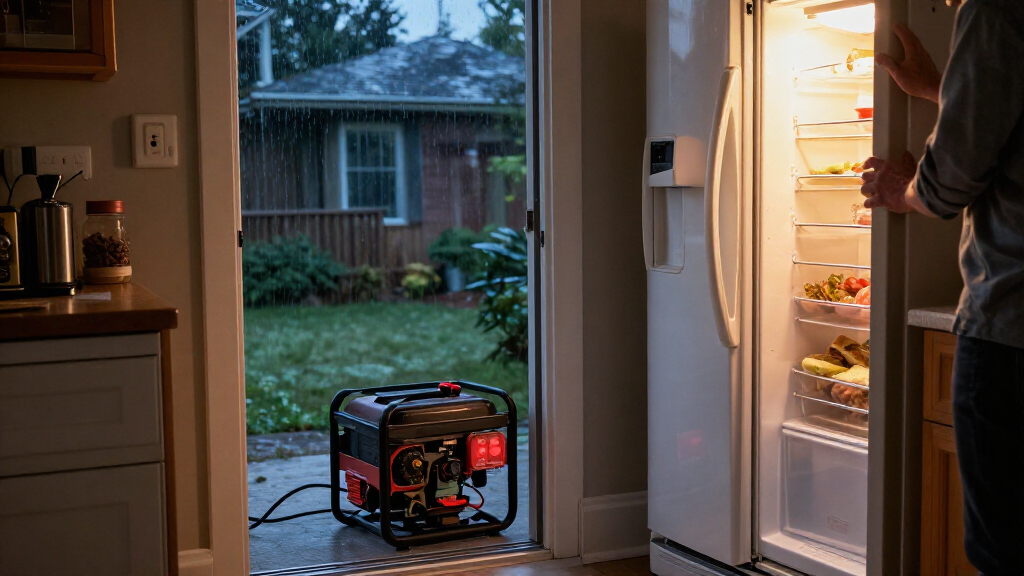
How We Picked
I ranked these options around the demands of refrigerator backup, not maximum output alone. The main criteria were usable running and starting capacity, portability, fuel flexibility or stored battery energy, ease of operation, and whether the format fits a household outage plan. A refrigerator cycles on and off, so a generator needs enough surge capacity for startup as well as steady operation; buyers should still check their own appliance label or manual rather than rely on a category-wide wattage assumption.
The ranking favors options that appear to balance capacity with practical backup use. Mid-size inverter generators sit ahead of very large units when they can provide useful headroom without imposing unnecessary weight and fuel burden. Dual-fuel models earn credit for fuel choice, while battery stations are judged on quiet, exhaust-free use and limited stored energy rather than treated as direct engine-generator substitutes. Product specifications and included equipment can vary by configuration, so I would verify outlets, runtime data, and charging options before purchase.
| inverter generators for refrigerator backup | Fuel |
|---|---|
| PowerSmart 4000-Watt Gas-Power | Gasoline |
| Oxseryn 2800-Watt Portable Inv | Gasoline |
| Genkins 2800W Portable Inverte | Gasoline |
| Generac GP3300i 3,300-Watt Gas | Unleaded gasoline |
| Westinghouse iGen12000DFc Dual | Gasoline and propane |
| Westinghouse WGen9500DF Dual-F | Gasoline or propane |
| Oxseryn 4400-Watt Gas-Powered | Gasoline |
| WEN 6800-Watt Dual-Fuel Invert | Gasoline or propane |
| Genkins 8000W Portable Inverte | Gasoline |
| Oxseryn 4400W Gasoline Inverte | Gasoline |
| Genkins 4500W Gas-Powered Inve | — |
| PowerSmart 4300-Watt Portable | — |
| EF ECOFLOW DELTA 3 Max Portabl | — |
| Jackery Solar Generator 1000 v | — |
| Genkins 4200W Portable Inverte | — |
Factors to Consider When Choosing Inverter Generators For Refrigerator Backup
Choosing refrigerator backup starts with the appliance and outage plan, not the biggest number on a generator label. I’d work out what else needs power, how long an outage might last, where the unit can run safely, and how fuel or recharging will work. These checks can prevent both buying too little capacity and hauling around a much larger generator than the job requires.
Match startup demand, not just running watts
A refrigerator’s compressor can draw a brief surge when it starts, so its steady running wattage alone may understate the capacity needed. Check the appliance nameplate or manual for electrical requirements, and use a plug-in watt meter if the data is unclear and measurement is appropriate. Compare that demand with both the generator’s running output and its peak or starting rating; the peak figure is temporary, not a second continuous rating. If you plan to power a freezer, lights, router, or medical equipment at the same time, add their loads and account for appliances that may start together. Avoid assuming that a larger generator solves every issue: the outlet, cord, transfer equipment, and circuit limits still matter.
Plan runtime around the refrigerator’s cycling
A refrigerator does not draw full power continuously, but its actual energy use changes with room temperature, door openings, food load, and compressor condition. Generator runtime claims are commonly tied to a particular load and fuel amount, so they are not a guaranteed number of outage hours for your setup. Look for runtime figures at more than one load where available, then plan fuel with a margin rather than estimating from the generator’s tank size alone. Eco or low-load modes may reduce fuel use when demand is light, but confirm how the unit responds to compressor startup. For a long outage, the practical question is not only how long one tank lasts, but whether you can safely store and replenish fuel.
Choose between gasoline, dual fuel, and battery power
Gasoline generators are familiar and can suit buyers who already have a safe fuel-storage routine, while dual-fuel models provide another option when one fuel is unavailable. Propane can be stored for longer periods than gasoline, but cylinder size, cold-weather performance, and the generator’s fuel-specific output can affect the plan. A battery power station avoids engine exhaust, noise, and routine engine maintenance, which can make it a better fit for indoor use when its placement and operating instructions allow it. Its limitation is stored energy: once depleted, it needs a suitable recharge source, and solar charging depends on sunlight, panel placement, and time. Compare usable watt-hours and charging rates with expected refrigerator consumption rather than treating battery capacity as equivalent to a generator’s watts.
Size for the outage you expect, not every appliance you own
A fridge-only backup plan may not need the same output as a setup that also runs a well pump, microwave, space heater, or air conditioner. List essential appliances and identify which can run at different times; staggered use can reduce the generator capacity needed. Larger units can offer valuable headroom, but they typically bring more weight, storage space, fuel demand, and noise to manage. Smaller generators are easier to move, yet may leave little room for additional loads or startup surges. I’d pay for added capacity only when it supports a specific load plan rather than as a vague promise of flexibility.
Treat safe placement and connection as part of the purchase
Fuel-powered generators produce carbon monoxide and must run outdoors, well away from doors, windows, and vents, following the manufacturer’s instructions and local guidance. A CO shutdown sensor is a backup feature, not permission to operate a generator indoors, in a garage, or near an open window. Use properly rated outdoor cords for direct appliance connections, or have a qualified electrician install suitable transfer equipment for household circuits. Never backfeed a home through a wall outlet, since that can endanger utility workers and damage equipment. Before an outage, check that the refrigerator can reach the generator safely and that the chosen connection method matches the appliance and generator outlets.
Weigh convenience features against maintenance and storage
Electric or remote start can make a generator easier to operate during poor weather, but the starting battery may need care and does not remove the need to learn the controls. Inverter technology can provide cleaner electrical output for sensitive electronics, though refrigerator compatibility still depends on sufficient capacity and proper connections. Fuel generators need scheduled maintenance and preparation for storage, including attention to fuel condition and the manufacturer’s service intervals. Battery stations skip engine upkeep but should be stored and charged according to their battery-care instructions. Before choosing, ask whether the unit is easy for you to move, start, connect, and maintain; a feature-rich model is little help if it is not ready when an outage begins.
Frequently Asked Questions
How do I know whether a generator can start my refrigerator?
Check the refrigerator’s label or manual for its electrical requirements, including any stated starting or locked-rotor demand. Compare those figures with the generator’s running watts and its temporary peak rating, not just the headline maximum. If the appliance gives only amps, voltage and amps can help estimate watts, but a technician or appliance manufacturer can clarify unusual compressor requirements. Leave capacity for other devices that may start at the same time. A generator that powers the fridge steadily in a light-load scenario may still struggle when the compressor cycles on alongside another appliance.
Can I run my refrigerator from a battery power station overnight?
It depends on the refrigerator’s energy use and the station’s usable watt-hours, not simply its advertised output watts. A fridge cycles, so the time it runs can differ substantially from a calculation based on continuous full-power draw. Check the station’s usable capacity, inverter output, and any limitations on surge loads, then compare those with measured or documented refrigerator consumption. Cold weather, door openings, and a warm kitchen can raise demand. For multi-day outages, plan a recharge source and realistic recharge time rather than assuming one full battery will cover the whole event.
Is a dual-fuel generator worth choosing for refrigerator backup?
It can be worthwhile if having a choice of fuel improves your outage plan or if you already store propane safely. Dual-fuel capability may help when gasoline is difficult to obtain, but output and runtime can differ by fuel, so compare the model’s specifications for each mode. Consider cylinder availability, connection requirements, and how much fuel you can store under local rules. If you have a reliable gasoline supply and only need short backup periods, a single-fuel model may be simpler. The best choice is the one you can fuel safely and operate with confidence during an outage.
Can I connect a generator directly to my home’s wiring?
Do not connect a generator to a household wall outlet or use a makeshift backfeed cord. That can send electricity onto utility lines and create a serious hazard for workers and occupants. For powering selected home circuits, have a qualified electrician install an approved transfer switch or interlock system compatible with the generator. A properly rated outdoor extension cord can power an individual appliance when used according to the generator and cord instructions. Check local electrical requirements before deciding how the generator will connect.
Should I buy a larger generator now to run more appliances later?
Only if those additional loads are part of a realistic plan. Write down the appliances you expect to run, their running demand, and any startup surges, then decide whether you can operate some at separate times. A larger unit may provide headroom, but it can also be heavier, take more storage space, and use more fuel than a fridge-focused setup needs. If you may add high-demand equipment such as a well pump or air conditioner, check the actual electrical requirements before buying. For a refrigerator and a few small essentials, a mid-size model may be easier to handle than a large household generator.
Conclusion
For most buyers seeking a balance of refrigerator capacity and manageable size, I’d start with the PowerSmart 4000-Watt Portable Inverter Generator as the best overall pick. The Oxseryn 2800-Watt or Genkins 2800W models are the value-oriented choices for a simpler fridge-first plan, provided the refrigerator’s starting demand fits their ratings. Beginners who prefer a familiar mid-size format can start with the PowerSmart; those who want extra fuel flexibility should look at the WEN DF680iX. For broader household loads and premium capacity, the Westinghouse iGen12000DFc is the standout, while the EF ECOFLOW DELTA 3 Max best fits buyers who prioritize quiet, exhaust-free operation and can plan around battery limits. If you need a lighter battery setup for shorter outages, the Jackery 1000 v2 is the more compact alternative. Before choosing, confirm the refrigerator’s startup requirements, connection plan, and expected outage duration.