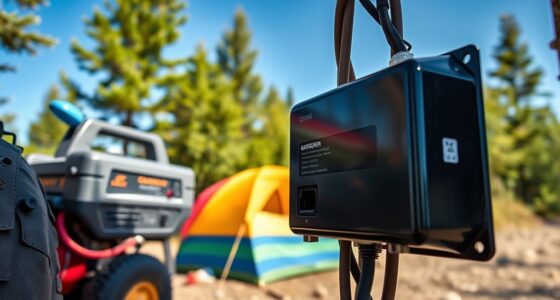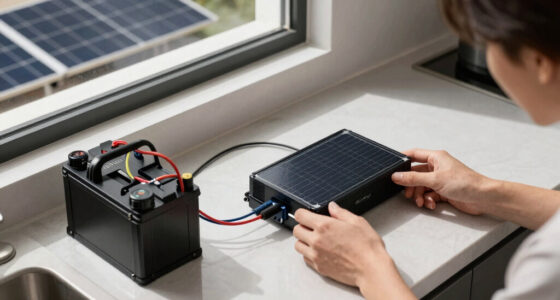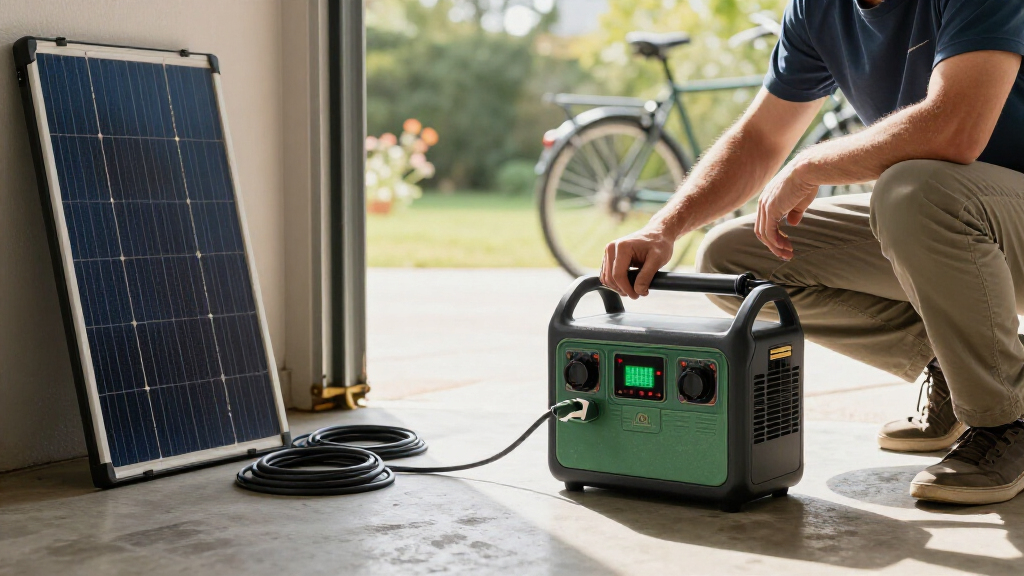

Looking for the best LFP battery power stations means choosing between chemistry-driven longevity and the right balance of capacity, inverter wattage, and charging speed. The Jackery HomePower 2000 Plus v2 earns my top spot for pairing a 2048Wh capacity with a 2400W inverter and true whole-home versatility at a size most buyers can actually manage. If you need more muscle, the EcoFlow DELTA 3 Ultra Plus pushes to 3072Wh with fast expansion, while budget-minded buyers should look at the BLUETTI AC180, which proves LFP durability doesn’t require a premium budget. The main tradeoff in this category is portability versus capability: big 3kWh units run refrigerators and power tools but weigh 60+ pounds, while compact units like the EcoFlow RIVER 3 Plus travel easily but can’t back up a home. Read on for the full ranked breakdown.

Get backup power and energy gear delivered free — and shop member deals
- Fast, free delivery on millions of items
- Access to Prime Big Deal Days deals on October 6–7
- Prime Video, Amazon Music and more included
Complete the kit


Key Takeaways
- The 2kWh class (Jackery 2000 Plus v2, Anker SOLIX C2000 Gen 2, BLUETTI Elite 200 V2) is the most competitive bracket — nearly identical capacities forced me to rank them on inverter headroom, charging speed, and expansion support rather than raw specs.
- Wattage gap matters more than capacity gap: the BLUETTI FridgePower and Anker SOLIX S2000 both hold around 2kWh, but their 1800W and 1500W inverters rule out power tools and kitchen appliances that 2400W+ units handle easily.
- The 3kWh tier (DELTA 3 Ultra Plus, HomePower 3600 Plus, Elite 300, FlashSpeed Pro 3600) splits into home-backup workhorses and portable powerhouses — expansion capability was the deciding factor for whole-home use.
- Small LFP stations have matured fast: the EcoFlow RIVER 3 Plus and Jackery Explorer 1000 V2 now offer the same 3,000+ cycle chemistry as flagship models, making them long-lived entry points rather than throwaway starters.
- Charging speed varied more than any other spec across the lineup — the fastest units recharge in under two hours while others take four or more, which matters most for users cycling their station between outages.
| Jackery HomePower 2000 Plus v2 Portable Power Station, 2048Wh, 2400W AC Output |  | Best for Whole-Home Expansion | Capacity: 2048Wh | Expandable Capacity: Up to 12kWh | AC Output: 2400W | VIEW LATEST PRICE | See Our Full Breakdown |
| Jackery HomePower 3000 Portable Power Station, 3072Wh, 3600W |  | Best for Home Backup Power | Capacity: 3072Wh | Running Output: 3600W | Surge Output: 7200W | VIEW LATEST PRICE | See Our Full Breakdown |
| BLUETTI FridgePower Portable Power Station, 2016Wh, 1800W |  | Best Dedicated Fridge Backup | Capacity: 2016Wh | Battery Type: LFP | Output Power: 1800W | VIEW LATEST PRICE | See Our Full Breakdown |
| EF ECOFLOW RIVER 3 Plus Portable Power Station, 286Wh, 760W |  | Best Compact Pick | Capacity: 286Wh | Surge Output: 1200W with X-Boost | UPS Switchover: Under 10 ms | VIEW LATEST PRICE | See Our Full Breakdown |
| Anker SOLIX C1000 Gen 2 Portable Power Station |  | Best Value Mid-Size | Battery Capacity: 1,024Wh | Output Power: 2,000W | Peak Output: 3,000W | VIEW LATEST PRICE | See Our Full Breakdown |
| BLUETTI Elite 200 V2 Portable Power Station, 2073.6Wh, 2600W |  | Best Balanced All-Rounder | Capacity: 2073.6Wh | Continuous AC output: 2600W | Power lifting output: 3900W | VIEW LATEST PRICE | See Our Full Breakdown |
| BLUETTI Elite 300 Portable Power Station, 3014Wh |  | Best for RV Owners | Battery capacity: 3014Wh | Battery type: LiFePO4 | AC output: 2400W | VIEW LATEST PRICE | See Our Full Breakdown |
| Anker SOLIX C2000 Gen 2 Portable Power Station, 2,048 Wh, 2,400 W |  | Best Value for Expansion | Battery capacity: 2,048 Wh | Expandable capacity: Up to 4 kWh | Peak output: 4,000 W | VIEW LATEST PRICE | See Our Full Breakdown |
| Anker SOLIX S2000 Portable Power Station, 2,010Wh, 1,500W |  | Best Compact Pick | Battery capacity: 2,010Wh | Battery type: LFP (314Ah cells) | Continuous output: 1,500W | VIEW LATEST PRICE | See Our Full Breakdown |
| EcoFlow DELTA 3 Ultra Plus 3072Wh Portable Power Station |  | Best for Serious Home Backup | Battery capacity: 3072Wh | Expandable capacity: 3kWh to 11kWh | Continuous output: 3600W | VIEW LATEST PRICE | See Our Full Breakdown |
| BLUETTI AC180 Portable Power Station, 1152Wh LiFePO4 Battery |  | Best Balanced Midsize Pick | Battery capacity: 1152Wh | Battery type: LiFePO4 | AC output: 1800W (2700W boost) | VIEW LATEST PRICE | See Our Full Breakdown |
| Jackery Explorer 1000 V2 Portable Power Station |  | Best Lightweight All-Rounder | Capacity: 1,070Wh | Battery type: LFP | AC output: 1,500W (3,000W surge) | VIEW LATEST PRICE | See Our Full Breakdown |
| VTOMAN FlashSpeed Pro 3600 Portable Power Station, 3096Wh, 3600W |  | Best Mobile Powerhouse | Battery capacity: 3096Wh | Battery chemistry: LiFePO₄ | Output: 3600W (6000W surge) | VIEW LATEST PRICE | See Our Full Breakdown |
| Jackery HomePower 3600 Plus Portable Power Station, 3584Wh, 3600W |  | Best Expandable Home Backup | Capacity: 3584Wh (expandable to 43kWh) | AC output: 3600W (7200W parallel) | Voltage: 120V; 240V in parallel | VIEW LATEST PRICE | See Our Full Breakdown |
| EcoFlow DELTA 3 Portable Power Station, 1024Wh, 1800W |  | Best Fast-Charging Starter Unit | Capacity: 1024Wh (expandable to 5kWh) | Battery chemistry: LiFePO4 (LFP) | Power output: 1800W | VIEW LATEST PRICE | See Our Full Breakdown |
| LFP battery power station | Weight | Capacity |
|---|---|---|
| Jackery HomePower 2000 Plus v2 | — | 2048Wh |
| Jackery HomePower 3000 Portabl | 59.5 lbs | 3072Wh |
| BLUETTI FridgePower Portable P | — | 2016Wh |
| EF ECOFLOW RIVER 3 Plus Portab | 10.4 lbs | 286Wh |
| Anker SOLIX C1000 Gen 2 Portab | 11.3 kg | — |
| BLUETTI Elite 200 V2 Portable | — | 2073.6Wh |
| BLUETTI Elite 300 Portable Pow | 58 lbs | — |
| Anker SOLIX C2000 Gen 2 Portab | 41.7 lb | — |
| Anker SOLIX S2000 Portable Pow | 35.7 lbs | — |
| EcoFlow DELTA 3 Ultra Plus 307 | 74 lbs | — |
| BLUETTI AC180 Portable Power S | — | — |
| Jackery Explorer 1000 V2 Porta | 23.8 lbs | 1,070Wh |
| VTOMAN FlashSpeed Pro 3600 Por | 83.8 lbs | — |
| Jackery HomePower 3600 Plus Po | — | 3584Wh (expandable to 43kWh) |
| EcoFlow DELTA 3 Portable Power | — | 1024Wh (expandable to 5kWh) |
More Details on Our Top Picks
Jackery HomePower 2000 Plus v2 Portable Power Station, 2048Wh, 2400W AC Output
This option stands out for one reason above all: scalability. Starting at 2048Wh, it grows to a genuine 12kWh — enough to shift from weekend camping to multi-day home backup without buying an entirely new unit. The 6000+ cycle LFP rating is also a step above the Jackery HomePower 3000, whose battery is rated for 4,000 cycles, which matters if this is a decade-long investment. Smart energy management with priority routing lets a household keep critical circuits alive when capacity runs low, and the 140W USB-C port with AVS support fast-charges compatible Apple laptops without a brick. The tradeoff is output: at 2400W it trails the HomePower 3000’s 3600W, so running multiple high-draw appliances simultaneously is off the table. Compared with the fixed-capacity Anker SOLIX S2000, this model wins for buyers planning to build a system over time rather than buy once.
Pros:- Expandable from 2048Wh up to 12kWh with add-on batteries
- 6000+ cycle LFP cells outlast most rivals in this class
- Smart energy management with priority routing for outages
- 140W USB-C with AVS protocol for fast laptop charging
Cons:- 2400W output is modest for a system that scales to 12kWh
- Reaching full expansion capacity requires a serious investment in extra battery packs
Best for: Homeowners building a scalable backup system in stages, starting small and expanding toward whole-home coverage
Not ideal for: Buyers who need to run several power-hungry appliances at once — 2400W of output limits simultaneous high-draw loads
- Capacity:2048Wh
- Expandable Capacity:Up to 12kWh
- AC Output:2400W
- Battery Type:LFP
- Battery Cycles:6000+
- USB-C Output:140W
- USB-C Protocol Support:AVS
Our verdict“This pick makes the most sense for buyers who want a power station that can grow into a home backup system instead of being replaced later.”
Jackery HomePower 3000 Portable Power Station, 3072Wh, 3600W
When the grid fails, the numbers that matter are capacity, output, and switchover speed — and this model delivers on all three. The 3072Wh capacity paired with 3600W of running output means it can run a refrigerator, furnace fan, and several lights concurrently, something the smaller Jackery HomePower 2000 Plus v2 simply cannot match in raw wattage. Its ≤20ms UPS switching keeps computers and medical devices alive without a reboot, and charging flexibility is unusually broad: AC, hybrid AC+DC (full charge in 1.7 hours), solar, car, or even a generator. The TT-30 RV port is a thoughtful touch for owners of mid-size campers. The compromises are physical and solar: at 59.5 pounds it is a two-person lift for anything beyond the garage, and hitting 80% via two 200W panels takes a leisurely nine hours. Compared with the similarly sized EcoFlow DELTA 3 Ultra Plus, it holds its own as the more appliance-friendly option for stationary home use.
Pros:- 3072Wh capacity with 3600W running output handles whole rooms of appliances
- UPS switching within 20ms protects computers and sensitive gear
- Five charging input options including generator and hybrid AC+DC
- Dedicated TT-30 RV outlet for campers
Cons:- 59.5-pound weight limits portability
- Solar charging to 80% takes 9 hours even with two 200W panels
Best for: Households preparing for extended outages who need to run multiple appliances and want generator-compatible recharging
Not ideal for: Campers and van lifers who move their power station often — 59.5 pounds makes it a chore to transport
- Capacity:3072Wh
- Running Output:3600W
- Surge Output:7200W
- Battery Chemistry:LiFePO4
- Battery Cycle Life:4,000 cycles to 70% capacity
- UPS Switching Time:≤20ms
- Charging Time:1.7 hours via hybrid AC and DC
- Weight:59.5 lbs
Our verdict“This is the model to buy if your main scenario is keeping a home functional through an outage rather than hauling power into the outdoors.”
BLUETTI FridgePower Portable Power Station, 2016Wh, 1800W
Most power stations are generalists; this one is a specialist. The 4W standby draw is the headline spec — a typical unit wastes far more power idling between cycles, which quietly shortens how long a refrigerator stays cold. Pair that with a 10ms UPS switchover (faster than the Jackery HomePower 3000’s 20ms) and a refrigerator never notices the grid went down. The 75mm slim chassis wall-mounts beside or behind a fridge where a bulky 16-inch-deep station would never fit, and it doubles as backup for sump pumps and freezers. Capacity expands to 8064Wh for multi-day outages. The honest catch: the base 2016Wh gets most households roughly a day or two of fridge runtime, so the multi-day claims depend on expansion batteries sold separately. And with 1800W of output, it is not the machine for running a microwave alongside kitchen appliances — the BLUETTI AC180 covers more general mid-size needs.
Pros:- 4W standby consumption stretches runtime during extended outages
- 10ms UPS switchover beats most rivals in this roundup
- Slim 75mm design wall-mounts in tight kitchen or utility spaces
- Expandable up to 8064Wh with app alerts and voice control
Cons:- Multi-day runtime requires expansion batteries bought separately
- 1800W output is too limited for running several large appliances at once
Best for: Homeowners whose top outage concern is protecting a refrigerator and freezer full of food, or keeping a sump pump running
Not ideal for: Buyers wanting one do-everything station for camping and varied appliances — the output and outlet layout are fridge-first
- Capacity:2016Wh
- Battery Type:LFP
- Output Power:1800W
- Surge Power:3600W
- Standby Consumption:4W
- UPS Switchover:10ms
- Expanded Capacity:Up to 8064Wh
- Thickness:75mm
Our verdict“If food spoilage during outages is your specific worry, this purpose-built unit does that one job better than any generalist power station here.”
EF ECOFLOW RIVER 3 Plus Portable Power Station, 286Wh, 760W
Not everyone needs kilowatt-hours — sometimes the job is keeping a router, a CPAP, and a phone alive through a short outage, and that is where this 10.4-pound unit earns its place. Its standout spec is a sub-10ms UPS switchover across three AC outlets, matching or beating units three times its size, so a desktop computer rides through a blackout without rebooting. An AC recharge of roughly one hour means it is ready again almost as soon as the power returns, and at 30 dB it is quiet enough for a bedroom nightstand. X-Boost surge handling up to 1200W lets it start the occasional tricky device. The limitation is arithmetic: 286Wh runs a mini fridge for hours, not days, and the 3000-cycle rating is shorter than the 6000+ cycles of the Jackery HomePower 2000 Plus v2 — a fair exchange for the smaller, cheaper package. Expansion batteries can double capacity, but at that point a larger base unit makes more sense.
Pros:- 10.4-pound carry weight with a 30 dB noise level suits bedrooms and desks
- Sub-10ms UPS switchover on three AC outlets
- Full AC recharge in about an hour
- IP54 protection and app control via Bluetooth and Wi-Fi
Cons:- 286Wh capacity is too small for appliance backup
- 3000-cycle lifespan trails larger LFP units in this roundup
Best for: Apartment dwellers and desk workers who need short-outage protection for a router, PC, CPAP, or small electronics
Not ideal for: Anyone planning to run a refrigerator or power tools — 286Wh drains quickly under real loads
- Capacity:286Wh
- Surge Output:1200W with X-Boost
- UPS Switchover:Under 10 ms
- Battery Chemistry:LiFePO4
- Battery Lifespan:3000 cycles to 80% capacity
- AC Recharge Time:About 1 hour
- Solar Input:Up to 220W
- Outlets:7, including 3 UPS-supported AC outlets
- Weight:10.4 lbs
Our verdict“Buy this for lightweight, quiet protection of small electronics — and skip it the moment refrigerator backup enters your plans.”
Anker SOLIX C1000 Gen 2 Portable Power Station
This model nails the sweet spot between portability and serious capability. At 1024Wh, it sits in the same capacity class as the EcoFlow DELTA 3 and BLUETTI AC180, but its 2000W output with 3000W peak outmuscles both, letting it run a microwave or hair dryer that would trip smaller units. Recharge speed is the other differentiator: 49 minutes over AC and roughly 1.8 hours with a 600W solar array mean less downtime between uses, whether that is back-to-back camping trips or successive outage days. The sub-10ms UPS switchover and a 4000-cycle rating to 80% capacity round out a well-rounded spec sheet for a unit one person can carry at 11.3kg. The tradeoffs are real, though: a full solar setup is a meaningful added cost, and Anker’s own listing is inconsistent on outlet count (nine in specs, ten in the description) — worth a close look before you buy. Compared with stepping up to the 2048Wh Anker SOLIX C2000 Gen 2, this one trades runtime for easier carrying and a lower entry cost.
Pros:- 2000W output with 3000W peak beats most 1kWh-class rivals
- Full AC recharge in 49 minutes minimizes downtime
- Sub-10ms UPS switchover for sensitive electronics
- 4000-cycle LFP rating supports years of regular use
Cons:- Solar recharging requires a separate compatible panel setup
- Listing inconsistencies on outlet count make exact port layout unclear before purchase
Best for: Campers and RV owners who want microwave-class output and fast recharging without a 50-pound unit
Not ideal for: Households needing multi-day backup — 1024Wh runs essentials for hours, not days, without solar input
- Battery Capacity:1,024Wh
- Output Power:2,000W
- Peak Output:3,000W
- AC Recharge Time:49 minutes at 1,600W
- Solar Input:600W, 60V max
- Battery Cycle Life:At least 80% capacity after 4,000 cycles
- UPS Switchover:Under 10 ms
- Weight:11.3 kg
Our verdict“This is the smart middle-ground buy: enough output for demanding appliances, enough portability for the outdoors, and recharge speeds that keep it usable every day.”
BLUETTI Elite 200 V2 Portable Power Station, 2073.6Wh, 2600W
This model earns a top spot because it refuses to make you choose between speed, power, and peace. The 2600W continuous output with a 3900W power-lifting mode handles demanding appliances that would trip up the Anker SOLIX S2000, while the 0–80% charge in about an hour rivals the Anker SOLIX C2000 Gen 2. What separates it is flexibility: AC, solar, and alternator charging make it as viable in an RV as it is on a garage shelf. The Silent Mode at 16–30dB is quiet enough for indoor overnight use, and the 6000+ cycle rating means the battery should outlast the inverter’s relevance. The catch is that headline charging speeds assume BLUETTI’s own high-wattage chargers or a full 1000W solar array — budget for those if fast recharge matters.
Pros:- 2600W continuous output runs demanding appliances, with 3900W power lifting for motor-driven loads
- Three charging paths including a 1200W alternator option for road use
- Silent Mode keeps noise between 16–30dB for indoor use
- Nine simultaneous device outlets and app control
Cons:- Fast recharge figures require BLUETTI’s specified high-power chargers or a 1000W solar array
- Longevity and performance claims are manufacturer statements, not independently verified
Best for: RV owners and home-backup planners who want one station that charges fast from any source and runs large appliances
Not ideal for: Buyers who want to charge at full speed using only the included cable and third-party panels — the fast times depend on BLUETTI’s specific accessories
- Capacity:2073.6Wh
- Continuous AC output:2600W
- Power lifting output:3900W
- Battery chemistry:LiFePO4
- Battery cycle life:Over 6,000 cycles
- AC charging:0–80% in 1 hour (Turbo Mode, 1800W)
- Solar charging:Full charge in 2.4 hours with 1000W panels
- Silent Mode noise:16–30dB
- Devices powered simultaneously:Up to 9
Our verdict“If you can only buy one station and need it to do everything reasonably well, this is the safest single purchase in the lineup.”
BLUETTI Elite 300 Portable Power Station, 3014Wh
Where most mid-size stations force RV owners into adapter cables and workarounds, this one builds in a native TT-30 RV outlet plus a 12V/30A DC output — no dongles, no lost capacity through conversion. The 3014Wh capacity sits a step above the BLUETTI Elite 200 V2, buying you roughly 45% more runtime before the bulk becomes a factor, and at 58 pounds it’s lighter than the EcoFlow DELTA 3 Ultra Plus at 74. The 10ms UPS switching also makes it credible as a home sump-pump or fridge backup. The tradeoff is outlet scarcity: only two AC outlets are listed, so multi-device setups will need a power strip, and the weight means it lives in the RV or on a shelf rather than in a backpack.
Pros:- Native TT-30 RV outlet and 12V/30A DC output eliminate adapter losses
- 3014Wh capacity with 2400W output covers whole-trailer essentials
- 10ms UPS switching doubles as serious home backup
- 0–80% recharge in as little as 78 minutes
Cons:- Only two power outlets listed, limiting simultaneous device use
- Heavy at 58 pounds without wheels or a handle-focused design
Best for: RV and travel-trailer owners who want to plug in directly without adapters and run sustained loads off-grid
Not ideal for: Campers who move their station between sites frequently — 58 pounds with no wheels is a two-person lift
- Battery capacity:3014Wh
- Battery type:LiFePO4
- AC output:2400W
- Surge output:4800W
- RV outlet:TT-30
- DC output:12V/30A
- UPS switching:10ms
- Recharge time:0–80% in as little as 78 minutes
- Weight:58 lbs
Our verdict“This is the pick if your power station spends its life plugged into a camper — the built-in RV outlets alone justify the choice.”
Anker SOLIX C2000 Gen 2 Portable Power Station, 2,048 Wh, 2,400 W
This model’s pitch is simple: start at 2kWh now, expand to 4kWh later without buying a whole new station. That growth path is what the Anker SOLIX S2000 lacks entirely, and it undercuts the EcoFlow DELTA 3 Ultra Plus‘s expansion ceiling while costing less up front. At 41.7 pounds, it’s the most portable of the 2kWh-class options here — noticeably lighter than the BLUETTI Elite 300 — and the 4000W peak output covers refrigerator and tool startup surges. The claimed 58-minute full recharge is real but conditional: it requires combined AC and solar input, so wall-only charging will be slower. And remember the 4kWh figure is only reachable after buying the expansion battery, so the out-the-door capacity is half the headline.
Pros:- Expandable from 2,048Wh up to 4kWh with an add-on battery
- 2,400W rated and 4,000W peak output handles startup surges
- Six recharge methods including solar and 800W alternator charging
- Lightest-in-class 41.7lb build for its capacity
Cons:- Expansion battery is required, not included, to reach 4kWh
- The 58-minute full recharge depends on combining AC and solar input
Best for: Buyers on a starter budget who want a capable 2kWh station today and a clear path to 4kWh later
Not ideal for: Anyone who needs maximum capacity immediately — the 4kWh figure requires a separate expansion battery purchase
- Battery capacity:2,048 Wh
- Expandable capacity:Up to 4 kWh
- Peak output:4,000 W
- Full recharge time:58 minutes with AC and solar
- Alternator charging:800 W; stated full charge in 3 hours
- Weight:41.7 lb
- Fridge runtime:Up to 32 hours (dual-door fridge)
Our verdict“Buy this if you want to spread the cost of a 4kWh system over time instead of paying for it all at once.”
Anker SOLIX S2000 Portable Power Station, 2,010Wh, 1,500W
At 35.7 pounds and roughly the footprint of a small cooler, this is the station you can actually carry to a campsite without planning around it — the BLUETTI Elite 200 V2 and Anker SOLIX C2000 Gen 2 both ask more of your back. Despite the size, it keeps eight outlets, sub-10ms UPS switching, and six charging methods, and the claimed 10,000-cycle battery lifespan is the most aggressive durability figure in this batch. The compromise is raw muscle: 1500W continuous output is half of what the C2000 Gen 2 offers, so electric kettles, hair dryers, and power tools are off the menu. Solar input also caps at 400W, meaning solar recharges are slow affairs compared to the Elite 200 V2’s 1000W ceiling. The absence of a 12V DC port further narrows its compatibility with older car accessories.
Pros:- Lightest and most compact in this capacity class at 35.7 lbs
- Eight outlets plus sub-10ms UPS switchover for backup duty
- Six charging methods including alternator and car charging
- Claimed 10,000-cycle LFP lifespan for long-term ownership
Cons:- 1500W continuous output limits which appliances it can run
- No 12V DC port, and solar input caps at a modest 400W
Best for: Campers and apartment dwellers who prioritize carry weight and outlet count over high-wattage appliance support
Not ideal for: Anyone running heating appliances or power tools — 1500W continuous output rules out most high-draw devices
- Battery capacity:2,010Wh
- Battery type:LFP (314Ah cells)
- Continuous output:1,500W
- Peak output:3,000W
- Maximum solar input:400W
- Outlets:8
- UPS switchover:<10 ms
- Weight:35.7 lbs
- Charging methods:6 (AC, solar, generator, alternator, car, wall)
Our verdict“Choose this when portability and outlet variety matter more than wattage — it’s the comfortable carry of the group.”
EcoFlow DELTA 3 Ultra Plus 3072Wh Portable Power Station
This is the heavy hitter of the batch, and it’s built for a different job than the others. The 3600W continuous output and 7200W surge put it in the same performance tier as the Jackery HomePower 3600 Plus, while the 3kWh-to-11kWh expansion range outgrows every other option here — enough to meaningfully back up a house rather than a fridge. Combined with sub-10ms UPS switching and 25dB operation, it’s designed to sit in a utility room permanently. The costs of that ambition are physical: at 74 pounds it’s far heavier than the BLUETTI Elite 300 despite similar starting capacity, and the two listed outlets mean you’ll need your home’s wiring or a transfer switch to use its full potential. This is an installation, not a grab-and-go.
Pros:- Expandable from 3kWh up to 11kWh for whole-home backup scale
- 3600W continuous and 7200W surge output runs heavy loads
- Sub-10ms UPS switching for seamless outage response
- Quiet 25dB operation suits permanent indoor placement
Cons:- At 74 pounds, it’s the heaviest option here and effectively stationary
- Only two outlets listed, so full utilization requires external distribution
Best for: Homeowners building a scalable whole-home or essential-circuit backup system they’ll expand over years
Not ideal for: Campers and anyone who needs to move the station regularly — 74 pounds with only two outlets makes it poor as a portable
- Battery capacity:3072Wh
- Expandable capacity:3kWh to 11kWh
- Continuous output:3600W
- Surge output:7200W
- UPS switching:Under 10ms
- Battery chemistry:LiFePO4
- Charging methods:6
- Noise level:25dB
- Weight:74 lbs
Our verdict“Skip the portability debate — this is for buyers who want the ceiling of a home battery system that starts at one box.”
BLUETTI AC180 Portable Power Station, 1152Wh LiFePO4 Battery
The AC180 earns its spot by pairing a 1152Wh LFP battery with 1800W of continuous output — enough to run power tools, a microwave, or a full camp kitchen without the weight penalty of the big units. Compared with the EcoFlow DELTA 3, it matches the output but adds a 2700W boost mode for stubborn appliances like air compressors, plus a 20ms UPS response that makes it genuinely useful as an office or router backup. A one-hour AC recharge is faster than the Jackery Explorer 1000 V2‘s default 1.7-hour charge. The tradeoffs are modest but real: solar-only recharges stretch to roughly three hours, and the boost mode is buried in the app rather than available at a button press.
Pros:- 1152Wh capacity with 1800W output hits a practical sweet spot
- 2700W boost mode handles surge-heavy appliances
- 20ms UPS response works for sensitive home backup
- One-hour AC recharge beats most similarly sized rivals
Cons:- Solar-only charging takes roughly 2.8–3.3 hours
- Boost mode must be activated through the app, not the unit itself
Best for: Campers and home-office users who want near-2kW output and UPS backup in a carryable package
Not ideal for: Off-grid solar-first users — 500W of solar input means slow recharges compared with higher-wattage units like the VTOMAN FlashSpeed Pro 3600
- Battery capacity:1152Wh
- Battery type:LiFePO4
- AC output:1800W (2700W boost)
- AC charging time:1 hour
- Solar input:500W
- Number of outlets:8
- UPS response time:20 ms
- Warranty:5 years
Our verdict“A well-rounded choice for buyers who want serious output and home-backup smarts without moving into 80-pound territory.”
Jackery Explorer 1000 V2 Portable Power Station
At 23.8 lbs with a foldable handle, the Explorer 1000 V2 is the easiest model in this lineup to actually carry — a clear step up in portability over the ~30 lb-plus BLUETTI AC180 and a different species from the 83.8 lb VTOMAN FlashSpeed Pro 3600. Output is a solid 1500W with a 3000W surge, and the LFP cells rated beyond 4,000 cycles mean years of weekend use. The app’s charging modes are more than a gimmick: enabling emergency charging cuts a full recharge to one hour, while quiet mode suits tent-adjacent use. Just know the limits — solar panels are sold separately and restricted to Jackery’s own, so off-grid buyers should budget accordingly rather than assume third-party panels will work.
Pros:- Light 23.8 lb build with a foldable handle for genuine portability
- LFP battery rated beyond 4,000 charge cycles
- App-controlled emergency, quiet, and efficiency charging modes
- Three pure sine wave AC outlets plus dual 100W USB-C ports
Cons:- Solar panel not included, and only Jackery panels are supported
- Fastest one-hour charging requires manually enabling emergency mode in the app
Best for: Campers, van lifers, and road-trippers who prioritize carrying comfort and quiet operation over raw capacity
Not ideal for: Solar-first off-grid users — panel compatibility is locked to Jackery’s ecosystem and no panel ships in the box
- Capacity:1,070Wh
- Battery type:LFP
- AC output:1,500W (3,000W surge)
- Weight:23.8 lbs
- Full charge time:1 hour (emergency mode); 1.7 hours default
- Battery lifespan:Over 70% capacity after 4,000 cycles
- Ports:3 AC, 2 USB-C 100W, 1 USB-A, 1 DC car port
Our verdict“The pick for anyone who will actually carry their power station rather than wheel it.”
VTOMAN FlashSpeed Pro 3600 Portable Power Station, 3096Wh, 3600W
This is the unit you buy when a weekend battery isn’t enough but a permanently installed home system is overkill. With 3096Wh of LiFePO₄ capacity and 3600W of output, it sits between the Jackery HomePower 3000 and the HomePower 3600 Plus in capability, but undercuts both on complexity: no parallel wiring, no expansion batteries, just 14 ports ready out of the box and sub-20ms UPS switching for whole-desk or fridge backup. Cycle life is the standout — 6,000+ cycles to 50% — meaning it can double as a daily-cycled workstation battery for years. The honest tradeoff is the 83.8 lb weight; the wheels and pull-up handle help, but lifting it into a vehicle is a two-person conversation. Solar input caps at 800W, so serious off-grid users still need a compatible panel array.
Pros:- 3600W output with 6000W surge runs nearly any household appliance
- 14 ports including four AC outlets and dual 100W USB-C
- 6,000+ cycles to 50% supports daily long-term use
- Under-20ms UPS switching for sensitive electronics backup
Cons:- 83.8 lb weight makes vehicle loading difficult even with wheels
- Solar charging requires a compatible panel setup to reach the 800W ceiling
Best for: Remote workers and RV owners who need multi-day, multi-device power they can reposition around a property
Not ideal for: Anyone who needs to lift their power station regularly — at 83.8 lbs it’s a roll-it-or-leave-it machine
- Battery capacity:3096Wh
- Battery chemistry:LiFePO₄
- Output:3600W (6000W surge)
- AC recharge time:About 2 hours
- Maximum solar input:800W
- Cycle life:3,000+ cycles to 80%; 6,000+ to 50%
- Ports:14 total
- Weight:83.8 lbs
Our verdict“A straightforward high-capacity workhorse for stationary-ish backup where expansion batteries aren’t wanted.”
Jackery HomePower 3600 Plus Portable Power Station, 3584Wh, 3600W
Where the VTOMAN FlashSpeed Pro 3600 is a fixed-capacity powerhouse, the HomePower 3600 Plus is a scalable backup platform: start at 3584Wh and expand to 43kWh across linked units, which is genuine whole-home outage territory. Its most differentiated feature is 240V output in parallel — something no other unit in this lineup offers — unlocking well pumps, dryers, and other 240V appliances the single-unit competitors simply can’t run. Charging flexibility is equally serious: AC, solar, a gas generator, or a hybrid AC+DC combo that refills in two hours. LFP cells rated for 6,000 cycles and operation down to -4°F round out a cold-climate-friendly design. The catch is cost and complexity — 240V requires a second unit, and even with wheels, moving it is nothing like grabbing the 23.8 lb Explorer 1000 V2.
Pros:- Expandable up to 43kWh for whole-home coverage
- 240V output when paired units run in parallel
- Charges via AC, solar, gas generator, or hybrid in 2 hours
- LFP cells rated 6,000 cycles and operate down to -4°F
Cons:- 240V capability requires buying and wiring a second unit
- Heavy and costly for anyone who doesn’t need home-scale backup
Best for: Homeowners in outage-prone or cold-climate regions building a scalable whole-home backup system over time
Not ideal for: Casual campers or occasional users — the capacity, weight, and expansion ecosystem are wasted money on weekend trips
- Capacity:3584Wh (expandable to 43kWh)
- AC output:3600W (7200W parallel)
- Voltage:120V; 240V in parallel
- Recharge time:2 hrs hybrid; 2.5 hrs AC/generator; 4 hrs solar
- Battery cycle life:6,000 cycles
- Operating temperature:Down to -4°F
- Portability:Wheels and telescopic handle
Our verdict“The right foundation for a serious home backup build, and overkill for everything else.”
EcoFlow DELTA 3 Portable Power Station, 1024Wh, 1800W
The DELTA 3 makes this list for one headline reason: a full recharge in 56 minutes, and 80% in just 30 — quicker than even the BLUETTI AC180‘s one-hour AC charge. For anyone new to power stations, that speed changes behavior: topping up between uses stops being a planning exercise and becomes a plug-in-afterthought. Output matches the AC180 at 1800W, and up to 13 appliances can run simultaneously, which covers a kitchen counter’s worth of devices during an outage. Unlike the Explorer 1000 V2‘s closed solar ecosystem, the 500W solar input keeps things flexible, and capacity can grow to 5kWh. The tradeoffs: expansion means buying EcoFlow battery packs, and the IP65 rating covers only the battery pack, not the whole unit — so don’t treat the main body as weatherproof.
Pros:- 56-minute full recharge and 30-minute 80% charge
- Expandable to 5kWh with compatible batteries
- 4,000-cycle LFP cells to 80% capacity
- Runs up to 13 appliances at once with 1800W output
Cons:- Expansion requires proprietary EcoFlow battery packs
- IP65 protection applies to the battery pack, not the full unit
Best for: First-time buyers who want near-instant recharges and a growth path without starting at a big, heavy unit
Not ideal for: Buyers wanting third-party expansion batteries — growth is limited to EcoFlow’s own packs
- Capacity:1024Wh (expandable to 5kWh)
- Battery chemistry:LiFePO4 (LFP)
- Power output:1800W
- Full charge time:56 minutes (AC + solar)
- Solar input:500W
- Cycle life:4,000 cycles to 80%
- Appliance capacity:Up to 13 simultaneously
- Battery pack protection:IP65
Our verdict“The smart entry point for buyers who value recharge speed and future expansion in a compact footprint.”
How We Picked
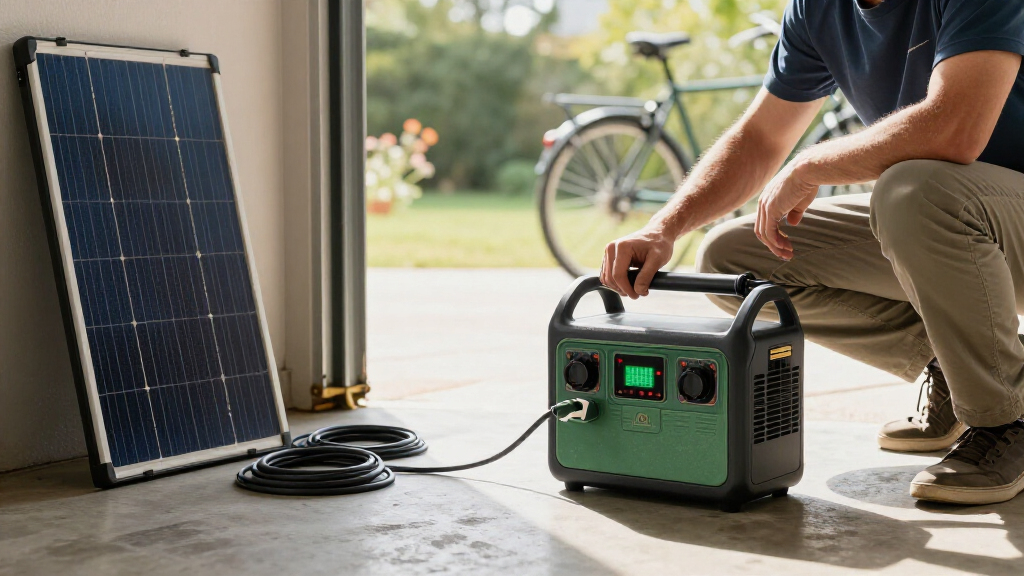
I evaluated every station through the lens that defines the LFP category: longevity. All fifteen models use lithium iron phosphate chemistry, so I looked past cycle-life marketing and ranked on the factors that actually differentiate one LFP station from another — usable capacity versus inverter output, AC and solar recharge speed, expansion capability, portability, and outlet versatility. A 3kWh battery with a weak inverter serves a different buyer than a 1kWh unit with 1800W of clean sine-wave output, and the rankings reflect those roles rather than a single spec hierarchy.
I also weighted who each product is for. Home-backup buyers need expandability and high sustained wattage; campers need weight under 30 pounds and fast solar input; apartment dwellers need something they can store charged for years without degradation anxiety — the exact scenario where LFP chemistry shines. Products that blurred roles or duplicated another pick’s strengths at a worse tradeoff landed lower. Every entry needed a genuine drawback documented too, because a roundup of fifteen perfect power stations helps no one.
Factors to Consider When Choosing Best LFP Battery Power Stations
Beyond the individual picks, choosing an LFP power station well means understanding how capacity, wattage, and charging interact — and where buyers most often miscalculate. These are the factors I’d weigh before spending money in this category.Match Wattage to Your Real Load, Not the Marketing Number
The single most common mistake is buying capacity without checking inverter output. A 2000Wh station with a 1500W inverter can’t start a table saw, a hair dryer, or sometimes even a microwave with a high surge draw. Add up the running watts of the appliances you actually need simultaneously, then add 20–30% headroom for surge loads — motors in refrigerators and pumps briefly draw far more than their rated wattage at startup. In this roundup, the gap between 1500W and 2400W+ units determines whether a station is a camping battery or a genuine home-backup tool.
Size Capacity Around Runtime, Not the Spec Sheet
Capacity tells you how long you can run things, so work backward from your needs: a refrigerator drawing 150W runs roughly 13 hours on 2kWh, while a space heater will drain the same battery in under two. Buyers consistently overbuy capacity for occasional outages and underbuy for daily off-grid use. Also remember that usable capacity is typically 85–90% of the rated figure due to inverter losses. If you only need phone charging and lights during rare outages, a sub-1kWh unit like the Explorer 1000 V2 does the job; reserve 3kWh-class stations for whole-circuit or multi-appliance backup where their weight and cost are justified.
Why LFP Chemistry Changes the Owning Experience
Lithium iron phosphate isn’t a marketing buzzword — it’s the reason these stations can sit at partial charge for months and tolerate 3,000-plus charge cycles, roughly six to ten years of daily cycling. Older NMC batteries degrade faster, hold less charge long-term, and carry more thermal risk. The practical benefit: you can store an LFP station fully charged in a closet year-round and trust it during an outage, and you don’t need to baby it with careful discharge habits. This is also why buying a smaller LFP unit beats buying a larger used NMC unit in most scenarios.
Charging Speed and Solar Input
Recharge time varied dramatically across this lineup, and it matters more than buyers expect. If you’re cycling a station daily — van life, job sites, frequent outages — a unit that recharges in under 90 minutes from AC effectively doubles your usable daily energy. For solar users, check maximum PV input: units accepting 400–1000W of panels can stay topped up off-grid, while weaker solar limits turn a capable battery into a slow-recovery device. Wall-charging speed is less relevant for emergency-only buyers, which is why I weighted it differently for portable picks versus home-backup picks.
Expansion: Pay Now or Pay Twice
Several stations in this roundup accept add-on battery packs, letting you start at 2kWh and grow to 6kWh or more without replacing the inverter or brain unit. That flexibility costs more upfront than a standalone unit of equal capacity, but it protects you if your needs grow — a new EV, medical equipment, or longer outages. Standalone units are cheaper per watt-hour and simpler to manage. My rule: if you can name a plausible scenario where you’d need double the capacity within three years, buy expandable; if your needs are fixed and known, don’t pay for the option.
Weight, Ports, and Everyday Livability
Weight is the tradeoff buyers underestimate until the first time they lift a 70-pound station into a car. Anything over 40 pounds effectively lives wherever you put it, so portability belongs high on your list if you camp or move between job sites. Check the port selection too: the number and placement of USB-C ports with real wattage output, whether AC outlets fit bulky plugs, and whether there’s a UPS or pass-through mode for always-on devices like routers and fish tanks. These details don’t show up on the box’s headline numbers but determine daily satisfaction.
Frequently Asked Questions
Is an LFP power station worth it over a cheaper lithium-ion model?
In most cases, yes — the chemistry is the main reason to pay attention to this category. LFP cells typically deliver 3,000+ cycles before dropping to 80% capacity, versus roughly 500–800 for older NMC chemistries, which translates to years of additional usable life. LFP also tolerates being stored fully charged and handles heat better, which matters for a device that sits in a garage or closet most of the year. The tradeoff is weight: LFP stores less energy per pound, so a comparable-capacity NMC unit will be lighter. For emergency backup and stationary use, longevity wins; for ultralight backpacking where you’ll cycle the battery occasionally, the weight penalty of LFP may not be worth it.
What size LFP power station do I need to run a refrigerator during an outage?
A modern fridge draws roughly 100–200W while running, but its compressor surge at startup can briefly hit 800–1200W, so the inverter rating matters as much as capacity. A 1kWh station like the EcoFlow DELTA 3 can run a fridge for about 8–10 hours; a 2kWh unit gets you through most single-day outages; a 3kWh expandable station like the DELTA 3 Ultra Plus can bridge multi-day outages, especially with a solar panel to trickle-charge. Run only the fridge on the station if you want maximum runtime, and skip older fridges with higher draw. If outages in your area regularly exceed a day, expansion capability should drive your decision more than the base battery size.
Can I leave an LFP power station plugged in or stored fully charged all year?
Yes, and this is one of LFP’s genuine advantages over older lithium chemistries. Unlike NMC cells, which age faster when held at 100% charge, LFP chemistry tolerates long-term full-charge storage without meaningful degradation. Many stations in this roundup also include a pass-through or UPS mode, letting the unit sit plugged in, keep itself topped up, and instantly power connected devices when the grid drops — ideal for routers, CPAP machines, and aquarium equipment. One habit worth keeping: run a full discharge-and-recharge cycle every few months so the battery meter stays calibrated. Otherwise, store it in a cool, dry spot and check the charge level occasionally.
Should I buy one large station or two smaller ones for the same total capacity?
Two smaller stations give you redundancy and portability — if one fails or one is in the car, you still have power, and a 286Wh unit like the RIVER 3 Plus travels where a 3kWh unit can’t. But one larger station is usually the better call for home backup: it can power a single high-wattage appliance (a microwave, sump pump, or space heater) that two small inverters can’t handle individually, and you avoid managing separate charge cycles and states of charge. Large stations also tend to offer faster AC recharge and expansion options. My rule: choose one big station if backup is the mission, and split only if portability is a genuine weekly need, not a hypothetical.
How important is solar charging speed if I’m mostly using it for emergency backup?
For short, infrequent outages, solar input is a nice-to-have rather than a requirement — AC recharge speed matters more because the grid comes back and refills the battery fast. Solar becomes decisive when outages stretch past a day or when you use the station off-grid, since panels are your only way to extend runtime indefinitely. A station accepting 400W+ of PV input can genuinely sustain a fridge-and-devices load through sunny weather, while 100–200W inputs only slow the drain. If you’re buying for hurricane season or grid instability in your region, prioritize high solar input and buy panels at the same time rather than planning to add them later.
Conclusion
After comparing all fifteen, the right choice comes down to what you’re powering and how often you’ll move the unit. For best overall, the Jackery HomePower 2000 Plus v2 hits the sweet spot of capacity, inverter headroom, and expandability that covers camping through partial home backup. The EcoFlow DELTA 3 Ultra Plus is my best premium pick for whole-home ambitions, with the Jackery HomePower 3600 Plus and VTOMAN FlashSpeed Pro 3600 as strong alternatives if its tradeoffs don’t suit you. For best value, the BLUETTI AC180 and EcoFlow DELTA 3 deliver real LFP durability and useful wattage without flagship pricing. Beginners should start with the EcoFlow RIVER 3 Plus or Jackery Explorer 1000 V2 — cheap ways to learn your actual power needs. And for specific needs: the BLUETTI FridgePower for dedicated appliance backup, the Anker SOLIX C2000 Gen 2 for fast-recharge users, and the Anker SOLIX S2000 for quiet, lightweight mid-size duty. Buy for the loads you can name today, with expansion only if you can name tomorrow’s too.
Fall Picks
fall essentials
As an affiliate, we earn on qualifying purchases.