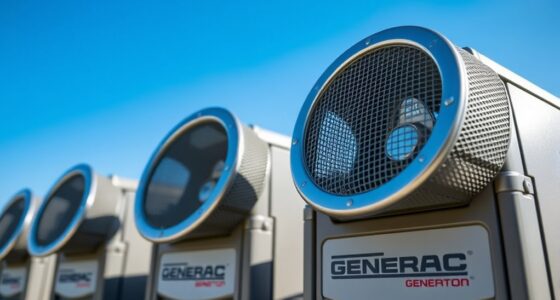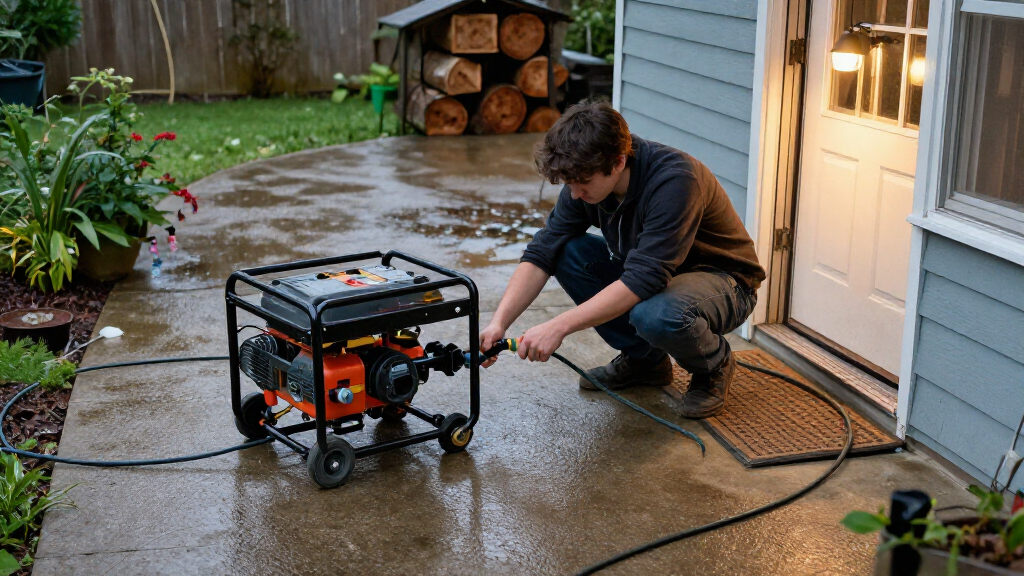

Tri-fuel portable generators can run on gasoline, propane, or natural gas, giving you fuel options when one supply is limited. I rank the DuroMax XP15000HXT as the best overall for buyers who prioritize high output and fuel flexibility; the Champion 11,000-watt inverter stands out for quieter inverter operation and remote start, while the Champion 5,000-watt is a more manageable fit for lighter backup needs. The main tradeoffs are power versus portability, conventional generator output versus inverter features, and convenience features versus added complexity. Fuel type also affects available output, so headline wattage alone is not enough to size a generator. Read on for the full comparison, selection criteria, and advice on matching a model to your home and backup plan.

Get backup power and energy gear delivered free with Prime
- Fast, free delivery on millions of items
- Prime Video, Amazon Music and more included
- Member-only deals all year
Complete the kit


Key Takeaways
- The lineup splits between high-output conventional models and inverter designs: the DuroMax XP15000HXT and Westinghouse WGen14500TFc suit larger loads, while the Champion 11,000-watt and DuroMax XP16000iHT inverter models put inverter operation at the center of the choice.
- Rated wattage is only part of the story: buyers should compare running output, starting demands, and the output available on each fuel—not rely on the biggest peak-watt figure.
- Remote and electric start features appear across several output levels: they can make startup easier, but they do not replace a safe, properly sized transfer connection.
- CO safety features differ across the field: several models list a CO alert or sensor, so buyers should check the exact model’s safety system and still operate every generator outdoors, far from openings.
- The Champion 5,000-watt model fills a distinct role: it may suit a shorter essentials list better than a large generator, but buyers with substantial starting loads should look higher in the lineup.
| DuroMax XP15000HXT 15,000-Watt Tri-Fuel Portable Generator with CO Alert |  | Best Overall | Starting output: 15,000 watts | Running output: 12,000 watts | Fuel types: Gasoline, propane, natural gas | VIEW LATEST PRICE | See Our Full Breakdown |
| Champion 11,000-Watt Tri-Fuel Portable Inverter Generator with Remote Start |  | Best for Sensitive Electronics | Starting output: 11,000 watts | Running output: 9,000 watts gasoline; 8,100 watts propane; 7,290 watts natural gas | Fuel types: Gasoline, propane, natural gas | VIEW LATEST PRICE | See Our Full Breakdown |
| DuroMax XP15000HXT+ 15,000-Watt Tri-Fuel Portable Generator |  | Best for Fuel Management | Starting output: 15,000 watts | Running output: 12,000 watts | Fuel types: Gasoline, propane, natural gas | VIEW LATEST PRICE | See Our Full Breakdown |
| Westinghouse WGen14500TFc Tri-Fuel Portable Generator, 18,000 Peak Watts |  | Best for Maximum Running Output | Peak output: 18,000 watts | Running output: 14,500 watts | Fuel types: Gasoline, propane, natural gas | VIEW LATEST PRICE | See Our Full Breakdown |
| Westinghouse 12,500-Watt Tri-Fuel Portable Generator with Remote Start |  | Best for RV and Home Connections | Peak output: 12,500 watts gasoline; 11,200 watts propane; 9,500 watts natural gas | Running output: 9,500 watts gasoline; 8,500 watts propane; 7,500 watts natural gas | Fuel types: Gasoline, propane, natural gas | VIEW LATEST PRICE | See Our Full Breakdown |
| Champion 5000-Watt Tri-Fuel Portable Generator with Electric Start |  | Best for Smaller Backup Needs | Fuel types: Gasoline, propane, natural gas | Engine: 224cc, 4-stroke | Running watts: 4,000 gasoline; 3,600 propane; 3,240 natural gas | VIEW LATEST PRICE | See Our Full Breakdown |
| DuroMax XP16000iHT 16,000-Watt Tri-Fuel Portable Inverter Generator |  | Best for High-Demand Backup | Fuel types: Gasoline, propane, natural gas | Starting watts: 16,000 W | Running watts: 13,000 W | VIEW LATEST PRICE | See Our Full Breakdown |
| WEN 14,500-Watt Tri-Fuel Generator with Electric Start and CO Sensor |  | Best for Outlet Flexibility | Fuel types: Gasoline, propane, natural gas | Surge watts: 14,500 gasoline; 12,500 propane; 10,500 natural gas | Running watts: 11,500 gasoline; 10,300 propane; 8,750 natural gas | VIEW LATEST PRICE | See Our Full Breakdown |
| Champion 12,500-Watt Tri-Fuel Electric Start Portable Generator |  | Best for Balanced Home Backup | Fuel types: Gasoline, propane, natural gas | Engine: 500cc Champion | Running watts: 10,000 gasoline; 9,000 propane; 8,000 natural gas | VIEW LATEST PRICE | See Our Full Breakdown |
| tri-fuel portable generator | Fuel types | Engine | Fuel tank | Outlets |
|---|---|---|---|---|
| DuroMax XP15000HXT 15,000-Watt | Gasoline, propane, natural gas | — | 13.2 gallons | 14, including a 50-amp outlet |
| Champion 11,000-Watt Tri-Fuel | Gasoline, propane, natural gas | 459 cc single-cylinder OHV | 6.08 gallons | — |
| DuroMax XP15000HXT+ 15,000-Wat | Gasoline, propane, natural gas | 670 cc V-twin | — | 3 |
| Westinghouse WGen14500TFc Tri- | Gasoline, propane, natural gas | 713 cc 4-stroke OHV V-twin | 10.5 gallons | 7, including 50A, 30A, GFCI duplex, and USB outlets |
| Westinghouse 12,500-Watt Tri-F | Gasoline, propane, natural gas | 457 cc 4-stroke OHV | 6.6 gallons | 8 total, including 120/240V 14-50R and 120V L14-30R |
| Champion 5000-Watt Tri-Fuel Po | Gasoline, propane, natural gas | 224cc, 4-stroke | 5 gallons | — |
| DuroMax XP16000iHT 16,000-Watt | Gasoline, propane, natural gas | 744cc, 4-stroke | 10.5 gallons | Two 50-amp outlets |
| WEN 14,500-Watt Tri-Fuel Gener | Gasoline, propane, natural gas | 500cc, 4-stroke OHV | 8.2 gallons | Four 120V 5-20R; one 120V/240V L14-30R; one 120V/240V 14-50R; one 12V DC automotive outlet |
| Champion 12,500-Watt Tri-Fuel | Gasoline, propane, natural gas | 500cc Champion | — | 120/240V 30A locking; 120/240V 42A; two 120V 20A GFCI duplex outlets |
More Details on Our Top Picks
DuroMax XP15000HXT 15,000-Watt Tri-Fuel Portable Generator with CO Alert
The DuroMax XP15000HXT earns my Best Overall spot by pairing substantial 12,000-watt running output with gasoline, propane, and natural gas flexibility. That capacity makes it a stronger fit for broad home backup than the Westinghouse 12,500-Watt model, while its remote and push-button start reduce the hassle of getting power on during an outage. A digital display helps track operating information, and the CO sensor shuts the unit down if it detects harmful fumes.
The tradeoff is its large, fuel-hungry format: the 13.2-gallon tank supports a stated 17-hour runtime, but this is still a substantial generator that needs outdoor operating space and fuel planning. Buyers who value inverter power quality may prefer the Champion 11,000-Watt inverter, which is specifically rated below 3% THD; this DuroMax is better suited to buyers prioritizing capacity over that specification.
Pros:- 12,000 watts of running output supports substantial home backup loads.
- Tri-fuel operation offers choices when one fuel is unavailable.
- Remote and push-button starting simplify startup.
- CO sensor, digital display, and 50-amp outlet add useful safety and monitoring features.
Cons:- Its large tank and high output make fuel storage and handling a significant part of ownership.
- The listed specifications do not state a THD figure, unlike the Champion 11,000-Watt inverter.
- It must be operated outdoors with suitable clearance from occupied spaces.
Best for: Homeowners who want high-output backup for multiple household loads and the option to connect gasoline, propane, or natural gas.
Not ideal for: Buyers with limited storage or a priority for low-THD inverter power for sensitive electronics.
- Starting output:15,000 watts
- Running output:12,000 watts
- Fuel types:Gasoline, propane, natural gas
- Engine displacement:670 cc
- Fuel tank:13.2 gallons
- Listed runtime:Up to 17 hours
- Voltage:240 volts
- Outlets:14, including a 50-amp outlet
- Starting system:Push-button and remote start
Our verdict“Choose the XP15000HXT if you want strong residential backup capacity and three fuel choices, and have room to store and operate a large generator.”
Champion 11,000-Watt Tri-Fuel Portable Inverter Generator with Remote Start
The Champion 11,000-Watt stands apart from the conventional high-output generators here because it is an inverter model rated below 3% THD. That makes it the clearest choice in this group for buyers who want tri-fuel flexibility alongside a stated power-quality figure for sensitive electronics. It also offers wireless remote start up to 80 feet, covered outlets, and CO Shield automatic shutoff. Compared with the DuroMax XP15000HXT, it gives up some starting and running capacity but adds the inverter design and a more specific power-quality rating.
Its output varies by fuel: natural gas provides 7,290 running watts, below its gasoline rating, so buyers should plan loads around the fuel they expect to use. The 6.08-gallon tank and stated 15-hour gasoline runtime apply at 25% load, not full demand; propane runtime is listed as up to eight hours at 25% load with a 20-pound tank. This is a more electronics-conscious pick, not the strongest option for maximum household capacity.
Pros:- Inverter output is rated below 3% THD for sensitive electronics.
- Runs on gasoline, propane, or natural gas, with propane and natural gas hoses included.
- Wireless remote start works from up to 80 feet away.
- CO Shield, covered outlets, and a three-year limited warranty add practical ownership support.
Cons:- Running output falls to 7,290 watts on natural gas.
- The stated propane runtime is up to eight hours at 25% load with a 20-pound tank.
- Offers less running capacity than the DuroMax XP15000HXT and Westinghouse WGen14500TFc.
Best for: Owners who need tri-fuel backup for electronics and appliances and value a published low-THD rating plus remote starting.
Not ideal for: Buyers who need the highest running output for large household loads or expect extended propane operation without changing tanks.
- Starting output:11,000 watts
- Running output:9,000 watts gasoline; 8,100 watts propane; 7,290 watts natural gas
- Fuel types:Gasoline, propane, natural gas
- Engine:459 cc single-cylinder OHV
- Fuel tank:6.08 gallons
- Gasoline runtime:Up to 15 hours at 25% load
- Power quality:Less than 3% THD
- Remote start range:Up to 80 feet
- Warranty:Three-year limited warranty with lifetime technical support
Our verdict“Pick the Champion if clean inverter power and remote convenience matter more than matching the largest generators’ output.”
DuroMax XP15000HXT+ 15,000-Watt Tri-Fuel Portable Generator
The XP15000HXT+ keeps the 15,000-watt starting and 12,000-watt running output of a serious home-backup unit, but its defining difference is electronic fuel injection. That feature is intended to support fuel efficiency and cold starts, making this a compelling fit for buyers who want a high-capacity tri-fuel generator with added engine-management hardware. Its included natural-gas hose, propane regulator, remote control, and battery tender also give the package a more ready-to-connect feel than the Westinghouse WGen14500TFc, whose listed details emphasize outlets and starting options.
This capacity comes with a real portability penalty: at 245 pounds, it is not a casual one-person move, even with the included wheel and handle kit. It also has three listed outlets, fewer than the 14 on the DuroMax XP15000HXT, so check that the connection layout suits your setup before choosing it. Its stated THD is below 5%, but the Champion inverter has a lower published figure for electronics-focused buyers.
Pros:- 12,000 watts of running output suits demanding residential backup.
- Electronic fuel injection is designed to support fuel efficiency and cold starts.
- Includes a natural-gas hose, propane regulator, remote control, battery tender, and wheel-and-handle kit.
- CO sensor, low-oil shutdown, and automatic voltage regulation provide useful operating protections.
Cons:- At 245 pounds, it is difficult to move without help despite the wheel and handle kit.
- Three listed outlets provide fewer direct connection options than the XP15000HXT’s 14.
- Its below-5% THD rating is not as low as the Champion inverter’s below-3% figure.
Best for: Homeowners seeking high-output tri-fuel backup who value electronic fuel injection and included fuel-connection accessories.
Not ideal for: People who need a generator they can lift or reposition easily, or buyers who need many built-in outlet choices.
- Starting output:15,000 watts
- Running output:12,000 watts
- Fuel types:Gasoline, propane, natural gas
- Engine:670 cc V-twin
- Power quality:Less than 5% THD
- Weight:245 pounds
- Dimensions:29.5 × 28 × 26 inches
- Outlets:3
- Warranty:5 years
Our verdict“Choose the XP15000HXT+ for high-capacity backup with electronic fuel injection, provided its weight and limited outlet count fit your setup.”
Westinghouse WGen14500TFc Tri-Fuel Portable Generator, 18,000 Peak Watts
With 14,500 running watts, the Westinghouse WGen14500TFc has the highest stated running output among these five, making it the capacity-first choice for buyers planning to support several large household loads. Its 18,000 peak watts, 713 cc V-twin engine, remote and electric start, and 50-amp outlet put it ahead of the Champion 11,000-Watt inverter when raw output is the priority. Transfer-switch- and interlock-ready connections also suit a planned home-backup setup.
The tradeoff is that its impressive runtime claim—up to 16 hours at 25% load—is specifically tied to gasoline, so it should not be treated as a full-load or all-fuel estimate. The THD is listed as below 5%, while the Champion inverter’s below-3% rating is a clearer match for electronics-first buyers. An automatic transfer switch is sold separately, and its large engine and high capacity call for careful planning around space, fuel, and electrical connections.
Pros:- Highest listed running output among these five products at 14,500 watts.
- Gasoline, propane, and natural gas options provide fuel flexibility.
- Remote and electric start, plus a 50-amp outlet, support home-backup use.
- CO sensor and automatic low-oil shutdown add safety protections.
Cons:- The 16-hour runtime claim applies only to gasoline at 25% load.
- An automatic transfer switch is sold separately.
- Its below-5% THD rating is higher than the Champion inverter’s published below-3% figure.
Best for: Homeowners who need the most listed running capacity in this group for a transfer-switch or interlock-based backup plan.
Not ideal for: Buyers who prioritize low-THD inverter output, compact storage, or a complete automatic-transfer-switch setup in the box.
- Peak output:18,000 watts
- Running output:14,500 watts
- Fuel types:Gasoline, propane, natural gas
- Engine:713 cc 4-stroke OHV V-twin
- Fuel tank:10.5 gallons
- Gasoline runtime:Up to 16 hours at 25% load
- Voltage:120/240 volts
- Outlets:7, including 50A, 30A, GFCI duplex, and USB outlets
- Power quality:Less than 5% THD
Our verdict“Choose the WGen14500TFc when maximum listed running output matters more than inverter-level power quality or a compact footprint.”
Westinghouse 12,500-Watt Tri-Fuel Portable Generator with Remote Start
This Westinghouse earns a distinct place for buyers who want a middle-capacity tri-fuel generator with varied connection options. Its gasoline output is 9,500 running watts, below the DuroMax XP15000HXT’s 12,000 watts, but the listed 14-50R outlet and RV-ready positioning make it a natural fit for RV owners who also want home-backup capability. Remote, electric, and recoil starting provide alternatives if one starting method is inconvenient, while a digital display reports voltage, frequency, and operating hours.
The 6.6-gallon tank is smaller than the XP15000HXT’s 13.2-gallon tank, and the stated 12-hour maximum runtime should not be read as a full-load guarantee. Output also drops on alternate fuels: natural gas is rated at 7,500 running watts. It is easier to justify than the larger Westinghouse WGen14500TFc when your loads do not need 14,500 running watts, but buyers seeking the most capacity should step up to that model.
Pros:- Tri-fuel capability includes gasoline, propane, and natural gas.
- Remote electric, standard electric, and recoil starting offer multiple ways to start.
- Listed outlets include a 120/240V 14-50R connection for RV or backup setups.
- Digital display, CO shutdown, low-oil shutdown, GFCI outlets, and overload protection support monitoring and safety.
Cons:- Gasoline running output of 9,500 watts is well below the WGen14500TFc’s 14,500 watts.
- The 6.6-gallon tank limits fuel capacity compared with the DuroMax XP15000HXT’s 13.2-gallon tank.
- Some assembly is required before use.
Best for: RV owners and homeowners who want tri-fuel flexibility, remote starting, and both RV and transfer-switch-style connections in one generator.
Not ideal for: Households that need the highest available running output or buyers who want long operation without refueling at substantial loads.
- Peak output:12,500 watts gasoline; 11,200 watts propane; 9,500 watts natural gas
- Running output:9,500 watts gasoline; 8,500 watts propane; 7,500 watts natural gas
- Fuel types:Gasoline, propane, natural gas
- Engine:457 cc 4-stroke OHV
- Fuel tank:6.6 gallons
- Maximum runtime:Up to 12 hours
- Voltage:240 volts
- Starting methods:Remote electric, electric, and recoil start
- Outlets:8 total, including 120/240V 14-50R and 120V L14-30R
Our verdict“Pick this Westinghouse if RV connections and flexible starting matter more than the maximum backup capacity offered by larger models.”
Champion 5000-Watt Tri-Fuel Portable Generator with Electric Start
For buyers who want tri-fuel flexibility without stepping up to a large home-backup unit, this Champion keeps the output and footprint more manageable. It supplies up to 4,000 running watts on gasoline, with lower output on propane and natural gas, so it can cover selected essentials rather than a whole home. Compared with the Champion 12,500-Watt Tri-Fuel, it is far less capable for multiple large appliances, but its 5-gallon tank and listed gasoline runtime of up to 14 hours at half load suit extended use at a modest draw. The included fuel hoses, oil, and battery reduce setup purchases, while electric start avoids relying on a pull cord. The tradeoff is still real: at 135 pounds and 68 dBA, it is heavy and audible for its output, and it must run outdoors away from occupied buildings.
Pros:- Three fuel options let owners adapt to available supplies.
- Electric start includes a battery, with cold-start technology listed among the features.
- Natural-gas and propane hoses plus engine oil are included.
- CO Shield and low-oil shutoff add automatic safety protections.
Cons:- Its 4,000-watt gasoline running output is modest beside the 10,000-watt Champion 12,500-Watt model.
- At 135 pounds, moving it between storage and use can take more than one person.
- The listed 68 dBA noise level may be intrusive near a campsite or neighboring homes.
Best for: Owners of smaller homes or cabins who want gasoline, propane, and natural-gas options to power a limited set of essentials during an outage.
Not ideal for: Buyers seeking whole-home backup, high starting capacity for several large appliances, or a generator they can easily lift and move alone.
- Fuel types:Gasoline, propane, natural gas
- Engine:224cc, 4-stroke
- Running watts:4,000 gasoline; 3,600 propane; 3,240 natural gas
- Starting system:Electric start; battery included
- Fuel tank:5 gallons
- Runtime:Up to 14 hours at 50% load on gasoline
- Noise level:68 dBA at 23 feet
- Weight:135 lbs
Our verdict“Choose this Champion for modest essential-load backup with three fuel choices, but skip it if your plan depends on powering several major household appliances.”
DuroMax XP16000iHT 16,000-Watt Tri-Fuel Portable Inverter Generator
This DuroMax is the lineup’s high-output choice: its 13,000 running watts and 240-volt supply make it better suited to substantial home loads than the WEN 14,500-Watt Tri-Fuel, which is rated for 11,500 running watts on gasoline. Two 50-amp outlets give buyers a clear connection path for a transfer switch or generator interlock, while remote start can spare a trip outside when the unit is installed in a suitable location. Its gasoline, propane, and natural-gas capability adds fuel flexibility at a scale that can support more demanding backup plans. That capacity comes with a major handling cost: the 744cc engine and 10.5-gallon tank make storage and movement less convenient. The 16,000-watt figure is starting output, not continuous power, so buyers should size loads around the 13,000-watt running rating.
Pros:- 13,000 running watts provide more continuous capacity than the WEN 14,500-Watt model.
- Two 50-amp outlets support transfer-switch or generator-interlock connections.
- Gasoline, propane, and natural-gas operation offers multiple fuel choices.
- Remote start and CO shutoff sensor add convenience and a safety feature.
Cons:- The 744cc engine and 10.5-gallon tank point to a large, cumbersome unit to store and move.
- Its 13,000-watt running rating is materially below the advertised 16,000-watt starting figure.
- Only two outlets are listed, limiting direct connection options without a suitable home connection setup.
Best for: Homeowners with a properly configured transfer switch or interlock who need high continuous output for multiple substantial household loads.
Not ideal for: Campers, apartment dwellers, and buyers who need a compact generator or expect to move and store it frequently.
- Fuel types:Gasoline, propane, natural gas
- Starting watts:16,000 W
- Running watts:13,000 W
- Voltage:240 V
- Engine:744cc, 4-stroke
- Fuel tank:10.5 gallons
- Runtime:18 hours
- Outlets:Two 50-amp outlets
Our verdict“Pick the XP16000iHT when high continuous output and 50-amp home connections matter more than easy transport or compact storage.”
WEN 14,500-Watt Tri-Fuel Generator with Electric Start and CO Sensor
The WEN earns its place through a useful mix of strong output and varied connections, rather than the extreme capacity of the DuroMax XP16000iHT. Its gasoline rating of 11,500 running watts is lower than that DuroMax’s 13,000, but WEN provides four 120V household outlets plus both L14-30R and 14-50R 120V/240V outlets. That spread can make it easier to connect everyday equipment directly while retaining options for home backup. Electric start has recoil as a fallback, and the wheel-and-handle kit helps with repositioning; neither makes a 500cc generator lightweight. The key fuel-planning catch is that the natural-gas hose is sold separately, and natural-gas output falls to 8,750 running watts. I would favor it over the Champion 5000-Watt when higher household capacity and 240V connections are priorities, but not for compact or quiet use.
Pros:- Four 120V household outlets and two 120V/240V outlets offer varied connection options.
- Electric start is backed by recoil starting.
- Wheel and handle kit supports repositioning of the large unit.
- CO Watchdog shutdown sensor provides automatic carbon-monoxide protection.
Cons:- Natural-gas hose is not included, adding a separate setup requirement.
- Running output drops from 11,500 watts on gasoline to 8,750 watts on natural gas.
- Its 500cc engine and large dimensions make it less suited to tight storage or frequent transport.
Best for: Homeowners and job-site users who want multiple direct outlet choices, 120V/240V output, and tri-fuel capability in a wheeled generator.
Not ideal for: Buyers who need natural-gas operation straight out of the box, a small portable unit, or the highest continuous output in this group.
- Fuel types:Gasoline, propane, natural gas
- Surge watts:14,500 gasoline; 12,500 propane; 10,500 natural gas
- Running watts:11,500 gasoline; 10,300 propane; 8,750 natural gas
- Voltage:120V/240V
- Engine:500cc, 4-stroke OHV
- Starting system:Electric start with recoil backup
- Fuel tank:8.2 gallons
- Outlets:Four 120V 5-20R; one 120V/240V L14-30R; one 120V/240V 14-50R; one 12V DC automotive outlet
Our verdict“Choose the WEN if outlet variety and 120V/240V flexibility outweigh the separate natural-gas hose and its lower output on gas.”
Champion 12,500-Watt Tri-Fuel Electric Start Portable Generator
This Champion makes a stronger home-backup case than the smaller Champion 5000-Watt: it delivers 10,000 running watts on gasoline and still provides 8,000 on natural gas. That gives buyers meaningful continuous capacity across all three fuel choices, while the 120/240V outlets include a 30A locking connection, a higher-amperage outlet, and two GFCI duplex outlets. Electric start, an included battery, Intelligauge monitoring, and CO Shield make operation and status checks more straightforward than on a bare-bones unit. Against the WEN 14,500-Watt, the Champion has lower gasoline running output, but its natural-gas running rating is lower by only 750 watts and its natural-gas hose is included. The tradeoffs are a 74 dBA noise level and a 7.7-gallon tank; on propane, the stated runtime is only three hours at half load with a 20-pound tank.
Pros:- 10,000 running watts on gasoline and 8,000 on natural gas suit substantial backup loads.
- Three fuel options provide flexibility when one supply is unavailable.
- Electric start includes a battery, and Intelligauge tracks voltage, frequency, and runtime.
- CO Shield and low-oil shutoff provide automatic safety protections.
Cons:- At 74 dBA at 23 feet, it may be disruptive near homes or shared outdoor spaces.
- Propane runtime is listed as three hours at 50% load with a 20-pound tank.
- Gasoline running output is below the WEN 14,500-Watt’s 11,500-watt rating.
Best for: Homeowners seeking substantial essential-load backup across gasoline, propane, and natural gas, with included fuel hoses and 120/240V connections.
Not ideal for: Noise-sensitive households or buyers planning long propane runs without access to larger propane supplies or tank changes.
- Fuel types:Gasoline, propane, natural gas
- Engine:500cc Champion
- Running watts:10,000 gasoline; 9,000 propane; 8,000 natural gas
- Starting system:Electric start; battery included
- Gasoline tank:7.7 gallons
- Noise level:74 dBA at 23 feet
- Voltage:240 V
- Outlets:120/240V 30A locking; 120/240V 42A; two 120V 20A GFCI duplex outlets
Our verdict“Choose this Champion for substantial multi-fuel home backup and included hoses, but look elsewhere if quiet operation or long propane runtime is central.”
How We Picked
I compared these nine tri-fuel models on the factors that shape real backup decisions: stated output, fuel flexibility, generator type, starting method, and listed safety features. I gave weight to whether a generator’s design and feature set match a clear buyer need—not simply to its highest wattage claim. A large conventional unit can be a better fit for demanding household loads, while an inverter model may suit buyers who value inverter operation and a different balance of output and convenience.
The ranking favors useful combinations of capability and usability. I placed models with broad home-backup appeal ahead of picks aimed at narrower needs, then separated higher-output options from smaller or inverter-focused alternatives. Listed specifications do not by themselves confirm runtime, noise, fuel-specific output, or transfer-switch compatibility, so buyers should verify those details in the manufacturer’s documentation before choosing.
Factors to Consider When Choosing Tri-fuel Portable Generators
Before choosing among these generators, I would start with the loads you need to run and the fuel access you can count on. The right fit depends on more than the largest wattage printed in a listing: electrical setup, fuel-specific output, operating location, and handling all shape how useful a portable unit will be.
Size for Starting Loads, Not Just Running Loads
Make a written list of the appliances you expect to power together, then separate their running watts from their startup demands. Motors in equipment such as pumps and refrigerators can draw more power briefly when they start, and that surge can determine whether several loads can operate at once. Avoid adding every appliance’s maximum figure without deciding which ones must run simultaneously; load sequencing may let you choose a smaller, easier-to-handle generator. Check the generator’s rated and peak output in its official specifications, along with any limits tied to the selected fuel. If the numbers are close, leave headroom rather than planning around the advertised maximum.
Check Output and Connections for Each Fuel
Tri-fuel capability gives you choices, but it does not mean every fuel delivers identical output or uses the same connection setup. Look up the manufacturer’s output figures for gasoline, propane, and natural gas, then compare them against the loads you plan to run. Think through supply logistics too: a stored gasoline supply, available propane cylinders, and a natural-gas connection each come with different limits and upkeep. Do not assume a household gas line can support a generator simply because the unit accepts natural gas; line capacity and installation details matter. Confirm the approved hoses, regulators, and connection requirements before planning a fuel arrangement.
Match Generator Type to Your Priorities
Conventional and inverter generators serve different priorities, even when both offer tri-fuel operation. An inverter model may be appealing if its operating characteristics suit your electronics and noise expectations, but buyers should confirm the manufacturer’s stated output, noise conditions, and intended use rather than infer performance from the label. Conventional models in this roundup focus more clearly on high output, which can matter when several household loads need support. Neither category is automatically the right choice for every home. Compare the actual load plan and operating environment before paying for a design feature you may not need.
Plan the Electrical Connection Before an Outage
A portable generator’s outlets do not automatically make it ready to power a house through existing wiring. If you want to feed selected circuits, ask a qualified electrician about a compatible transfer switch or another code-compliant connection method. Never connect a generator to household wiring through a standard wall outlet, since that can create serious hazards for utility workers and residents. Check the generator’s outlet types and electrical ratings against the equipment or transfer setup you intend to use. Settling this before an emergency can prevent buying a model that does not fit your planned connection.
Treat CO Protection as a Backup, Not a Placement Plan
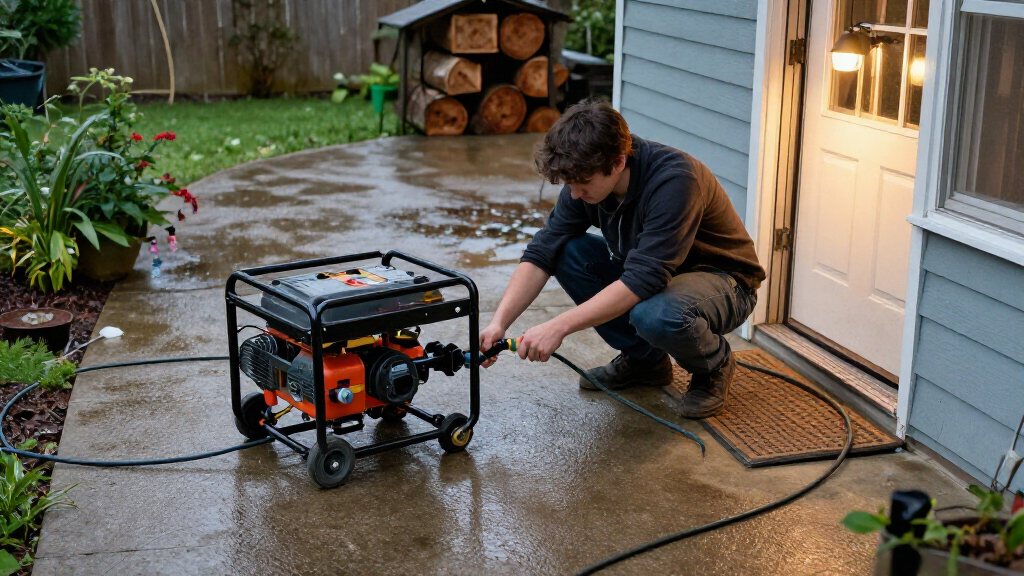
A CO sensor or alert can add a layer of protection, but it does not make indoor or enclosed operation safe. Place any portable generator outdoors, away from doors, windows, vents, and attached garages, following the manufacturer’s distance guidance. Wind and building layout can carry exhaust toward openings even when a unit seems far away, so placement deserves attention each time conditions change. Keep working carbon monoxide alarms in the home as a separate safety measure. Read the exact model’s instructions to understand what its CO feature detects, how it responds, and whether it can stop operation.
Account for Moving, Storage, and Routine Care
High-output portable generators can be difficult to move and store, so consider the route from storage to the operating spot before settling on a large model. Check the unit’s listed dimensions, weight, wheel arrangement, and handle design, and decide whether one person can position it safely. A generator also needs appropriate storage, periodic maintenance, and fresh fuel or properly managed fuel supplies to be useful when an outage arrives. Electric or remote start can simplify startup, but it does not remove battery care or engine maintenance. Buyers who need only a few essentials may be better served by a smaller model that is easier to deploy regularly.
Frequently Asked Questions
How much generator output should I plan for during a home outage?
Start with the specific circuits and appliances you want to run together, not the size of the house alone. Add their running demands, then check the largest startup demand among equipment that may switch on at the same time. If you can stagger loads, a lower-output generator may cover your essential plan; if you need several large loads at once, a higher-output option may be a better fit. Compare fuel-specific rated output before deciding, since the usable figure can vary by fuel. An electrician can help translate a circuit plan into a safe generator connection.
Can I connect any tri-fuel generator to my home’s natural-gas line?
No. A generator’s ability to burn natural gas does not confirm that a particular home gas line can deliver enough fuel for it. The line, meter, regulator, and connection setup all need to meet the generator maker’s requirements and local rules. Have a qualified professional assess the installation rather than improvising adapters or assuming an existing appliance line will work. Also check the model’s natural-gas output and compare it with your planned loads. A fuel option is only useful when the supply and connection are properly suited to the unit.
Does a tri-fuel generator provide the same wattage on gasoline, propane, and natural gas?
Not necessarily. Manufacturers may list different output figures for each fuel, so a generator’s headline rating may not apply to all three. Check the official specifications for the exact model and fuel you expect to use, including both rated and peak output where available. This matters most when your load plan is close to the generator’s limits or includes equipment with high startup demand. If natural gas is your main backup fuel, size the generator around its natural-gas figures rather than its gasoline rating.
Is an inverter model a better choice for electronics than a conventional generator?
An inverter design may be a good fit for buyers who prioritize its electrical design and operating characteristics, but the word “inverter” alone does not answer every compatibility question. Review the manufacturer’s specifications for the model and the requirements of sensitive equipment you intend to power. Check output capacity as carefully as power quality; a suitable design can still be undersized for the combined load. For a home connection, use an approved setup and follow the equipment makers’ instructions. The inverter options here also differ in output, so compare them against the same load list as the conventional models.
Should I choose remote start or electric start for emergency backup?
Either feature can make starting more convenient, especially if pulling a recoil starter would be difficult, but the two labels do not tell you everything about operation. Confirm what the remote control can do, how far it works under the maker’s stated conditions, and what power source the starting system requires. Electric-start models may depend on a maintained battery, so include battery checks in your routine. A remote or electric starter does not eliminate the need to place the unit safely, manage fuel, or connect loads correctly. Pick the feature that fits your likely startup conditions rather than treating it as a substitute for preparation.
Conclusion
For the broadest mix of high output and three-fuel flexibility, I would start with the DuroMax XP15000HXT as the best overall pick, while checking its fuel-specific output against my load plan. The best value by role is the Champion 5,000-watt model for buyers with a modest essentials list; it is not the right match for large simultaneous loads. For a premium, inverter-focused choice, compare the DuroMax XP16000iHT with the Champion 11,000-watt inverter and decide which output and feature balance suits your needs. Beginners who want a more limited backup plan may find the Champion 5,000-watt easier to size than a high-output unit, though safe electrical setup still matters. For specific needs, choose a high-output conventional model such as the Westinghouse WGen14500TFc for heavier loads, or favor a listed CO alert or sensor when that feature is part of your selection criteria—without relying on it in place of safe outdoor placement.
Black Friday Picks

Sonos One (Gen 2) Two-Room Set Voice-Controlled Smart Speaker with Alexa (2-Pack, Black)
As an affiliate, we earn on qualifying purchases.