
TL;DR

Get backup power and energy gear delivered free — and shop member deals
- Fast, free delivery on millions of items
- Access to Prime Big Deal Days deals on October 6–7
- Prime Video, Amazon Music and more included
A generator wattage calculator estimates the capacity you need by adding up all running watts and the largest startup surge. Planning with a margin helps prevent overloads and ensures reliable backup power.
Ever tried running your entire home with a small generator and watched it sputter and stall? Or bought a massive unit that guzzles fuel and sits idle most of the time? The secret is knowing exactly how much power you need. Using a generator wattage calculator simplifies this process, saving you money and frustration.
This guide will walk you through how these calculators work, what inputs to consider, and how to interpret the results. Whether you’re planning for emergency backup or outdoor adventures, getting your generator size right makes all the difference.
Always add the largest startup surge to your total load, not just running watts.
Include a safety margin of at least 10–25% to prevent overloads and allow for future expansion.
Use manufacturer labels for accurate appliance wattage, avoiding guesswork.
Compare different generator types—portable vs inverter—to match your specific needs.
Remember, load sequencing can reduce the size of the generator you need, saving money and fuel.
What Is a Generator Wattage Calculator and Why Use One?
A generator wattage calculator estimates the size of the generator you need. It considers all the appliances and tools you want to run at the same time. For example, if you plan to power your refrigerator, lights, and a few electronics during an outage, the calculator helps you avoid buying a unit that’s too weak or too powerful.
Think of it as a recipe — add up the ingredients (loads), and the calculator tells you the right-sized oven (generator). This process is crucial because choosing a generator that’s too small can lead to frequent overloads, tripping breakers, or equipment damage. Conversely, selecting a unit that’s too large means unnecessary fuel consumption and higher upfront costs, which may not be justified for your actual needs. The calculator helps strike a balance, ensuring efficiency, safety, and cost-effectiveness.
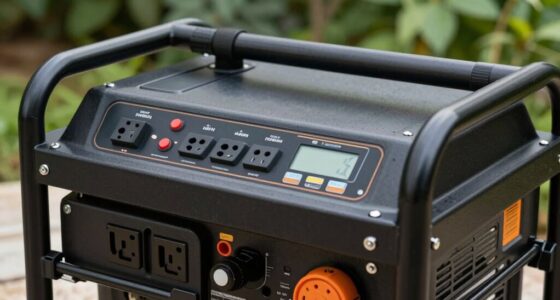
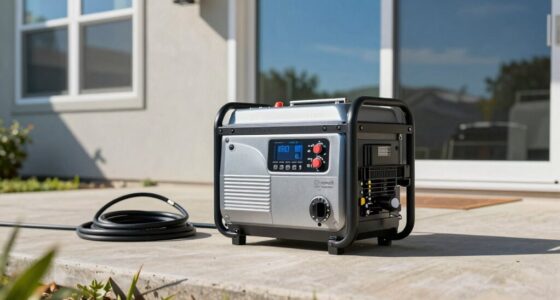
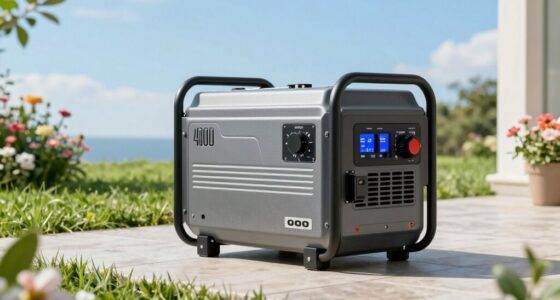
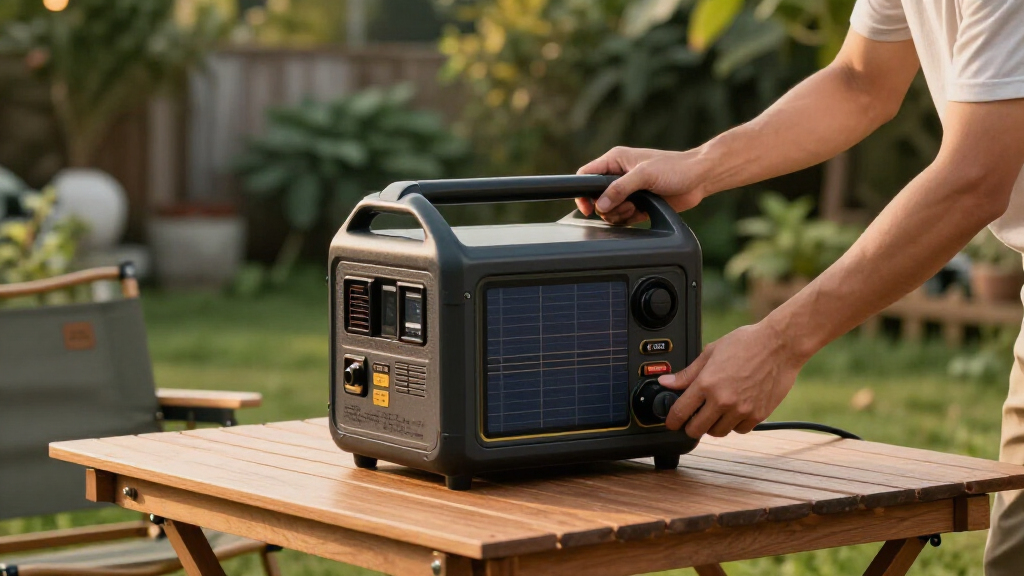
portable inverter generator for backup power
As an affiliate, we earn on qualifying purchases.
As an affiliate, we earn on qualifying purchases.
How to Use a Generator Wattage Calculator in 3 Easy Steps
- List your essential appliances: Write down the wattage of each device. Check labels or manufacturer specs. For example, a refrigerator might draw 700 watts, a sump pump 1,000 watts, etc. Recognizing which appliances are critical helps prioritize your power needs and avoid overestimating capacity, which can lead to unnecessarily large and expensive generators.
- Input your loads: Enter these values into the calculator, selecting whether they run continuously or only surge at startup. Understanding the difference is key: continuous loads are what the appliance consumes during normal operation, while startup watts reflect the initial power spike. Accurate input ensures the calculator provides a realistic size estimate, preventing underpowered setups that trip or overpowered units that waste fuel and money.
- Review the results: The calculator sums all loads, adds the largest startup surge, and suggests a generator size with a safety margin. For instance, it might recommend a 5,000-watt model for your needs. Evaluating this recommendation in context allows you to consider future expansion, potential inefficiencies, or additional safety buffers, leading to a more reliable and durable power setup.
As an affiliate, we earn on qualifying purchases.
Compare Portable and Inverter Generators by Wattage
| Feature | 2000 Watt Portable Generator | 3500 Watt Inverter Generator | 5000 Watt Portable Generator |
|---|---|---|---|
| Best for | Basic essentials, small tools | Electronics, RV, moderate loads | Whole-house backup, multiple appliances |
| Power quality | Fair, may produce harmonic distortionClean, stable power suitable for sensitive electronics | Good for heavy loads, less clean than inverter | |
| Fuel efficiency | Lower at light loads | More efficient at varying loads | Higher fuel consumption |
As an affiliate, we earn on qualifying purchases.
Why Starting Watts Matter More Than You Think
Most appliances, especially motors in refrigerators or sump pumps, need a surge of power at startup. This can be two to three times their running watts. If your generator can’t handle this spike, it will overload and shut down. For example, a refrigerator with a 700-watt running load might need 2,000 watts at startup. Recognizing the importance of starting watts is critical because many appliances don’t operate at a steady load— their initial surge is significantly higher. Overlooking this can lead to choosing a generator that can’t handle these peaks, causing frequent outages or damage. The tradeoff involves selecting a generator with sufficient capacity to handle these surges while avoiding an oversized unit that wastes fuel. Properly accounting for starting watts ensures your generator can smoothly power your appliances without interruptions, especially during critical moments like power outages.
Many underestimate this and end up with a generator that trips or fails when appliances start. Always include the largest startup wattage in your calculations. A common mistake is adding all starting watts together, but overlapping starts are rare — so focus on the biggest surge and the total running load.
As an affiliate, we earn on qualifying purchases.
Practical Tips for Accurate Generator Sizing
- Check appliance labels: Use the manufacturer’s wattage ratings, not just the power input.
- Plan for a safety margin: Add 10–25% extra capacity for future needs or unexpected surges.
- Sequence heavy loads: Run large appliances one at a time to keep the load manageable.
- Don’t forget startup watts: Always include the highest surge in your total calculation.
- Match your fuel type: Gas, propane, and natural gas ratings can differ. Make sure your calculator accounts for this.
Frequently Asked Questions
How do I know the wattage of my appliances?
Check the label on the appliance or the user manual. If only the amperage and voltage are listed, multiply them (volts × amps) to estimate watts. For motors, consider starting wattage, which is usually higher than running wattage.Can I just add up all appliances’ wattages?
No. You should add the wattages of all appliances you plan to run simultaneously, then include the largest startup surge. Avoid summing all startup watts together, as appliances rarely start at the same time.What if my peak load exceeds my generator’s capacity?
The generator will overload, trip its breaker, or stall. To avoid this, size your generator with a safety margin, and consider load management or sequential startup for large appliances.How accurate are manufacturer wattage ratings?
They provide a good estimate but can vary due to appliance age, efficiency, and operating conditions. Measure actual loads if possible for the most precise sizing.Is a bigger generator always better?
Not necessarily. Oversized units cost more, consume more fuel, and run inefficiently at light loads. Sizing correctly ensures reliability without waste.Conclusion
Getting your generator size right hinges on understanding both running and startup watts of your appliances. A wattage calculator simplifies this task, helping you avoid costly mistakes. When it’s time to buy, remember: size just right, and you’ll have peace of mind when it counts.
Imagine a quiet, reliable power source that kicks in smoothly, lighting up your home or campsite without a hitch. That’s what accurate sizing delivers — simplicity, safety, and confidence in any situation.
Generator Wattage Calculator
Estimate running and starting watts for a short list of common backup loads.
Your selected load fits the small-generator range. Compare 2,000 watt portable generators for essentials-only backup.
See small-generator matchesYour surge load points to a mid-size inverter generator. Compare 3,500 watt options and verify each appliance label.
See mid-size generator matchesYour list needs a larger generator class. Compare 5,000 watt portable generators and plan circuits with a qualified pro.
See larger generator matchesEstimate only. Check product specs, local rates, and site conditions before buying or planning around these numbers.
Fall Picks
fall essentials
As an affiliate, we earn on qualifying purchases.