
TL;DR

Get backup power and energy gear delivered free with Prime
- Fast, free delivery on millions of items
- Prime Video, Amazon Music and more included
- Member-only deals all year
The Chicago-based 548 Foundation trains residents for solar and other skilled-trade careers through technical classes, stipends and continued support. Founder Patton reported 700 graduates, a 70% graduation rate and a 68% job-placement rate; the source does not specify the measurement period or placement-rate methodology.
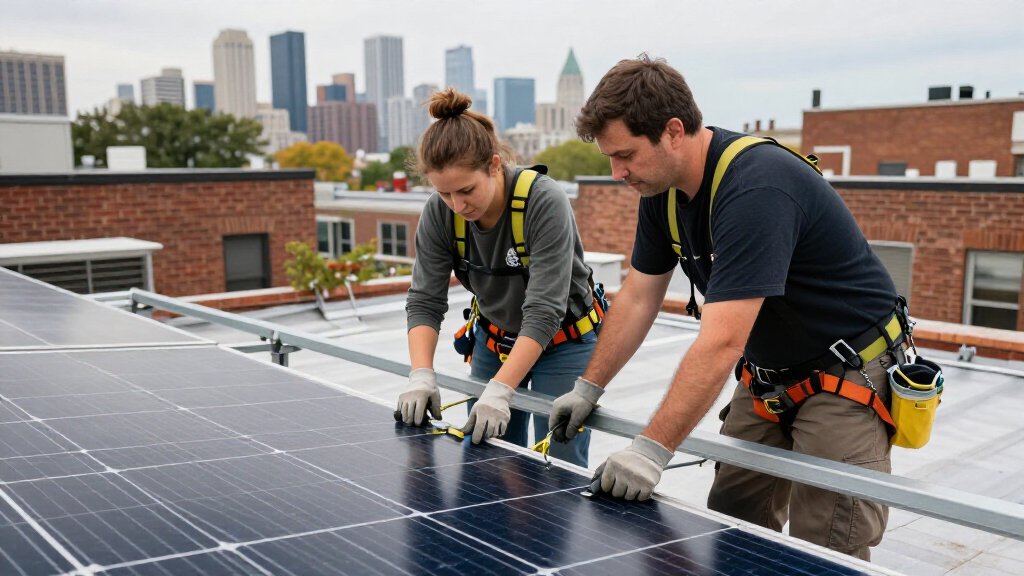
Chicago’s 548 Foundation is using state-supported training to prepare residents, including people from Black and Latino communities, for solar and other skilled-trade work. The program pairs hands-on instruction with stipends and support for barriers such as child care, transportation, housing and mental health; at a 2024 graduation, founder Patton cited 700 graduates and a 68% job-placement rate.
The foundation began providing training through Illinois’ workforce-development program in 2023, according to Patton. It now runs multiple sessions each year in Chicago and the suburbs of Aurora, Elgin and Waukegan. The source said another Chicago session was scheduled to begin that month, though it does not give a calendar date for the announcement.
Students receive a stipend and help addressing practical obstacles that can make it difficult to attend classes or keep a job. Alongside solar and technical instruction, the curriculum covers basic math and resume-writing. Staff and affiliates also provide ongoing help with needs including child care, car trouble, mental health and housing, including after trainees graduate.
In August 2024, Canary Media attended a job fair for 548 graduates, where solar employers conducted interviews and said the interviews would promptly lead to job offers. The report also described instructors using role-play to teach conflict mediation and starting hands-on classes at 6 a.m., matching common fieldwork hours and giving students a chance to plan around early starts and family responsibilities.
Support That Connects Training to Work
The program’s model addresses a gap between learning a trade and being able to take a job. Technical qualifications alone may not resolve a missed class caused by child-care needs, an unreliable car or housing instability. The foundation’s stipends and continuing support are designed to help participants manage those demands while training and after they enter work.
Its approach also presents clean-energy employment as one route into the wider skilled-trades workforce, rather than a single track into solar installation. The source says Illinois recently revised its clean-energy curriculum to prepare participants for a broader range of careers amid volatility in parts of the sector. That flexibility matters to trainees whose interests may change, and to workers seeking other construction opportunities.
Patton framed the program as a response to stereotypes about Black communities and work. The reported waiting list and outcomes offer a snapshot of demand and the foundation’s results, but they are figures provided by the program, not an independent evaluation. The account also does not establish whether the reported earnings and placements will persist over time.
portable solar panel for home backup
As an affiliate, we earn on qualifying purchases.
As an affiliate, we earn on qualifying purchases.
From Solar Classes to Trade Careers
The 548 Foundation’s courses operate through a state workforce-development program and serve Chicago and nearby suburbs with substantial Latino immigrant and African American populations, according to the source. The combination of practical instruction and support services reflects a workforce-development strategy that treats employment barriers as part of training, not as separate issues to address only after a course ends.
At the 2024 graduation, participants described different plans. Anthony Legorreta called the experience “life-changing.” Kelvin Davis praised the hands-on installation training but said he was interested in desk-based work within solar rather than physically demanding installation. Mikah Allen preferred iron work and construction; the report said links to trade-union apprenticeships could also support that path.
Pastor Barrett connected the classes to generational wealth, recalling how a union job helped his grandfather establish a home and family after moving to Chicago from Mississippi. His remarks placed the training within a local history of access to skilled work, while the graduates’ varied goals showed that the program’s potential reach extends beyond solar installation.
“We have a 70% graduation rate, 700 graduates. Then they said the market wasn’t ready for us. Meanwhile, we have a 68% placement rate. Our students get jobs within 33 days of graduation. They’re averaging $68,000 a year.”
— Patton, founder of the 548 Foundation, at a graduation
As an affiliate, we earn on qualifying purchases.
How Outcomes Are Measured
The program’s outcome figures are attributed to Patton. The source does not explain the period covered by the 700 graduates, whether the 70% graduation rate applies to all cohorts or a particular group, or how the 68% placement rate is calculated. It also does not say how many graduates found solar jobs specifically, as opposed to other work, or how long participants remained employed.
Patton’s reported average annual earnings of $68,000 and claim that students get jobs within 33 days are not accompanied by details about the sample, job types or data-collection method. The report offers accounts from graduates and describes employer interviews at a job fair, but does not independently verify the program’s figures or say how many interviews resulted in offers.
The source gives no enrollment capacity, current waiting-list count beyond Patton’s reported 500-person figure, or details on funding and the long-term availability of support services. It also does not establish whether the scheduled Chicago session went ahead as planned.
solar inverter for residential solar
As an affiliate, we earn on qualifying purchases.
As an affiliate, we earn on qualifying purchases.
Future Sessions and Wider Trade Paths
The source said another Chicago training session was due to begin in the month of the report, but it provides no later update on that cohort. The foundation’s recurring sessions in Chicago, Aurora, Elgin and Waukegan are the next stated opportunities for residents to take part; enrollment dates, eligibility rules and available places were not detailed.
For graduates, next steps may include solar employment, desk-based clean-energy roles or other construction and union apprenticeship routes. The state’s revised curriculum is intended to prepare workers for a wider range of clean-energy careers, according to the report. How many participants take those different paths—and whether the program can maintain its reported outcomes as the job market changes—remains to be seen.
As an affiliate, we earn on qualifying purchases.
Key Questions
What is the 548 Foundation program?
It is a Chicago-area workforce training program that offers solar and other technical instruction alongside math, resume-writing and support services. The foundation began offering training through Illinois’ workforce-development program in 2023, according to Patton.
Where does the foundation offer training?
The source reports multiple sessions each year in Chicago, Aurora, Elgin and Waukegan. It said another Chicago session was scheduled to start that month, but does not provide an exact date or later confirmation.
What support do participants receive?
Students receive a stipend and help with barriers including child care and car trouble. The program also offers instruction in basic skills and support related to mental health, housing and other needs, with assistance available after graduation.
What job outcomes has the program reported?
Patton cited 700 graduates, a 70% graduation rate and a 68% placement rate, and said graduates found jobs within 33 days on average. The source does not give the figures’ measurement period or explain how the rates and earnings were calculated.
Does the training lead only to solar installation work?
No. Graduates described interests ranging from desk-based solar roles to iron work and construction. The source also says the state recently revised the clean-energy curriculum to prepare workers for a wider range of careers and that the training includes links to trade-union apprenticeships.
Source: rss
Halloween Picks
halloween
As an affiliate, we earn on qualifying purchases.