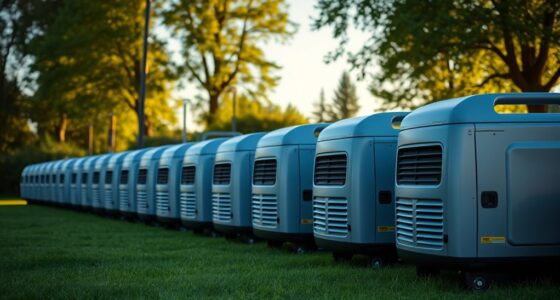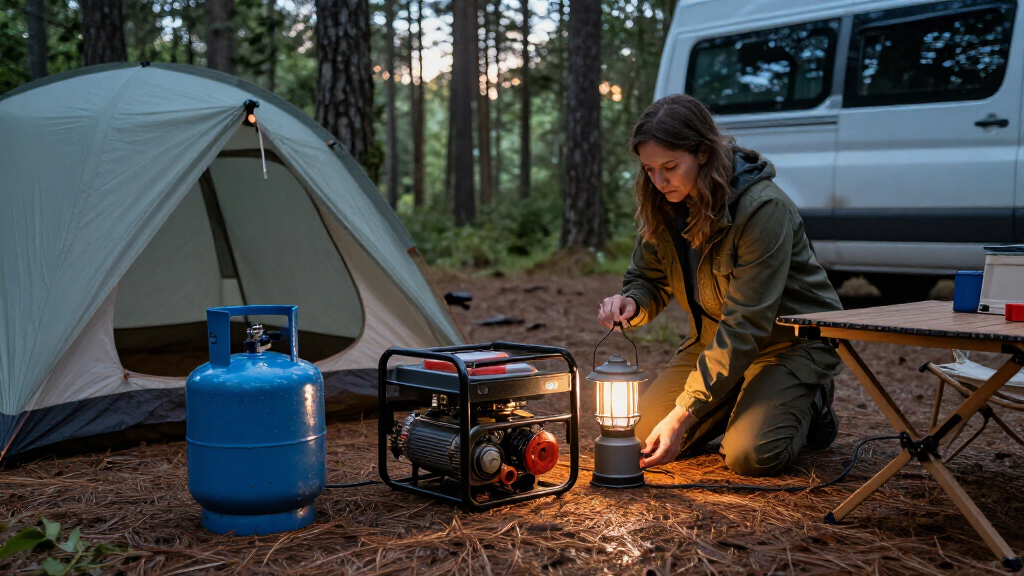

Choosing the right power source for camping often involves a trade-off between convenience and runtime, and propane inverter generators sit at the intersection of clean energy and portability. The Westinghouse 4000 Peak Watt Super Quiet Dual Fuel stands out as the best overall pick, offering a balanced blend of power, quiet operation, and remote start convenience for most campers. For those prioritizing portability and budget, the Pulsar PG2200BiS delivers essential power in a compact frame, while the Champion 4000-Watt Dual Fuel RV Ready excels for users needing specific RV compatibility features. This roundup examines how these units handle propane fuel specifics, such as startup reliability in cold weather and runtime consistency. Continue reading to see which model fits your specific camping style and power needs.

Get backup power and energy gear delivered free with Prime
- Fast, free delivery on millions of items
- Prime Video, Amazon Music and more included
- Member-only deals all year
Complete the kit


Key Takeaways
- Dual-fuel capability is the industry standard, but propane performance varies widely; some models lose more power on propane than others.
- Remote start and electric start features significantly improve usability in bad weather, distinguishing premium models from basic ones.
- Noise levels remain a critical differentiator; inverter technology keeps most models under 60 dBA, but decibel ratings often measure at different distances.
- RV-ready outlets (30A) are a key feature for camper owners, adding weight and cost but eliminating the need for adapters.
- CO safety sensors are becoming standard on mid-to-high-end models, adding a layer of protection for enclosed or semi-enclosed camping setups.
| Pulsar PG2200BiS 2,200W Portable Dual Fuel Quiet Inverter Generator |  | Best Compact Option for Light Camping | Peak Wattage: 2,200 Watts | Running Wattage: 1,800 Watts | Fuel Type: Gasoline / LPG | VIEW LATEST PRICE | See Our Full Breakdown |
| Westinghouse 4000 Peak Watt Super Quiet Dual Fuel Inverter Generator |  | Best Balanced Performance for RVs | Peak Wattage: 4,000 Watts | Running Wattage: 3,300 Watts | Fuel Type: Gasoline / LPG | VIEW LATEST PRICE | See Our Full Breakdown |
| PowerSmart 3800 Watt Dual Fuel Inverter Generator | 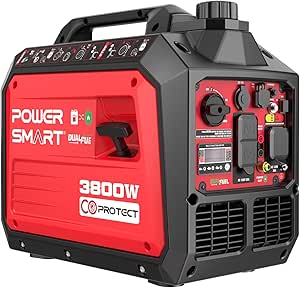 | Best for Extended Runtime on Propane | Peak Wattage: 3,800 Watts | Running Wattage: 3,300 Watts | Fuel Type: Gasoline / Propane | VIEW LATEST PRICE | See Our Full Breakdown |
| Westinghouse 5000 Peak Watt Super Quiet Dual Fuel Portable Inverter Generator |  | Best High-Capacity for RV Living | Peak Wattage: 5,000 Watts | Running Wattage: 3,900 Watts | Fuel Type: Gasoline / LPG | VIEW LATEST PRICE | See Our Full Breakdown |
| WEN 4800-Watt Dual Fuel Inverter Generator with Electric Start |  | Best for Easy Transport and Setup | Peak Wattage: 4,800 Watts | Fuel Type: Gasoline / LPG | Tank Volume: 1.9 Gallons | VIEW LATEST PRICE | See Our Full Breakdown |
| Westinghouse 12000 Peak Watt Tri-Fuel Portable Inverter Generator |  | Best for Heavy-Duty Home Backup and Large Campsites | Peak Wattage: 12,000 Watts | Running Wattage: 9,000 Watts | Fuel Types: Gasoline, Propane, Natural Gas | VIEW LATEST PRICE | See Our Full Breakdown |
| Champion 4000-Watt Dual Fuel RV Ready Portable Inverter Generator |  | Best for RV Travelers and Mid-Size Campsites | Peak Wattage: 4,000 Watts | Running Wattage: 4,000 Watts | Fuel Types: Gasoline, Propane | VIEW LATEST PRICE | See Our Full Breakdown |
| BILT HARD 5500W Dual Fuel Inverter Generator |  | Best for High-Power Needs on a Budget | Peak Wattage: 5,500 Watts | Running Wattage: 4,000 Watts | Fuel Types: Gasoline, LPG | VIEW LATEST PRICE | See Our Full Breakdown |
| AIVOLT 4300W Dual Fuel Inverter Generator with Remote Start |  | Best for Quiet Operation and Convenience | Peak Wattage: 4,300 Watts | Running Wattage: 3,300 Watts | Noise Level: 53 dBA | VIEW LATEST PRICE | See Our Full Breakdown |
| WEN 6800-Watt Dual Fuel RV-Ready Electric Start Portable Inverter Generator |  | Best for RVs Requiring 240V Power | Peak Wattage: 6,800 Watts | Running Wattage: 5,500 Watts (Est.) | Fuel Types: Gasoline, Propane | VIEW LATEST PRICE | See Our Full Breakdown |
| A-iPower 7600W Gas Propane Inverter Generator with Electric Start, RV Ready |  | Best High-Capacity Powerhouse | Peak Wattage: 7600 watts | Running Wattage: 6100 watts | Fuel Type: Dual Fuel (Gas/Propane) | VIEW LATEST PRICE | See Our Full Breakdown |
| BILT HARD Dual Fuel Gas & Propane Powered Generator 4500W, RV Ready, Portable Outdoor Generator with CO Sensor |  | Best Mid-Range Balanced Performer | Peak Wattage: 4500 watts | Running Wattage: 3500 watts | Weight: 57.7 pounds | VIEW LATEST PRICE | See Our Full Breakdown |
| WEN 3600-Watt Dual Fuel Portable Inverter Generator with CO Watchdog |  | Best Lightweight for Light Camping | Peak Wattage: 3600 watts | Weight: 49 pounds | Runtime: 5 hours at half load | VIEW LATEST PRICE | See Our Full Breakdown |
| A-iPower 4300W Gas Propane Inverter Generator, Lightweight, Fuel Sense |  | Best Compact Dual-Fuel Value | Peak Wattage: 4300 watts | Running Wattage: 3450 watts | Weight: 54.8 pounds | VIEW LATEST PRICE | See Our Full Breakdown |
| ERAYAK 4500W Dual-Fuel Portable Inverter Generator for Home and Outdoor Use |  | Best for Extended Runtime | Peak Wattage: 4500 watts | Running Wattage: 3500 watts | Runtime: 20+ hours (propane) | VIEW LATEST PRICE | See Our Full Breakdown |
| propane inverter generators for camping | Peak Wattage | Running Wattage | Runtime | Fuel Type |
|---|---|---|---|---|
| Pulsar PG2200BiS 2,200W Portab | 2,200 Watts | 1,800 Watts | 16 Hours (estimated) | Gasoline / LPG |
| Westinghouse 4000 Peak Watt Su | 4,000 Watts | 3,300 Watts | 7 Hours | Gasoline / LPG |
| PowerSmart 3800 Watt Dual Fuel | 3,800 Watts | 3,300 Watts | — | Gasoline / Propane |
| Westinghouse 5000 Peak Watt Su | 5,000 Watts | 3,900 Watts | 18 Hours | Gasoline / LPG |
| WEN 4800-Watt Dual Fuel Invert | 4,800 Watts | — | 7 Hours (at half load) | Gasoline / LPG |
| Westinghouse 12000 Peak Watt T | 12,000 Watts | 9,000 Watts | Up to 19 hours | — |
| Champion 4000-Watt Dual Fuel R | 4,000 Watts | 4,000 Watts | — | — |
| BILT HARD 5500W Dual Fuel Inve | 5,500 Watts | 4,000 Watts | — | — |
| AIVOLT 4300W Dual Fuel Inverte | 4,300 Watts | 3,300 Watts | Up to 34 hours (Propane) | — |
| WEN 6800-Watt Dual Fuel RV-Rea | 6,800 Watts | 5,500 Watts (Est.) | — | — |
| A-iPower 7600W Gas Propane Inv | 7600 watts | 6100 watts | 21 hours (25% load) | Dual Fuel (Gas/Propane) |
| BILT HARD Dual Fuel Gas & Prop | 4500 watts | 3500 watts | 13 hours | Gasoline & Propane |
| WEN 3600-Watt Dual Fuel Portab | 3600 watts | — | 5 hours at half load | Gasoline and Propane |
| A-iPower 4300W Gas Propane Inv | 4300 watts | 3450 watts | 7 hours | Gasoline & LPG |
| ERAYAK 4500W Dual-Fuel Portabl | 4500 watts | 3500 watts | 20+ hours (propane) | — |
More Details on Our Top Picks
Pulsar PG2200BiS 2,200W Portable Dual Fuel Quiet Inverter Generator
This unit stands out for its lightweight footprint and straightforward dual-fuel switching, making it ideal for campers who prioritize portability over raw power. At just 44 pounds, it is significantly easier to haul into a campsite than the Westinghouse 4000 Watt model, which weighs considerably more. The parallel capability allows you to double your output later if needs grow, though the single unit’s 1,800 running watts limit you to essentials like lights and a small cooler. It lacks the remote start convenience found in larger competitors, relying instead on a manual recoil pull that some users may find less convenient in cold weather. This is the right choice if your campsite power needs are modest and you dislike lugging heavy equipment.Pros:- Lightweight and easy to transport to remote sites
- Parallel capability allows for future power expansion
- Quiet operation suitable for noise-restricted campsites
Cons:- Lower wattage limits appliance compatibility
- Manual recoil start lacks the convenience of remote electric start
- Shorter runtime compared to larger tank models
Best for: Solo campers or couples with minimal power needs who value easy transport
Not ideal for: RV owners or families needing to run air conditioning or microwaves
- Peak Wattage:2,200 Watts
- Running Wattage:1,800 Watts
- Fuel Type:Gasoline / LPG
- Weight:44 Pounds
- Runtime:16 Hours (estimated)
- Outlets:3 Total (including USB)
- Noise Level:60 dB
Our verdict“Choose this if you want a lightweight, dual-fuel unit for basic camping needs without paying for excess power.”
Westinghouse 4000 Peak Watt Super Quiet Dual Fuel Inverter Generator
This model hits the sweet spot between power and portability, offering 3,300 running watts that can handle most RV appliances without the bulk of the Westinghouse 5000 Watt unit. The inclusion of remote electric start is a major convenience factor, allowing you to fire up the generator from inside your tent or RV, a feature absent in the Pulsar PG2200BiS. While it weighs more than smaller options, the built-in CO sensor provides critical safety for enclosed spaces. The tradeoff is a shorter runtime of 7 hours on a full tank compared to larger fuel-capacity models, meaning you will need to refuel during long weekends. It is a robust choice for those who want reliability and modern features without going overboard on size.Pros:- Remote electric start for easy operation
- Built-in CO sensor enhances safety
- Sufficient wattage for most RV needs
Cons:- Heavier than compact camping models
- Moderate runtime requires frequent refueling
- Higher price point than basic entry-level units
Best for: RV campers who need reliable power for AC units and kitchen appliances
Not ideal for: Backpackers or hikers who cannot carry heavy equipment
- Peak Wattage:4,000 Watts
- Running Wattage:3,300 Watts
- Fuel Type:Gasoline / LPG
- Runtime:7 Hours
- Tank Volume:1.69 Gallons
- Safety Feature:CO Sensor
- Starting System:Remote / Electric
Our verdict“This is the ideal mid-range generator for RV users who prioritize safety and convenience.”
PowerSmart 3800 Watt Dual Fuel Inverter Generator
What distinguishes this generator is its impressive 24-hour runtime on propane, far exceeding the Westinghouse 4000 Watt’s 7-hour gasoline limit. This makes it a strong contender for weekend trips where you want to minimize refueling stops. The 59 dBA noise level keeps it neighbor-friendly, though it is slightly louder than the quietest competitors. At 50.7 pounds, it is heavier than the Pulsar, so you will need wheels or a helper to move it comfortably. The reliance on a recoil start is a notable drawback compared to the electric-start options from Westinghouse or WEN, which can be frustrating in cold conditions. This unit suits campers who value fuel longevity and propane availability over high-tech starting conveniences.Pros:- Exceptional 24-hour runtime on propane
- Quiet operation at 59 dBA
- Includes CO sensor and low oil shutdown
Cons:- Heavy at over 50 pounds
- Manual recoil start only
- Larger footprint than compact models
Best for: Campers who prefer propane for long runtimes and have easy access to propane tanks
Not ideal for: Users who require push-button starting or need to minimize weight
- Peak Wattage:3,800 Watts
- Running Wattage:3,300 Watts
- Fuel Type:Gasoline / Propane
- Propane Runtime:24 Hours
- Gas Runtime:8 Hours
- Weight:50.7 Pounds
- Noise Level:59 dBA
Our verdict“Pick this if you prioritize long propane runtime and safety features over portability and easy starting.”
Westinghouse 5000 Peak Watt Super Quiet Dual Fuel Portable Inverter Generator
For those who need to run multiple high-draw appliances simultaneously, this unit delivers 3,900 running watts, outpacing the Westinghouse 4000 Watt model. The 18-hour runtime on a large 3.4-gallon tank is a significant advantage for extended stays, reducing the hassle of frequent refueling. It includes a 30A RV-ready outlet, making it a plug-and-play solution for full-time RVers, unlike the smaller Pulsar which lacks this specific connectivity. However, the increased power comes with increased weight and size, making it less suitable for car camping where space is tight. The remote electric start adds convenience, but the higher cost and bulk mean this is a dedicated investment for serious RV users rather than casual campers.Pros:- High wattage supports multiple appliances
- Long 18-hour runtime on gasoline
- 30A RV-ready outlet for direct connection
Cons:- Heavy and bulky for casual camping
- Higher price point than mid-range models
- Requires more storage space
Best for: Full-time RVers or large families needing high wattage and long runtime
Not ideal for: Small car campers or those with limited storage space
- Peak Wattage:5,000 Watts
- Running Wattage:3,900 Watts
- Fuel Type:Gasoline / LPG
- Runtime:18 Hours
- Tank Volume:3.4 Gallons
- Outlets:5 Total (including 30A RV)
- Starting System:Remote / Electric
Our verdict“This is the go-to choice for RV owners who need reliable, high-output power for extended trips.”
WEN 4800-Watt Dual Fuel Inverter Generator with Electric Start
This generator focuses on user-friendly logistics, featuring wheels and a telescoping handle that make moving its 4,800-watt capacity far easier than the static PowerSmart model. The CO Watchdog safety system automatically shuts down the unit if carbon monoxide levels rise, offering peace of mind in enclosed spaces. While its 1.9-gallon tank limits runtime to about 7 hours, the electric start and fuel shutoff valve simplify operation and storage maintenance. Compared to the Westinghouse 5000 Watt, it offers slightly less peak power but comparable utility for most camping scenarios. It is a practical choice for those who want a balance of power and portability without the extreme weight of the largest units.Pros:- Wheels and telescoping handle for easy transport
- CO Watchdog automatic safety shutdown
- Electric start for convenient ignition
Cons:- Shorter runtime due to smaller tank
- Parallel capability requires separate purchase
- Initial setup can be complex for beginners
Best for: Campers who need substantial power but want easy maneuverability with wheels
Not ideal for: Users who need to run multiple heavy appliances continuously for days
- Peak Wattage:4,800 Watts
- Fuel Type:Gasoline / LPG
- Tank Volume:1.9 Gallons
- Runtime:7 Hours (at half load)
- Safety Feature:CO Watchdog
- Starting System:Electric Start
- Portability:Wheels and Telescoping Handle
Our verdict“Choose this if you want high wattage with the convenience of wheels and advanced safety features.”
Westinghouse 12000 Peak Watt Tri-Fuel Portable Inverter Generator
This unit is a powerhouse, offering 12,000 peak watts that dwarfs the Champion 4000-Watt and BILT HARD 5500W models in this list. While it is overkill for a small tent site, it is the only option here that can comfortably run a central air conditioner or multiple large appliances simultaneously. Its tri-fuel capability (gas, propane, natural gas) provides unmatched flexibility, though the sheer size and weight make it impractical for backpacking or tight RV storage. If you need raw power and have the space to store it, this stands out, but casual campers should look at lighter alternatives.Pros:- Massive 12,000-watt surge capacity handles high-draw appliances effortlessly
- Tri-fuel versatility allows switching between gas, propane, and natural gas
- Extensive 19-hour runtime minimizes refueling frequency during long outages
Cons:- Significantly heavier and larger than standard camping inverters
- Complex setup and storage requirements due to size
- Higher cost reflects industrial-grade capacity, not lightweight portability
Best for: RV owners with large slide-outs or homeowners needing serious backup power for heavy appliances.
Not ideal for: Backpackers or small-campsite users who cannot manage a heavy, bulky machine.
- Peak Wattage:12,000 Watts
- Running Wattage:9,000 Watts
- Fuel Types:Gasoline, Propane, Natural Gas
- Runtime:Up to 19 hours
- Engine Displacement:457 cc
- Starting Method:Remote Start
Our verdict“Choose this if you need industrial-grade power for RVs or home backup and can manage its substantial size.”
Champion 4000-Watt Dual Fuel RV Ready Portable Inverter Generator
The Champion 4000-Watt hits the sweet spot for RVers who need reliable power without the bulk of the Westinghouse 12000. It delivers enough juice to run a 15,000 BTU AC unit or microwave, making it far more capable than the Pulsar 2,200W for serious camping. Its CO Shield safety technology is a critical feature for enclosed spaces like RVs, offering peace of mind that lower-tier models lack. However, you are limited to 4,000 watts, so running multiple high-draw appliances at once will trip the breaker. It is the logical choice if you want a balance of power and portability for road trips.Pros:- Optimized for RV use with sufficient power for standard air conditioners
- Integrated CO Shield provides automatic shutdown for enhanced safety
- Dual-fuel system allows easy switching to propane for longer storage life
Cons:- Parallel operation requires a separately sold kit, adding to the total cost
- Limited to 4,000 running watts, restricting simultaneous high-draw usage
- Recoil-only start may be difficult for some users in cold weather
Best for: RV travelers and families who need to run standard camping appliances like AC units and microwaves.
Not ideal for: Users who need to run multiple high-wattage tools simultaneously or require parallel capability without extra kits.
- Peak Wattage:4,000 Watts
- Running Wattage:4,000 Watts
- Fuel Types:Gasoline, Propane
- Noise Level:64 dBA
- Safety Feature:CO Shield Auto-Shutdown
- Engine Displacement:149 cc
Our verdict“This is the ideal middle-ground generator for RV owners who need dependable power for essential appliances.”
BILT HARD 5500W Dual Fuel Inverter Generator
If you need more wattage than the Champion 4000 but find the Westinghouse 12000 too expensive or large, the BILT HARD 5500W offers a compelling middle path. It provides 5,500 starting watts, enough to kickstart larger tools or appliances that would stall smaller units. The inclusion of USB-C outlets is a modern touch that saves you from carrying extra adapters, unlike the AIVOLT 4300W. However, at nearly 62 pounds, it sacrifices the lightweight portability of the Pulsar or WEN 3600. You are trading ease of transport for raw capacity, making it best for tailgates or fixed camp sites rather than hiking to your spot.Pros:- High 5,500-watt surge power handles demanding tools and appliances
- Modern USB-C connectivity reduces need for separate charging bricks
- Dual-fuel flexibility extends usability across different fuel availability scenarios
Cons:- Heavy at 61.7 pounds, making solo transport difficult
- Smaller fuel tank requires more frequent refueling than larger competitors
- Bulkier footprint limits placement options in tight campsites
Best for: DIY enthusiasts and campers who need higher wattage for power tools but want to avoid premium pricing.
Not ideal for: Solo campers or those with limited vehicle cargo space due to its heavy weight.
- Peak Wattage:5,500 Watts
- Running Wattage:4,000 Watts
- Fuel Types:Gasoline, LPG
- Weight:61.7 lbs
- Engine Displacement:160 cc
- Key Outlet:USB-C
Our verdict“A robust choice for those prioritizing wattage and modern outlets over lightweight portability.”
AIVOLT 4300W Dual Fuel Inverter Generator with Remote Start
The AIVOLT 4300W stands out primarily for its 53 dBA noise level, which is quieter than the Champion 4000 and WEN 6800. This makes it an excellent choice for noise-restricted campsites or early morning use. The remote start feature adds a layer of comfort, allowing you to fire it up from inside your tent or RV. While its 4,300-watt output is comparable to the Champion, the single outlet configuration is a significant limitation compared to the multi-outlet BILT HARD. You will likely need to rely on extension cords or power strips, which can clutter your setup. It is best for users who value silence and convenience over complex power distribution.Pros:- Exceptionally quiet operation at 53 dBA for peaceful environments
- Remote and electric start eliminate the hassle of recoil pulls
- Lightweight design with wheels and telescoping handle enhances mobility
Cons:- Single AC outlet limits direct connection of multiple devices
- Parallel kit is sold separately, reducing scalability potential
- Runtime on gasoline is shorter compared to propane mode
Best for: Campers in noise-sensitive areas who prioritize quiet operation and easy starting.
Not ideal for: Users needing to plug in multiple devices directly without using extension cords.
- Peak Wattage:4,300 Watts
- Running Wattage:3,300 Watts
- Noise Level:53 dBA
- Starting Method:Remote & Electric
- Runtime:Up to 34 hours (Propane)
- Safety Feature:CO Auto-Shutoff
Our verdict“Ideal for quiet-focused campers who don’t mind using extension cords for multiple devices.”
WEN 6800-Watt Dual Fuel RV-Ready Electric Start Portable Inverter Generator
Unlike the Champion 4000 or AIVOLT 4300, the WEN 6800 includes a L14-30R transfer switch ready outlet, making it uniquely suited for RVs that require 240-volt connections for larger systems. It delivers 6,800 surge watts, bridging the gap between mid-range units and the massive Westinghouse 12000. The CO Watchdog adds a necessary safety layer for enclosed spaces. However, its run time at half load is shorter than some competitors, meaning you will refuel more often than with the AIVOLT on propane. It is the definitive pick for RV owners who need to power high-end systems like heat pumps or large microwaves without buying a separate transfer switch kit.Pros:- Includes L14-30R outlet for direct RV transfer switch connection
- High 6,800-watt surge capacity handles demanding RV appliances
- CO Watchdog ensures automatic shutdown in dangerous carbon monoxide levels
Cons:- Shorter runtime at half load requires more frequent refueling
- Bulky design limits portability compared to lighter 4000W models
- Parallel capability requires an additional accessory purchase
Best for: RV owners with 30-amp or 50-amp hookups who need direct 240V capability and high surge power.
Not ideal for: Campers looking for maximum runtime per tank or those who only need 120V power.
- Peak Wattage:6,800 Watts
- Running Wattage:5,500 Watts (Est.)
- Fuel Types:Gasoline, Propane
- Key Outlet:L14-30R (120V/240V)
- Safety Feature:CO Watchdog
- Engine Displacement:224 cc
Our verdict“The top choice for RV users needing 240V power and high surge capacity in a single unit.”
A-iPower 7600W Gas Propane Inverter Generator with Electric Start, RV Ready
This unit stands out for its massive 7600-watt output, making it the clear choice for those who need to run heavy appliances without hesitation. Compared to the BILT HARD 4500W, which handles essential campsite needs, the A-iPower manages larger RV air conditioners and multiple high-draw devices simultaneously. The 21-hour runtime on propane is a significant advantage for extended off-grid stays, reducing the frequency of refueling trips. However, this power comes at a cost: at 130 pounds, it lacks the portability of lighter models like the WEN 3600W. You will likely need a wheeled cart or two people to move it comfortably. It is an industrial-grade solution in an inverter form factor, prioritizing raw capacity over ease of transport.
Pros:- Delivers 7600 starting watts, capable of handling high-surge appliances like RV AC units.
- Extensive 21-hour runtime on propane minimizes refueling frequency during long trips.
- Dual-fuel flexibility allows switching to propane for cleaner, longer-lasting storage.
- Electric start adds convenience, especially in cold weather or after long storage periods.
Cons:- Weighs 130 pounds, making it difficult for one person to lift or load into a vehicle.
- Bulky size requires significant storage space in a car trunk or garage.
- Higher price point reflects the increased capacity and dual-fuel complexity.
Best for: RV owners with 30A hookups and families needing to power air conditioners, microwaves, and multiple electronics at once.
Not ideal for: Solo campers or those with limited storage space, as the 130-pound weight and large footprint make it cumbersome to transport and store.
- Peak Wattage:7600 watts
- Running Wattage:6100 watts
- Fuel Type:Dual Fuel (Gas/Propane)
- Runtime:21 hours (25% load)
- Weight:130 pounds
- Starting System:Electric & Recoil
- Noise Level:62 dB
- Outlets:5 Total
Our verdict“Choose this model if you prioritize raw power and long runtime over portability and weight.”
BILT HARD Dual Fuel Gas & Propane Powered Generator 4500W, RV Ready, Portable Outdoor Generator with CO Sensor
The BILT HARD 4500W strikes a compelling balance between power and manageability. It offers 4500 peak watts, sufficient for most camping essentials and smaller RV units, while weighing a more manageable 57.7 pounds compared to the heavy A-iPower 7600W. A key differentiator is the built-in CO sensor, which automatically shuts off the unit if carbon monoxide levels rise, adding a layer of safety that many competitors lack. While it doesn’t match the 21-hour runtime of larger units, its 13-hour runtime is respectable for overnight trips. The design is compact, but the parallel kit is sold separately, which is a hidden cost if you plan to expand your power capacity later.
Pros:- Integrated CO sensor automatically shuts down the generator for enhanced safety.
- Dual-fuel capability provides flexibility between gasoline and propane usage.
- Weighs under 60 pounds, making it feasible for one person to transport.
- Includes a USB port for convenient charging of small electronics.
Cons:- Parallel connection kit must be purchased separately for dual-unit setups.
- 13-hour runtime is shorter than larger models like the ERAYAK or A-iPower.
- Tank capacity is modest, requiring more frequent refueling on gasoline mode.
Best for: Campers and RVers who want a safe, mid-sized generator with automatic CO protection and manageable weight.
Not ideal for: Users who need to run two large units together immediately, as the parallel kit is not included in the box.
- Peak Wattage:4500 watts
- Running Wattage:3500 watts
- Weight:57.7 pounds
- Runtime:13 hours
- Safety Feature:CO Sensor
- Fuel Type:Gasoline & Propane
- Dimensions:21.4″L x 12.7″W x 19.3″H
Our verdict“This is the smart choice for safety-conscious users who need reliable mid-range power without the bulk of industrial units.”
WEN 3600-Watt Dual Fuel Portable Inverter Generator with CO Watchdog
For those who hike to their campsite or have limited car space, the WEN 3600W is the standout lightweight option. At just 49 pounds, it is significantly easier to handle than the BILT HARD 4500W or the massive A-iPower. The CO Watchdog feature ensures safety by shutting down the unit if dangerous gas levels are detected, a critical feature for tent camping near living spaces. However, the tradeoff is capacity: with 3600 peak watts and a 5-hour runtime at half load, it struggles with high-draw appliances like air conditioners or large microwaves. It is best suited for lights, phones, and small coolers, rather than powering an entire RV.
Pros:- Extremely lightweight at 49 pounds for easy carrying and transport.
- CO Watchdog safety sensor automatically shuts down the engine.
- Quiet operation at 65 decibels respects campsite noise regulations.
- Dual-fuel system allows for clean propane burning when preferred.
Cons:- Short 5-hour runtime at half load requires frequent refueling.
- Lower wattage limits the ability to run high-draw appliances.
- Parallel kit is sold separately, limiting expansion capabilities.
Best for: Solo campers, tent campers, and tailgaters who prioritize portability and need to power small electronics and lights.
Not ideal for: RV owners needing to run air conditioners or multiple large appliances, as the wattage and runtime are insufficient.
- Peak Wattage:3600 watts
- Weight:49 pounds
- Runtime:5 hours at half load
- Noise Level:65 dB
- Safety Feature:CO Watchdog
- Outlets:7
- Fuel Type:Gasoline and Propane
Our verdict“Ideal for light-duty camping where weight savings and safety sensors outweigh the need for high power output.”
A-iPower 4300W Gas Propane Inverter Generator, Lightweight, Fuel Sense
The A-iPower 4300W offers a sweet spot in the lineup, providing 4300 peak watts in a compact frame. It is slightly lighter than the BILT HARD 4500W at 54.8 pounds, making it a bit easier to maneuver while still delivering enough power for most camping needs. The Fuel Sense technology helps manage fuel consumption, though the 7-hour runtime is on the lower end compared to the ERAYAK 4500W. With only three power outlets, it may require extension cords for multiple devices, a limitation not found in the more outlet-rich WEN 3600W. It is a solid, no-frills option for those who want reliable dual-fuel power without the extra weight of larger units.
Pros:- Compact and lightweight design at 54.8 pounds for easy transport.
- Dual-fuel capability offers flexibility between gas and propane.
- Quiet operation at 63dB is suitable for noise-sensitive campsites.
- Clean power output protects sensitive electronics from surges.
Cons:- Only three outlets may necessitate the use of extension cords.
- Runtime of 7 hours is shorter than larger tank models.
- Recoil start only, lacking the convenience of electric start options.
Best for: Campers who need a reliable, compact dual-fuel generator for powering lights, fans, and small appliances.
Not ideal for: Users who need to plug in many devices simultaneously, as the limited number of outlets requires additional cords.
- Peak Wattage:4300 watts
- Running Wattage:3450 watts
- Weight:54.8 pounds
- Runtime:7 hours
- Outlets:3
- Starting System:Recoil
- Fuel Type:Gasoline & LPG
Our verdict“A practical, lightweight choice for campers who value portability and dual-fuel flexibility over multiple outlets.”
ERAYAK 4500W Dual-Fuel Portable Inverter Generator for Home and Outdoor Use
The ERAYAK 4500W distinguishes itself with exceptional efficiency, offering over 20 hours of runtime on propane. This is a significant advantage over the BILT HARD 4500W, which offers half that time, making the ERAYAK ideal for multi-day trips where refueling is inconvenient. The 58 dBA noise level is among the quietest in this group, quieter than the WEN 3600W, ensuring a peaceful campsite environment. It features a robust set of outlets, including a 30A RV outlet, making it versatile for both camping and home backup. The tradeoff is a slightly heavier weight at 54 pounds and a setup process that some users find complex compared to simpler plug-and-play models.
Pros:- Extremely long runtime of over 20 hours on propane for extended trips.
- Ultra-quiet operation at 58 dBA is ideal for noise-restricted areas.
- Includes a 30A RV outlet and USB-C port for versatile connectivity.
- Automatic idle control helps conserve fuel when load is low.
Cons:- Initial setup and configuration can be complex for beginners.
- Refueling requires care to avoid spills due to tank design.
- Weight of 54 pounds is moderate but not the lightest option available.
Best for: Long-term campers and RV users who prioritize long runtime and ultra-quiet operation over absolute lowest weight.
Not ideal for: Users who want a simple, instant-start experience, as the initial setup and fuel switching can be complex.
- Peak Wattage:4500 watts
- Running Wattage:3500 watts
- Runtime:20+ hours (propane)
- Noise Level:58 dBA
- Weight:54 pounds
- Outlets:5 (incl. 30A RV)
- Features:CO Sensor, Auto Idle
Our verdict“The best choice for those who need to leave their generator running for days without frequent refueling.”

How We Picked
I evaluated these generators based on their specific performance when running on propane, a fuel that offers cleaner storage and longer shelf life but often results in slightly lower power output compared to gasoline. My primary criteria included rated and peak wattage on propane, noise levels (measured at 23 feet), fuel consumption efficiency, and portability features like wheels and handles. I also prioritized user-friendly features such as electric start, parallel capability for doubling power, and safety mechanisms like CO shutdown sensors.
The ranking logic prioritizes reliability and ease of use for the average camper. Models that struggle with cold starts on propane or lack clear fuel gauges were ranked lower. I balanced raw power against weight, ensuring that high-wattage models offered sufficient portability features to justify their bulk. This approach helps identify which generators provide the best value for specific camping scenarios, from minimalist tenting to full-service RV hookups.
| propane inverter generators for camping | Fuel Type |
|---|---|
| Pulsar PG2200BiS 2,200W Portab | Gasoline / LPG |
| Westinghouse 4000 Peak Watt Su | Gasoline / LPG |
| PowerSmart 3800 Watt Dual Fuel | Gasoline / Propane |
| Westinghouse 5000 Peak Watt Su | Gasoline / LPG |
| WEN 4800-Watt Dual Fuel Invert | Gasoline / LPG |
| Westinghouse 12000 Peak Watt T | — |
| Champion 4000-Watt Dual Fuel R | — |
| BILT HARD 5500W Dual Fuel Inve | — |
| AIVOLT 4300W Dual Fuel Inverte | — |
| WEN 6800-Watt Dual Fuel RV-Rea | — |
| A-iPower 7600W Gas Propane Inv | Dual Fuel (Gas/Propane) |
| BILT HARD Dual Fuel Gas & Prop | Gasoline & Propane |
| WEN 3600-Watt Dual Fuel Portab | Gasoline and Propane |
| A-iPower 4300W Gas Propane Inv | Gasoline & LPG |
| ERAYAK 4500W Dual-Fuel Portabl | — |
Factors to Consider When Choosing Propane Inverter Generators For Camping
Selecting a propane inverter generator requires understanding how propane behaves differently than gasoline. These factors will help you filter through the specifications to find a unit that matches your actual camping needs rather than just marketing claims.
Propane Power Output vs. Gasoline
Propane contains less energy per gallon than gasoline, so you will typically see a 10-15% drop in power output when switching fuels. Check the propane-specific wattage rating rather than the gasoline rating to avoid underpowering your devices. If you plan to run high-draw appliances like air conditioners or microwaves, choose a generator with a higher baseline capacity to compensate for this loss. Some models maintain voltage stability better on propane, which is critical for sensitive electronics like laptops and CPAP machines.
Startup Reliability in Cold Weather
Propane vaporizes more slowly in cold temperatures, making startup a common pain point for winter campers. Electric start and recoil assist mechanisms are not just conveniences; they are necessary for reliable ignition in chilly conditions. Look for models with built-in fuel shutoff valves that prevent vapor lock, a common issue where residual gas freezes in the carburetor. If you camp in freezing temperatures, prioritize units with known cold-weather performance or consider adding a fuel stabilizer designed for propane systems.
Noise Levels and Campground Etiquette
Most campgrounds enforce strict noise limits, often around 50-60 decibels at 50 feet. Inverter technology reduces noise by adjusting engine speed to the load, but build quality also plays a major role in sound insulation. Compare models based on their dBA ratings at 25 feet, as some manufacturers measure closer to the unit to make them appear quieter. A generator that runs at 58 dBA might be acceptable for dispersed camping, but a 65 dBA unit could disturb neighbors in a crowded state park.
Portability and Weight Distribution
Propane tanks add significant weight, especially the 20-pound cylinders commonly used for grills and heaters. Wheel kits and telescoping handles are essential for units over 50 pounds, as carrying them over uneven terrain can be strenuous. Check if the generator has a low center of gravity to prevent tipping when rolling over rocks or logs. For backpackers or car campers with limited trunk space, compact designs that fit standard tank sizes without protruding are preferable.
Safety Features for Enclosed Spaces
While propane burns cleaner than gasoline, it still produces carbon monoxide. CO shutdown sensors automatically turn off the generator if dangerous levels are detected, a feature now standard on many mid-range models. This is particularly important for campers using pop-up tents or enclosed awnings where ventilation might be restricted. Never rely solely on ventilation; always place the generator downwind and at least 20 feet away from sleeping areas, regardless of safety features.
Frequently Asked Questions
Can I use any propane tank with these generators?
Most camping generators are compatible with standard 20-pound propane cylinders, the same kind used for backyard grills. However, some smaller units may only support 1-pound disposable canisters or require specific hose adapters for larger tanks. Always verify the hose connection type included with the generator; many come with a quick-disconnect fitting that matches standard BBQ tanks. Using non-standard tanks can lead to pressure inconsistencies or connection leaks, so sticking to widely available sizes is the safest bet for reliability.Why is my generator producing less power on propane than on gasoline?
This is a normal physical limitation of propane fuel, which has lower energy density than gasoline. Manufacturers typically list separate ratings for each fuel, and you should expect a 10-15% reduction in wattage when running on propane. This difference is due to the chemical composition of the fuel, not a defect in the generator. To mitigate this, size your generator based on the propane rating, not the gasoline rating, to ensure your appliances run without tripping the breaker.How long can I run a propane generator continuously?
Runtime depends on the load and the size of the propane tank. A standard 20-pound tank holds about 4.7 gallons of propane, and most camping generators consume between 0.5 to 1.5 gallons per hour at 50% load. This translates to roughly 3 to 9 hours of runtime on a single tank. For overnight camping, you may need to bring multiple tanks or choose a larger generator with a higher fuel efficiency rating to avoid waking up to refill the tank.Do propane generators require more maintenance than gasoline ones?
Propane generators generally require less maintenance because propane burns cleaner and does not leave behind carbon deposits or gum up carburetors like stale gasoline can. However, the fuel system components, such as hoses and regulators, can degrade over time if exposed to extreme weather. It is important to inspect the fuel lines for cracks or leaks before each trip. Unlike gasoline engines, you do not need to drain the fuel tank for long-term storage, making propane a better option for seasonal campers.Is it safe to run a generator in a tent or RV?
No, it is never safe to run any combustion engine generator inside a tent, RV, or enclosed space due to the risk of carbon monoxide poisoning. Even with CO sensors, these units are designed for outdoor use only. You must place the generator at least 20 feet away from your campsite, with the exhaust facing away from people and sleeping areas. Use heavy-duty extension cords to bring power to your site, and consider using a battery-powered CO detector as an extra precaution.Conclusion
Choosing the right propane inverter generator depends on your specific camping setup and power demands. The Westinghouse 4000 Peak Watt Super Quiet is my best overall pick for most campers, balancing power, noise, and ease of use. For those on a tighter budget or with minimal power needs, the Pulsar PG2200BiS offers excellent value and portability. If you require RV compatibility and robust features, the Champion 4000-Watt Dual Fuel RV Ready is the superior choice for built-in hookups. Beginners should look for models with electric start and clear CO sensors to reduce operational friction. Evaluate your typical load and campsite conditions to make the final decision.
Fall Picks
fall essentials
As an affiliate, we earn on qualifying purchases.