TL;DR

Get backup power and energy gear delivered free with Prime
- Fast, free delivery on millions of items
- Prime Video, Amazon Music and more included
- Member-only deals all year
A Brattle Group report for The Pew Charitable Trusts finds that virtual power plants could reduce the cost of grid overbuilding if electricity demand grows less than utilities forecast. In a modeled scenario, expanding these resources cut overbuilding costs by $33 billion from 2030 to 2040, but the savings depend on utilities adopting the approach and on reliable participation.
A Brattle Group report says expanding virtual power plants could reduce customer costs if utilities build grid infrastructure for data center demand that does not materialize. In a modeled scenario where U.S. electricity load growth falls 5% short of forecasts through 2030, broader use of virtual power plants reduced estimated overbuilding costs by $33 billion from 2030 to 2040.
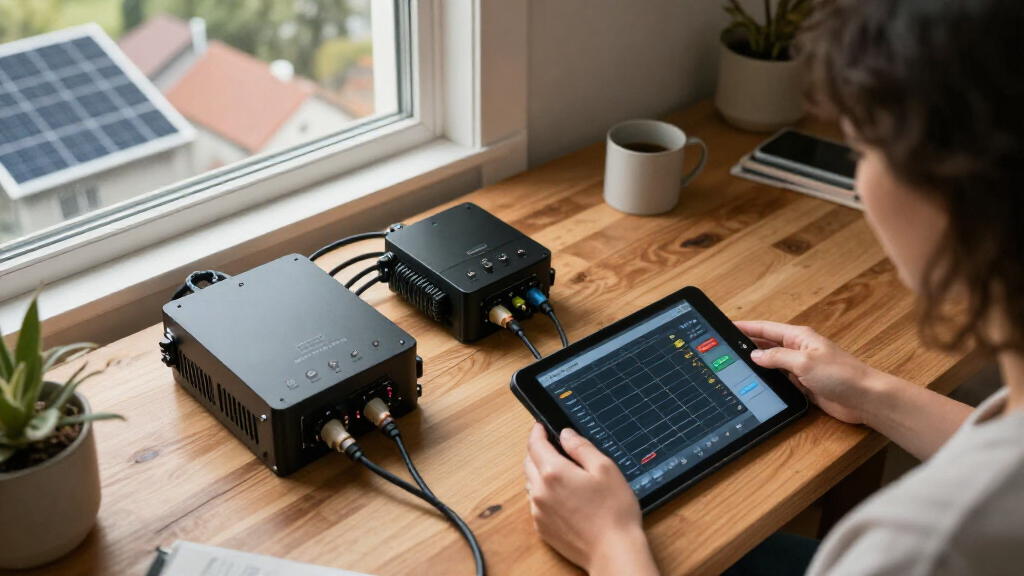
The report, published Thursday by consultancy The Brattle Group on behalf of The Pew Charitable Trusts, examines virtual power plants, or networks of distributed energy resources such as rooftop solar, home batteries and other equipment that can be coordinated remotely. These resources can help utilities meet peak demand by shifting or reducing electricity use, or by supplying stored or locally generated power.
In the report’s scenario, utility customers would otherwise bear about $84 billion in costs between 2030 and 2040 from power plants and grid infrastructure built in anticipation of load growth that fell short. Expanding virtual power plants cut those costs by $33 billion, or roughly 40% of the modeled overbuilding costs. The figures are estimates from a specific scenario, not a forecast of what customers will necessarily pay.
The report says the United States had 113 gigawatts of distributed energy resources that could be used in virtual power plants as of 2025. If that capacity grew to 524 gigawatts by 2050, the analysis estimates the country could avoid $614 billion in grid investments and reduce the average household electricity bill by $122 a year by 2050. Those projections depend on substantial growth in participating resources and program implementation.
A Flexible Hedge Against Data Center Demand
Utilities must plan power plants and transmission and distribution networks years ahead, while forecasts for data center electricity use remain uncertain. Building too little could constrain economic activity or reliability; building too much could leave customers paying for assets that are not needed. The report argues that virtual power plants offer a more modular and adjustable option than committing immediately to large, long-lived infrastructure projects.
Brattle principal and lead author Ryan Hledik said utilities could wait longer to determine whether projected demand appears, then add distributed resources if needed. That flexibility could reduce the risk that household and business customers carry costs for infrastructure tied to data center projects that are delayed, scaled back or canceled. It does not remove the need for grid investment or guarantee that virtual power plants can meet every local reliability requirement.
The report also says virtual power plant programs have costs: participants need compensation, and utilities must establish systems to coordinate the resources. Brattle’s analysis finds the grid benefits exceed participant payments in its modeling. If the resources are no longer needed, incentives could be reduced, but Hledik cautioned that volatile payments could make programs less attractive to customers.
Products Worth Considering

eufy Security Video Doorbell E340, Dual Cameras, 2K FHD, 8GB Local Storage

Philips Hue Festavia 130-Foot Indoor/Outdoor Smart String Lights, 500 Color-Changing LEDs

Ring Alarm 5-Piece Wireless Security System
As an affiliate, we earn on qualifying purchases.
The Grid Planning Problem Behind the Report
Data centers are adding to forecasts of electricity demand, but the scale and timing of that growth are uncertain. The report frames this as a planning risk: utilities may need to make investment decisions before it is clear how much new load will connect and when. It does not establish that the AI boom will falter; instead, it analyzes what could happen if actual load growth comes in below forecasts.
Virtual power plants combine smaller resources that can be coordinated to support the grid. Their ability to defer conventional investments depends on whether utilities can count on them during periods of high demand and whether the resources are available where grid constraints occur. The report’s analysis adds a demand-forecasting hedge to earlier assessments of how coordinated customer resources could reduce peak demand and grid costs.
Some states are adopting policies intended to protect customers from costs associated with infrastructure built for prospective data centers. Hledik said the degree to which those rules can shield consumers, particularly in a severe shortfall scenario, remains uncertain. The report points to virtual power plants as a complementary planning tool rather than proof that existing protections are sufficient.
“These are smaller modular resources we can bring online, once the necessary systems are in place. You can wait longer to figure out if that demand is actually going to appear, and then build the VPP at that point.”
— Ryan Hledik, Brattle Group principal and report lead author
Forecasts, Participation and Costs Remain Uncertain
The $33 billion estimate comes from a modeled case in which load growth falls 5% below forecasts through 2030; it is not a confirmed saving or a prediction that demand will fall short. The report does not establish how much data center demand will ultimately materialize, how quickly virtual power plant capacity can grow, or whether it will be available at the times and locations utilities need it.
Utilities would need to invest in systems to coordinate distributed resources and offer compensation that attracts participants. The report’s finding that benefits exceed payments reflects its analysis, while actual program costs and performance will vary. Hledik said cutting incentives when resources are less needed could weaken customer interest if payments fluctuate sharply.
It is also unclear how fully state rules can protect ordinary customers from costs tied to data center infrastructure that goes unused. The supplied report summary does not give a detailed state-by-state accounting of protections or specify how utilities would translate its modeled savings into rates.
Utilities and States Face Implementation Decisions
The report’s proposed next step is to incorporate virtual power plant benefits into utility grid planning. Quinlan said Pew has published a policy playbook and a state policy explorer describing possible approaches. The report points to virtual power plant mandates adopted in Colorado, Illinois, Maryland and Virginia as examples of state action; it does not say those policies have already produced the national savings modeled.
Data center developers could also help expand distributed capacity. Hledik cited Google and aggregator Voltus seeking a gigawatt of distributed resources across the PJM Interconnection territory, the country’s largest energy market, as an example of a developer-linked effort. Whether such projects scale, and whether regulators and utilities remove barriers to them, will affect how much flexibility virtual power plants can provide.
The next measurable steps are whether utilities include these resources in their plans, whether programs attract dependable participation, and how actual demand compares with forecasts. Those developments will determine whether virtual power plants can defer specific investments and deliver customer savings beyond the report’s modeled scenarios.
Key Questions
What is a virtual power plant?
A virtual power plant is a network of distributed energy resources, such as home batteries and rooftop solar, coordinated to support the electricity grid. Depending on the equipment and program, it can reduce demand, shift electricity use or provide power during periods of high demand.
How much could virtual power plants reduce overbuilding costs?
In Brattle’s scenario where load growth falls 5% short of forecasts through 2030, expanded virtual power plants reduced estimated overbuilding costs by $33 billion from 2030 to 2040, about 40% of the $84 billion modeled cost. This is a scenario estimate, not a guaranteed saving.
Does the report say AI data center demand will fall?
No. The report examines the possibility that electricity load growth could come in below forecasts. It does not establish that AI or data center demand will decline, or say how much demand will ultimately appear.
What could prevent virtual power plants from delivering the projected benefits?
Utilities would need coordination systems, enough participating resources and confidence those resources will be available when and where they are needed. Program costs and customer compensation also matter; sharply changing incentives could make participation less attractive.
What happens next?
Pew says the next step is for utilities to incorporate potential virtual power plant benefits into grid planning. State policies, utility programs and data center developers’ efforts to secure distributed resources will help determine whether the approach expands.
Source: canarymedia.com