TL;DR
Portable inverter generators are compact fuel-powered generators that make AC electricity, convert it to DC, then invert it to produce stable AC power. Choose a model by checking rated and starting watts, runtime at a stated load, noise conditions, weight, fuel options, and outlets. Operate it outdoors with safe clearance, and connect it to home wiring only through an approved setup installed to local requirements.
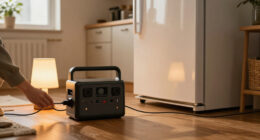
A refrigerator can hum along on a generator, then suddenly demand a burst of power when its compressor kicks on. That brief surge is why choosing a portable inverter generator by its headline wattage alone can leave you with a dark campsite or a tripped breaker just when you need the freezer cold.

Get backup power and energy gear delivered free with Prime
- Fast, free delivery on millions of items
- Prime Video, Amazon Music and more included
- Member-only deals all year
Portable inverter generators make electricity from fuel and electronically shape it into a steadier output. This guide explains how that process affects electronics, how to estimate the power you need, and how to compare runtime, noise, fuel, and portability. You’ll also find a practical safety checklist for using a generator outdoors or preparing selected home essentials for an outage.
Think of a generator as a small supply line: its rated capacity sets the width of the pipe, while each appliance draws its own flow. Match the supply to your real use, and you can avoid hauling more weight and fuel than the job requires.
Add running watts for the devices you’ll use together, then account for the largest motor startup surge.
Compare fuel runtime only when the stated load is similar; higher demand generally uses fuel faster.
Read noise ratings with their distance and test conditions, and check weight and handles before planning transport.
Confirm outlet, fuel, and parallel-kit compatibility from the manufacturer’s specifications.
Run generators outdoors with safe clearance, use working CO alarms, and connect home wiring through an approved setup installed to local requirements.
How an inverter generator turns fuel into steadier electricity
A portable inverter generator is a compact fuel-powered generator that produces alternating current (AC), converts it to direct current (DC), then inverts it back to AC with less fluctuation than many conventional portable generators. That electronic conversion is why these units are often chosen for campsites, RVs, and electronics. Check the model’s specifications and your devices’ requirements before connecting them. [1]
Imagine the electrical output as a stream of water. A conventional generator can send a stream that changes with engine speed, while the inverter’s electronics act like a regulator, smoothing the flow. A laptop charger may be happier with that steadier supply, but the label “inverter” does not replace checking compatibility or protecting equipment as its manufacturer advises.
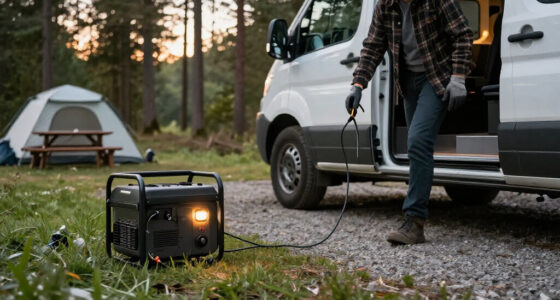
For example, a camper who wants to charge a laptop, run lights, and keep a small fan turning may value stable output and quiet operation more than the maximum wattage available. A contractor running several high-draw tools may care more about sustained capacity. The electronics add capability, but they also make model specifications worth reading closely.
Compare rated output, outlet types, voltage, circuit breakers, and any USB ports. Some generators support parallel operation with a compatible second unit, which can increase available output; the required kit and compatibility depend on the manufacturer. Treat parallel connections as a specific system, not a universal plug-and-play feature.
Products Worth Considering

Dyson V9 Motorbar Cordless Vacuum

Ring Alarm 14-Piece Home Security Kit

Levoit Vital 100S-P Air Purifier with Washable Pre-Filter
As an affiliate, we earn on qualifying purchases.
Size your generator around the appliance that starts hardest
Portable inverter generators need enough rated watts to run your planned devices and enough starting watts to handle brief surges from motor-driven appliances. A refrigerator, pump, or air conditioner can draw more power for a moment when its motor starts than it uses while running. Add the running needs and account for the largest startup demand. [1]
Start with the labels or manuals for your appliances. If a fridge needs 700 watts while running and a 1,200-watt starting surge, while lights and a router together use 150 watts, the generator must handle the combined running load and the surge when the compressor starts. Those figures are an example; your appliance labels determine your actual requirements.
Picture a summer outage: the fridge is on, a few LED lamps glow, and you want to start a window air conditioner. If the air conditioner’s startup surge lands while the fridge compressor is running, a generator sized only to the devices’ steady draw may overload. You can sometimes manage that by starting loads one at a time, but the generator still needs enough capacity for the largest combination you expect to use.
Use this short planning sequence before buying:
- List every appliance you expect to power at the same time.
- Find each device’s running watts and starting watts in its manual or on its label.
- Add the simultaneous running loads, then check how the largest startup surge affects the total.
- Compare the result with the generator’s rated output and surge rating, following the manufacturer’s guidance.
Whole-house backup usually calls for substantially more capacity and a professionally planned connection. A small unit may cover chosen essentials; it will not automatically run every circuit.
Compare runtime, noise, and weight before you pick a model
Portable inverter generators suit different routines depending on how much fuel they use, how they sound under load, and how easily you can move them. Compare runtime figures only at the same stated load, and read the conditions behind noise ratings. A light campsite load can stretch a tank farther than powering several appliances at once. [1]
Suppose one listing says “up to 10 hours” without naming the load, while another states its runtime at a specific percentage of rated capacity. The second figure gives you a clearer basis for comparison. Runtime generally falls as electrical demand rises, so a weekend camper using a few lights and chargers may see a different result from someone running an air conditioner.
Noise ratings need the same care. Distance, operating load, and test conditions affect the number. A unit that sounds like a soft lawn mower at a quiet campground may seem much louder against a bedroom window during an outage. Check campground rules and place the generator where exhaust and sound can disperse safely.
Portability changes with power: higher-output models often weigh more. Handles, wheels, and overall size matter when you need to lift a unit into a vehicle or move it across gravel. Compare the practical details side by side:
| What to compare | What to check | Why it matters |
|---|---|---|
| Runtime | Hours at a stated load | Shows whether the figure fits your expected use |
| Noise | Decibels, distance, and test load | Makes competing ratings more meaningful |
| Weight | Unit weight, handles, wheels, and size | Predicts how practical transport will feel |
| Fuel | Gasoline, propane, or dual fuel and output per fuel | Connects performance to fuel you can actually store and buy |
A dual-fuel model can offer flexibility, but compare its output and runtime on each fuel. Gasoline and propane use can produce different figures.
Choose outlets and features that fit the way you’ll use it
The useful features on a portable inverter generator are the ones that fit your devices and routine. Check outlet types and voltage, USB ports, circuit breakers, and any remote-start or monitoring controls against the equipment you plan to power. A feature list matters less than whether the generator has the right connections and capacity for a real Saturday at camp or a night without grid power. [1]
For example, an RV owner might need an outlet that matches the RV connection, while someone charging phones and camera batteries may appreciate USB ports. Don’t assume a familiar-looking outlet can safely supply every device; follow the manual, use cords rated for the load and conditions, and avoid overloading any circuit.
Parallel capability may help if your power needs could grow later. Two compatible models can connect through a manufacturer-approved parallel kit to provide more output, but the kit and supported combinations vary by brand. Before buying one smaller generator on the promise of future expansion, confirm the exact compatible model and kit details.
Recent product trends include more dual-fuel designs, digital controls, remote or electric starting, and parallel-capable models. Those options can be handy when you’re checking a unit in the rain or starting it from a distance, but they don’t remove the need to follow operating instructions. Availability and emissions rules differ by market, so check current specifications and local requirements for the model sold where you live.
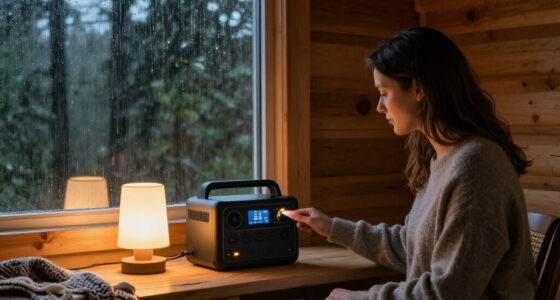
Battery power stations offer another path: they run quietly without on-site fuel combustion, but capacity and recharge time differ from fuel generators. A household might use a battery unit for phones overnight and a generator later to recharge it or run larger loads. That pairing can reduce engine hours, provided both products support the planned use.
Run a generator safely outdoors and protect your home
Portable inverter generators produce carbon monoxide (CO), a colorless, odorless gas that can kill. Run one outdoors, well away from doors, windows, and vents, and follow the manufacturer’s placement guidance. Never operate it inside a home, garage, or other enclosed or partly enclosed space. Use working CO alarms in your home. [1]
During an outage, it can be tempting to tuck a generator just inside an open garage door to shield it from drizzle. Don’t. Exhaust can collect where you cannot see or smell it. Keep the unit dry using only weather protection that does not trap heat or exhaust, and follow the manual’s directions for wet-weather use.
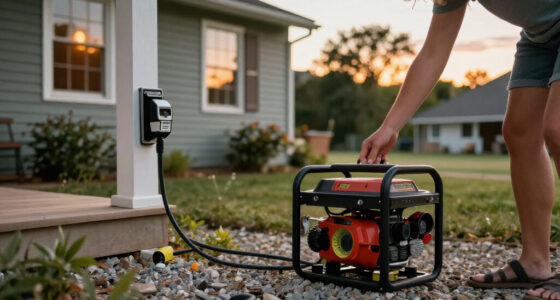
Keep cords and connections rated for the electrical load and the conditions where you’ll use them. If you want to power household wiring, use a properly installed transfer switch or another approved connection method that meets local requirements. Never connect a generator directly to a wall outlet: that can backfeed the electrical system and create a serious hazard. Arrange home wiring work with a licensed electrician.
Fuel needs care, too. Store it as the manufacturer and local rules direct, away from hot equipment. Turn the generator off and let it cool before refueling; splashing fuel near hot surfaces can start a fire. During storage, follow the manual for oil changes, fuel-system care, and fuel stabilizer or draining. Gasoline can deteriorate, so a generator left untouched until next season may need more preparation than a quick pull on the starter.
CO safety: Keep the generator outdoors with safe clearance and ventilation, and maintain working CO alarms in the home. Exhaust can be deadly even when you cannot detect it.
Make a buying checklist you can use in the store
A good buying checklist starts with the job, not a brand or a dramatic wattage claim. Match the generator’s rated watts to your planned loads, then check runtime under a stated load, noise test conditions, weight, fuel options, outlets, warranty, and maintenance instructions. Those details tell you how the unit will work in your driveway, at a campsite, or beside an RV. [1]
Imagine a family preparing for a three-day trip. They need to move the generator from the car to a campsite, charge devices, and run a small fan. A light, manageable unit with matching outlets and enough rated output may suit them better than a heavier model with capacity they never use. For a homeowner who wants to keep a fridge and sump pump running, startup watts and a safe connection plan deserve more attention than USB ports.
Take a photo of appliance labels or write down their wattage before shopping. Then compare manufacturer figures for each fuel type, because a dual-fuel model may produce different output on propane and gasoline. Ask whether the quoted runtime applies to a light or heavy load, and whether the advertised noise rating names a distance and operating condition.
- Power: rated output, starting output, and planned simultaneous loads.
- Fuel: available fuel, storage needs, runtime, and output by fuel.
- Fit: weight, dimensions, handles, wheels, and outlet types.
- Ownership: maintenance schedule, warranty, and storage instructions.
- Safety: outdoor placement, cord ratings, CO alarms, and an approved home connection if needed.
A little arithmetic and a careful read of the manual can save you from buying a generator that is too small, too heavy, or awkward to operate when the lights go out.
Frequently Asked Questions
What size inverter generator do I need?
List the devices you plan to run together and check both running watts and starting watts, especially for appliances with motors. Add the simultaneous running loads and account for the largest startup surge. A refrigerator, for example, may need a short burst above its normal running draw.
Can a portable inverter generator run a refrigerator or air conditioner?
It can if its rated output covers the running load and its surge capacity covers startup, but requirements vary by appliance. Check the appliance and generator specifications before connecting them. Whole-house backup usually needs much more capacity and an approved connection installed to local requirements.
Are inverter generators safe for laptops and other electronics?
Many inverter models are designed to provide steadier power than conventional portable generators, which can suit many electronics. Still, check the generator’s specifications and the device maker’s requirements before use. A surge protector may add protection, but it does not make an incompatible power source suitable.
How long will a generator run on one tank?
It depends on tank capacity, fuel, and electrical load. Compare manufacturer runtime figures at the same stated load; a unit will generally run for less time as you draw more power. A light load of lamps and chargers is different from running an air conditioner and refrigerator together.
Can I connect a generator to my home?
Use a properly installed transfer switch or another approved connection method that meets local requirements. Never connect a generator directly to a wall outlet, since that can backfeed the electrical system. Have a licensed electrician plan and install home wiring connections.
Can I run a portable generator in rain or overnight?
Follow the manufacturer’s weather and operating guidance, and keep the generator outdoors with safe clearance and ventilation. Any weather protection must not trap exhaust or heat. If you run it overnight, keep it away from doors, windows, and vents and maintain working CO alarms indoors.
Conclusion
Choose a generator around the appliances you actually need, including the brief surge when a motor starts. Then compare runtime at a stated load, noise conditions, fuel, weight, and outlets so the unit fits the way you’ll use it.
When the power drops, a well-sized generator should bring back the essentials without bringing exhaust indoors. Keep it outdoors, treat fuel and connections with care, and let the steady hum stay where it belongs: in open air.