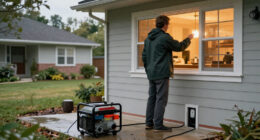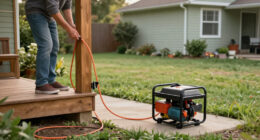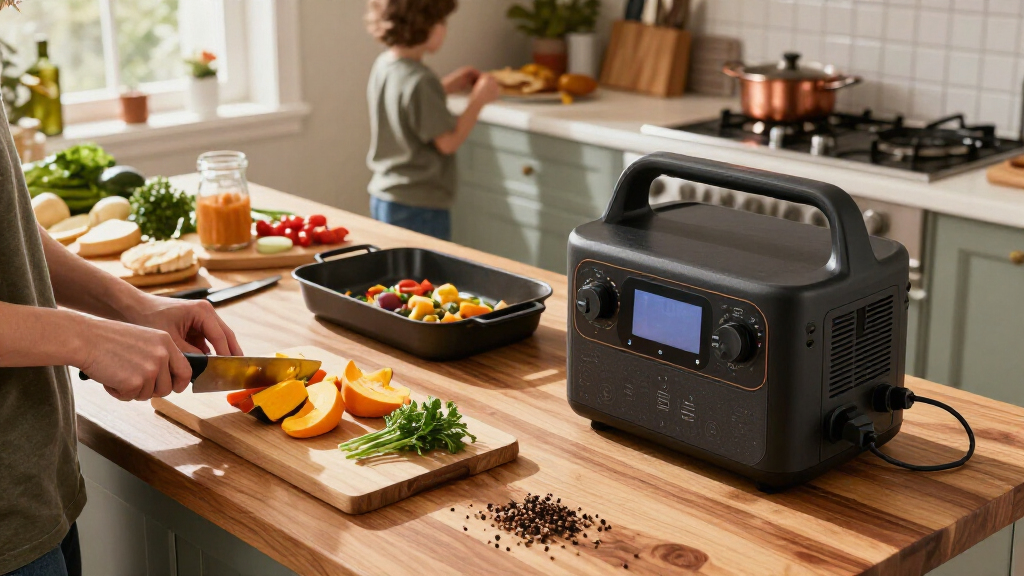
For Thanksgiving cooking, I’d choose a power station by matching its continuous output and usable capacity to the appliances you plan to run. The EF ECOFLOW DELTA 3 Max is my best overall pick on paper, pairing 2,048Wh of capacity with 2,400W output; the Oukitel P2001 Pro stands out for its higher 3,200W output, while the Jackery HomePower 3600 Plus offers the largest listed capacity here. The main tradeoff is between enough power for high-wattage cooking appliances and a lighter, smaller unit suited to electronics or brief backup. A station’s watt-hour rating alone cannot tell you whether it can start or run an oven, kettle, or slow cooker. Read on for the full comparison, buying advice, and picks by cooking setup.

Get backup power and energy gear delivered free with Prime
- Fast, free delivery on millions of items
- Prime Video, Amazon Music and more included
- Member-only deals all year
Complete the kit


Key Takeaways
- Appliance wattage can matter more than capacity: The Oukitel P2001 Pro lists 3,200W output, while the Anker SOLIX S2000 lists 1,500W, so they may suit different loads even though both are around 2,000Wh.
- The 2,048Wh class offers several distinct tradeoffs: The EF ECOFLOW DELTA 3 Max pairs that capacity with 2,400W output, the Jackery Explorer 2000 v2 lists 2,200W, and the Anker SOLIX S2000 lists 1,500W.
- The biggest listed capacity is not automatically the best kitchen fit: The 3,584Wh Jackery HomePower 3600 Plus is the high-capacity choice, but smaller stations may be easier to move and sufficient for a limited appliance plan.
- About 1,000Wh models are a middle ground, not a whole-kitchen guarantee: The Anker SOLIX C1000 Gen 2, PECRON F1000 LFP, DJI Power 1000 V2, CTOLITY AP1000, and Jackery Explorer 1000 v2 differ in output and are better compared against specific appliance loads.
- The compact models are mainly for lighter duties: Units around 288–293Wh, including the BLUETTI Elite 30 V2, DARAN, and BailiBatt, are more suited to small electronics or brief, low-power use than sustained cooking.
| Anker SOLIX C1000 Gen 2 Portable Power Station |  | Best Overall for a Thanksgiving Backup | Battery capacity: 1,024Wh | Battery type: LiFePO4 | Running output: 2,000W | VIEW LATEST PRICE | See Our Full Breakdown |
| PECRON F1000 LFP Portable Power Station |  | Best for Quiet, Mixed-Device Backup | Battery capacity: 962Wh | Battery chemistry: LiFePO4 | AC output: 1,500W pure sine wave, 120V | VIEW LATEST PRICE | See Our Full Breakdown |
| DJI Power 1000 V2 Portable Power Station |  | Best for Fast Recharge Between Cooking Tasks | Battery capacity: 1,024Wh | Battery type: LFP | Output wattage listed: 1,000W | VIEW LATEST PRICE | See Our Full Breakdown |
| EF ECOFLOW DELTA 3 Max Portable Power Station |  | Best for Longer Cooking Backup | Battery capacity: 2,048Wh | Battery type: LiFePO4 (LFP) | Output wattage: 2,400W | VIEW LATEST PRICE | See Our Full Breakdown |
| Jackery Explorer 300 Portable Power Station |  | Best Compact Pick for Serving-Area Essentials | Capacity: 292Wh | Battery cell type: Lithium-ion | Peak surge output: 600W | VIEW LATEST PRICE | See Our Full Breakdown |
| Oukitel P2001 Pro Portable Power Station, 3200W, 2048Wh LiFePO₄ Battery |  | Best for High-Draw Cooking Gear | Battery capacity: 2048Wh | Battery chemistry: LiFePO₄ | AC output: 3200W listed; 1400W continuous in US standard backup mode | VIEW LATEST PRICE | See Our Full Breakdown |
| Jackery Explorer 2000 v2 Portable Power Station, 2042Wh, 2200W |  | Best for Quieter Backup | Battery capacity: 2042Wh | Battery type: LiFePO₄ | AC output: 2200W | VIEW LATEST PRICE | See Our Full Breakdown |
| Jackery HomePower 3600 Plus Portable Power Station, 3584Wh, 3600W |  | Best for Long Cooking Sessions | Battery capacity: 3584Wh | Battery type: LFP | Output wattage: 3600W | VIEW LATEST PRICE | See Our Full Breakdown |
| BLUETTI Elite 30 V2 Portable Power Station, 288Wh, 600W |  | Best Compact Option for Small Loads | Capacity: 288Wh | Battery chemistry: LFP | Continuous output: 600W | VIEW LATEST PRICE | See Our Full Breakdown |
| DARAN Portable Power Station, 288Wh LiFePO4 Battery, 350W (600W Surge), 7-Port |  | Best Lightweight Pick for Basics | Battery capacity: 288Wh | Battery type: LiFePO₄ | Surge output: 600W | VIEW LATEST PRICE | See Our Full Breakdown |
| CTOLITY AP1000 Portable Power Station, 1800W, 1024Wh LiFePO4 Battery |  | Best for Cooking-Load Headroom | Battery capacity: 1,024Wh | Battery chemistry: LiFePO4 | Continuous output: 1,800W pure sine wave | VIEW LATEST PRICE | See Our Full Breakdown |
| Anker SOLIX S2000 Portable Power Station, 2,010Wh, 1,500W |  | Best for Longer Backup | Battery capacity: 2,010Wh | Battery type: LFP | Continuous output: 1,500W | VIEW LATEST PRICE | See Our Full Breakdown |
| Jackery Explorer 1000 v2 Portable Power Station, 1024Wh LiFePO4 Battery |  | Best Compact, App-Controlled Pick | Battery capacity: 1,024Wh | Battery type: LiFePO4 (LFP) | AC output: 1,500W | VIEW LATEST PRICE | See Our Full Breakdown |
| LIBRIDS C600 Portable Power Station, 640Wh LiFePO4 Battery, 600W Output |  | Best for Low-Wattage Essentials | Battery capacity: 640Wh | Battery type: LiFePO4 | Surge output: 1,200W | VIEW LATEST PRICE | See Our Full Breakdown |
| BailiBatt 600W Portable Power Station, 293Wh |  | Best Ultra-Light Backup | Battery capacity: 293Wh | Maximum output: 600W | AC output: 600W, 120V pure sine wave | VIEW LATEST PRICE | See Our Full Breakdown |
| portable power stations for Thanksgiving cooking | Weight | Battery capacity | Battery type |
|---|---|---|---|
| Anker SOLIX C1000 Gen 2 Portab | 11.3kg | 1,024Wh | LiFePO4 |
| PECRON F1000 LFP Portable Powe | 23.9lb | 962Wh | — |
| DJI Power 1000 V2 Portable Pow | 15kg | 1,024Wh | LFP |
| EF ECOFLOW DELTA 3 Max Portabl | — | 2,048Wh | LiFePO4 (LFP) |
| Jackery Explorer 300 Portable | 7.5lb | — | — |
| Oukitel P2001 Pro Portable Pow | 22 kg (47.4 lb) | 2048Wh | — |
| Jackery Explorer 2000 v2 Porta | 39.5 lb | 2042Wh | LiFePO₄ |
| Jackery HomePower 3600 Plus Po | 77.2 lb | 3584Wh | LFP |
| BLUETTI Elite 30 V2 Portable P | 9.5 lb | — | — |
| DARAN Portable Power Station | 8.2 lb | 288Wh | LiFePO₄ |
| CTOLITY AP1000 Portable Power | Under 25 lb | 1,024Wh | — |
| Anker SOLIX S2000 Portable Pow | 35.7 lb | 2,010Wh | LFP |
| Jackery Explorer 1000 v2 Porta | 23.4 lb | 1,024Wh | LiFePO4 (LFP) |
| LIBRIDS C600 Portable Power St | 16.3 lb | 640Wh | LiFePO4 |
| BailiBatt 600W Portable Power | 7.7 lb | 293Wh | — |
More Details on Our Top Picks
Anker SOLIX C1000 Gen 2 Portable Power Station
For a Thanksgiving kitchen that needs more than phone charging, the Anker SOLIX C1000 Gen 2 strikes a practical balance: its 1,024Wh capacity and 2,000W running output can support a range of cooking and serving appliances, subject to each appliance’s draw and the station’s usable energy. Its 49-minute AC recharge gives it an edge over the PECRON F1000 on the listed recharge details, while a 10ms UPS switchover can help keep connected equipment powered through an outage. The LiFePO4 battery is rated to retain at least 80% capacity after 4,000 cycles. The tradeoff is limited solar input at 600W, and the supplied information conflicts on whether it has nine or ten ports, so I would verify the outlet layout before buying. It is also far smaller in capacity than the EcoFlow DELTA 3 Max.
Pros:- 1,024Wh capacity and 2,000W running output suit a broader range of backup tasks than compact stations.
- AC recharge is listed at 49 minutes at 1,600W.
- 600W maximum solar input offers an off-grid recharge option.
- LiFePO4 battery lifespan is rated at 4,000 cycles to at least 80% capacity.
Cons:- The 1,024Wh battery is much smaller than the EcoFlow DELTA 3 Max’s 2,048Wh capacity.
- Solar input is capped at 600W and 60V.
- Product details conflict on the number of total outlets and ports.
Best for: Hosts seeking a mid-size backup station for selected kitchen appliances, lights, and electronics during an outage.
Not ideal for: Cooks who want to power several high-draw appliances for an extended meal or need a confirmed, specific outlet count.
- Battery capacity:1,024Wh
- Battery type:LiFePO4
- Running output:2,000W
- Peak output:3,000W
- AC recharge:49 minutes at 1,600W
- Maximum solar input:600W, 60V maximum
- UPS switchover:Under 10ms
- Weight:11.3kg
- Dimensions:15.1 × 8.2 × 9.6in
Our verdict“I’d choose the Anker for a versatile, fast-recharging Thanksgiving backup when a 1,024Wh battery is enough for the appliances you plan to run.”
PECRON F1000 LFP Portable Power Station
The PECRON F1000 suits a Thanksgiving setup where quiet operation and varied connections matter as much as cooking output. Its 1,500W pure sine wave AC output and 962Wh battery can cover selected kitchen gear, while four AC outlets let you connect more than one device without relying solely on USB ports. At a stated 25dB, it is the quietest option in this group by the supplied figures, edging the DJI Power 1000 V2 at 26dB. The PECRON also includes a 100W USB-C port, app control, and a 5W light. Compared with the Anker SOLIX C1000 Gen 2, though, it has less capacity and lower AC output, and its UPS transfer time is 20ms rather than 10ms. At 23.9 pounds, it is not a light carry, and the 500W car charger is separate.
Pros:- Four AC outlets and a mix of USB-A, USB-C, DC, and car ports support varied devices.
- 1,500W pure sine wave AC output is suited to compatible appliances within the station’s limits.
- Listed operating noise is 25dB.
- Supports both AC and solar charging, with app control and a built-in 5W LED light.
Cons:- 962Wh capacity and 1,500W output are below the Anker SOLIX C1000 Gen 2’s listed capacity and output.
- The 500W car charger is sold separately.
- At 23.9 pounds, carrying it between rooms or outdoors takes more effort than carrying a compact station.
Best for: Hosts who want a relatively quiet station with several AC outlets for selected appliances and household devices.
Not ideal for: Cooks planning to run higher-draw appliances or move the station frequently; its output is lower than the Anker’s and it weighs 23.9 pounds.
- Battery capacity:962Wh
- Battery chemistry:LiFePO4
- AC output:1,500W pure sine wave, 120V
- AC outlets:4
- USB-C ports:2 (33W and 100W)
- Maximum solar input:600W
- UPS transfer time:20ms
- Noise level:25dB
- Weight:23.9lb
Our verdict“I’d pick the PECRON for a quieter, multi-port setup when 1,500W output covers your planned cooking and backup loads.”
DJI Power 1000 V2 Portable Power Station
The DJI Power 1000 V2 is a strong fit for hosts who can recharge between demands: it reaches 80% in 37 minutes, making it easier to top up during a break than the listed 49-minute AC recharge time of the Anker SOLIX C1000 Gen 2. Its 1,024Wh LFP battery, four AC outlets, and two 140W USB-C ports offer a useful mix for kitchen equipment and personal devices. The stated noise floor of 26dB is close to the PECRON F1000’s 25dB, and its 10ms UPS switch is quicker than the PECRON’s 20ms transfer. But the 15kg body is not especially easy to carry, and solar and car charging need separate compatible adapters. The headline maximum output is 2,600W; the supplied specs also list 1,000W output, so I would check appliance requirements rather than assume every load can use the peak figure.
Pros:- Reaches 80% charge in a listed 37 minutes.
- Two 140W USB-C ports can serve demanding USB-C devices.
- Four AC outlets and a 1,024Wh LFP battery support a mix of household backup tasks.
- 10ms UPS switch and stated 26dB low noise level suit a backup station used around the home.
Cons:- Solar and car charging require separate compatible adapters.
- At 15kg, it is heavier than the Anker SOLIX C1000 Gen 2’s listed 11.3kg.
- Product details list both 1,000W output and 2,600W maximum output, so the usable output for a specific appliance needs clarification.
Best for: Hosts with access to AC power between cooking periods who value rapid recharging and high-output USB-C for laptops or other devices.
Not ideal for: Buyers who need a ready-to-use solar or car-charging setup, or who need clear confirmation that their appliance’s running draw fits the listed output.
- Battery capacity:1,024Wh
- Battery type:LFP
- Output wattage listed:1,000W
- Maximum output:2,600W
- AC outlets:4
- USB-C ports:2 × 140W
- Recharge time:0–80% in 37 minutes
- UPS switch time:10ms
- Weight:15kg
Our verdict“I’d choose the DJI when quick AC top-ups and powerful USB-C matter more than light weight or built-in solar and car-charging compatibility.”
EF ECOFLOW DELTA 3 Max Portable Power Station
When Thanksgiving backup means more than keeping a few devices alive, the EcoFlow DELTA 3 Max brings the largest battery in this five-product group: 2,048Wh, twice the listed capacity of the Anker SOLIX C1000 Gen 2 and DJI Power 1000 V2. Its 2,400W output and up to 3,400W X-Boost output give it more headroom for compatible loads, while the 0–80% charge time of about 1.13 hours is useful when a shorter recharge window matters. App monitoring and scheduling can help track energy use during a long meal. The bigger reserve comes with a practical cost: the listed dimensions are nearly 20 inches long, and the product data gives no weight, so I cannot judge how manageable it is to move. Only three power outlets are listed, and solar panels are not included.
Pros:- 2,048Wh capacity provides twice the listed energy storage of the Anker SOLIX C1000 Gen 2.
- 2,400W output and up to 3,400W X-Boost output offer more headroom than the 1,500W PECRON F1000.
- Reaches 80% charge in about 1.13 hours.
- App monitoring and charging schedules help track and manage power use.
Cons:- The product data does not list a weight, making portability hard to judge.
- Only three total power outlets are listed.
- Solar panels are optional and not included.
Best for: Hosts who need more battery reserve for a longer outage or several rounds of appliance use and can accommodate a larger station.
Not ideal for: Buyers who prioritize easy carrying, need more than three listed outlets, or expect solar panels to come included.
- Battery capacity:2,048Wh
- Battery type:LiFePO4 (LFP)
- Output wattage:2,400W
- X-Boost output:Up to 3,400W
- Charging time:0–80% in about 1.13 hours
- Transfer time:Less than 10ms
- Total power outlets:3
- Dimensions:9.4 × 12 × 19.44in
- Warranty:5 years
Our verdict“I’d pick the EcoFlow for longer Thanksgiving backup when extra battery capacity matters more than compact dimensions or a larger outlet count.”
Jackery Explorer 300 Portable Power Station
The Jackery Explorer 300 is the small, easy-to-carry choice here, not a station for powering the main Thanksgiving cooking lineup. At 7.5 pounds and 292Wh, it is much easier to move between the kitchen, dining room, and porch than the 15kg DJI Power 1000 V2. Its 300W rated output can support modest compatible loads, while two AC outlets, USB ports, and a car port make it useful for lights, phones, or other serving-area essentials. The limit is substantial: its capacity and output sit far below the Anker SOLIX C1000 Gen 2, so it is not the right pick for a high-draw cooker or long appliance run. Solar charging is supported, but the panel is sold separately.
Pros:- At 7.5 pounds, it is easier to carry around the home than the larger stations in this group.
- Two AC outlets plus USB-A, USB-C, and a car port support several device types.
- 300W rated output and 600W peak surge suit modest compatible loads.
- Can recharge from a compatible solar panel.
Cons:- 292Wh capacity is far below the Anker SOLIX C1000 Gen 2’s 1,024Wh, limiting runtime.
- 300W rated output rules it out for many high-draw cooking appliances.
- Solar panel is not included.
Best for: Hosts who want a lightweight station for phones, lights, and low-draw serving-area devices rather than kitchen appliances.
Not ideal for: Cooks seeking outage power for ovens, kettles, or other high-draw appliances; its 300W rated output and 292Wh capacity are limited.
- Capacity:292Wh
- Battery cell type:Lithium-ion
- Peak surge output:600W
- Weight:7.5lb
- AC outlets:2
- USB-C PD output:100W
- Car port output:120W
- Solar charging:About 80% in 2.8 hours with a 100W panel
Our verdict“I’d choose the Explorer 300 for portable power for lights and personal devices, not for keeping Thanksgiving cooking appliances running.”
Oukitel P2001 Pro Portable Power Station, 3200W, 2048Wh LiFePO₄ Battery
The Oukitel P2001 Pro pairs a 2048Wh battery with a listed 3200W AC output, giving it more stated output headroom than the Jackery Explorer 2000 v2 for running a demanding cooking appliance alongside smaller devices. That makes it a stronger fit for a Thanksgiving setup built around higher-wattage gear, while its 13 output ports can also serve phones and other electronics. Its 1800W AC charging input and support for solar, car, and generator charging offer several ways to replenish it before or during a long gathering. There is an important caveat: the stated US standard backup mode limits continuous AC output to 1400W, so buyers should check the mode and the appliance’s running wattage rather than plan around the headline figure alone. At 22 kg, it is also a substantial carry.
Pros:- 2048Wh LiFePO₄ battery rated for over 4,000 charge cycles
- Four AC outlets and 13 total output ports, including 100W USB-C PD
- Supports AC, solar, car outlet, and generator charging
- App control and under-10ms EPS switchover
Cons:- US standard backup mode limits continuous AC output to 1400W
- At about 22 kg (47.4 lb), it is awkward to move by hand
- Its 2048Wh capacity still calls for careful runtime planning with sustained cooking loads
Best for: Hosts who need a large battery, multiple device ports, and headroom for cooking appliances whose running wattage fits the applicable output mode.
Not ideal for: Anyone relying on more than 1400W of continuous AC power in US standard backup mode, or who needs a light unit to carry between kitchen and serving area.
- Battery capacity:2048Wh
- Battery chemistry:LiFePO₄
- AC output:3200W listed; 1400W continuous in US standard backup mode
- AC charging input:1800W
- Solar input:Up to 1000W
- Output ports:4 AC, 2 USB-A, 4 USB-C (including 100W PD), 2 DC5521, 1 car socket
- Weight:22 kg (47.4 lb)
- EPS switchover:Under 10ms
- Warranty:5 years
Our verdict“Choose the P2001 Pro for a port-rich, high-capacity Thanksgiving setup if your appliances fit its actual backup-mode output limit.”
Jackery Explorer 2000 v2 Portable Power Station, 2042Wh, 2200W
For a Thanksgiving gathering where noise matters as much as backup capacity, the Jackery Explorer 2000 v2 offers a useful combination: a 2042Wh LiFePO₄ battery, 2200W AC output, and a silent-charging mode rated below 30dB. Its listed 39.5-pound weight is lighter than the Oukitel P2001 Pro, though either is a substantial lift for repeated trips across the house. The Jackery also charges quickly from AC, with a stated 0–80% time of 66 minutes, and supports solar charging when paired with optional panels. Compared with the Oukitel, it has fewer AC outlets and lower stated output, so it is less suited to a setup needing several mains-powered appliances at once. Its three AC outlets make it a better match for a few carefully chosen loads than a crowded cooking station.
Pros:- 2042Wh LiFePO₄ battery with a stated lifespan of up to 10 years
- 2200W AC output for compatible appliances
- Silent charging mode is rated below 30dB
- AC fast charging reaches 80% in a stated 66 minutes
Cons:- Only three AC outlets for mains-powered devices
- Solar panels are optional and not included
- The stated runtime of 1 hour 7 minutes is load-dependent and may not reflect a cooking setup
Best for: Hosts who want substantial battery capacity for a few selected appliances and electronics, with quieter charging in a shared living space.
Not ideal for: Cooks who need more than three AC outlets, higher output headroom, or solar panels included with the station.
- Battery capacity:2042Wh
- Battery type:LiFePO₄
- AC output:2200W
- AC outlets:3
- USB-C PD output:100W
- Weight:39.5 lb
- AC fast charging:0–80% in 66 minutes
- Silent charging:Full charge in 5 hours at less than 30dB
- UPS switching time:20ms
Our verdict“Pick the Explorer 2000 v2 if quieter charging and a large battery matter more than extra outlets or the Oukitel’s higher stated output.”
Jackery HomePower 3600 Plus Portable Power Station, 3584Wh, 3600W
When the priority is running a larger cooking setup for longer, the Jackery HomePower 3600 Plus leads this batch in battery capacity: 3584Wh, compared with roughly 2040Wh in the Oukitel P2001 Pro and Explorer 2000 v2. Its 3600W output also gives it more stated AC headroom than those models, while expansion options can scale capacity for buyers planning extended backup beyond a single meal. The tradeoff is size: at 77.2 pounds, it is far heavier than either 2000Wh-class Jackery or Oukitel, though its wheels and telescopic handle help with rolling it over suitable surfaces. It has only two outlets, so check whether your appliances can share them safely. This is a substantial reserve for hosts who value runtime over easy lifting.
Pros:- 3584Wh capacity is the largest in this batch
- 3600W output provides more stated AC headroom than the 2000Wh-class options here
- Expandable capacity supports larger backup plans
- Wheels and telescopic handle make rolling easier than carrying
Cons:- At 77.2 lb, it is difficult to lift and position
- Only two outlets are listed
- 240V output requires parallel operation
Best for: Hosts planning long outages or extended cooking and serving periods who can roll the unit into place and have a limited number of AC plugs to manage.
Not ideal for: Buyers who need to carry their station up stairs, want several AC outlets, or expect 240V output from one unit without parallel operation.
- Battery capacity:3584Wh
- Battery type:LFP
- Output wattage:3600W
- Parallel output:7200W
- Expandable capacity:Up to 21kWh per unit
- Outlets:2
- Weight:77.2 lb
- Recharge time:2 hours hybrid AC+DC; 2.5 hours AC or gas generator; 4 hours solar
- Battery cycle life:6000 cycles
Our verdict“Choose the HomePower 3600 Plus when extended runtime matters more than lifting weight and outlet count.”
BLUETTI Elite 30 V2 Portable Power Station, 288Wh, 600W
The BLUETTI Elite 30 V2 is the compact choice here, not a substitute for a full-size cooking power station. Its 288Wh battery and 600W continuous output suit small electronics or other low-wattage gear, but they fall well short of the Jackery Explorer 2000 v2 for powering substantial appliances or sustaining a meal’s worth of cooking. The 1500W Power Lifting Mode should not be mistaken for 1500W of continuous output; buyers should match appliances to the 600W rating and check whether the mode supports their specific load. At 9.5 pounds, it is much easier to move around a crowded home, and its stated 0–80% wall charge time of 45 minutes can make short top-ups practical. Treat it as support for small devices, not a cooker supply.
Pros:- Compact 9.5 lb design is easy to reposition
- 140W USB-C PD supports fast charging for compatible devices
- Adjustable wall charging reaches 80% in a stated 45 minutes
- Supports solar, AC, car, lead-acid, and generator charging
Cons:- 288Wh capacity limits runtime, especially for higher-wattage loads
- 600W continuous output rules out many major cooking appliances
- 1500W Power Lifting Mode is not the same as 1500W continuous output
Best for: Hosts who want a lightweight station for phones, small electronics, or other compatible loads up to 600W during a gathering.
Not ideal for: Anyone expecting to run a high-wattage oven, kettle, or other major cooking appliance, or to power loads for long periods without recharging.
- Capacity:288Wh
- Battery chemistry:LFP
- Continuous output:600W
- Power Lifting Mode:Up to 1500W
- Weight:9.5 lb
- Charging time:0–80% in 45 minutes; 0–100% in 70 minutes
- USB-C fast charging:140W PD
- UPS switch time:≤10ms
Our verdict“Choose the Elite 30 V2 as a portable companion for small loads, not as the main power source for Thanksgiving cooking.”
DARAN Portable Power Station, 288Wh LiFePO4 Battery, 350W (600W Surge), 7-Port
The DARAN Portable Power Station is the lightest option in this group at 8.2 pounds, making it easier to keep nearby for phones, small electronics, and compatible low-wattage devices. Its 350W rated output is lower than the BLUETTI Elite 30 V2’s 600W continuous rating, so the DARAN is the more limited choice for anything with a substantial draw. Both units have 288Wh batteries, which means neither is a practical main supply for sustained cooking; the BLUETTI offers more output and faster USB-C PD, while the DARAN prioritizes a lighter carry and includes a storage bag and LED light. Optional solar and the one-year warranty are further tradeoffs. Before plugging in any appliance, check its running wattage against the 350W rating.
Pros:- At 8.2 lb, it is lighter than the BLUETTI Elite 30 V2
- LiFePO₄ battery includes protection against several electrical and temperature issues
- Can recharge from AC, a 12V car outlet, or optional solar
- Includes an LCD, LED light, and storage bag
Cons:- 350W rated output excludes many cooking appliances
- 288Wh capacity limits runtime for sustained loads
- Solar panels and car charging cables are sold separately
Best for: Hosts who want an inexpensive-to-carry backup for phones and small devices, and whose connected loads stay within 350W.
Not ideal for: Cooks who need to power a typical high-wattage appliance, need more than 350W continuous output, or want solar accessories included.
- Battery capacity:288Wh
- Battery type:LiFePO₄
- Surge output:600W
- AC outlets:2
- USB-C PD:60W
- Weight:8.2 lb
- Charging options:AC, 12V car, optional solar
- Warranty:1 year
Our verdict“Pick the DARAN for the lightest basic backup in this batch, but not to run a major Thanksgiving cooking appliance.”
CTOLITY AP1000 Portable Power Station, 1800W, 1024Wh LiFePO4 Battery
For Thanksgiving cooking, the AP1000’s main advantage over the Jackery Explorer 1000 v2 is its 1,800W continuous output, which leaves more room for a higher-draw countertop appliance—provided its wattage stays within the limit. Its 1,024Wh battery is still a one-appliance-at-a-time reserve for most cooking setups, not a way to run an oven or several heating appliances through the whole meal. The under-25-pound weight, 11 outlets, and AC, solar, and car charging make it flexible around the home or at a holiday gathering. Fast AC charging is useful if you can recharge between cooking tasks. The tradeoff is that it stores much less energy than the Anker SOLIX S2000, and solar charging needs compatible panels. Choose it for output headroom and portability, not extended high-wattage cooking.
Pros:- 1,800W continuous output gives more appliance headroom than the 1,500W Jackery Explorer 1000 v2.
- 1,024Wh LiFePO4 battery is rated for 4,000+ cycles while retaining up to 70% capacity.
- AC charging is stated to reach full capacity in about 60 minutes.
- Eleven outlets and AC, compatible solar, and car charging support varied setups.
Cons:- The 1,024Wh capacity is limited for extended use of cooking appliances that draw substantial power.
- Loads requiring more than 1,800W continuous output are not a fit.
- Solar charging requires compatible panels.
Best for: Cooks who want to power one moderately high-wattage countertop appliance and value portability and multiple charging options.
Not ideal for: Households hoping to run multiple heating appliances for hours or power loads above 1,800W; its battery capacity and continuous output set clear limits.
- Battery capacity:1,024Wh
- Battery chemistry:LiFePO4
- Continuous output:1,800W pure sine wave
- Peak output:3,600W
- Outlets:11
- AC charging time:Approximately 60 minutes to full; 80% in 45 minutes
- UPS switching:Under 20 ms
- Weight:Under 25 lb
- Charging methods:AC, compatible solar panels, and car charging
Our verdict“Pick the AP1000 if your Thanksgiving plan calls for one higher-draw appliance and portable 1,800W output rather than the longer reserve of a larger station.”
Anker SOLIX S2000 Portable Power Station, 2,010Wh, 1,500W
The SOLIX S2000 puts the emphasis on energy reserve, not maximum cooking-appliance output. Its 2,010Wh battery is nearly double the capacity of the CTOLITY AP1000, which can mean more time for a fridge or lower-draw kitchen gear between recharges; the stated refrigerator runtime varies with actual use and conditions. But its 1,500W continuous output is lower than the CTOLITY’s 1,800W, so check appliance labels before planning to run a kettle, multicooker, or other heating appliance. Eight outlets and six recharge methods add flexibility, while under-10ms UPS switching suits backup for connected electronics. At 35.7 pounds, it is also a heavier carry than the Jackery Explorer 1000 v2. This makes more sense for holding a reserve through a long gathering than for buyers whose priority is a higher continuous wattage rating.
Pros:- 2,010Wh LFP battery provides substantially more stored energy than the 1,024Wh CTOLITY AP1000.
- Six recharge methods include AC, solar, generator, alternator charger, and car outlet options.
- Under-10ms UPS switchover supports connected devices during a power interruption.
- Up to 400W solar input offers a stated way to replenish the station off-grid.
Cons:- 1,500W continuous output may rule out some higher-wattage cooking appliances.
- At 35.7 lb, it is heavier than the Jackery Explorer 1000 v2.
- No 12V DC port is listed, limiting direct connection to some DC equipment.
Best for: Hosts who want a larger energy reserve for refrigerator support and low-to-moderate-power devices during a long gathering or outage.
Not ideal for: Cooks whose appliance needs exceed 1,500W continuous output, or anyone who needs a lighter station to carry between locations.
- Battery capacity:2,010Wh
- Battery type:LFP
- Continuous output:1,500W
- Peak output:3,000W
- Solar input:Up to 400W
- Outlets:8
- UPS switchover:Under 10 ms
- Weight:35.7 lb
- Recharge methods:AC, solar, wall outlet, generator, solar panels, alternator charger, or car outlet
Our verdict“Choose the SOLIX S2000 for a bigger energy buffer and varied recharging, as long as your cooking appliances fit its 1,500W continuous limit.”
Jackery Explorer 1000 v2 Portable Power Station, 1024Wh LiFePO4 Battery
The Explorer 1000 v2 is a practical fit when a Thanksgiving backup station needs to be easy to move and manage. At 23.4 pounds, it is lighter than the 2,010Wh Anker SOLIX S2000, though its 1,024Wh battery also gives you less stored energy. Its 1,500W AC output can handle compatible appliances within that limit, but the CTOLITY AP1000 offers more continuous output at 1,800W. Jackery’s app adds emergency, quiet overnight, and energy-efficiency charging modes; emergency charging is stated to reach full capacity in 50 minutes, but that mode must be enabled. The 10ms UPS switchover is useful for connected electronics, not a substitute for checking cooking loads. Solar is a notable restriction: panels are not included, and charging is compatible only with Jackery panels. This is a compact, feature-led choice rather than a high-capacity kitchen power hub.
Pros:- 23.4-pound weight makes it easier to carry than the 35.7-pound Anker SOLIX S2000.
- App offers emergency, quiet overnight, and energy-efficiency charging modes.
- 1,500W AC output and 3,000W surge output support compatible appliances.
- 10ms UPS switchover and multiple port types support connected devices and backup use.
Cons:- Its 1,024Wh battery holds less energy than the Anker SOLIX S2000’s 2,010Wh battery.
- Continuous output is 300W lower than the CTOLITY AP1000’s 1,800W rating.
- Solar panel is not included, and solar charging is limited to compatible Jackery panels.
Best for: Hosts who prioritize a lighter 1kWh station, app-based charging controls, and backup for compatible appliances and small devices.
Not ideal for: Cooks seeking the greatest appliance headroom or longer runtimes, and buyers who want to use non-Jackery solar panels.
- Battery capacity:1,024Wh
- Battery type:LiFePO4 (LFP)
- AC output:1,500W
- Surge output:3,000W
- UPS switchover:10 ms
- Weight:23.4 lb
- Dimensions:12.34 × 7.91 × 9.19 in
- Ports:2 AC, 2 USB-C, 1 USB-A, 1 DC car port
- Charging time:50 minutes with emergency charging enabled; 1.25 hours in default mode
Our verdict“Pick the Explorer 1000 v2 if portability and app controls matter more than the longer reserve or higher output of larger alternatives.”
LIBRIDS C600 Portable Power Station, 640Wh LiFePO4 Battery, 600W Output
The C600 suits a narrower Thanksgiving job: keeping low-wattage essentials running rather than powering the main cooking appliances. Its 640Wh battery and 600W rated output can support compatible small devices, while four AC outlets let you connect several items so long as their combined demand stays within the limit. That is a clear step down from the Jackery Explorer 1000 v2, which has a 1,500W AC rating and a larger battery; the LIBRIDS is the more compact choice, not the one for a demanding cooking load. Its 10ms UPS switching, metal housing, and LCD display suit backup and status monitoring, and it accepts AC, solar, car, or generator charging. The 1,200W surge figure does not change the 600W rated limit for sustained loads. Choose it for modest backup, and skip it for high-wattage kitchen appliances.
Pros:- 640Wh LiFePO4 battery offers more capacity than the 293Wh BailiBatt 600W station.
- Four AC outlets and eight total ports support several compatible low-power devices.
- AC, solar, car, and gas generator charging provide multiple replenishment options.
- 10ms UPS switching, LCD status display, and metal housing suit backup use.
Cons:- 600W rated output excludes many high-draw cooking appliances.
- 640Wh capacity is modest for extended appliance use compared with 1,024Wh stations such as the Jackery Explorer 1000 v2.
- At 16.3 lb, it is heavier than the BailiBatt despite its compact capacity class.
Best for: Hosts who need a compact station for phones, networking gear, lights, or other low-wattage essentials during meal prep or an outage.
Not ideal for: Cooks planning to power a kettle, toaster oven, or other appliance whose running load exceeds 600W, or anyone needing long runtimes from a larger battery.
- Battery capacity:640Wh
- Battery type:LiFePO4
- Surge output:1,200W
- Output ports:8 total, including 4 AC outlets
- Charging methods:AC, solar (XT60), car, or gas generator
- UPS switching:10 ms
- Weight:16.3 lb
- Fast charging time:As little as 1.5 hours
Our verdict“Choose the C600 for portable backup of modest loads, not as a power source for high-wattage Thanksgiving cooking.”
BailiBatt 600W Portable Power Station, 293Wh
The BailiBatt is the easiest option here to carry, but its 293Wh battery makes it a supplemental power source rather than a Thanksgiving cooking station. At 7.7 pounds, it is far lighter than the LIBRIDS C600, and its 100W USB-C output is useful for charging compatible devices. The single AC outlet is rated at 600W, but that figure describes the maximum output—not how long the small battery can sustain a cooking appliance. For a brief task, check both the appliance’s running wattage and expected runtime; for a meal’s worth of kitchen power, the Jackery Explorer 1000 v2 offers much more capacity and AC output. Seven ports, an LCD, and battery management add convenience, while the car charging cable is not included and the battery needs periodic recharging in storage. I’d treat this as a lightweight device-charging backup, not a source for major cooking loads.
Pros:- At 7.7 lb, it is much easier to carry than the 16.3-pound LIBRIDS C600.
- 100W USB-C output supports compatible higher-power USB-C devices.
- Seven ports, an LCD screen, and built-in battery management aid everyday device use.
- 600W pure sine wave AC output can support compatible loads within the rating.
Cons:- 293Wh capacity is far below the 640Wh LIBRIDS C600 and 1,024Wh Jackery Explorer 1000 v2.
- Only one AC outlet is provided, and total device demand must stay below 600W.
- A car charger cable is not included, and the battery should be recharged every 1–2 months when stored.
Best for: Travelers or hosts who want a very light backup for phones, USB-C devices, and other brief, low-energy tasks around the gathering.
Not ideal for: Anyone expecting to run cooking appliances for meaningful periods or support several devices with substantial combined power draw.
- Battery capacity:293Wh
- Maximum output:600W
- AC output:600W, 120V pure sine wave
- Ports:7 total: 1 AC, 2 USB-C, 2 USB-A, 1 car port, 1 DC port
- USB-C output:100W and 24W
- Weight:7.7 lb
- Dimensions:10 × 6 × 8 in
- Battery cycle life:More than 1,500 charge cycles
- Included items:AC adapter and user manual
Our verdict“Choose the BailiBatt for lightweight device backup, but skip it if you need sustained power for Thanksgiving cooking appliances.”
How We Picked
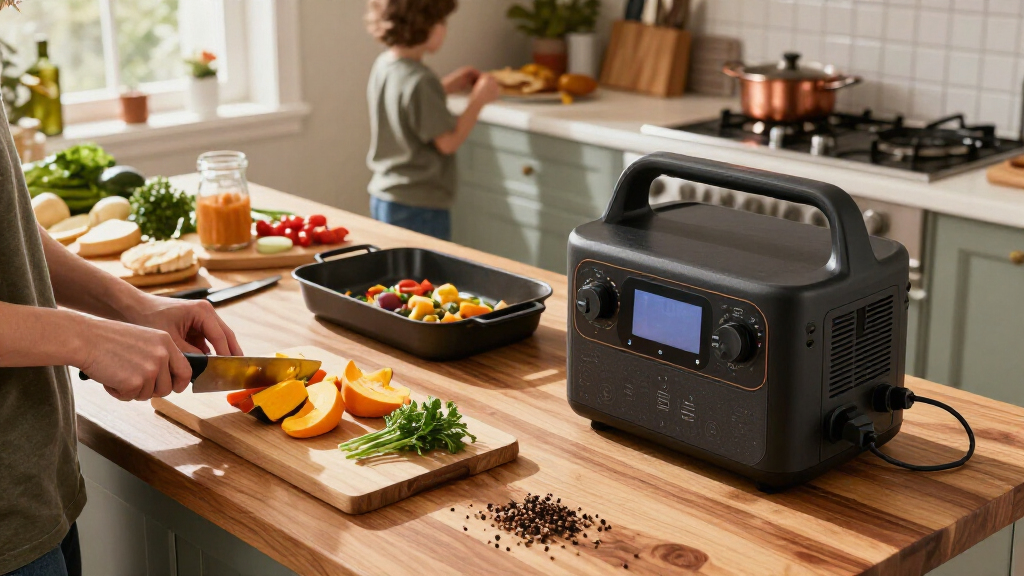
I ranked these stations around a Thanksgiving-specific question: can the unit support the appliances a buyer actually wants to run, for long enough to be useful? I weighed listed continuous output against common high-demand kitchen loads, then considered battery capacity, portability, and whether the model looks better suited to a single appliance, light backup, or a broader cooking setup. LiFePO4 chemistry was also a relevant factor where specified, since buyers often compare battery type when choosing a station for repeated seasonal use.
The order favors a balance of output and capacity rather than the largest number in any one spec. The EF ECOFLOW DELTA 3 Max leads for its combination of 2,400W and 2,048Wh; the Oukitel P2001 Pro ranks highly for its greater listed output, while the Jackery HomePower 3600 Plus is aimed at buyers who prioritize capacity. Smaller units rank lower for cooking because their output or stored energy can limit appliance choice and run time. I would check each appliance’s running and startup wattage, the station’s continuous AC rating, and its manual before buying; the supplied product details do not establish tested run times.
| portable power stations for Thanksgiving cooking | Battery type |
|---|---|
| Anker SOLIX C1000 Gen 2 Portab | LiFePO4 |
| PECRON F1000 LFP Portable Powe | — |
| DJI Power 1000 V2 Portable Pow | LFP |
| EF ECOFLOW DELTA 3 Max Portabl | LiFePO4 (LFP) |
| Jackery Explorer 300 Portable | — |
| Oukitel P2001 Pro Portable Pow | — |
| Jackery Explorer 2000 v2 Porta | LiFePO₄ |
| Jackery HomePower 3600 Plus Po | LFP |
| BLUETTI Elite 30 V2 Portable P | — |
| DARAN Portable Power Station | LiFePO₄ |
| CTOLITY AP1000 Portable Power | — |
| Anker SOLIX S2000 Portable Pow | LFP |
| Jackery Explorer 1000 v2 Porta | LiFePO4 (LFP) |
| LIBRIDS C600 Portable Power St | LiFePO4 |
| BailiBatt 600W Portable Power | — |
Factors to Consider When Choosing Portable Power Stations For Thanksgiving Cooking
Choosing a station for a holiday meal starts with the cooking plan, not the product’s headline capacity. These factors can help you avoid buying a unit that stores plenty of energy but cannot run your intended appliance, or carrying more weight and capacity than your setup needs.
Match Continuous Output to Your Appliances
List the appliances you want powered and find each one’s running wattage on its label or manual. Add the loads you expect to run at the same time, then compare that total with the station’s continuous output—not its surge figure. Heating appliances such as kettles and countertop ovens can draw substantial power, so a station that handles a phone charger may still be unsuitable for cooking. Motors and compressors can also need extra power at startup. If your total is close to the station’s limit, plan to run appliances one at a time or choose a higher-output unit.
Estimate Energy Use Across the Meal
Capacity, measured in watt-hours, gives a rough sense of how long a station can supply energy, but it does not equal guaranteed appliance run time. Multiply an appliance’s wattage by the hours you expect to use it for a rough energy estimate, then leave room for conversion losses and changes in appliance cycling. A 1,000Wh station may be plenty for short, intermittent use yet fall short for a long heating task. Buyers often focus on peak output and forget that sustained cooking drains the battery. When the meal depends on hours of heat, estimate each task separately and consider whether you can recharge between them.
Check Startup Loads and Appliance Compatibility
Some devices draw more power briefly when they start than they use while running. That spike can trip a station even when the appliance’s normal wattage seems to fit. Look for both the station’s continuous and surge ratings, but do not assume a surge number supports a high load for an extended period. If a cooking appliance has an unclear label, check its manual or contact its manufacturer before relying on a power station. I would also avoid planning to power multiple high-draw devices at once until their combined load is confirmed.
Plan for Charging and Recharging
A station’s value during a holiday meal depends partly on how you can refill it. Check the supported AC charging input, any solar charging limits, and the time required for the recharge method you expect to use. A fast recharge can help between cooking tasks, but it does not make a small battery behave like a larger one during sustained use. Solar can extend an outage setup when conditions allow, though weather and panel placement affect what it can deliver. If you need power for a full day, plan around the energy you can realistically replenish rather than assuming a charging option will always be available.
Balance Portability Against Capacity
High-capacity stations can support longer use, but they are often less convenient to carry between a garage, patio, and kitchen. Think about where the unit will sit, how far it must travel, and whether its size leaves safe clearance from heat and moisture. A compact station can be easier to position, but its lower capacity usually makes it a better match for electronics or small loads than extended cooking. Do not select a model based on capacity alone if one person needs to move it. For a fixed backup spot, portability may matter less than output and stored energy.
Treat Safety and Operating Conditions as Part of the Setup
Portable power stations should be operated according to their manuals, with ventilation and separation from hot surfaces, splashes, and outdoor weather. They are not a substitute for a properly installed home backup system, and they should not be used to power household circuits through improvised connections. Check the device’s temperature limits, charging guidance, and approved cables before setting up near a busy cooking area. Keep cords routed where guests will not trip over them, and avoid overloading outlets or adapters. A sensible setup can matter as much as choosing a station with enough output.
Frequently Asked Questions
Can a portable power station run an electric oven for Thanksgiving?
Possibly, but the oven’s rated wattage and the station’s continuous AC output determine whether the pairing works. Many ovens draw more power than compact stations can supply, and prolonged heating can use a large share of the battery. Check the oven’s manual for its electrical demand and compare it with the station’s continuous rating, not just its surge figure. Then estimate energy use for the time you plan to cook. If either figure is close to the station’s limit, do not count on that setup without confirmation from the manufacturers.
Is a 1,000Wh station enough for Thanksgiving cooking?
It can support selected tasks, but 1,000Wh does not automatically mean it can power a full meal. A brief, lower-wattage appliance use may fit, while a high-draw device running for a long period can consume the available energy quickly. Output also matters: the appliance must stay below the station’s continuous wattage limit. Add up planned loads and estimate their operating time before deciding. For a multi-appliance cooking plan, a larger-capacity and higher-output model may be a better match.
Should I choose more watt-hours or more watts?
Choose based on the failure you most need to avoid. More watts help a station run appliances with high operating or startup demands, while more watt-hours can keep compatible loads running longer. A high-capacity unit with modest output may still reject a powerful kitchen appliance; a high-output unit with limited capacity may run it only briefly. Compare both figures with your appliance list and expected cooking time. If you have not chosen appliances yet, a balanced model is usually easier to plan around than an extreme in only one specification.
Can I run a kettle and a countertop oven from one power station at the same time?
Only if their combined running load stays below the station’s continuous output and their startup demands are supported. Add the wattages from both appliance labels, then check the station’s manual for AC output limits and any restrictions on individual outlets. High-draw devices can use battery energy quickly even when the station can power them. Running them one at a time may reduce the output requirement, though total energy use still matters. When the load is near the limit or specifications are unclear, use separate power sources or confirm compatibility with the manufacturers.
Can I recharge a power station while it is powering kitchen appliances?
Some stations support pass-through charging, but the exact behavior and limits vary by model. Check the manual to see whether charging and AC output can operate at the same time, whether output is reduced, and which charging methods are supported. The incoming power may not keep pace with a high-demand appliance, so the battery can still drain during use. Do not assume solar or a wall connection will make a limited-capacity station suitable for all-day cooking. For a holiday setup, test the planned charging arrangement with the intended loads before relying on it.
Conclusion
For the broadest balance of cooking output and battery capacity in this lineup, I’d start with the EF ECOFLOW DELTA 3 Max as the best overall pick. The PECRON F1000 LFP is a more modest-capacity option to compare for buyers whose appliance plan is limited, while the Jackery HomePower 3600 Plus is the best premium fit for those who prioritize the largest listed capacity. For beginners, I’d favor a model whose output clearly exceeds the needs of a small, defined appliance plan rather than starting with a compact 288–293Wh unit for cooking. If your specific need is high output, compare the Oukitel P2001 Pro’s 3,200W rating with your appliance requirements; for phones, lights, and other small loads, the compact BLUETTI Elite 30 V2 or similar units may be easier to manage. Before choosing, check your appliances’ wattage, estimate their runtime, and confirm compatibility in the manuals.