To test your generator quietly at 23 feet, set up on a flat, open surface and verify all maintenance is complete. Use a calibrated sound level meter at ear level, positioned according to environmental conditions, avoiding reflective surfaces and external noise. Run the generator normally and record stabilized decibel levels. Avoid common mistakes like improper calibration or poor placement. If you keep following best practices, you’ll effectively measure noise and ensure your generator remains compliant and peaceful—more details ahead.

Get backup power and energy gear delivered free — and shop member deals
- Fast, free delivery on millions of items
- Access to Prime Big Deal Days deals on October 6–7
- Prime Video, Amazon Music and more included
Key Takeaways
- Position the sound level meter at 23 feet, ear level, in a quiet, open environment to ensure accurate noise measurements.
- Use a calibrated sound level meter and verify proper setup to prevent measurement inaccuracies.
- Run the generator under normal load, allowing sound levels to stabilize before recording readings.
- Maintain proper generator maintenance and environmental factors to prevent increased noise emissions.
- Repeat tests and compare results against standard noise limits for responsible noise management and compliance.
Why Testing at 23 Feet Matters for Quiet Generators
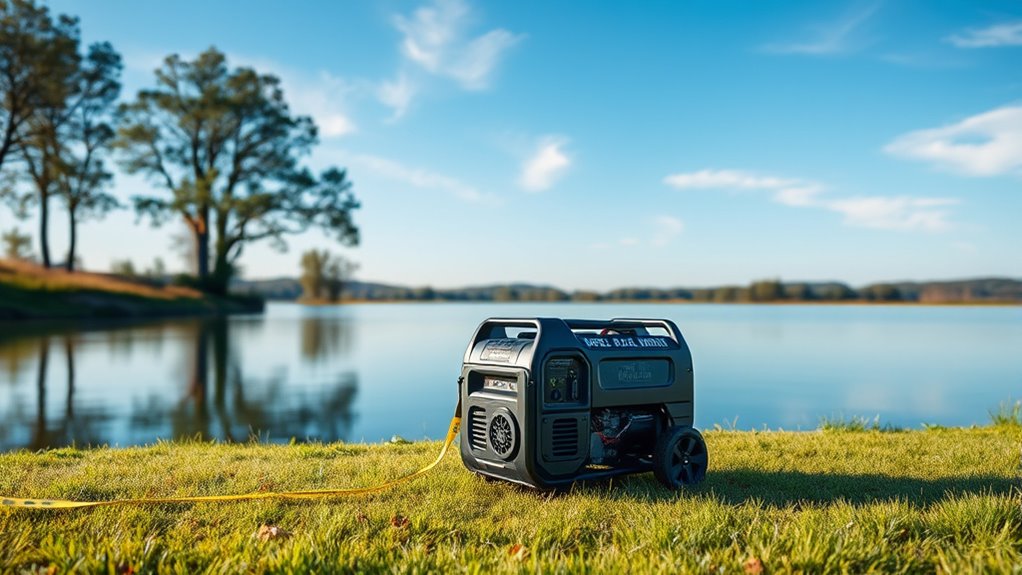
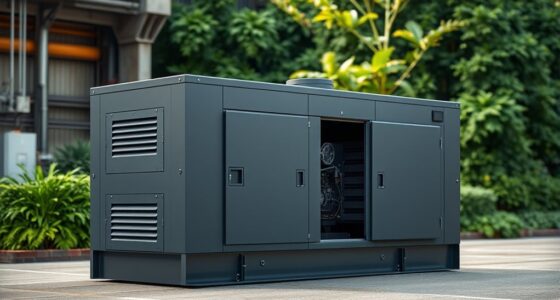
Testing quiet generators at 23 feet is essential because it closely simulates real-world conditions where people typically experience noise. Proper generator placement plays a key role in noise mitigation, making this distance ideal for realistic measurements. When you position the generator at this distance, you get an accurate sense of how loud it will sound during everyday use, helping you evaluate its impact on nearby spaces. This testing distance accounts for factors like reflection and absorption that influence noise levels, ensuring your measurements reflect actual sound levels in typical environments. Additionally, understanding the importance of acoustic performance can help you select and position generators more effectively. By focusing on this specific distance, you can better assess whether a generator’s noise output aligns with your quiet operation needs, leading to smarter placement choices and effective noise control.
Understanding Noise Levels and Decibel Measurements
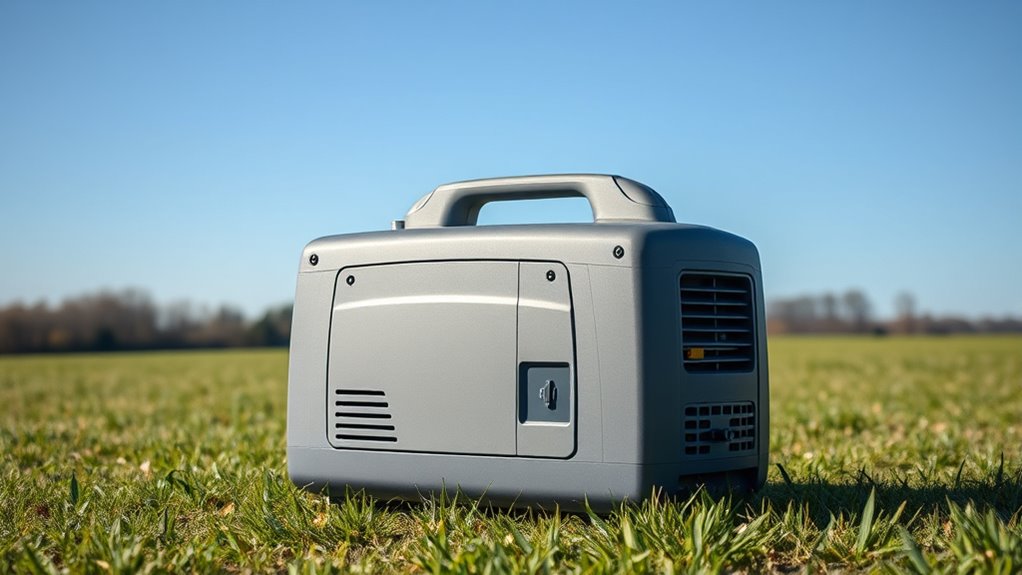
Understanding noise levels and decibel measurements is essential because it helps you quantify how loud a generator truly is. Decibels (dB) are the standard unit used in acoustic engineering to gauge sound intensity. Recognizing these measurements enables you to evaluate noise pollution effectively and take into account compliance with regulations. Here are key points to think about:
- Decibel Scale: It’s logarithmic, meaning a small increase in decibels can represent a significant rise in perceived loudness.
- Measurement Distance: Noise levels vary with distance; testing at 23 feet provides a realistic assessment of typical exposure.
- Environmental Factors: Surrounding structures and ambient noise influence measurements, so understanding these helps in accurate assessments.
Mastering decibel readings empowers you to manage generator noise responsibly and minimize environmental impact.
Preparing Your Generator for Accurate Testing
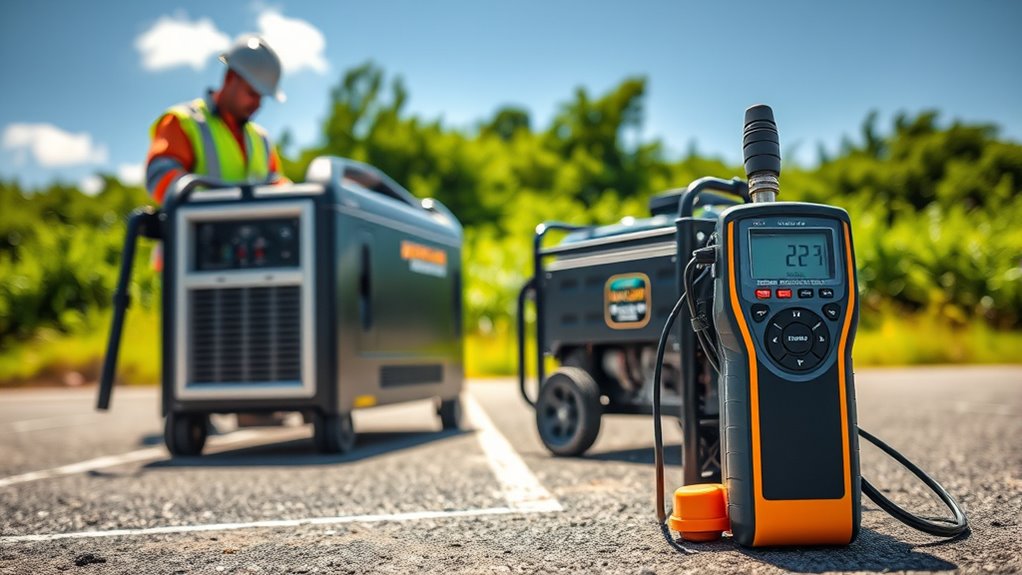
To guarantee your noise measurements are accurate, proper preparation of your generator before testing is key. First, check your fuel type—whether gasoline, diesel, or propane—and ensure it’s clean and fresh. Stale or contaminated fuel can cause irregular engine operation, skewing noise levels. Next, review your maintenance schedule; perform any overdue tasks like oil changes, air filter replacements, or spark plug checks. A well-maintained generator runs smoothly and produces consistent noise levels. Also, ensure the generator is on a stable, level surface and has cooled down from prior use. Tighten any loose bolts and inspect for leaks. Properly preparing your generator minimizes variables that could affect sound measurements, giving you reliable, accurate test results.
Essential Equipment and Tools for Noise Testing
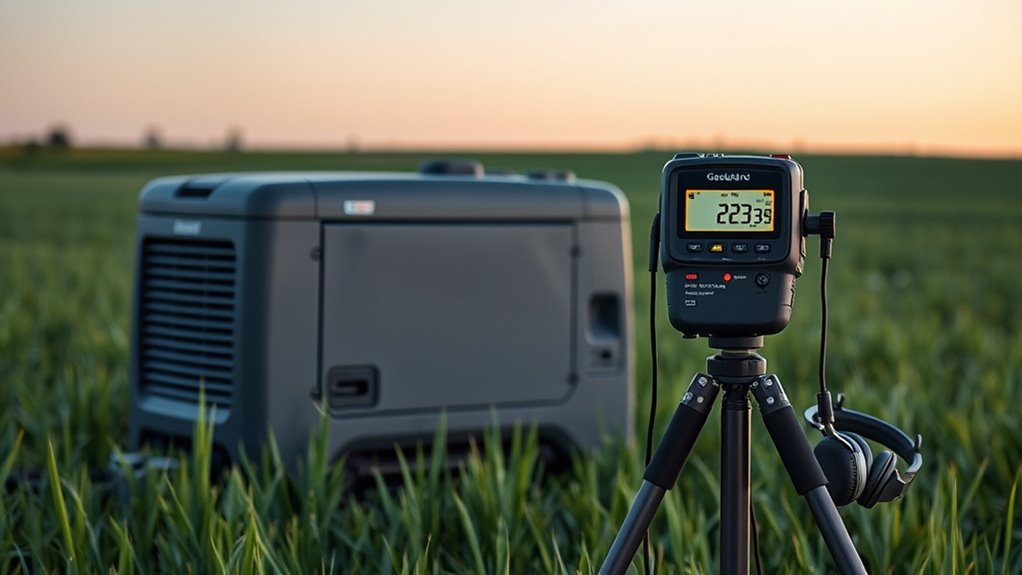
Having the right equipment is vital for obtaining accurate noise measurements from your generator. First, you need a reliable sound level meter, ideally a calibrated device, to guarantee precise readings. Second, a quality calibration equipment is essential for verifying your sound level meter’s accuracy before testing. Third, consider using a soundproof enclosure or barriers to minimize external noise interference during measurements. These tools help create a controlled environment, making certain your data reflects the generator’s true noise output. Proper calibration equipment guarantees your measurements are consistent and reliable. Investing in high-quality soundproof enclosures and precision calibration tools improves test accuracy, giving you confidence in your noise level assessments at 23 feet. Without these essentials, your results could be compromised or misleading. Additionally, understanding soundproofing techniques can further enhance measurement accuracy by reducing ambient noise.
Step-by-Step Guide to Conducting the Noise Test
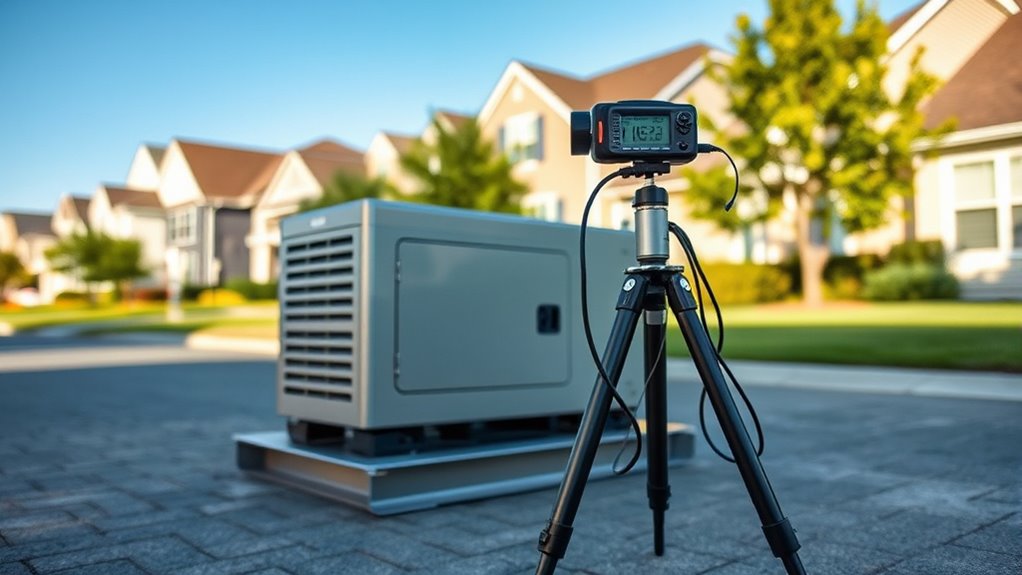
Start by preparing the testing area to guarantee accurate sound measurements and minimize background noise. Next, position your sound level meter at 23 feet from the generator, following standard guidelines. To ensure consistent results, double-check that the environment is free of other ambient noises that could interfere with the measurement. Finally, measure the sound levels carefully, recording the data for analysis.
Preparing the Testing Area
Before you begin testing, make sure the area is prepared to minimize external noise and interference. Clear the space of any distractions and set up a quiet environment. Focus on essential equipment setup and safety precautions to ensure accurate results and safe operation.
Consider these steps:
- Choose a flat, open space away from traffic and other noise sources.
- Position the microphone at 23 feet from the generator, ensuring it’s stable and unobstructed.
- Confirm that all electrical connections are secure, and safety precautions like grounding and fire safety are in place.
Proper preparation helps prevent measurement errors and keeps you safe during testing. Taking these initial steps ensures your noise measurements are precise and reliable.
Measuring Sound Levels
To accurately measure sound levels during your noise test, you need to follow a precise, step-by-step process. First, set your sound level meter at 23 feet from the generator, ensuring it’s at ear level. Turn on the generator and allow it to run normally. Use soundproofing techniques like positioning barriers or natural obstructions to minimize noise pollution reflections. Record the decibel reading once the generator stabilizes. Repeat measurements at different times or angles if needed for consistency. Keep a detailed log of your readings to compare results later. Properly measuring sound levels helps identify if your generator meets noise pollution standards. Accurate data ensures you can implement effective soundproofing techniques to reduce noise and improve overall quietness. Additionally, understanding remote work benefits, such as increased flexibility and productivity, can motivate you to create a quieter, more efficient workspace at home.
Interpreting the Results and Ensuring Compliance
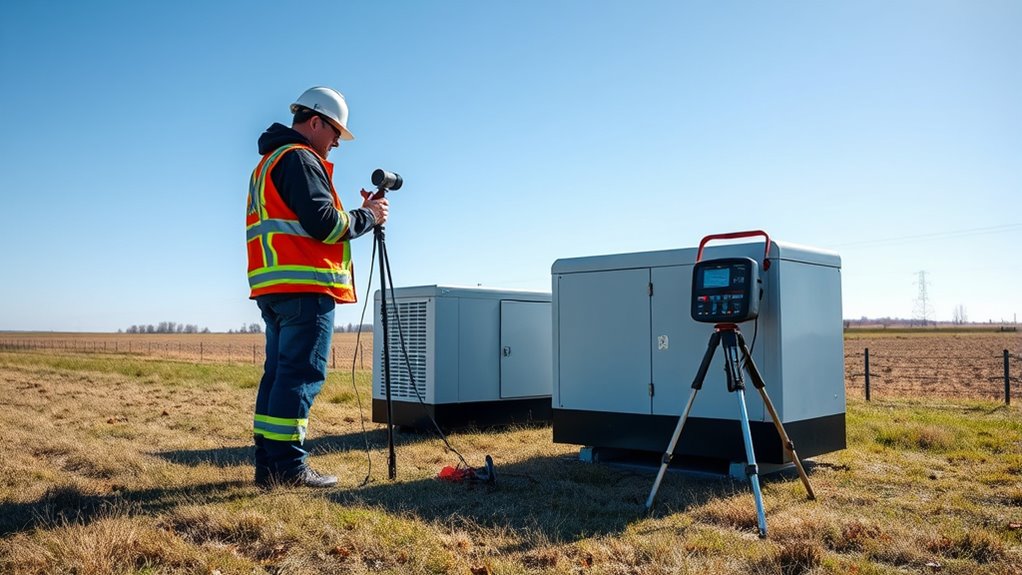
Once you’ve completed the noise test, it’s essential to compare your results against sound level standards to see if they meet regulations. You need to verify that the noise limits at 23 feet are within acceptable ranges to guarantee compliance. By doing so, you’ll confirm whether your generator operates quietly enough for your environment. Incorporating home improvement strategies, such as proper placement and soundproofing, can further help in maintaining compliance and reducing noise impact.
Sound Level Standards
Understanding sound level standards is essential for evaluating whether a generator meets regulatory requirements and operates quietly enough for its environment. These standards specify maximum permissible noise levels, often measured at a specific distance like 23 feet. To ensure compliance:
- Check the local or industry-specific noise regulations for your area.
- Compare your test results against these standards to confirm regulatory compliance.
- Evaluate sound insulation features that can reduce noise transmission, enhancing quiet operation.
- Incorporate sound design techniques to minimize disturbance and improve acoustic performance.
Adhering to these standards guarantees your generator minimizes disturbance and meets legal requirements. Proper interpretation of the noise limits, combined with effective sound insulation, helps you maintain a quiet environment while complying with regulations. Always verify your measurements against the standards to avoid penalties and ensure peak performance.
Verifying Noise Limits
After reviewing the sound level standards relevant to your generator, it’s important to accurately interpret your test results to determine compliance. Check if the measured noise levels at 23 feet stay within the permitted decibel limits. If they’re below the threshold, your generator passes; if not, adjustments are needed. Confirm your testing conditions match real-world operation for accurate results. Remember, consistent noise levels can also impact fuel efficiency because louder operation may indicate inefficiencies or maintenance issues. Regularly reviewing your maintenance schedules can help keep noise levels down and maintain compliance. If your generator exceeds the limits, consider troubleshooting or upgrading components to reduce sound emissions. Understanding GMC tuning techniques can also be useful in minimizing engine noise and optimizing performance. Correct interpretation of results ensures you’re compliant, efficient, and minimizing disruption to your environment.
Common Mistakes to Avoid During Testing

Failing to prepare properly is one of the most common mistakes during quiet generator testing. Overlooking safety can lead to accidents or injuries, so always make sure your testing area is secure and clear of hazards. Neglecting calibration is another mistake; if your equipment isn’t calibrated correctly, your noise measurements won’t be accurate. To avoid these issues, follow these steps:
- Double-check safety protocols and personal protective gear before starting.
- Verify that your sound level meter is properly calibrated according to manufacturer instructions.
- Review testing procedures to ensure all equipment is set up correctly and functioning.
- Be aware of measurement accuracy and how it impacts your test results to ensure reliable data.
Tips for Maintaining Quiet Operation Over Time
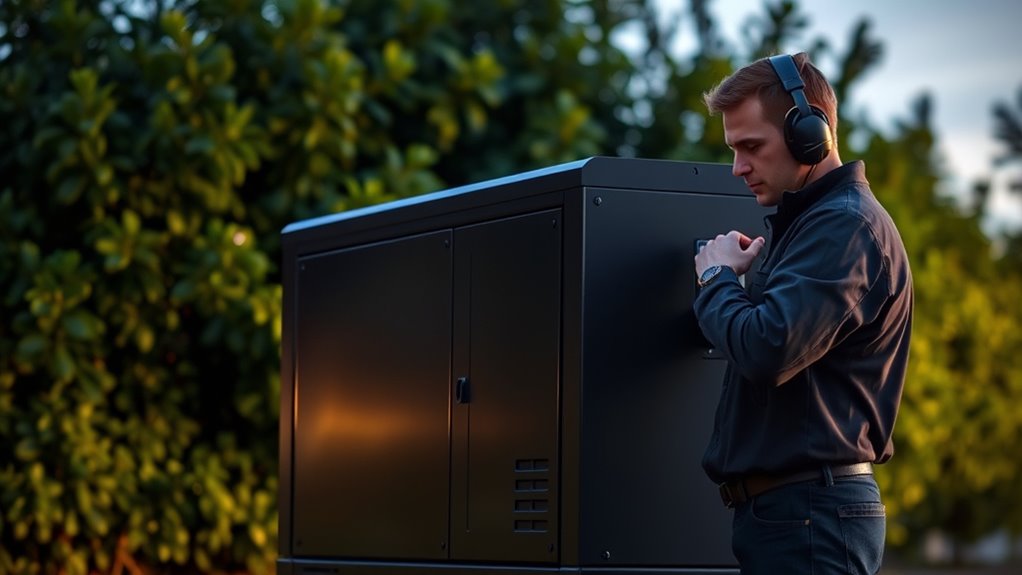
To keep your generator operating quietly over time, regular maintenance is essential. Follow a consistent maintenance schedule to prevent issues that can increase noise levels, such as clogged filters or worn parts. Regularly check and replace air filters to improve fuel efficiency and reduce engine strain, which helps keep operation quieter. Keep the fuel system clean and free of debris to prevent inefficient combustion that can cause loud knocking or vibrations. Lubricate moving parts as recommended to minimize friction and noise. Monitoring fuel consumption can also alert you to potential problems early. By sticking to these maintenance routines, you guarantee your generator runs smoothly and quietly for years, maintaining ideal fuel efficiency and minimizing noise disruptions at 23 feet.
Additional Considerations for Different Environments
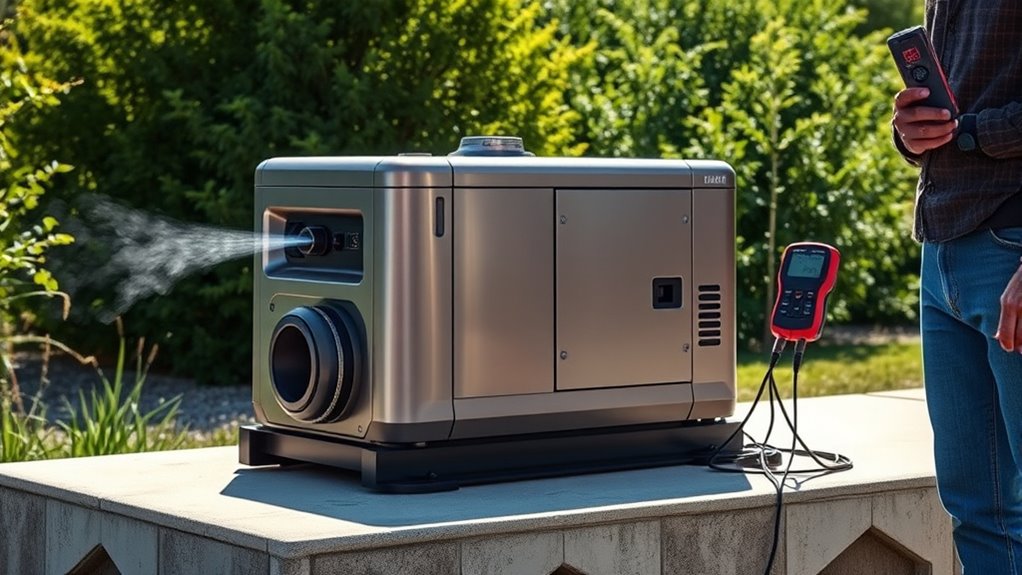
Different environments can considerably impact your generator’s noise levels and performance. In urban environments, buildings and narrow streets can reflect sound, increasing perceived noise. In outdoor settings, wind, terrain, and foliage can either dampen or amplify noise, affecting your measurements. To adapt:
Environmental factors like buildings, terrain, and foliage significantly influence generator noise levels and performance.
- Urban environments: Position your generator away from walls and reflective surfaces to minimize sound reflection.
- Outdoor settings: Choose a flat, open area to reduce sound distortion caused by uneven terrain or vegetation.
- General tips: Use barriers or natural foliage to absorb noise and shield equipment from wind interference. Being aware of noise reflection, which can significantly alter your noise level measurements, is essential for accurate testing.
Frequently Asked Questions
How Do Ambient Noise Levels Affect the Accuracy of the Test?
Ambient noise levels can substantially impact your test accuracy if you don’t account for noise calibration. When using sound level meters, verify they’re properly calibrated to the background noise. High ambient noise can mask generator sounds, leading to inaccurate readings. To get precise results, perform tests in a quiet environment or adjust your measurements to subtract ambient noise, guaranteeing your generator’s noise levels are accurately recorded.
Can Weather Conditions Influence Noise Measurement Results?
Weather variability can definitely influence noise measurement results. Wind, rain, or humidity can distort sound levels, making your readings less accurate. Additionally, changing weather conditions may affect equipment calibration, leading to inconsistent results. To guarantee precision, you should monitor weather patterns closely and calibrate your measuring equipment regularly, especially before testing, to account for environmental factors and maintain reliable noise level assessments.
What Safety Precautions Should Be Taken During Noise Testing?
During noise testing, you should wear ear protection to prevent hearing damage and guarantee accurate results. Make sure to establish a secure area, keeping bystanders at a safe distance from the generator. Use barriers if necessary, and follow all safety guidelines to prevent accidents. Always check weather conditions beforehand, as they can influence noise levels and safety. Prioritizing safety measures helps you conduct effective, damage-free noise testing.
Are There Specific Regulations Governing Noise Testing at 23 Feet?
You won’t believe it, but yes, there are strict regulations governing noise testing at 23 feet! You need to follow specific testing standards to guarantee regulatory compliance, which can feel like steering through a maze of rules. These standards specify acceptable noise levels and testing procedures, making sure your generator’s noise output meets legal limits. Ignoring them isn’t just risky; it could lead to hefty fines or failed inspections, so play by the rules!
How Often Should Noise Testing Be Repeated for Reliable Data?
You should repeat noise testing at least annually to guarantee reliable data. Regular testing helps verify that your equipment calibration remains accurate over time. Depending on your specific regulations or operational needs, more frequent testing—such as semi-annual or quarterly—may be required. Consistent testing frequency allows you to identify any deviations early, maintaining compliance and confidence in your noise measurements, especially when evaluating generator performance at 23 feet.
Conclusion
By understanding noise levels, preparing properly, and following each step carefully, you guarantee accurate testing and compliance. Monitoring your generator’s noise, avoiding common mistakes, and maintaining regular checks help keep it quiet over time. Staying consistent, staying informed, and staying proactive are your keys to peaceful operation. With these practices, you’ll enjoy reliable, quiet performance, peace of mind, and a healthier environment—all at 23 feet. Keep testing, keep improving, and keep your generator silent and efficient.
Evergreen bestsellers Picks
bestsellers
As an affiliate, we earn on qualifying purchases.