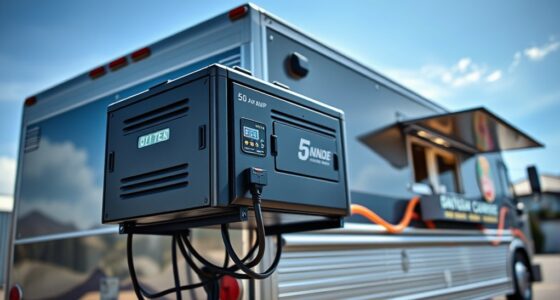

Choosing the right watt inverter generator for food truck operations requires balancing raw power output with the clean energy needed for sensitive electronics. My top pick, the Champion 11,000-Watt Portable Inverter Generator, stands out for its ability to run heavy-duty refrigeration and cooking appliances simultaneously without risking voltage spikes. For those needing flexibility, the Westinghouse iGen12000DFc offers dual-fuel capability, allowing operators to switch between gasoline and propane when fuel availability fluctuates. The primary tradeoff you will face is between noise levels and runtime capacity, as quieter models often require more frequent refueling or larger, heavier units. Continue reading to see how these thirteen models stack up against specific food truck needs.

Get backup power and energy gear delivered free with Prime
- Fast, free delivery on millions of items
- Prime Video, Amazon Music and more included
- Member-only deals all year
Complete the kit


Key Takeaways
- Dual-fuel capability is not just a convenience feature; it provides critical operational resilience when one fuel type becomes scarce or expensive.
- True inverter technology is non-negotiable for food trucks with digital POS systems and LED lighting, as standard generators can damage sensitive electronics.
- Weight is a significant barrier; models over 200 pounds often require two people or a loading dock for daily setup and teardown.
- CO sensors are increasingly standard on premium units, adding a layer of safety that is vital for enclosed or semi-enclosed service windows.
- Parallel capability allows two smaller, lighter generators to match the output of one heavy-duty unit, offering better portability and redundancy.
| maXpeedingrods MXR5000 5000-Watt Inverter Generator |  | Best Value for a Small Food Truck | Starting wattage: 5,000 watts | Running wattage: 4,000 watts | Fuel: Gasoline | VIEW ON AMAZON | See Our Full Breakdown |
| Champion 11,000-Watt Portable Inverter Generator with Wireless Remote Start |  | Best for High-Demand Food Trucks | Starting wattage: 11,000 watts | Running wattage: 9,000 watts | Fuel and tank: Gasoline; 6.1 gallons | VIEW ON AMAZON | See Our Full Breakdown |
| Champion 4000-Watt Dual-Fuel RV-Ready Portable Inverter Generator |  | Best for Flexible Fueling | Starting wattage: 4,000 watts | Running wattage: 3,000 watts gasoline; 2,700 watts propane | Fuel types: Gasoline and propane | VIEW ON AMAZON | See Our Full Breakdown |
| WEN DF360iX 3600-Watt Dual-Fuel Portable Inverter Generator |  | Best Compact Dual-Fuel Pick | Surge output: 3,600 watts gasoline; 3,500 watts propane | Fuel types: Gasoline and propane | Engine displacement: 149 cc | VIEW ON AMAZON | See Our Full Breakdown |
| AIVOLT 11,250W Dual-Fuel Inverter Generator with 50A Outlet |  | Best for Long Shifts and Dual-Fuel Backup | Starting wattage: 11,250 watts gasoline; 10,570 watts propane | Running wattage: 9,000 watts gasoline; 8,540 watts propane | Fuel: Gasoline and propane | VIEW ON AMAZON | See Our Full Breakdown |
| RINADURS RAD 6000iE Gas-Powered Inverter Generator |  | Best Straightforward 5,000-Watt Gas Pick | Fuel: Gasoline | Running output: 5,000 watts | Starting output: 5,500 watts listed | VIEW ON AMAZON | See Our Full Breakdown |
| Westinghouse iGen12000DFc Dual Fuel Portable Inverter Generator |  | Best for High-Load Food Trucks | Fuel: Gasoline and propane | Running output: 9,000 W gasoline; 8,100 W propane | Peak output: 12,000 W gasoline; 11,000 W propane | VIEW ON AMAZON | See Our Full Breakdown |
| WEN DF480iX 4800-Watt Dual-Fuel Portable Inverter Generator |  | Best Dual-Fuel Choice for Lighter Setups | Fuel types: Gasoline and propane | Surge output: 4,800 W gasoline; 4,320 W propane | Engine: 224 cc | VIEW ON AMAZON | See Our Full Breakdown |
| Westinghouse iGen2550 Portable Inverter Generator |  | Best Compact Backup for Small Loads | Fuel: Gasoline | Running output: 1,900 watts | Peak output: 2,550 watts | VIEW ON AMAZON | See Our Full Breakdown |
| Westinghouse iGen8200TFc Tri-Fuel Portable Inverter Generator |  | Best Fuel Flexibility for Mobile Operators | Fuel types: Gasoline, propane, natural gas | Gasoline output: 8,200 W peak; 6,600 W running | Propane output: 7,380 W peak; 5,940 W running | VIEW ON AMAZON | See Our Full Breakdown |
| PowerSmart 3800-Watt Dual-Fuel Inverter Generator | 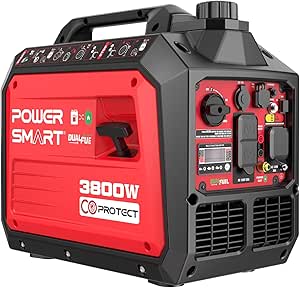 | Best for Compact Dual-Fuel Setups | Fuel types: Gasoline and propane | Starting wattage: 3,800 watts gasoline; 3,500 watts propane | Running wattage: 3,300 watts gasoline; 3,100 watts propane | VIEW ON AMAZON | See Our Full Breakdown |
| WEN DF680iX 6800-Watt Dual-Fuel Portable Inverter Generator |  | Best for Higher-Demand Dual-Fuel Operation | Fuel types: Gasoline and propane | Gasoline output: 6,800 surge watts; 5,100 rated watts | Propane output: 6,000 surge watts; 4,500 rated watts | VIEW ON AMAZON | See Our Full Breakdown |
| Westinghouse ecoGen10000 Portable Inverter Generator with CO Sensor |  | Best for High-Output Gasoline Power | Fuel type: Gasoline | Running wattage: 7,600 watts | Peak wattage: 10,000 watts | VIEW ON AMAZON | See Our Full Breakdown |
| watt inverter generator for food truck | Engine | Warranty | Runtime | Noise level |
|---|---|---|---|---|
| maXpeedingrods MXR5000 5000-Wa | 160 cc, 4-stroke | 2 years | — | — |
| Champion 11,000-Watt Portable | 459 cc, 4-stroke, single-cylinder OHV | 3-year limited warranty with lifetime technical support | Up to 15 hours at 25% load | 64 dBA at 23 feet |
| Champion 4000-Watt Dual-Fuel R | 149 cc, 4-stroke | 3-year limited warranty with lifetime technical support | Gasoline: up to 10 hours; propane: up to 25 hours, both at 25% load | 64 dBA at 23 feet |
| WEN DF360iX 3600-Watt Dual-Fue | — | 3 years | Up to 5 hours at half load on gasoline; up to 14 hours at half load on a 20-pound LPG tank | 65 dB at quarter load |
| AIVOLT 11,250W Dual-Fuel Inver | 459 cc, 4-stroke | 2 years | — | 60 dBA at 23 feet and 25% load |
| RINADURS RAD 6000iE Gas-Powere | 223 cc, 4-stroke | 1 year | — | — |
| Westinghouse iGen12000DFc Dual | 457 cc, 4-stroke OHV | 3-year limited warranty | Up to 19 hours at 25% load on gasoline | — |
| WEN DF480iX 4800-Watt Dual-Fue | 224 cc | 3-year limited warranty | Up to 7 hours at half load on gasoline; up to 20 hours at half load on a 20-pound LPG tank | 62 dB at quarter load |
| Westinghouse iGen2550 Portable | 80 cc, 4-stroke OHV | — | Up to 11 hours | As low as 52 dBA |
| Westinghouse iGen8200TFc Tri-F | 298 cc, 4-stroke OHV | — | Up to 17 hours at 25% load | — |
| PowerSmart 3800-Watt Dual-Fuel | 149cc 4-stroke | — | Up to 8 hours at 25% load on gasoline; up to 24 hours on a 20-pound propane tank | 59 dBA at 25% load in Eco Mode |
| WEN DF680iX 6800-Watt Dual-Fue | 224cc | Three-year limited warranty | Up to 6.1 hours at half load on gasoline; up to 9 hours at half load on a 20-pound propane tank | 64 dB at quarter load |
| Westinghouse ecoGen10000 Porta | 420cc 4-stroke OHV | Three-year limited warranty | Up to 12 hours | — |
More Details on Our Top Picks
maXpeedingrods MXR5000 5000-Watt Inverter Generator
The MXR5000 is a practical fit for a food truck with a modest electrical load: its 4,000 running watts can support selected appliances and service equipment, while pure sine wave output is suited to sensitive electronics. It is a simpler, lower-output choice than the Champion 11,000-Watt Portable Inverter Generator, which is better suited to several high-draw appliances running together. The tradeoff is limited connection flexibility: the listed data gives just two power outlets, so check that your equipment can connect safely without relying on extra distribution hardware. Its gasoline engine also means carrying and replenishing fuel, and the product details do not specify noise level or runtime. I’d choose it for a compact operation that prioritizes basic capacity and protective features over extended service or abundant outlets.
Pros:- 4,000 running watts offer useful capacity for a modest food-truck setup.
- Pure sine wave output is suited to sensitive electronics.
- ECO mode can adjust fuel consumption to demand.
- CO sensor and overload protection add safety and equipment safeguards.
Cons:- Gasoline-only operation requires fuel storage and replenishment.
- Only two power outlets are listed, limiting connection flexibility.
- Noise level and runtime are not provided in the product details.
Best for: Owner-operators with a compact menu and a measured load that stays within 4,000 running watts.
Not ideal for: Trucks running several high-draw cooking appliances at once, or operators who need documented runtime, noise figures, or multiple outlet options.
- Starting wattage:5,000 watts
- Running wattage:4,000 watts
- Fuel:Gasoline
- Engine:160 cc, 4-stroke
- Power outlets:2
- Features:CO sensor, hour meter, overload protection, USB port
- Warranty:2 years
Our verdict“Choose the MXR5000 for a small, carefully load-managed truck that needs 4,000 running watts without the larger Champion 11,000-Watt unit’s capacity.”
Champion 11,000-Watt Portable Inverter Generator with Wireless Remote Start
For a food truck with multiple substantial electrical loads, the Champion 11,000-Watt gives the strongest documented running capacity in this group: 9,000 watts. That headroom can make it a better match than the maXpeedingrods MXR5000 when cooking equipment, refrigeration, and service systems need to operate together, though a load calculation is still necessary. Its wireless remote and electric start can make startup easier when the generator is positioned away from the operator, and the 6.1-gallon tank is rated for up to 15 hours at 25% load. That runtime figure is at light load, not a promise for a busy service shift. At 64 dBA at 23 feet, it is also not a quiet choice for crowded vending areas; its size and fuel use warrant planning for placement and refueling.
Pros:- 9,000 running watts provide substantially more capacity than the MXR5000.
- Wireless remote and electric start simplify starting from a distance.
- Up to 15 hours of runtime is specified at 25% load.
- Less than 3% THD and CO Shield automatic shutoff are useful for electronics and safety.
Cons:- The stated 64 dBA noise level may be intrusive at a vending location.
- Gasoline exhaust requires outdoor operation and careful placement.
- The 15-hour figure is at 25% load, so heavy service use can shorten runtime.
Best for: Food-truck operators with several high-demand appliances who need up to 9,000 running watts and remote starting.
Not ideal for: Small trucks with limited electrical needs or vendors who must keep generator noise low near customers.
- Starting wattage:11,000 watts
- Running wattage:9,000 watts
- Fuel and tank:Gasoline; 6.1 gallons
- Runtime:Up to 15 hours at 25% load
- Noise level:64 dBA at 23 feet
- Engine:459 cc, 4-stroke, single-cylinder OHV
- Starting system:Wireless remote and electric start
- Power quality:Less than 3% THD
- Warranty:3-year limited warranty with lifetime technical support
Our verdict“Pick this Champion when your truck’s calculated load calls for high output and remote start, and you can accommodate its noise and gasoline requirements.”
Champion 4000-Watt Dual-Fuel RV-Ready Portable Inverter Generator
The standout reason to consider this Champion dual-fuel model is the choice between gasoline and propane. For a food-truck operator who already carries propane for cooking, that flexibility may simplify fuel planning; gasoline delivers 3,000 running watts, while propane output drops to 2,700. It is far below the Champion 11,000-Watt Portable Inverter Generator in capacity, so it suits a limited electrical load rather than a truck running several power-hungry appliances. At less than 55 pounds, it is easier to move than the larger Champion, and its TT-30R outlet and clean-power specification suit compatible equipment. Propane runtime is listed as up to 25 hours at 25% load, but that light-load figure should not be mistaken for a full service shift. Parallel operation requires a separately sold kit.
Pros:- Gasoline and propane operation offers flexibility in fuel planning.
- Less than 55 pounds makes it more portable than the 11,000-watt Champion.
- Less than 3% THD is suited to sensitive electronics.
- CO Shield and an RV-ready TT-30R outlet add useful safety and connection options.
Cons:- Running output tops out at 3,000 watts on gasoline and 2,700 on propane.
- Propane output is lower than gasoline output.
- Parallel kit is sold separately if more capacity is needed.
Best for: Vendors with a modest electrical load who already use propane and want a portable generator with two fuel options.
Not ideal for: Operators needing more than 3,000 running watts on gasoline or planning to power multiple high-draw appliances concurrently.
- Starting wattage:4,000 watts
- Running wattage:3,000 watts gasoline; 2,700 watts propane
- Fuel types:Gasoline and propane
- Runtime:Gasoline: up to 10 hours; propane: up to 25 hours, both at 25% load
- Noise level:64 dBA at 23 feet
- Engine:149 cc, 4-stroke
- Weight:Less than 55 pounds
- Power quality:Less than 3% THD
- Warranty:3-year limited warranty with lifetime technical support
Our verdict“Choose this Champion for a lighter, dual-fuel setup with a modest load, not for a truck whose appliances demand the 9,000 running watts of its larger sibling.”
WEN DF360iX 3600-Watt Dual-Fuel Portable Inverter Generator
At 49 pounds, the WEN DF360iX is the easiest option here to prioritize when moving and stowing a generator matters as much as its output. It provides 2,900 rated watts on gasoline or 2,600 on propane, placing it below the Champion 4000-Watt in running capacity but close in role: a portable source for a deliberately limited load. Its two 120 V household receptacles, TT-30R, DC outlet, and USB ports give operators several connection types, though outlet variety does not increase the generator’s total capacity. WEN lists up to five hours at half load on gasoline, shorter than the Champion’s stated gasoline runtime at 25% load; these figures use different loads and are not directly equivalent. For longer service, propane is an option, but runtime still depends on demand and tank size.
Pros:- At 49 pounds, it is lighter than the Champion 4000-Watt model.
- Gasoline and propane operation gives fuel-choice flexibility.
- Includes household, RV, DC, and USB connection options.
- CO shutdown and fuel shutoff add safety and fuel-management features.
Cons:- Rated output is limited to 2,900 watts on gasoline and 2,600 on propane.
- Gasoline runtime is listed as up to five hours at half load.
- Parallel connection kit is sold separately.
Best for: Solo vendors or compact-truck operators who need a lighter dual-fuel generator for a small, measured electrical load.
Not ideal for: Food trucks running multiple high-draw appliances or needing longer gasoline runtime at substantial loads.
- Surge output:3,600 watts gasoline; 3,500 watts propane
- Fuel types:Gasoline and propane
- Engine displacement:149 cc
- Noise level:65 dB at quarter load
- Runtime:Up to 5 hours at half load on gasoline; up to 14 hours at half load on a 20-pound LPG tank
- Weight:49 pounds
- Outlets:Two 120 V NEMA 5-20R, one 120 V TT-30R, one 12 V DC, two 5 V USB
- Warranty:3 years
Our verdict“Choose the DF360iX when low weight and multiple fuel choices matter more than the Champion 4000-Watt’s higher running output.”
AIVOLT 11,250W Dual-Fuel Inverter Generator with 50A Outlet
The AIVOLT pairs high output with dual-fuel capability: it is rated for 9,000 running watts on gasoline and 8,540 on propane, putting it in the same high-capacity class as the Champion 11,000-Watt rather than the smaller portable Champions. Its listed 50A outlet and ATS compatibility may suit a truck or backup setup designed around those connections, but buyers should verify their equipment’s electrical requirements before choosing it. A 7.1-gallon gasoline tank is rated for up to 19 hours, though the load for that maximum is not specified, making the figure difficult to compare with Champion’s 15 hours at 25% load. The AIVOLT adds remote, push-button, and recoil starting, but its 60 dBA noise rating is also stated only at 25% load. Its two-year warranty is shorter than Champion’s three-year coverage.
Pros:- 9,000 running watts on gasoline and 8,540 on propane suit substantial loads.
- Dual-fuel operation gives an alternative to gasoline-only generators such as the MXR5000.
- Remote, push-button, and recoil starting provide several ways to start it.
- CO, low-oil, and overload protection cover key operating risks.
Cons:- The 19-hour maximum runtime is given without a specified load.
- The 60 dBA noise rating applies at 25% load, not a heavier food-truck load.
- Two-year warranty is shorter than the Champion 11,000-Watt model’s three-year limited warranty.
Best for: Food-truck operators with a high electrical load who want propane as a backup fuel, multiple starting methods, and a listed 50A connection.
Not ideal for: Small trucks with modest loads, or buyers who need runtime and noise figures specified at directly comparable operating loads.
- Starting wattage:11,250 watts gasoline; 10,570 watts propane
- Running wattage:9,000 watts gasoline; 8,540 watts propane
- Fuel:Gasoline and propane
- Tank volume:7.1 gallons
- Maximum runtime:Up to 19 hours; load condition not specified
- Noise level:60 dBA at 23 feet and 25% load
- Engine:459 cc, 4-stroke
- Starting methods:Remote, push-button, recoil
- Warranty:2 years
Our verdict“Pick the AIVOLT for high-load food-truck use when propane flexibility and a 50A outlet fit your setup, but compare its unspecified runtime conditions carefully.”
RINADURS RAD 6000iE Gas-Powered Inverter Generator
The RINADURS RAD 6000iE offers 5,000 running watts, a useful middle ground for a food truck that needs more capacity than a compact generator but not the 9,000-watt gasoline output of the Westinghouse iGen12000DFc. Electric start reduces the effort of getting the generator running during a busy setup, while its CO sensor and engine protections add practical safeguards for outdoor operation. The tradeoff is fuel flexibility: unlike the Westinghouse iGen8200TFc, it runs on gasoline only. Its 97.5-pound weight also makes frequent solo loading a chore. There is a specification mismatch worth checking before purchase: the product title suggests 6,000 watts of peak power, but the listed starting output is 5,500 watts. I would plan around the stated specs rather than the title.
Pros:- 5,000 watts of listed running output suits a moderate food-truck electrical load.
- Electric start makes routine startup simpler.
- CO sensor, low-oil protection, and overheat protection add useful safety measures.
- Compact listed dimensions for its output class.
Cons:- At 97.5 pounds, it is heavy for frequent manual loading.
- Gasoline-only operation offers less fuel flexibility than the dual-fuel WEN DF480iX.
- The title’s 6,000-watt peak claim conflicts with the listed 5,500-watt starting output.
Best for: Food-truck operators who need about 5,000 running watts, prefer electric start, and plan to use gasoline.
Not ideal for: Operators who need propane or natural gas options, frequent one-person loading, or more verified starting capacity than the listed 5,500 watts.
- Fuel:Gasoline
- Running output:5,000 watts
- Starting output:5,500 watts listed
- Engine:223 cc, 4-stroke
- Fuel tank:3.43 gallons
- Voltage and frequency:120 V, 60 Hz
- Weight:97.5 pounds
- Safety features:CO sensor, low-oil protection, overheat protection
- Warranty:1 year
Our verdict“Choose the RAD 6000iE if 5,000 running watts and electric start fit your truck, but verify the peak-output discrepancy and plan for its weight.”
Westinghouse iGen12000DFc Dual Fuel Portable Inverter Generator
For a truck running several demanding appliances, the Westinghouse iGen12000DFc has the strongest listed gasoline output in this group: 9,000 running watts, with 8,100 watts on propane. That headroom can help accommodate overlapping equipment loads that would exceed the RINADURS RAD 6000iE‘s 5,000 running watts. Dual-fuel operation also gives owners a choice of gasoline or propane, and its listed ≤3% THD suits sensitive electronics. Remote and electric start, a digital display, and up to 19 hours at 25% load add convenience during long service days. The cost of that capacity is a large, cumbersome unit; it is a less sensible match for a small truck with modest demand or limited storage. Runtime figures also depend on fuel and load.
Pros:- 9,000 running watts on gasoline provides the highest listed running output among these five picks.
- Propane operation retains 8,100 running watts for fuel-choice flexibility.
- Listed total harmonic distortion of 3% or less is suited to sensitive electronics.
- Remote and electric start plus up to 19 hours at 25% load support convenient extended operation.
Cons:- Its high-output, large format can be difficult to transport and store.
- The 19-hour runtime is specified at only 25% load, not a full food-truck workload.
- Propane output is lower than gasoline output.
Best for: Food-truck owners with multiple high-draw appliances who need substantial output, dual-fuel flexibility, and clean power for electronics.
Not ideal for: Small-truck operators with limited storage or low power needs, and anyone who must move a generator frequently without help.
- Fuel:Gasoline and propane
- Running output:9,000 W gasoline; 8,100 W propane
- Peak output:12,000 W gasoline; 11,000 W propane
- Engine:457 cc, 4-stroke OHV
- Fuel tank:7.9 gallons
- Runtime:Up to 19 hours at 25% load on gasoline
- Voltage:120/240 V
- Total harmonic distortion:≤3%
- Warranty:3-year limited warranty
Our verdict“Pick the iGen12000DFc when your truck’s combined appliance demand justifies its high output and bulk.”
WEN DF480iX 4800-Watt Dual-Fuel Portable Inverter Generator
The WEN DF480iX makes more sense for a food truck with a restrained electrical load than for one powering several heavy appliances at once. Its maximum surge output is 4,800 watts on gasoline and 4,320 watts on propane; that is slightly below the RINADURS RAD 6000iE’s listed 5,000 running watts, so buyers should check actual appliance demand rather than compare surge figures alone. The WEN’s advantage is versatility: gasoline and propane operation, a TT-30R outlet, USB ports, and electric start with recoil backup cover a range of uses. It also has wheels and a telescoping handle, unlike the notably heavy RINADURS. The main limitation for truck use is the lack of a listed running-watt figure here, making load planning harder; its parallel kit is sold separately.
Pros:- Gasoline and propane options provide flexibility when one fuel is inconvenient.
- Electric start includes recoil backup.
- Wheels and telescoping handle ease movement compared with the 97.5-pound RINADURS.
- CO shutdown, fuel shutoff, and a three-year limited warranty add practical ownership features.
Cons:- The supplied specifications list surge watts but not running watts, which complicates food-truck load planning.
- Its 4,800-watt gasoline surge output is not a substitute for a comparable running-watt rating.
- The parallel connection kit is sold separately.
Best for: Food-truck owners with modest, carefully calculated loads who value propane backup and a wheeled design for moving the generator.
Not ideal for: Operators who need a confirmed high running-watt capacity for multiple commercial appliances or want parallel capability without buying extra equipment.
- Fuel types:Gasoline and propane
- Surge output:4,800 W gasoline; 4,320 W propane
- Engine:224 cc
- Fuel tank:1.9 gallons
- Runtime:Up to 7 hours at half load on gasoline; up to 20 hours at half load on a 20-pound LPG tank
- Noise level:62 dB at quarter load
- Outlets:Four 120 V outlets, one TT-30R, one 12 V DC, two 5 V USB
- Starting system:Electric start with recoil backup
- Warranty:3-year limited warranty
Our verdict“Choose the DF480iX for a lighter-duty setup that benefits from dual fuel and mobility, but confirm its running capacity against your equipment before buying.”
Westinghouse iGen2550 Portable Inverter Generator
The Westinghouse iGen2550 is the most portable option here, at 43 pounds, but its 1,900 running watts make it a supplemental-power pick rather than a whole-truck solution. It can suit a small vendor running a limited set of low-draw equipment or provide a separate source for electronics; it is far below the WEN DF480iX in surge capacity and the larger generators in sustained output. Its listed less-than-3% THD, USB outlets, and quiet operation down to 52 dBA are useful around sensitive devices and nearby customers. Parallel capability offers a route to more output, though it requires another compatible unit. The 1.16-gallon tank and limited running wattage are meaningful constraints for long, demanding shifts, so I would not select it as the sole source for a full commercial kitchen.
Pros:- At 43 pounds, it is much easier to carry than the larger food-truck generators in this group.
- Quiet operation is listed as low as 52 dBA.
- Less than 3% THD supports sensitive electronics.
- Parallel capable design can add capacity with a compatible second generator.
Cons:- 1,900 running watts limits how many appliances it can power at once.
- The 1.16-gallon tank may require refueling during extended operation.
- A second compatible generator is needed to use parallel capability for added output.
Best for: Small food vendors or truck owners seeking a lightweight generator for electronics and a narrow, low-wattage appliance load.
Not ideal for: Food trucks powering refrigeration, cooking equipment, and other substantial loads together, or operators who need long runtime without refueling.
- Fuel:Gasoline
- Running output:1,900 watts
- Peak output:2,550 watts
- Engine:80 cc, 4-stroke OHV
- Fuel tank:1.16 gallons
- Runtime:Up to 11 hours
- Weight:43 pounds
- Noise level:As low as 52 dBA
- Total harmonic distortion:Less than 3%
Our verdict“Choose the iGen2550 for portable, low-load support, not as the sole generator for a fully equipped food truck.”
Westinghouse iGen8200TFc Tri-Fuel Portable Inverter Generator
The Westinghouse iGen8200TFc balances substantial capacity with more fuel choices than the gasoline-only RINADURS RAD 6000iE. On gasoline it lists 6,600 running watts; propane and natural gas lower that to 5,940 and 5,280 watts, respectively. That range can suit a truck owner who wants to choose fuel based on availability, though the appliance load must fit the output of the fuel actually in use. A 50A outlet, 120/240 V output, remote and electric start, and less than 3% THD make it a better-equipped commercial option than the compact Westinghouse iGen2550. Its 3.9-gallon tank is paired with up to 17 hours at 25% load, but demanding service can shorten that substantially. It is still a sizeable machine, and frequent high-load shifts call for careful fuel planning.
Pros:- Tri-fuel operation gives operators three fuel choices.
- Gasoline running output of 6,600 watts supports a more demanding load than the compact iGen2550.
- 50A transfer-switch-ready outlet and 120/240 V output add connection flexibility.
- Remote and electric start, CO sensor, and less than 3% THD suit practical commercial use.
Cons:- Running output drops to 5,940 watts on propane and 5,280 watts on natural gas.
- The 3.9-gallon tank may need refilling during extended high-load operation.
- Up to 17 hours of runtime is specified at 25% load, not typical peak service demand.
Best for: Food-truck operators who need mid-to-high output and want the option to run on gasoline, propane, or natural gas.
Not ideal for: Buyers with a tight storage area, or trucks whose combined equipment demand exceeds the generator’s lower propane or natural-gas output.
- Fuel types:Gasoline, propane, natural gas
- Gasoline output:8,200 W peak; 6,600 W running
- Propane output:7,380 W peak; 5,940 W running
- Natural-gas output:6,560 W peak; 5,280 W running
- Engine:298 cc, 4-stroke OHV
- Fuel tank:3.9 gallons
- Runtime:Up to 17 hours at 25% load
- Total harmonic distortion:Less than 3%
- Outlets:14-50R 50A, TT-30R 30A, GFCI 5-20R 20A duplex
Our verdict“Pick the iGen8200TFc if fuel choice and 6,600 gasoline running watts matter more than a smaller footprint or equal output on every fuel.”
PowerSmart 3800-Watt Dual-Fuel Inverter Generator
The PowerSmart 3800 makes sense for a food truck with a modest electrical load and limited storage space. It delivers 3,300 running watts on gasoline, or 3,100 on propane, and weighs 50.7 pounds—far easier to move than the larger WEN DF680iX. Propane can stretch listed runtime to 24 hours on a 20-pound tank at the specified conditions, while gasoline is listed for up to eight hours at just 25% load, so I would not treat that figure as a full-shift guarantee. Its 59 dBA Eco Mode rating, CO sensor, and varied outlets suit quieter service setups, but output is 120V only. That rules it out for buyers who need 240V equipment or substantial headroom for several heat-producing appliances. Parallel capability offers an expansion path, though it adds another unit and setup.
Pros:- Gasoline and propane operation gives fuel flexibility
- 50.7-pound listed weight is lighter than the WEN DF680iX
- 59 dBA at 25% load in Eco Mode is suited to quieter service locations
- CO, overload, short-circuit, and low-oil protections are listed
Cons:- Gasoline runtime is listed as up to eight hours only at 25% load
- 120V-only output excludes equipment requiring 240V
- 3,100–3,300 running watts may be limiting for a busy truck with several heavy loads
Best for: Food-truck operators running a modest 120V load who value a relatively light generator and the option to use propane.
Not ideal for: Trucks with 240V equipment or multiple high-draw cooking appliances that need more running-watt capacity and stronger load headroom.
- Fuel types:Gasoline and propane
- Starting wattage:3,800 watts gasoline; 3,500 watts propane
- Running wattage:3,300 watts gasoline; 3,100 watts propane
- Noise level:59 dBA at 25% load in Eco Mode
- Runtime:Up to 8 hours at 25% load on gasoline; up to 24 hours on a 20-pound propane tank
- Outlets:120V 30A L5-30R, 120V 20A 5-20R duplex, 12V 8A DC, dual 5V 2.1A USB
- Weight:50.7 pounds
- Engine:149cc 4-stroke
Our verdict“Choose the PowerSmart for a lighter, quieter 120V setup with dual-fuel flexibility, but skip it if your truck needs 240V or more running capacity.”
WEN DF680iX 6800-Watt Dual-Fuel Portable Inverter Generator
For a food truck whose load exceeds what compact inverter units can handle, the WEN DF680iX offers a useful jump: 5,100 rated watts on gasoline and 4,500 on propane. Its 120V/240V L14-30R outlet adds flexibility for compatible equipment, while the listed low total harmonic distortion makes it a stronger fit for sensitive electronics than a conventional generator. Compared with the PowerSmart 3800, this WEN provides substantially more running capacity and wheels with a telescoping handle, but it is larger in role and louder at 64 dB at quarter load. Runtime is listed as up to 6.1 hours at half load on gasoline, so operators should plan refueling around their service schedule. The parallel kit is sold separately, another cost and setup step for anyone seeking still more capacity.
Pros:- Provides 5,100 rated watts on gasoline and 4,500 on propane
- L14-30R outlet supplies 120V/240V output
- Listed THD is under 1.2% at full load for sensitive electronics
- Electric start, CO shutdown protection, wheels, and telescoping handle support daily operation
Cons:- 64 dB at quarter load is louder than the PowerSmart 3800’s listed Eco Mode level
- Gasoline runtime is up to 6.1 hours at half load
- Parallel connection kit is sold separately
Best for: Food-truck operators with several simultaneous loads, compatible 240V equipment, and a need to switch between gasoline and propane.
Not ideal for: Small trucks with light 120V loads, or operators who prioritize low noise and long gasoline runtime between refills.
- Fuel types:Gasoline and propane
- Gasoline output:6,800 surge watts; 5,100 rated watts
- Propane output:6,000 surge watts; 4,500 rated watts
- Noise level:64 dB at quarter load
- Runtime:Up to 6.1 hours at half load on gasoline; up to 9 hours at half load on a 20-pound propane tank
- Outlets:L14-30R 120V/240V, two 120V receptacles, TT-30R RV, 12V DC, and two 5V USB ports
- Engine:224cc
- Warranty:Three-year limited warranty
Our verdict“Pick the DF680iX when your truck needs higher dual-fuel output and 120V/240V flexibility, and accept more noise and regular refueling.”
Westinghouse ecoGen10000 Portable Inverter Generator with CO Sensor
The Westinghouse ecoGen10000 is the high-output choice here, with 7,600 running watts and 10,000 peak watts for food trucks carrying a heavier appliance load. Its 240V output and transfer-switch-ready outlets also make it more adaptable to compatible backup-power setups than the 120V-only PowerSmart 3800. A 5.28-gallon tank is listed for up to 12 hours of runtime, which can reduce fuel stops compared with the WEN DF680iX’s listed 6.1-hour gasoline runtime at half load; actual endurance will depend on demand. Remote and push-button electric starting can be convenient when the generator is positioned away from the service area. The tradeoff is fuel choice: this model runs on gasoline only, unlike both dual-fuel options. Its 420cc engine and higher output also make it a less fitting pick for a small truck with a light load.
Pros:- 7,600 running watts and 10,000 peak watts provide the highest listed output among these three
- 240V output and transfer-switch-ready outlets support compatible equipment and backup setups
- Up to 12 hours of listed runtime from a 5.28-gallon tank
- Remote and push-button electric start, CO sensor, and low-oil shutdown
Cons:- Gasoline-only operation lacks the propane option offered by the PowerSmart and WEN
- 420cc engine and high capacity may be excessive for a small truck with modest loads
- Minimal assembly is required before operation
Best for: Food-truck operators with substantial electrical demand who need 240V capability, extended listed runtime, and gasoline-powered output.
Not ideal for: Operators who want propane as an alternate fuel, need a compact low-output unit, or cannot accommodate gasoline storage and engine maintenance.
- Fuel type:Gasoline
- Running wattage:7,600 watts
- Peak wattage:10,000 watts
- Voltage:240 volts
- Engine:420cc 4-stroke OHV
- Fuel tank capacity:5.28 gallons
- Runtime:Up to 12 hours
- Starting method:Remote electric, push-button electric, and recoil
- Warranty:Three-year limited warranty
Our verdict“Choose the ecoGen10000 for a high-demand truck needing 240V and long listed runtime, but pick a dual-fuel model if propane flexibility matters.”

How We Picked
I evaluated these generators based on three core pillars relevant to mobile food businesses: clean power output, fuel versatility, and operational practicality. First, I filtered for models with true inverter technology to ensure total harmonic distortion (THD) remains below 3%, which is necessary to protect touchscreens, credit card readers, and refrigeration compressors. Second, I prioritized units with dual-fuel or tri-fuel capabilities, recognizing that food truck operators often face unpredictable fuel access and pricing. Third, I assessed physical dimensions and weight, as daily loading and unloading create a high barrier for bulky equipment. Products were ranked higher if they offered a balance of high starting watts for compressors and low running watts for efficiency.
Factors to Consider When Choosing Watt Inverter Generator For Food Truck
Selecting a generator for a commercial kitchen on wheels involves different calculations than choosing one for camping or home backup. The following factors will help you align your power needs with your specific menu and service style.
Calculating True Power Needs
Most food truck operators underestimate their starting watts, which is the surge of power required to kickstart motors in refrigerators, ice makers, and fans. While running watts determine how many appliances stay on, starting watts determine if the generator can handle the initial load without tripping its breaker. You must add the starting wattage of your largest motor-driven appliance to the running wattage of all other active devices. If you fail to account for this surge, you will experience frequent shutdowns during peak service hours. Always round up your total calculation by at least 20% to provide a safety margin for simultaneous startups.
Noise Regulations and Customer Experience
Food trucks often operate in tight urban spaces where noise ordinances are strictly enforced. A generator running at 75 decibels can disrupt the dining atmosphere and lead to complaints from neighbors or event organizers. Inverter generators are generally quieter than conventional open-frame models because they throttle the engine based on load rather than running at full capacity constantly. When comparing models, look for noise ratings measured at 25% load, as this reflects typical service conditions better than idle noise. Choosing a model with an eco-mode switch can significantly reduce noise during slow periods.
Fuel Availability and Storage Logistics
Gasoline offers high energy density but degrades quickly if stored improperly, potentially clogging carburetors during long storage periods. Propane, conversely, has an indefinite shelf life and burns cleaner, extending the engine’s lifespan. However, propane tanks are bulky and require specific safety distances from the truck. Dual-fuel generators solve this logistical puzzle by allowing you to switch fuels based on what is available or cheaper at the time. If you operate in areas with strict fire codes that limit gasoline storage, propane-ready models might be the only compliant option.
Portability and Daily Setup Friction
Unlike stationary backup generators, a food truck unit is moved daily or weekly. Weight and wheel design are therefore critical usability factors. A 200-pound generator might be manageable on smooth pavement but becomes a hazard on uneven festival grounds or gravel lots. Look for models with solid rubber wheels and ergonomic handles that accommodate uneven terrain. If you are a solo operator, prioritize models under 150 pounds or consider parallelizing two smaller units to distribute the weight and allow for easier handling.
Maintenance Intervals and Downtime Costs
Engine oil changes, air filter replacements, and spark plug checks are mandatory for any internal combustion engine. In a commercial setting, downtime equals lost revenue. Generators with low-hour oil change intervals or easy-access panels reduce the time spent on maintenance. Some premium models feature longer service intervals or oil-change reminders, which helps busy operators stick to schedules. Neglecting maintenance on a generator that runs 8-10 hours a day can lead to premature engine failure, so factor the ease of service into your long-term cost analysis.
Frequently Asked Questions
Can I run a commercial refrigerator on an inverter generator?
Yes, but you must verify the starting watts of your specific refrigerator model. Commercial units often use compressors that require three to five times their running watts to start. An inverter generator is preferred because it delivers stable voltage, which prevents the compressor from overheating or failing prematurely. Ensure the generator’s surge capacity exceeds the refrigerator’s starting wattage requirement, even when other appliances are running.
Is it safe to run a generator inside the food truck?
No, running any internal combustion generator inside an enclosed space is dangerous due to carbon monoxide emissions. Even with ventilation, the risk of poisoning is too high. Generators should always be placed outside the truck, with exhaust directed away from service windows and customer areas. If local codes allow, you can use a generator box placed on the ground outside, but never inside the cabin or kitchen area.
What happens if my food truck needs more power than the generator provides?
If the load exceeds the generator’s capacity, the circuit breaker will trip to prevent damage, shutting down your equipment. This causes spoilage and lost sales. To avoid this, you can either upgrade to a higher-wattage unit or use two smaller generators in parallel if your models support it. Another option is to stagger the use of high-draw appliances, such as running the ice maker only when the fryers are off.
Do I need a transfer switch for my food truck generator?
A manual transfer switch is highly recommended for safety. It prevents backfeeding power into the grid or the truck’s battery system, which can electrocute utility workers or damage the truck’s alternator. It also ensures that the generator and the truck’s engine are not connected simultaneously. Most food trucks use a simple inlet box with a manual switch to isolate the generator power from the vehicle’s electrical system.
How does altitude affect generator performance?
Higher altitudes mean thinner air, which reduces the oxygen available for combustion. This causes a drop in power output, typically around 3.5% for every 1,000 feet above sea level. If you operate in mountainous regions, you must derate the generator’s rated wattage. Choose a model with a higher baseline capacity than you think you need, or look for generators with turbocharging or specific high-altitude kits to maintain performance.
Conclusion
For most food truck operators, the Champion 11,000-Watt Portable Inverter Generator offers the best balance of raw power and clean output, making it the Best Overall choice for high-volume kitchens. If you are just starting out with a lighter menu, the Westinghouse iGen2550 serves as the Best for Beginners due to its lightweight design and lower cost. For those prioritizing fuel flexibility and longevity, the Westinghouse iGen12000DFc is the Best Premium option, offering dual-fuel convenience and robust build quality. Budget-conscious operators should look at the WEN DF360iX as the Best Value, providing sufficient power for smaller trucks without the premium price tag. Choose based on your specific wattage needs and daily handling constraints.