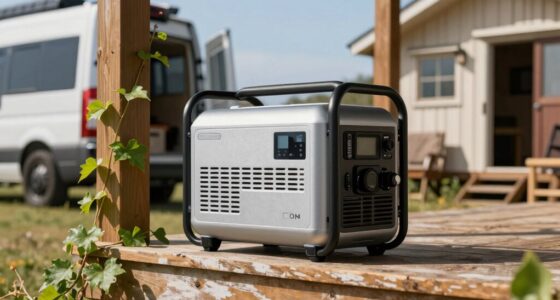

During natural disasters, you need to operate your generator safely to keep your household powered and protected. Place it outdoors in a well-ventilated area, away from vents and windows, and avoid indoor use to prevent carbon monoxide poisoning. Regularly maintain and test your generator, connect only essential appliances, and use outdoor-rated extension cords. Remember to keep a fire extinguisher nearby and stay informed with weather updates. Continuing will guide you through these critical safety and preparedness steps for using your generator effectively.

Get backup power and energy gear delivered free with Prime
- Fast, free delivery on millions of items
- Prime Video, Amazon Music and more included
- Member-only deals all year
Key Takeaways
- Place the generator outdoors in a well-ventilated area, away from windows and vents, to prevent carbon monoxide poisoning.
- Perform pre-use checks, including fuel level and cord inspection, to ensure reliable operation during outages.
- Connect only essential appliances and use outdoor-rated extension cords to avoid overloads and electrical hazards.
- Follow proper startup and shutdown procedures: turn off and unplug appliances before shutting down the generator.
- Keep a fire extinguisher nearby, ensure detectors are working, and stay informed with weather alerts during generator use.
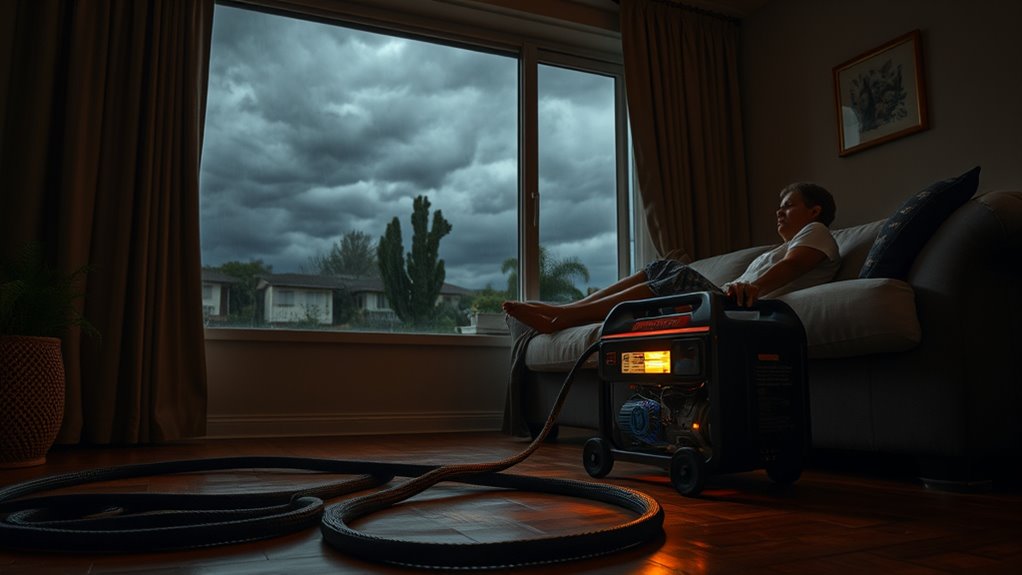
Emergency preparedness is vital because unexpected disasters can strike at any time, catching you off guard. One of the most common disruptions during natural calamities is a power outage, which can leave your home or business without electricity for hours or even days. To stay safe and operational during such events, having a reliable generator is essential. However, simply owning a generator isn’t enough—you need to understand how to use it correctly and follow safety protocols to prevent accidents or injuries. Being prepared means knowing exactly what steps to take before, during, and after a power outage.
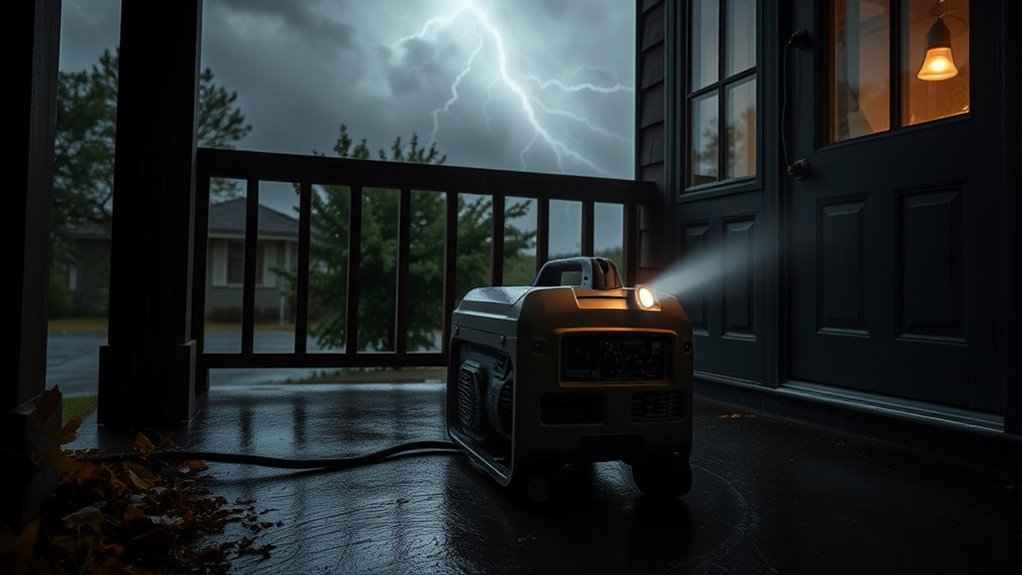
First, make certain your generator is in good working condition before an emergency occurs. Regular maintenance, such as checking fuel levels, inspecting cords, and testing the unit, will make sure it functions properly when needed. When a power outage happens, don’t rush to operate the generator immediately. Instead, assess the situation and make certain your safety. Follow safety protocols by placing the generator outdoors in a well-ventilated area, away from windows, doors, and vents to avoid carbon monoxide poisoning. Never operate it indoors or in enclosed spaces, even if the power’s out, because the risks are severe.
Ensure your generator is well-maintained and placed outdoors to prevent dangerous carbon monoxide buildup during power outages.
Once you start your generator, connect only the essential appliances and devices. Overloading it can cause damage or start a fire, so be mindful of the wattage limits. Use heavy-duty, outdoor-rated extension cords, and avoid daisy-chaining multiple cords together. Keep a fire extinguisher nearby and make certain your smoke and carbon monoxide detectors are working properly. Remember, safety protocols aren’t just about equipment—they also involve staying informed. Listen to weather alerts and emergency updates, and communicate with local authorities if necessary. Additionally, understanding generator safety protocols and proper maintenance can help prevent accidents and prolong your generator’s lifespan.
After the power is restored, turn off and unplug the generator before shutting it down completely. Let it cool down before storing it in a safe, dry place. Regularly review your safety protocols and make certain everyone in your household or workplace knows how to operate the generator safely. Educate yourself on proper startup and shutdown procedures and keep a checklist handy for quick reference during an emergency.
outdoor portable generator for emergencies
As an affiliate, we earn on qualifying purchases.
As an affiliate, we earn on qualifying purchases.
Frequently Asked Questions
Can Generators Be Safely Used Indoors During a Power Outage?
You should never use generators indoors because it’s unsafe. Poor indoor safety and inadequate generator ventilation can lead to dangerous carbon monoxide buildup, which is odorless and deadly. Always operate your generator outdoors in a well-ventilated area, away from windows and doors. This guarantees proper generator ventilation, protects you from harmful fumes, and keeps your home safe during power outages.
What Are the Environmental Impacts of Using Portable Generators?
Using portable generators can cause serious environmental impacts, like releasing clouds of air pollution that clog your air like a thick fog, and creating noise disturbances loud enough to shatter peace. These emissions contribute to smog and climate change, while the noise can disturb neighbors and wildlife. You might not see it immediately, but your reliance on generators adds up, harming the environment and your community over time.
How Do I Maintain My Generator for Long-Term Storage?
To maintain your generator for long-term storage, start by adding fuel stabilizers to prevent fuel from degrading. Run the generator briefly to circulate the stabilizer, then shut it down and drain the carburetor if recommended. Don’t forget to disconnect and charge the battery periodically for battery maintenance, ensuring it stays in good condition. Store your generator in a dry, protected area to prolong its lifespan and readiness.
Are Solar-Powered Generators Effective During Prolonged Outages?
Yes, solar-powered generators can be effective during prolonged outages, especially if you choose models with high battery capacity. They harness solar energy, providing a sustainable power source when grid electricity is unavailable. Keep in mind, their effectiveness depends on adequate sunlight and your generator’s battery capacity. Regularly maintaining the panels and ensuring the batteries are fully charged will help you maximize their performance during extended blackouts.
What Safety Equipment Is Recommended When Operating a Generator?
Think of operating a generator like handling a powerful tool—you need safety gear to stay protected. Always keep a fire extinguisher nearby in case of sparks or fire. Wear protective gloves to prevent burns or shocks when connecting or maintaining the generator. Make certain your workspace is dry and well-ventilated. These safety equipment essentials help you stay safe and in control, even when the power’s out and the storm rages.
heavy-duty outdoor extension cords
As an affiliate, we earn on qualifying purchases.
As an affiliate, we earn on qualifying purchases.
Conclusion
Think of your generator as a sturdy lighthouse in a storm, guiding you safely through the darkness of a power outage. Just as a lighthouse offers hope and direction, your preparedness guarantees you’re not left lost in the chaos of a natural disaster. By understanding how to properly use your generator, you become the captain steering your household safely ashore. Stay vigilant, plan ahead, and let your readiness illuminate the path through any storm.
carbon monoxide detector for home
As an affiliate, we earn on qualifying purchases.
As an affiliate, we earn on qualifying purchases.
As an affiliate, we earn on qualifying purchases.
Halloween Picks
halloween
As an affiliate, we earn on qualifying purchases.