To size a generator for your HVAC system, first determine the total wattage of all components, including compressors and motors, and remember to account for startup surge power, which can be 2-3 times higher. Match this load to a generator with enough capacity to handle both running and surge demands comfortably, plus some safety margin for future upgrades. If you proceed, you’ll discover detailed steps to guarantee your generator is perfectly suited to your HVAC needs.
Key Takeaways
- Calculate total HVAC load by summing all components’ wattages, including compressors and fans.
- Determine the HVAC system’s starting (surge) wattage, typically 2-3 times the running wattage.
- Select a generator with capacity slightly above the total load plus surge to ensure reliability.
- Consider continuous wattage ratings and add safety margins for future expansion or unexpected demands.
- Verify manufacturer specifications for both startup and running wattages to prevent undersizing.
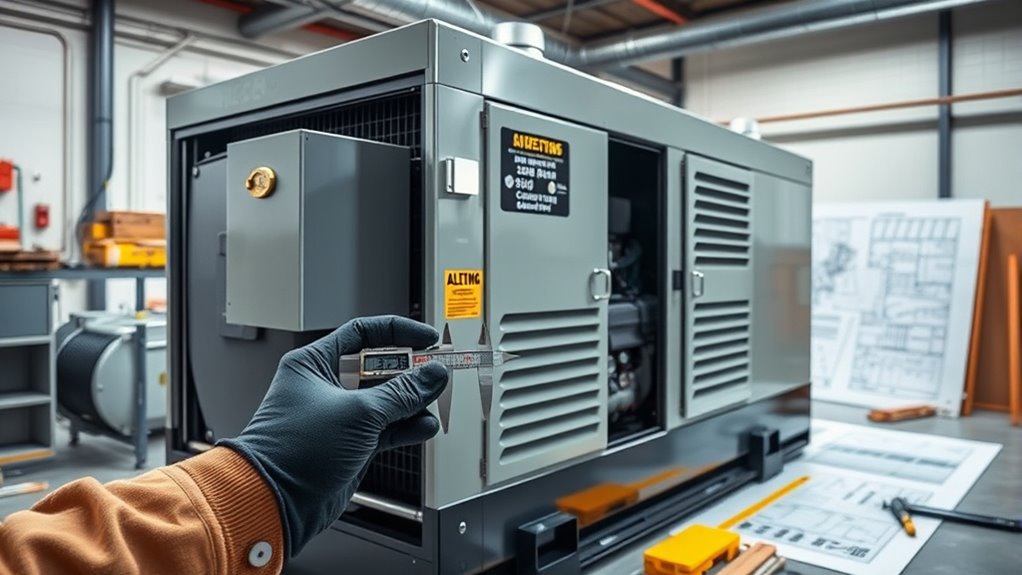
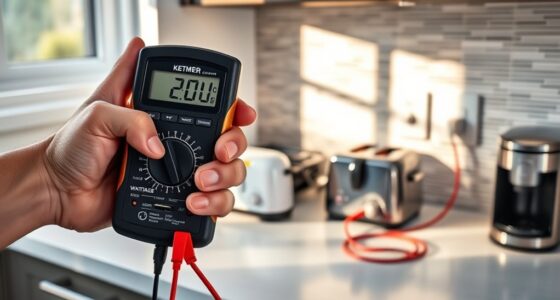
Choosing the appropriate generator size for your HVAC system is crucial to guarantee reliable operation during power outages or peak demand periods. To do this effectively, you need to perform accurate load calculations and understand how generator capacity aligns with your system’s requirements. Load calculations involve assessing the total electrical demand of your HVAC components, including the compressor, fan motors, and control systems. By summing up these individual loads, you determine the total wattage your generator must support. This process prevents underestimating your needs, which could lead to system failure or frequent overloads, and avoids overestimating, which results in unnecessary expense and inefficiency.
Accurate load calculations ensure your generator supports your HVAC system reliably during outages.
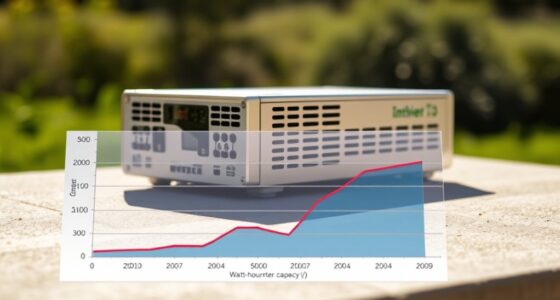
Generator capacity is usually expressed in watts or kilowatts, and matching this capacity to your load calculations is essential. For example, if your HVAC system’s startup surge demands are high, you need a generator that can handle these initial power spikes without tripping or shutting down. Typically, HVAC units require a surge capacity that’s 2 to 3 times their running wattage during startup. So, if your system consumes 3,000 watts when running, your generator should ideally support a surge capacity of at least 6,000 to 9,000 watts. This ensures smooth operation and prevents interruptions when switching the system on, especially during power outages.
When selecting a generator, also consider the continuous wattage rating, which indicates how much power it can supply steadily over time. It’s wise to choose a generator with a capacity slightly above your calculated load to accommodate future upgrades or additional appliances. For instance, if your load calculation suggests a need for 5,000 watts, opting for a 6,000-watt generator provides a safety margin, ensuring that your HVAC system runs reliably without pushing the generator to its limits.
Furthermore, understanding the distinction between starting wattage and running wattage is vital. HVAC systems, particularly compressors and fans, draw much more power at startup than during normal operation. Failing to account for this difference can lead to selecting a generator that can’t handle the initial surge, causing system shutdowns or damage. Always verify the manufacturer’s specifications for both starting and running wattage when performing load calculations. Additionally, awareness of generator efficiency can help in selecting a model that maximizes performance and longevity over its lifespan.

Diversitech E Lite Plastic Equipment Pad for HVAC Systems, 36" x 48" x 3", Gray (EL3648-3)
Manufacturer: Diversities
As an affiliate, we earn on qualifying purchases.
As an affiliate, we earn on qualifying purchases.
Frequently Asked Questions
How Do Seasonal Temperature Variations Affect Generator Sizing?
Seasonal temperature variations directly impact your generator capacity needs. During colder months, your HVAC system demands more power to maintain comfort, so you should size your generator for peak winter loads. Conversely, warmer seasons reduce system load, meaning a smaller generator might suffice. By accounting for seasonal temperature changes, you guarantee your generator can handle the highest expected loads year-round, preventing outages and maintaining consistent climate control.
Can a Generator Handle Multiple HVAC Units Simultaneously?
A generator can handle multiple HVAC units at once like a conductor managing an orchestra. You need to guarantee its capacity can meet the total power load of all units running simultaneously. If the combined wattage exceeds the generator’s capacity, it’ll strain and possibly shut down. To avoid this, calculate the total wattage of each unit and select a generator with a higher capacity to comfortably support your entire system.
What Maintenance Is Required for HVAC Generators Long-Term?
You need to regularly check and change the oil, filters, and spark plugs to keep your HVAC generator running smoothly. To improve fuel efficiency and noise reduction, schedule professional inspections and tune-ups annually. Keep the generator clean and guarantee proper ventilation. These steps help prevent breakdowns, extend its lifespan, and maintain ideal performance, so your HVAC system stays reliable during emergencies.
How Does Altitude Impact Generator Performance and Sizing?
Altitude effects can turn your generator into a reluctant performer, especially at higher elevations. As you climb, generator elevation causes less oxygen, which reduces engine power and efficiency. You’ll need to adjust your sizing, perhaps by choosing a more robust model or installing a derating factor. Keep in mind, altitude impacts your generator’s performance, so plan accordingly to make certain your HVAC system runs smoothly no matter how high you go.
Are There Specific Safety Considerations for Outdoor HVAC Generator Installations?
For outdoor installation, you must prioritize generator safety by guaranteeing proper grounding, secure mounting, and weatherproof enclosures. Protect your outdoor generator from moisture, debris, and extreme temperatures to prevent damage and safety hazards. Regularly inspect electrical connections and use appropriate circuit breakers. Adequate ventilation is essential to prevent overheating. Following these safety considerations ensures reliable operation and reduces risks during outdoor HVAC generator use.

Calculated Industries 4090 Sheet Metal/HVAC Pro Calc Calculator, Advanced Construction-Math for Sheet Metal, HVAC Pros with Fan Law Functions, ArcK Built-in Constant, Laws of Cosines, Offset Functions
CUSTOM HVAC & SHEET METAL functions let you simplify Test and Balance (TAB) with built-in Fan Law function:…
As an affiliate, we earn on qualifying purchases.
As an affiliate, we earn on qualifying purchases.
Conclusion
Choosing the right generator for your HVAC system is like finding the perfect engine to power a mighty ship—you need just the right size to keep everything running smoothly without risking a storm. When you match tonnage and wattage accurately, your system will breathe easy, even during the fiercest storms. So, take the time to size your generator carefully; it’s the steady heartbeat that keeps your comfort afloat through any weather.

Generac 26kW Home Standby Generator for home use, built-in cellular connectivity, whole house generator for power backup
Whole House Protection: Keep your family comfortable and connected during power outages. Avoid the disruption of losing refrigeration,…
As an affiliate, we earn on qualifying purchases.
As an affiliate, we earn on qualifying purchases.

EUHOMY 8,000 BTU Portable Air Conditioners, 4-in-1 Air Conditioner Portable Up to 350 Sq.Ft., Portable AC Unit with Cool, Fan, Dehumidifier, Sleep, 24H Timer, Remote & Installation Kit, for Bedroom
𝐏𝐨𝐰𝐞𝐫𝐟𝐮𝐥 𝟖,𝟎𝟎𝟎 𝐁𝐓𝐔 𝐂𝐨𝐨𝐥𝐢𝐧𝐠 𝐟𝐨𝐫 𝐔𝐩 𝐭𝐨 𝟑𝟓𝟎 𝐒𝐪. 𝐅𝐭.: EUHOMY portable air conditioner delivers strong and fast…
As an affiliate, we earn on qualifying purchases.
As an affiliate, we earn on qualifying purchases.