
A tri-fuel generator makes more sense when you need reliable power that adapts to fuel availability and reduces environmental impact. If you face frequent outages, live in remote areas, or want flexibility during emergencies, switching between gasoline, propane, or natural gas can keep your power steady. It also minimizes dependence on a single fuel source and improves sustainability. Keep exploring to discover how integrating these benefits can fit your specific needs and enhance your energy security.
Key Takeaways
- Ideal for remote locations or disaster-prone areas where fuel supply stability is critical.
- When cost savings and environmental benefits justify higher initial investment.
- In scenarios requiring flexibility to switch fuels based on availability or price fluctuations.
- For businesses or homeowners seeking reliable power during outages with diverse fuel options.
- When integrating renewable energy sources alongside traditional fuels to enhance sustainability.
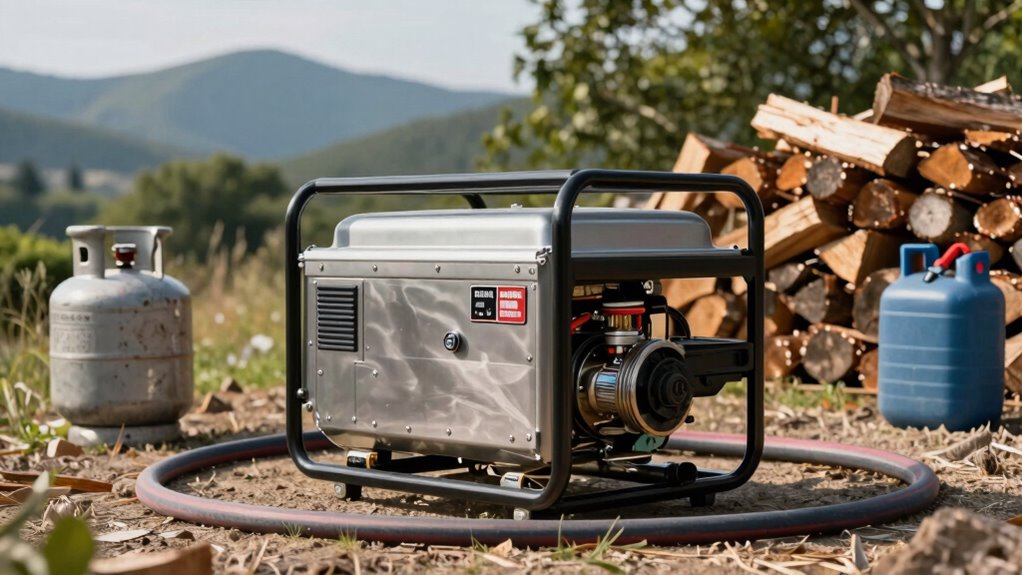
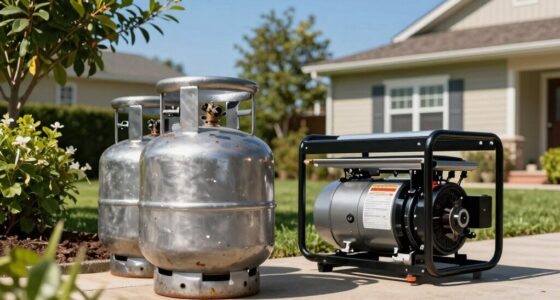
A tri-fuel generator might seem like overkill at first, but in many situations, it actually makes more sense than sticking to just one fuel source. When you consider the variety of renewable options and the need for reliable power, a tri-fuel setup offers flexibility that’s hard to match. Instead of worrying about running out of fuel or dealing with supply chain issues, you can switch seamlessly between gasoline, propane, and natural gas. This adaptability proves especially useful during emergencies, power outages, or in remote locations where fuel availability varies.
One of the biggest advantages is how it enhances your energy security. With multiple fuel options, you’re not limited to just one source, which can be a lifesaver during natural disasters or fuel shortages. If gasoline runs out or becomes too expensive, you can switch to propane or natural gas, both of which are often more stable and affordable in the long run. This flexibility minimizes downtime and keeps essential appliances running without interruption. Plus, natural gas and propane are considered cleaner-burning fuels compared to gasoline, so you’re reducing your environmental impact while maintaining efficient power.
Multiple fuel options boost energy security, ensuring reliable power during shortages and reducing environmental impact.
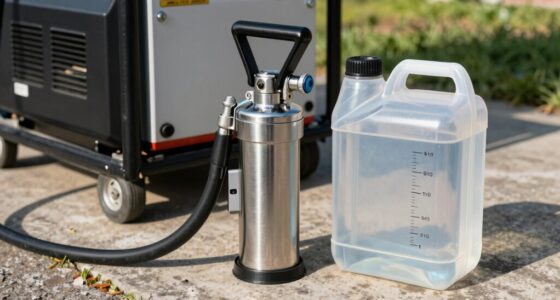
However, it’s important to weigh the maintenance costs associated with a tri-fuel generator. These units tend to have more complex fuel systems, which can lead to higher maintenance requirements over time. You’ll need to keep an eye on fuel lines, filters, and valves for each fuel type, and regular inspections become essential to ensure everything functions smoothly. While the initial investment might be higher, the added convenience and reliability often justify the extra upkeep. Over the lifespan of the generator, the decreased risk of running out of fuel and the ability to utilize renewable options like biogas or other alternative fuels make it a smart choice for those who want versatility. Additionally, understanding essential safety tips for handling these fuels can help prevent accidents and ensure safe operation, especially when switching between different fuel sources.
Incorporating renewable fuel sources into your generator setup can further improve sustainability and reduce dependency on fossil fuels. Using watt-hours and capacity metrics can help you select a generator that meets your specific energy needs effectively. Moreover, advancements in solar integration have made it possible to combine renewable energy sources with traditional fuels, creating even more resilient power solutions. In the end, a tri-fuel generator isn’t just about having multiple fuel options; it’s about gaining control over your power supply. It makes sense if you want a dependable, flexible, and environmentally conscious backup or primary power source. Yes, the maintenance costs might be a bit more, but the benefits of renewable options, reduced downtime, and increased energy security often outweigh those expenses. If you’re looking for a solution that adapts to your needs and helps you navigate unpredictable fuel markets, a tri-fuel generator is worth considering.
As an affiliate, we earn on qualifying purchases.
Frequently Asked Questions
How Does a Tri Fuel Generator Compare in Cost to Single-Fuel Models?
A tri fuel generator typically costs more upfront than single-fuel models due to its added versatility and fuel efficiency. While the initial investment is higher, you save money in the long run by using multiple fuel sources, which can reduce operating costs and improve fuel efficiency during power outages or emergencies. So, although it’s pricier initially, the flexibility and efficiency often make it a smarter, cost-effective choice.
Are Tri Fuel Generators Suitable for Residential Backup Power?
Sure, a tri fuel generator is suitable for residential backup power, but don’t expect peace and quiet. If fuel efficiency and noise levels matter, you might want to reconsider. These generators offer versatility and longer run times, which is great during outages, but they can be loud and consume more fuel when running on multiple sources. Perfect for the adventurous homeowner who values flexibility over tranquility, not so much for the peaceful neighborhood.
What Maintenance Is Required for Tri Fuel Generators?
You need to regularly check and change the oil, spark plugs, and filters to keep your tri fuel generator running smoothly. Keep the fuel system clean to maintain fuel efficiency, especially when switching between fuels. Also, inspect noise levels and make sure mufflers are functioning properly. Regular maintenance not only enhances fuel efficiency but also reduces noise levels, prolonging your generator’s lifespan and ensuring reliable backup power when you need it most.
Can Tri Fuel Generators Operate on Alternative Fuel Sources?
Absolutely, tri fuel generators are powerhouse machines that can operate on multiple fuel sources! Their alternative fuel compatibility means you can switch between gasoline, propane, and natural gas effortlessly, making them incredibly versatile. This fuel source versatility guarantees you’re never left stranded, even if one fuel runs out. With this flexibility, you’re prepared for any situation, whether it’s backup power or off-grid adventures, making these generators smarter and more adaptable than you ever imagined.
How Long Can a Tri Fuel Generator Run Continuously?
A tri fuel generator can run continuously for as long as you supply fuel, typically ranging from 8 to 24 hours depending on fuel tank size and load. Its fuel efficiency varies with the fuel type, and it usually maintains lower noise levels when running on propane or natural gas. To maximize runtime, make certain you have ample fuel reserves, and remember that load demands can impact both efficiency and noise.
As an affiliate, we earn on qualifying purchases.
Conclusion
So, next time you’re weighing backup power options, remember a tri fuel generator isn’t just a gadget—it’s your versatile hero in disguise. Like a chameleon adapting to its surroundings, it seamlessly switches fuels to keep your world running smoothly. Don’t let the complexity scare you; instead, see it as a smart, flexible choice that could save the day when you least expect it. After all, isn’t being prepared the real power move?
best tri fuel generator for emergencies
As an affiliate, we earn on qualifying purchases.
As an affiliate, we earn on qualifying purchases.
tri fuel generator natural gas propane gasoline
As an affiliate, we earn on qualifying purchases.
As an affiliate, we earn on qualifying purchases.