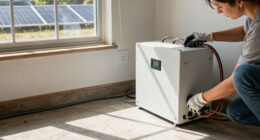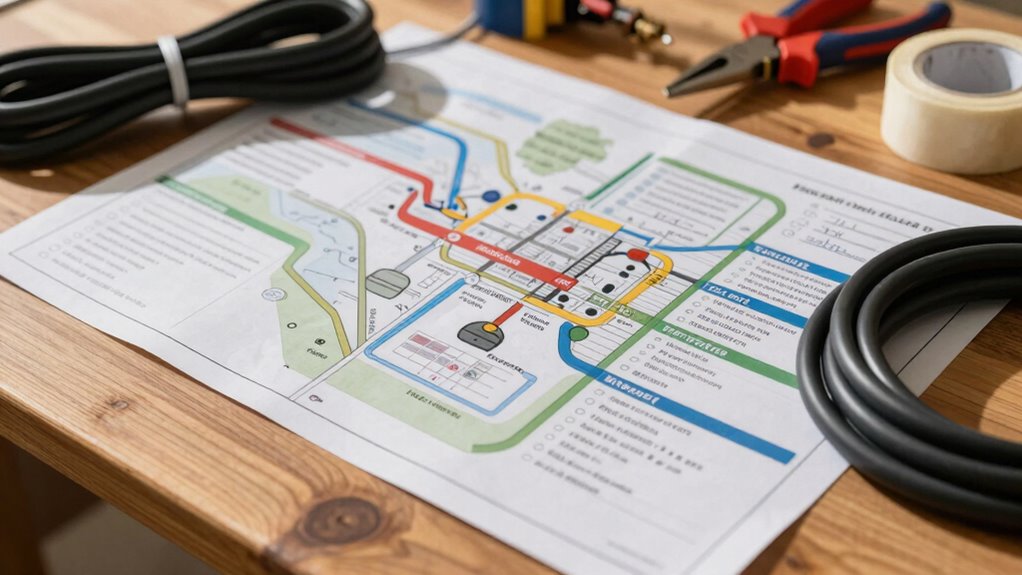

To build a home generator cord map, start by identifying which appliances and circuits you need to power during an outage. Map out your outlets and circuits, noting which are designated for generator use, and color-code or label them clearly. Use a visual diagram or chart for quick reference, and guarantee you select heavy-duty, outdoor-rated extension cords. Regularly review and practice connecting your generator safely—staying prepared can prevent hazards. If you keep exploring, you’ll learn how to make your setup even safer and more efficient.

Get backup power and energy gear delivered free with Prime
- Fast, free delivery on millions of items
- Prime Video, Amazon Music and more included
- Member-only deals all year
Key Takeaways
- Identify critical appliances and circuits to prioritize during power outages.
- Map outlets to specific circuits, using labels or color coding for clarity.
- Mark designated generator outlets and compatible extension cords on the diagram.
- Ensure safe connection practices, avoiding direct household outlet connections without a transfer switch.
- Regularly review, update, and practice using the cord map for emergency preparedness.

Have you ever wondered how to guarantee your home generator connects safely and efficiently to your appliances during an outage? Building a home generator cord map is essential for this. Not only does it support your emergency preparedness, but it also guarantees electrical safety for you and your family. When power goes out unexpectedly, knowing exactly which outlets and appliances your generator can safely power prevents dangerous overloads and potential fires. By creating a detailed cord map, you’re taking proactive steps to manage your power needs and protect your home’s electrical system.
Creating a home generator cord map ensures safe, efficient power connection during outages, protecting your family and electrical system.
Start by evaluating your home’s power requirements. Identify critical appliances you want to run during an outage, such as your refrigerator, sump pump, or medical equipment. Once you’ve pinpointed these essentials, determine which outlets in your home are wired to circuits that can handle the additional load of your generator. It’s essential to understand your electrical system’s layout. Consult your electrical panel or hire a professional if needed, to map out which outlets correspond to each circuit. This step forms the foundation of your cord map, allowing you to connect only those circuits that are safe and necessary.
Next, create a visual diagram or written chart that clearly indicates which outlets are linked to each circuit, and specify which ones are designated for generator use. Use color coding or labels to make this chart easy to read during an emergency. When connecting your generator, always use heavy-duty, outdoor-rated extension cords that match the power capacity needed. Your cord map should specify which cords go to which outlets, making it straightforward to connect your generator without guesswork. This prevents accidental overloads and keeps your electrical safety a top priority. Proper understanding of your home’s electrical system is key to creating an effective and safe cord map. Additionally, understanding how generators operate in various scenarios can help you plan more effectively. Familiarity with emergency procedures and safety protocols is equally important to ensure a swift response during outages. Knowing the proper connection methods can also make a significant difference in avoiding hazards.
Incorporating emergency preparedness into your planning guarantees that you’re ready to respond swiftly and safely when the power goes out. Your cord map acts as a quick-reference guide, reducing confusion and minimizing the risk of unsafe connections. Remember, never connect your generator directly to household outlets unless you have a professionally installed transfer switch. This practice can cause backfeeding, endangering utility workers and damaging your generator.
Finally, review and update your cord map regularly, especially if you add new appliances or modify your electrical system. Practicing how to use your map helps you become familiar with your setup, reducing stress during an outage. Building a complete home generator cord map isn’t just about convenience; it’s an essential safety measure. It guarantees your generator connects correctly, protects your electrical system, and keeps your family safe when emergencies strike.
Products Worth Considering

Dyson Ball Animal 2 Plus Corded Vacuum

Shark Rocket Pet Plus Corded Stick Vacuum, Bordeaux, HV322

Philips Hue Festavia Globe Outdoor String Lights, 32 Bulbs, 91 ft
As an affiliate, we earn on qualifying purchases.
Frequently Asked Questions
What Tools Are Essential for Creating a Generator Cord Map?
You’ll need essential tools like a voltage tester to guarantee safety and accuracy in your generator cord map. Labeling your cords clearly helps keep everything organized and easy to follow. Use a multimeter for voltage testing, verifying connections, and confirming power flow. Sharp markers or label makers are perfect for cord labeling. With these tools, you can create a reliable, safe, and efficient generator cord map that simplifies your setup and maintenance.
How Often Should I Update My Generator Cord Map?
You should update your generator cord map at least once a year or after any major electrical changes. Did you know that 30% of generator-related accidents happen due to outdated wiring or incorrect power distribution? Regular updates guarantee generator safety and proper power distribution, reducing risks during outages. Staying current with your map helps you quickly identify connections, prevent hazards, and keep your home and family safe.
Can I Use a Standard Household Extension Cord for My Generator?
You shouldn’t use a standard household extension cord for your generator because it may not meet generator safety standards. These cords often have limited cord length and can overheat or cause voltage drops, risking damage or safety hazards. Instead, use a heavy-duty, outdoor-rated generator cord that’s designed for your power needs. Ensuring proper cord length and quality helps keep your setup safe and reliable during power outages.
What Safety Precautions Are Necessary When Building a Cord Map?
When building a cord map, prioritize electrical safety by ensuring all connections are secure and insulated properly to prevent shocks or fires. Use proper labeling to clearly identify each cord’s purpose and connection point, reducing confusion during emergencies. Always turn off power sources before working, and double-check your work for accuracy. Wearing protective gear and working in a dry environment also helps minimize risks, ensuring your setup is safe and reliable.
How Do I Troubleshoot Common Issues With My Generator Cord Connections?
When troubleshooting generator cord connections, start by inspecting the wiring for loose or damaged contacts, guaranteeing the generator’s power transfer is smooth. Check for proper grounding and verify all connections match your cord map. Use a multimeter to test voltage and continuity, which helps identify wiring issues. If you notice irregular power flow or sparks, turn off the generator and recheck your wiring. Maintaining proper generator wiring ensures safe and efficient power transfer.
Conclusion
Creating your home generator cord map is like forging a lifeline in times of need, ensuring safety and peace of mind. Just as a lighthouse guides ships safely to shore, your map directs power where it’s needed most, preventing chaos and confusion. With careful planning and a clear plan, you’ll be ready for any storm. Remember, a well-prepared home stands resilient—your efforts today shine brighter than any storm’s shadow.