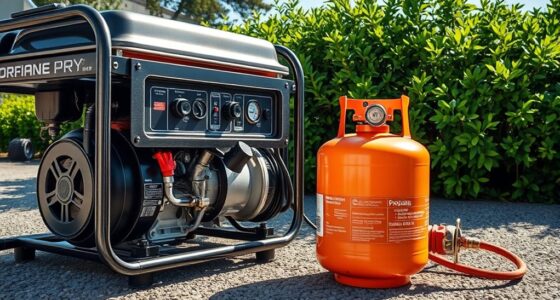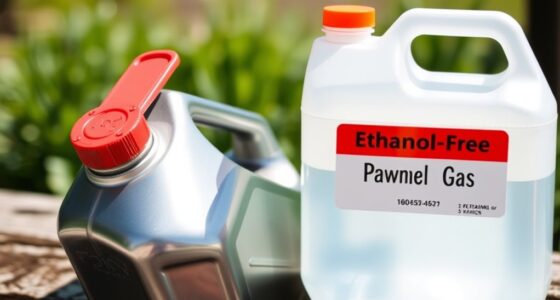
When storing fuel at home, it’s important to know your local limits to stay compliant and safe. Check with local authorities to find out maximum storage amounts for gasoline, diesel, and other flammables. Always use approved containers and store them outdoors in well-ventilated areas, away from heat, flames, and children. Proper storage prevents accidents, spills, and environmental harm. If you want to make certain you’re following all safety rules, there’s more essential information to explore.
Key Takeaways
- Check local regulations for maximum allowable fuel storage volumes in your area.
- Use approved, tightly sealed containers designed for fuel to ensure safety.
- Store fuel outdoors in well-ventilated, secure locations away from heat and open flames.
- Avoid storing large quantities in garages or basements to reduce fire risk.
- Follow spill prevention measures and keep fuel away from water sources to protect the environment.
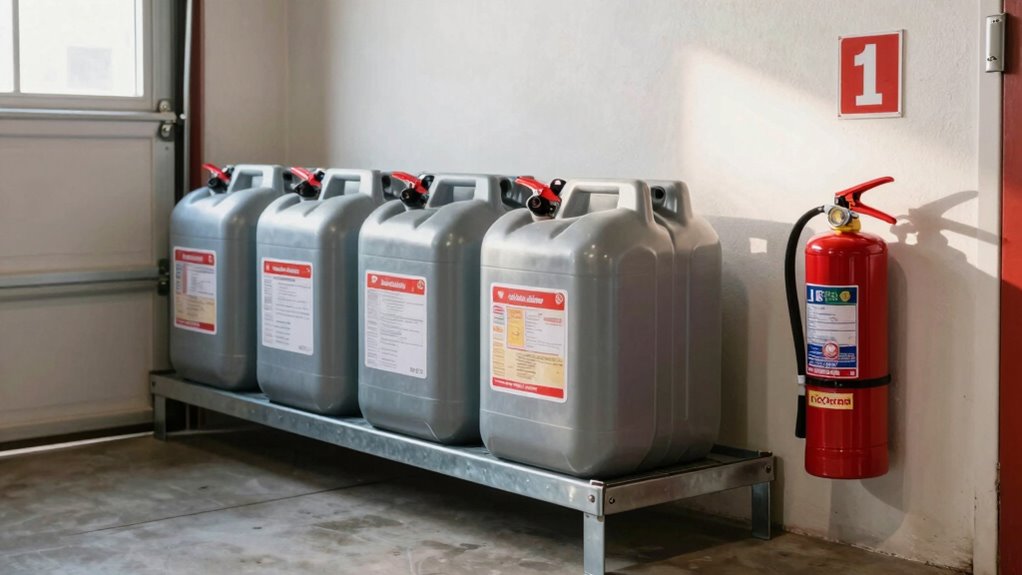
Have you ever wondered how much fuel you can safely store at home? It’s a common question, especially if you’re thinking about keeping some for emergencies or outdoor projects. The key lies in understanding safety regulations designed to protect both you and your environment. Local codes and regulations set clear limits on how much fuel you can store, primarily to prevent accidents and reduce environmental impact. These rules vary depending on where you live, so it’s essential to check with your local fire department or municipal authorities for specific limits. Generally, they specify the maximum volume for storing gasoline, diesel, or other flammable liquids in residential areas. Going over these limits can lead to fines or legal issues, but more importantly, it increases the risk of fire hazards and environmental contamination.
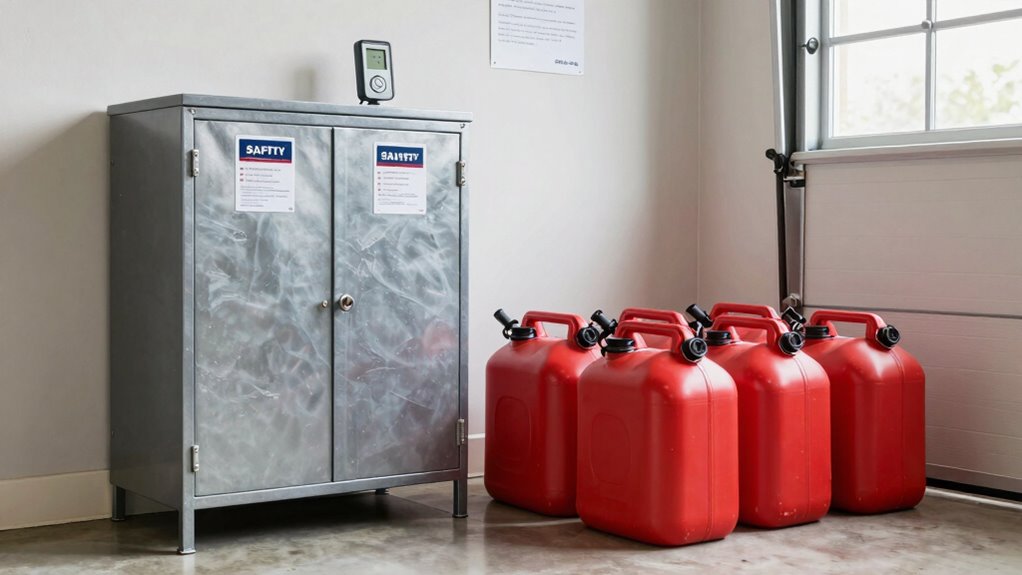
When storing fuel at home, safety should always come first. Proper containers are essential—they should be approved for fuel storage, tightly sealed, and kept in well-ventilated areas away from heat sources or open flames. You should also store fuel in a location that’s inaccessible to children and pets. Avoid storing large quantities in your garage or basement where fumes can accumulate and pose health risks. Instead, opt for outdoor storage in a secure shed or container designed specifically for flammable liquids. Using proper storage containers can significantly reduce the risk of leaks or spills, ensuring safer handling and storage. Additionally, choosing containers made from materials resistant to corrosion can extend their lifespan and prevent leaks over time. Adhering to safety regulations isn’t just about avoiding penalties; it’s about minimizing risks to yourself, your family, and your neighbors. Furthermore, fuel storage regulations often include specific guidelines on how to properly secure and label your containers, which can help prevent accidental misuse or mishandling. Additionally, understanding fuel storage limits can help you plan appropriately and stay within safe and legal boundaries.
Environmental impact is another key consideration. Spills or leaks from improperly stored fuel can seep into soil and water sources, causing long-term damage to ecosystems. That’s why regulations often include guidelines on container type, storage location, and spill containment measures. Keeping fuel away from storm drains and water supplies helps prevent contamination. If a spill does happen, having a plan for quick cleanup and disposal is essential to mitigate environmental harm. By following these regulations and best practices, you’re not only protecting your household but also safeguarding the environment from pollution and ecological disruption. Proper spill containment measures are an integral part of responsible fuel storage, helping to prevent environmental damage in case of accidents.
approved fuel storage containers
As an affiliate, we earn on qualifying purchases.
As an affiliate, we earn on qualifying purchases.
Frequently Asked Questions
Are There Different Fuel Storage Limits for Different Types of Fuel?
Yes, fuel storage limits vary depending on the type of fuel and local storage regulations. You need to follow specific storage regulations for each fuel container, like gasoline, diesel, or propane. For example, gasoline typically has stricter limits due to its volatility, while propane tanks are regulated based on size and placement. Always verify your local codes to guarantee safe storage and compliance with the appropriate fuel container standards.
How Often Should I Check My Stored Fuel for Contamination?
You should check your stored fuel every three to six months, because nothing says “perfectly stable” like discovering contamination just when you need it most. Regular inspections help guarantee fuel stability and prevent contamination, saving you from costly repairs or dangerous situations. Don’t wait until the fuel smells off or looks cloudy—routine checks are your best defense against contamination, keeping your supplies safe and reliable when you need them.
Can I Store Fuel in My Garage Legally?
Storing fuel in your garage is often legal, but you must prioritize storage safety. Make sure your fuel tank is approved and kept upright to prevent leaks. Keep the tank away from heat sources, open flames, or electrical outlets to reduce fire risk. Check local regulations, as rules vary by area. Properly labeled and sealed containers help maintain safety, and regular inspections can prevent hazards from contaminated or degraded fuel.
What Safety Measures Should I Follow When Storing Large Quantities of Fuel?
Storing large quantities of fuel is like walking a tightrope—you must prioritize safety. You should keep fuels in approved, tightly sealed containers away from heat sources, and guarantee proper ventilation to prevent dangerous fumes from building up. Be aware of fire hazards, and never smoke near stored fuel. Regularly check containers for leaks or damage, and store them in cool, well-ventilated areas to minimize risks.
Do Storage Limits Vary by State or Local Regulations?
Yes, storage limits vary by state and local regulations. Regulation variations exist depending on where you live, so you need to verify your local restrictions before storing fuel. Some areas have strict limits to prevent fire hazards, while others are more lenient. Always guarantee you follow your local rules to stay compliant and maintain safety. Contact your local fire department or regulatory agency for specific storage guidelines in your area.
As an affiliate, we earn on qualifying purchases.
Conclusion
Storing fuel at home can seem risky, but with the right limits and safety measures, you’re actually protecting yourself and your loved ones. Just remember, it’s not about stockpiling endless amounts, but about being prepared responsibly. If you’re worried about running out during an emergency, plan ahead and keep within recommended limits. That way, you’ll stay safe, ready, and confident—without the stress of overdoing it.
flammable liquids safety containers
As an affiliate, we earn on qualifying purchases.
As an affiliate, we earn on qualifying purchases.
As an affiliate, we earn on qualifying purchases.