
To reduce cord clutter, organize your cables using clips, Velcro straps, and cable sleeves to bundle and secure them along walls and furniture. Incorporate cable covers to protect wires from damage, contain them neatly, and prevent tripping hazards, especially in high-traffic areas. Proper management keeps your space tidy and safe while extending the lifespan of your cords. Keep exploring to discover more tips on creating a safer, clutter-free environment.
Open a free Amazon Business account
Business pricing, bulk buying and tax-exempt orders.
As an affiliate, we earn on qualifying purchases.
Key Takeaways
- Utilize cable clips, Velcro straps, and sleeves to bundle and secure cords, reducing clutter and preventing tangling.
- Install cable covers over floor cords to protect from damage and eliminate tripping hazards.
- Choose appropriate cable management tools based on area traffic and cord type for effective organization.
- Regularly inspect and adjust cords to maintain neatness and prevent wear or electrical risks.
- Incorporate low-profile, flexible cable covers indoors for a tidy appearance and enhanced safety.
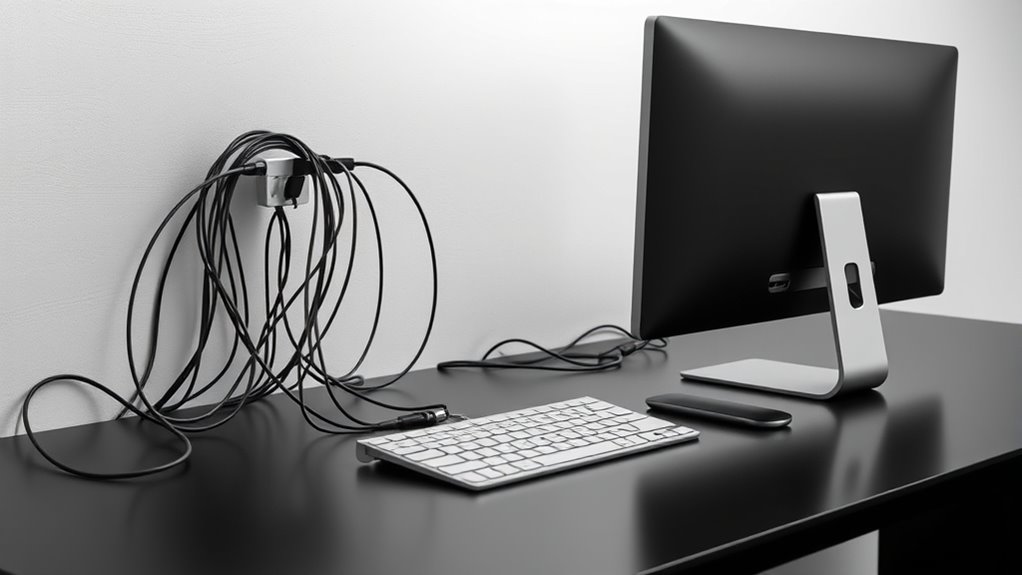
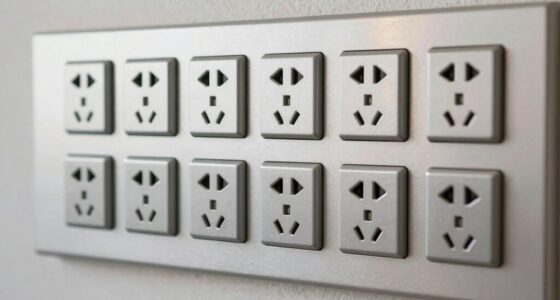
Ever wonder how to keep your cables organized and prevent tripping hazards? The key lies in effective wire organization and using the right cable covers. Cluttered cords not only make your space look untidy but also pose serious safety concerns. When wires are scattered across floors or tangled behind furniture, the risk of trips and falls increases, especially in busy households or workplaces. To combat this, you need a strategic approach that keeps cords neat, accessible, and out of the way.
Keeping cables organized prevents hazards and keeps your space tidy and safe.
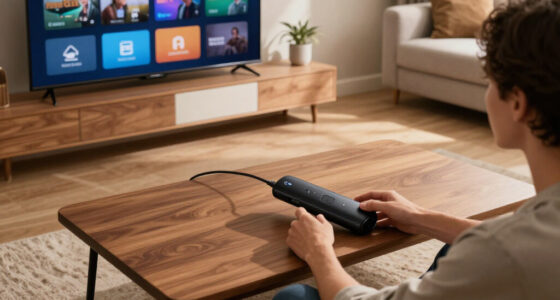
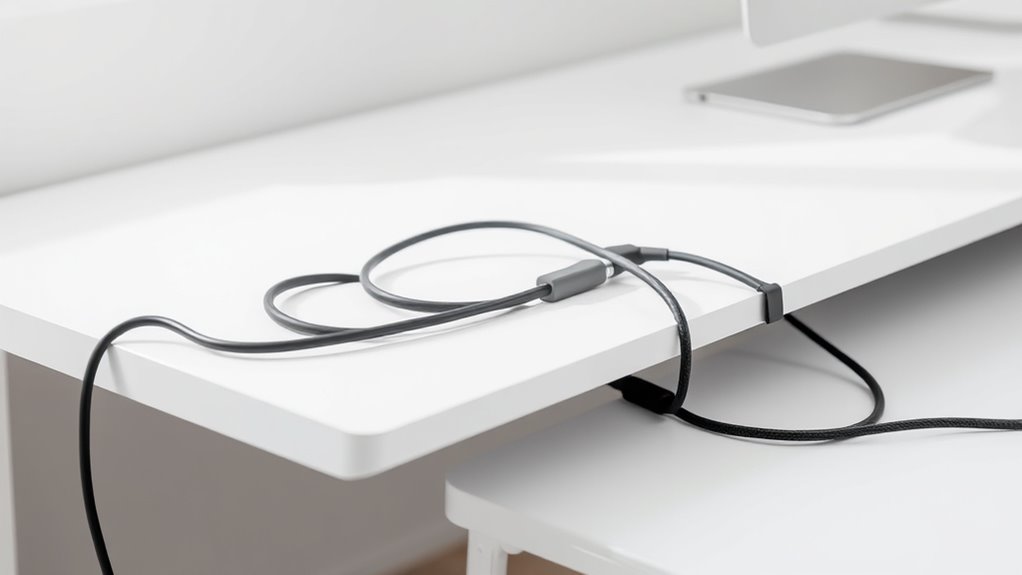
Start by evaluating your space and identifying all the cords that need managing. Gather cables from electronic devices, chargers, computer setups, and entertainment systems. Once you’ve identified the clutter, consider using cable management tools like cable clips, Velcro straps, or cable sleeves. These help bundle cords together, reducing tangles and making it easier to access the cables you need. Proper wire organization keeps your space tidy, minimizes wear and tear on cords, and makes cleaning easier. Incorporating cable management tools can further streamline this process and improve safety.
However, organizing cords on their own isn’t enough; you also need to address safety concerns. Loose or exposed wires can easily cause trips, especially if they run across walkways or under rugs. Using cable covers can be a game changer here. Cable covers are designed to protect cords from damage and keep them safely contained. They come in various materials, such as rubber, plastic, or fabric, and can be easily laid over the floor. When you use cable covers, you create a smooth surface that prevents tripping and reduces the chance of cords getting pulled or damaged.
Choosing the right cable covers depends on your environment. For high-traffic areas, heavy-duty covers that withstand foot traffic and prevent slipping are recommended. For indoor use, flexible and low-profile options work well. Installing cable covers is straightforward: you just lay them over the cords and secure them as needed. This not only improves safety but also makes your space look more organized and professional.
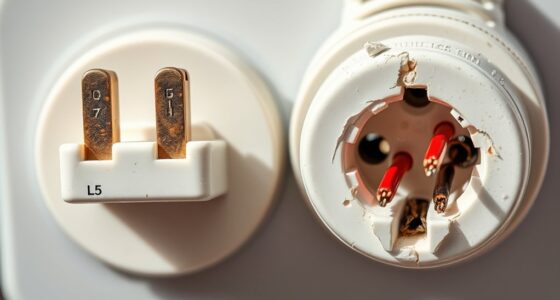
Remember, safety concerns aren’t just about preventing trips; exposed or frayed cords can also be fire hazards. Keeping cords neatly managed and protected with appropriate cable covers minimizes wear and tear, extending their lifespan and reducing the risk of electrical issues. Plus, when cords are properly bundled and covered, you avoid accidental unplugging or damage from pets or children.
In the end, effective wire organization combined with strategic use of cable covers creates a safer, cleaner, and more efficient environment. It’s a simple step that makes a big difference—less clutter, fewer accidents, and a more polished look. Taking the time to implement these small but impactful solutions ensures your space remains safe and organized for everyone.
As an affiliate, we earn on qualifying purchases.
Frequently Asked Questions
How Do I Choose the Right Cable Cover for My Space?
You should choose a cable cover based on your space’s needs, considering decorative designs and material options. Think about the style you want—sleek, colorful, or discreet—and pick a cover that complements your decor. Material options like plastic, fabric, or rubber offer durability and flexibility. Measure your cables accurately to guarantee a proper fit. With the right design and materials, you’ll keep cords organized and enhance your space’s look effortlessly.
Can Cord Management Solutions Be Used Outdoors?
Yes, cord management solutions can be used outdoors if they feature outdoor weather resistance and are made from UV resistant materials. These qualities protect your cables from rain, sun, and other elements, ensuring longevity and safety. Look for covers specifically designed for outdoor use, and always check product specifications to confirm they withstand weather conditions in your area. Proper outdoor cord management keeps your space safe and organized.
Are Cable Covers Safe for Children and Pets?
Cable covers are like a shield for your home, providing safe pathways for cords. They’re generally safe for children and pets when made from non-toxic, durable materials, but you should always verify for quality. Properly installed covers prevent tripping hazards, reducing risks for child safety and pet protection. Keep an eye on wear and tear, and ensure the covers fit snugly to maintain a secure environment for everyone in your household.
How Do I Install Cable Covers on Uneven Surfaces?
To install cable covers on uneven surfaces, start with proper surface prep by cleaning the area thoroughly to guarantee good adhesion. Choose adhesive options that are flexible or designed for textured surfaces, such as heavy-duty or gel-based adhesives. Apply the adhesive evenly and press the cover firmly into place, ensuring it conforms to the uneven surface. Allow adequate drying time before using the cables to secure a lasting, safe fit.
Can I Reuse or Relocate Cable Covers Easily?
Like a chameleon adapts to its surroundings, you can often reuse or relocate cable covers with ease. Many are designed for quick removal and reinstallation, making them perfect if you want flexibility. If you’re exploring wireless alternatives or decorative options, these covers can be moved without hassle, helping you maintain a neat space while accommodating changes. Just verify the adhesive isn’t too strong, so you can adjust without damaging surfaces.
As an affiliate, we earn on qualifying purchases.
Conclusion
Imagine your space, neat and tidy, with cords hidden like secrets behind furniture. With simple cord management and sleek cable covers, you can transform chaos into calm. No more tangled messes or tripping hazards—just smooth, clean lines that let your room breathe. Take control today, and watch as clutter melts away, revealing a serene, organized oasis. Your home deserves this touch of order—so start hiding those cords and enjoy the peace of a clutter-free space.
As an affiliate, we earn on qualifying purchases.
As an affiliate, we earn on qualifying purchases.
Flea & tick season Picks
flea and tick prevention
As an affiliate, we earn on qualifying purchases.