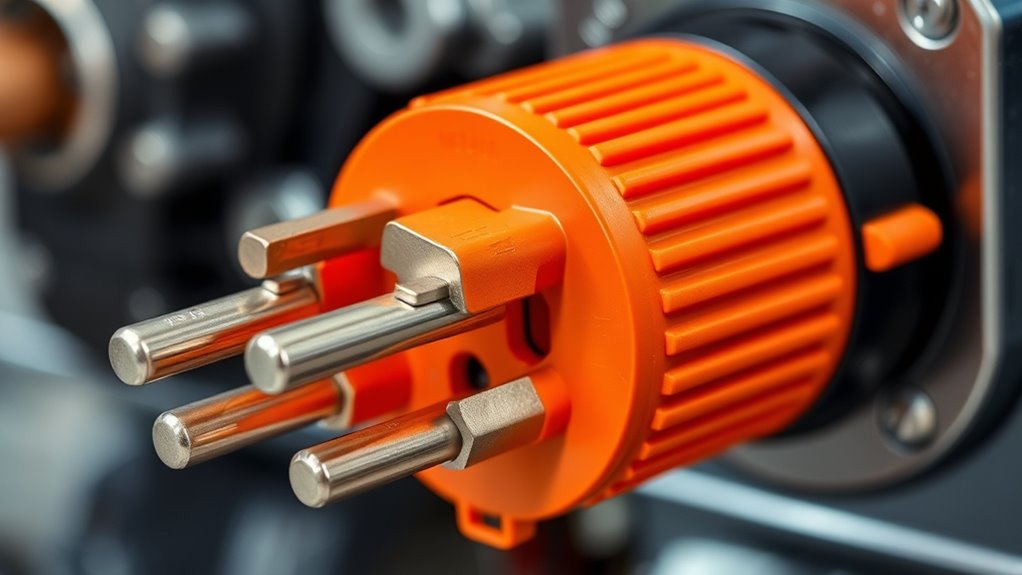

Understanding NEMA codes helps you select the right generator plugs and receptacles for safe, reliable connections. These codes specify standards for plug shapes, pin configurations, and electrical ratings, ensuring compatibility and safety. By matching the NEMA designations to your generator’s power output and your appliances’ needs, you prevent hazards like overheating or faults. Keep in mind, proper identification and adherence to these codes are essential—continue exploring to learn how to choose components that meet safety standards perfectly.
Key Takeaways
- NEMA codes specify standards for plug and receptacle shapes, pin configurations, and electrical ratings for generator connections.
- Understanding NEMA designations helps select compatible plugs and receptacles for safe and proper power transfer.
- NEMA ratings include information on voltage, amperage, and intended use (e.g., residential, industrial).
- Matching NEMA codes ensures connector compatibility, preventing electrical faults and hazards.
- Proper knowledge of NEMA standards guarantees compliance with safety regulations and electrical codes.
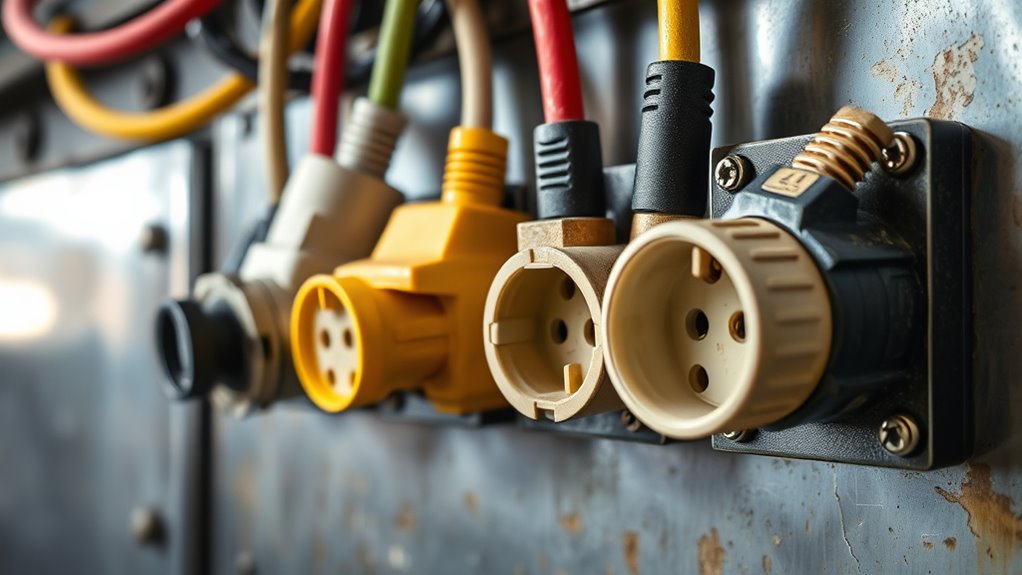
When choosing generator plugs and receptacles, it is vital to understand their role in safely connecting your generator to household appliances or external power sources. Selecting the right components ensures you avoid electrical hazards, equipment damage, and code violations. One of the most important aspects is understanding generator plug types and receptacle compatibility. These terms refer to the specific designs and standards that determine whether a plug fits into a particular receptacle and whether they can safely transfer power.
Generator plug types are categorized based on their shape, pin configuration, and electrical ratings. Different types serve different purposes, such as portable use, industrial applications, or permanent installations. For example, NEMA (National Electrical Manufacturers Association) codes specify standards for these plugs, guaranteeing consistency and safety. Common NEMA plug types include NEMA 5-15, which is a standard household outlet, and more heavy-duty options like NEMA 14-50, used for larger generators or RV connections. Knowing your generator’s power output and the appliances you plan to run helps you select the appropriate plug type.
Generator plug types vary by shape, pin configuration, and electrical ratings, serving portable, industrial, or permanent needs.
Receptacle compatibility is equally important. Receptacles must match the plug type to guarantee a secure connection that prevents accidental disconnections or shorts. When matching plugs and receptacles, you need to consider the amperage rating, voltage, and the configuration of the pins. Using an incompatible receptacle can lead to dangerous arcing, overheating, or electrical faults. For instance, a standard 120V household outlet won’t work with a 240V generator outlet unless it’s designed for dual voltage or has the appropriate adapters. Additionally, understanding safety standards and compliance requirements is essential to ensure your setup meets all legal and safety guidelines.
It’s also essential to verify that the receptacle is rated for outdoor use if you’ll be connecting your generator outside. Outdoor receptacles are built to withstand weather conditions and often have protective covers. When working with generator plugs and receptacles, always check that they adhere to local electrical codes and standards. This not only keeps you safe but also ensures your setup is compliant with legal requirements.
Top picks for "generator plug receptacl"
Open Amazon search results for this keyword.
As an affiliate, we earn on qualifying purchases.
Frequently Asked Questions
How Do I Identify the Correct NEMA Code for My Generator?
To identify the correct NEMA code for your generator, first check your device’s plug compatibility and the receptacle standards it requires. Look at the equipment’s specifications or labels for voltage, amperage, and phase information. Then, correlate these details with NEMA codes, which are designed to ensure proper fit and safety. This step guarantees you select the right plug and receptacle combination, maintaining safe and reliable connections.
Can I Mix Different NEMA Plug Types on the Same Generator?
You shouldn’t mix different NEMA plug types on the same generator because it jeopardizes plug compatibility and violates receptacle standards. Using incompatible plugs can lead to electrical hazards and damage your equipment. Stick to one NEMA code that matches your power needs and receptacle standards. This ensures safe, reliable connections and prevents potential issues with power delivery or safety violations. Always follow manufacturer guidelines for proper plug and receptacle use.
Are There Safety Concerns With Using Incompatible Receptacles?
Using incompatible receptacles can pose serious safety concerns, including electrical shock and fire hazards. Nearly 60% of electrical accidents involve improper connections, so mismatched plugs increase risks considerably. When you ignore compatibility, you may unintentionally create dangerous situations, risking injury or damage. Always verify your generator’s receptacles match the plugs, following NEMA codes, to keep yourself and others safe from electrical shock and fire hazards.
What Maintenance Is Required for Generator Plugs and Receptacles?
You should regularly inspect your generator plugs and receptacles for signs of wear and damage. Check for plug corrosion, which can cause poor connections, and verify the receptacle is clean and free from debris. Perform a thorough receptacle inspection at least once a year, and replace any corroded or damaged parts immediately. Proper maintenance ensures safe, reliable operation and helps prevent electrical issues during power needs.
How Do Weather Conditions Affect Nema-Rated Plugs and Receptacles?
Weather conditions can turn your NEMA-rated plugs and receptacles into fragile flowers if you’re not careful. Rain, snow, and humidity threaten to cause corrosion, compromising their safety and performance. You need to take weather impact into account and choose corrosion-resistant materials to protect against the elements. Regular inspections and proper sealing help ensure your equipment stays reliable, no matter if the skies are clear or stormy.
Conclusion
Just like the steady hand of a conductor guiding an orchestra, choosing the right NEMA plug or receptacle guarantees your generator performs safely and reliably. Remember, these connections are more than just hardware—they’re your link to comfort and safety during life’s unpredictable storms. By understanding NEMA codes, you’re not just making an informed choice; you’re safeguarding what matters most. Trust in this knowledge, and let it be your shield when the power goes out.