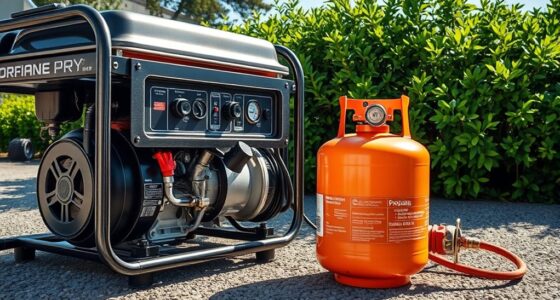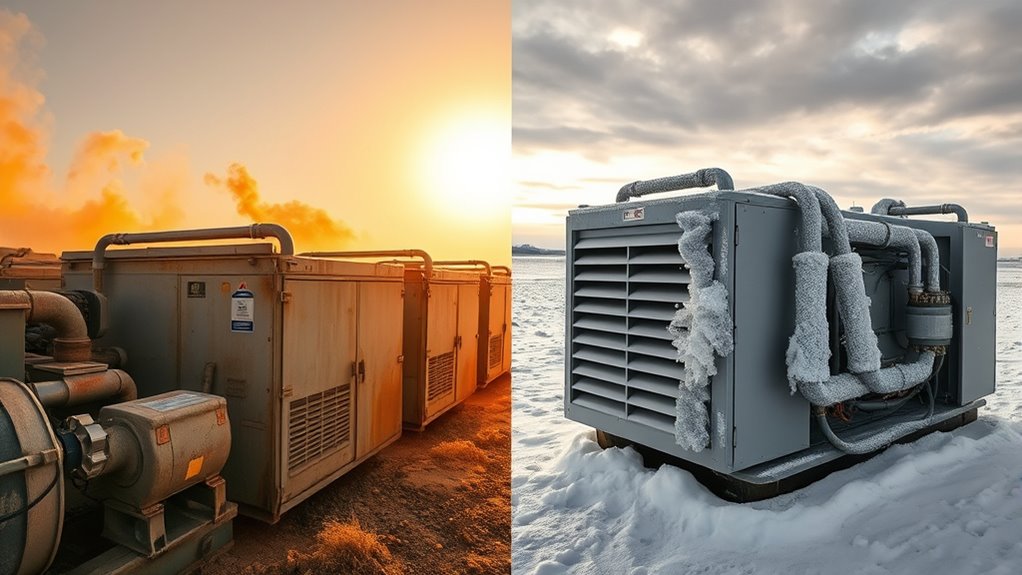

In extreme cold, your generator may struggle to start due to thickened oil and frozen fuel lines, so pre-warming and full tanks help. In hot weather, overheating can occur if ventilation isn’t adequate or the load is too high. Proper placement, maintenance, and following specific startup procedures for each environment can boost efficiency and lifespan. Want to discover more tips to keep your generator running smoothly across all temperatures? Keep going for essential advice.
Key Takeaways
- Cold temperatures thickening oil and reducing fuel vaporization require pre-warming and full fuel tanks for reliable startup.
- Hot weather increases overheating risks, necessitating proper ventilation, coolant checks, and shaded placement.
- Following specific startup procedures helps prevent engine strain and fuel wastage in extreme temperatures.
- Regular maintenance, including oil changes and radiator cleaning, enhances generator performance in both hot and cold conditions.
- Positioning generators in shaded, ventilated areas and adjusting load during peak heat improves efficiency and prevents damage.
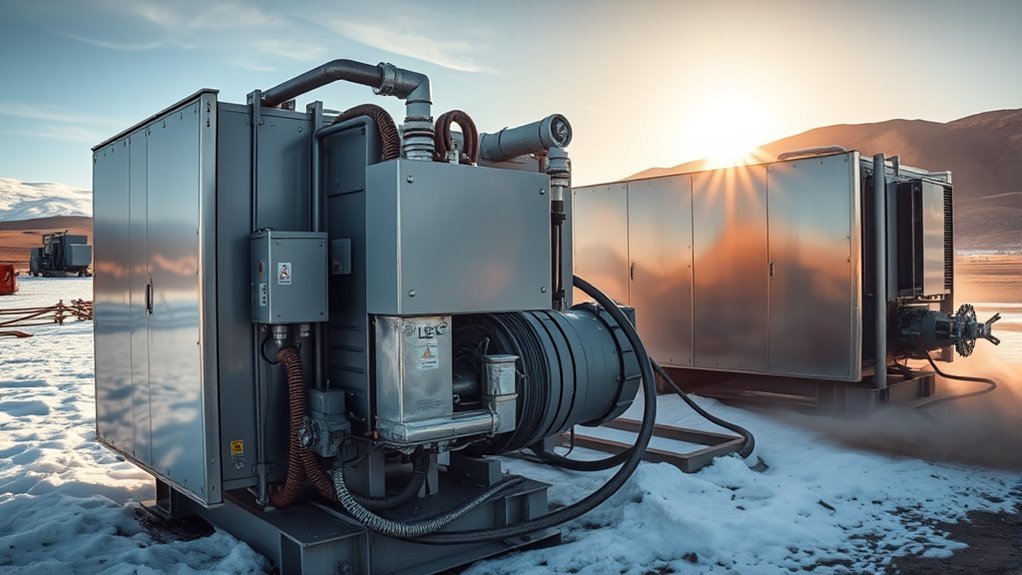
Have you ever wondered how your generator performs during extreme temperatures? Cold or hot weather can markedly impact its operation, especially concerning fuel efficiency and startup procedures. When temperatures plummet, engines often struggle to start because thickened oil and low fuel vaporization hinder smooth ignition. To combat this, you should follow proper startup procedures, such as pre-warming the engine with a block heater if available, which helps maintain ideal fuel vaporization and reduces stress on the engine. Ensuring your fuel tank is topped off prevents condensation and fuel line freezing, both of which can cause startup failures. It’s also wise to use fuel stabilizers designed for cold climates, as they help keep the fuel mixture stable and prevent gelling. These steps improve fuel efficiency by allowing the engine to run smoothly without excess idling or fuel wastage. During cold weather, the initial startup might take longer, but adhering to these procedures minimizes unnecessary strain on the generator and keeps it running more effectively once warmed up. Proper maintenance practices can further enhance performance in extreme conditions.
In hot weather, your generator faces different challenges. High temperatures can cause the engine to overheat if proper ventilation isn’t maintained, leading to potential damage and reduced fuel efficiency. To keep your generator running efficiently, make sure it’s placed in a shaded, well-ventilated area. Regularly check the coolant levels and ensure the radiator is clean and free of debris to facilitate proper heat dissipation. When starting up in extreme heat, follow your usual startup procedures but pay extra attention to allowing the engine to cool slightly before turning it on if it’s been running for a while. Overheating can cause the engine to stall or operate inefficiently, wasting fuel and increasing wear. You might also consider running a lower load during peak heat hours to prevent overheating and conserve fuel. Proper maintenance, such as changing oil more frequently in extreme temperatures, helps sustain fuel efficiency and prevents unexpected breakdowns.
Whether it’s cold or hot, understanding how your generator responds to temperature extremes helps you adapt your startup procedures and maintain ideal fuel efficiency. Being proactive by taking the right steps before and during operation ensures your generator performs reliably, saving you money and avoiding inconvenient outages. Regular inspections, proper placement, and tailored startup techniques are your best tools for running your generator smoothly in any extreme weather condition.

Generac 5620 Extreme Cold Weather Engine Block Heater for 6.8L
- Compatibility: Fits liquid-cooled Generac generators
- Enhanced Performance: Requires cold weather kit for optimal use
- Cold Weather Kit Compatibility: Works with Generac Cold Weather Kit 5633
As an affiliate, we earn on qualifying purchases.
As an affiliate, we earn on qualifying purchases.
Frequently Asked Questions
How Does Altitude Affect Generator Performance in Extreme Weather?
Altitude challenges can profoundly affect your generator’s performance. At high altitudes, the thinner air reduces oxygen availability, causing your generator to struggle with combustion. This means it may run less efficiently or produce less power. To counter this, you might need to adjust the altitude challenge settings or use a derating kit. Always check your generator’s specifications for altitude limits to ensure reliable operation in extreme weather conditions.
Are There Specific Maintenance Tips for Cold Versus Hot Weather?
Think of your generator as a well-oiled machine that needs different care in extreme temperatures. For cold weather, follow cold start procedures to prevent engine damage and keep it running smoothly. In hot weather, guarantee proper hot weather cooling by checking coolant levels and ventilation. Regularly inspect filters and oil, and adjust maintenance routines to match temperature challenges, ensuring your generator stays resilient like a sturdy tree in any storm.
Can Extreme Temperatures Shorten a Generator’s Lifespan?
Extreme temperatures can indeed shorten your generator’s lifespan. Cold weather causes temperature effects like thickened oil and brittle components, leading to wear and tear. Hot weather accelerates engine stress and can cause overheating, also reducing lifespan. To prevent this, you should perform proper maintenance tailored to the temperature, such as oil changes and cooling system checks. Ignoring these factors can lead to early generator failure and costly repairs.
What Safety Precautions Are Needed During Extreme Temperature Operation?
Think of your generator as a delicate dancer on a hot stove or icy pond. To stay safe, wear protective gear like gloves and goggles to prevent burns or frostbite. Always follow emergency procedures if you notice overheating or freezing issues, such as shutting down immediately and keeping a fire extinguisher nearby. Staying vigilant and prepared helps you avoid accidents and keeps your generator running smoothly in extreme temperatures.
How Do Fuel Types Influence Generator Efficiency in Different Climates?
You’ll find that fuel types considerably influence generator efficiency across different climates. In cold weather, using fuel with additives helps prevent gelling and guarantees smooth operation, while proper fuel storage keeps it fresh. Hot temperatures can cause fuel evaporation or degradation, so choosing stable fuel types and adding stabilizers can boost efficiency. Always select the right fuel and maintain it properly to keep your generator running at its best in any climate.

DNA Motoring 2pcs 12Inch Electric Radiator Cooling Fan Thermostat Wiring Switch Relay Kit, Universal High Performance Slim Fan Push Pull Electric Radiator with Mount Kit, RAF-12X2+SW-KIT
- Cooling for Engine Components: Cools radiator, A/C, intercooler, oil, transmission
- Lightweight Slim Design: 12-inch diameter, 2.5-inch thick, JDM plastic blades
- Complete Kit Included: Two fans, mounting kits, relay kit
As an affiliate, we earn on qualifying purchases.
As an affiliate, we earn on qualifying purchases.
Conclusion
So, next time you rely on your generator in extreme heat or cold, remember how these harsh conditions can secretly sabotage your power supply. Ironically, your trusty backup might fail just when you need it most, proving that even the most reliable equipment isn’t immune to nature’s extremes. Stay prepared, stay safe, and don’t let Mother Nature’s worst moments catch you off guard—because sometimes, your generator’s biggest enemy is the weather it’s built to survive.

STA-BIL 360 Marine Ethanol Treatment and Fuel Stabilizer – Prevents Corrosion – Helps Clean Fuel System For Improved In-Season Performance – Treats Up To 80 Gallons, 8 fl. oz. (22260)
- Fuel System Cleaner: Cleans injectors, lines, and pumps
- Corrosion Protection: Prevents rust and internal corrosion
- Performance Booster: Enhances fuel efficiency and engine power
As an affiliate, we earn on qualifying purchases.
As an affiliate, we earn on qualifying purchases.

GenArmor Generator Covers While Running, 100% Waterproof Heavy Duty Tarps Generator Tent, Portable Outdoor Generator Enclosure for Most 4000w~13000w Generators, Black, Standard
- Waterproof Protection: Ensures generator safety in all weather
- Integrated Robust Design: Secure frame and fabric with bolts
- Heavy-Duty Materials: Made from durable tarpaulin and metal
As an affiliate, we earn on qualifying purchases.
As an affiliate, we earn on qualifying purchases.