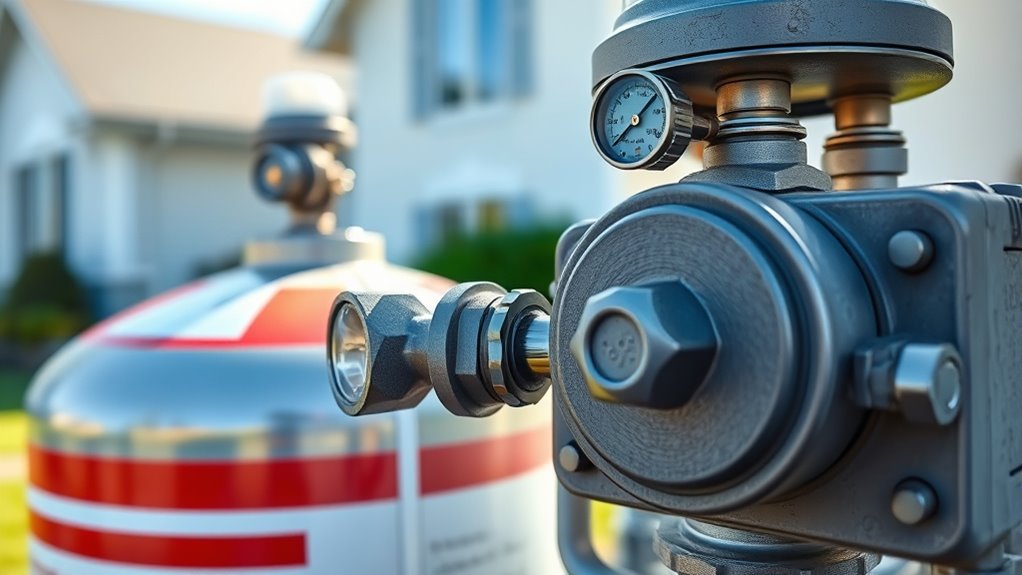

When choosing between propane and natural gas for your home standby system, consider your area’s infrastructure, fuel costs, and environmental goals. Propane offers flexibility with on-site storage, making it ideal if natural gas lines aren’t available, but it can be more costly and less stable in price. Natural gas provides a steady, cleaner, and often less expensive supply if you have access to pipelines. Keep exploring to find out which fuel suits your needs best.

Get backup power and energy gear delivered free — and shop member deals
- Fast, free delivery on millions of items
- Access to Prime Big Deal Days deals on October 6–7
- Prime Video, Amazon Music and more included
Key Takeaways
- Natural gas provides a continuous, reliable supply via pipelines, ideal for consistent home standby power.
- Propane offers greater energy density and on-site storage, beneficial where pipeline access is limited.
- Natural gas burns cleaner, producing fewer pollutants and greenhouse gases than propane.
- Propane may involve higher costs and maintenance due to tank installation and refilling needs.
- Infrastructure availability significantly influences the practicality and cost-effectiveness of each fuel option.
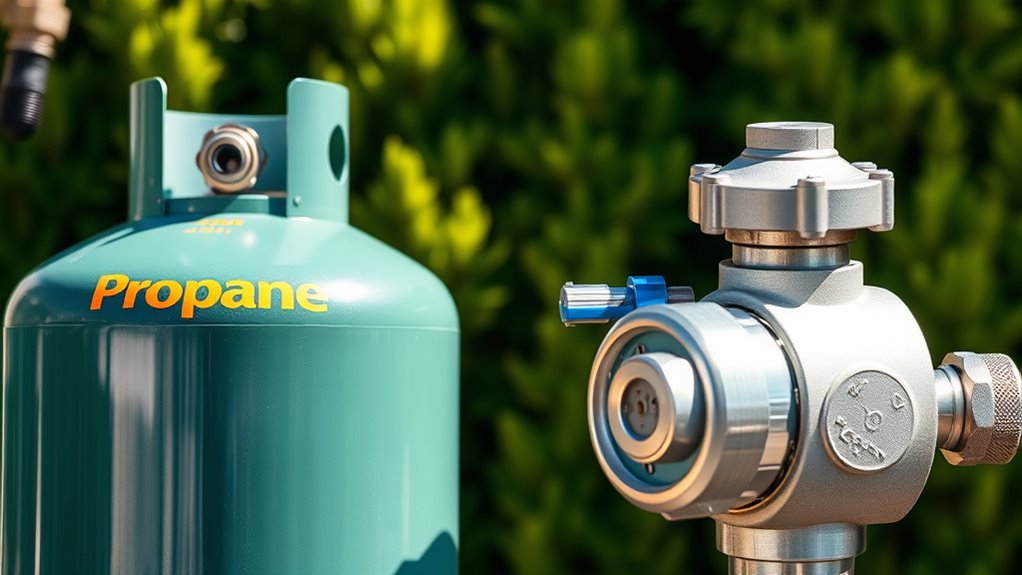
When choosing between propane and natural gas for your home or business, understanding their differences can help you make an informed decision. Both fuels serve as reliable energy sources, but they differ markedly in terms of energy efficiency and environmental impact, which are vital factors for your long-term satisfaction and sustainability. Propane, stored as a liquid in tanks, tends to have a higher energy content per unit volume than natural gas, making it more energy-dense. This means that for the same amount of fuel, propane can often deliver more heat, which can translate into better energy efficiency for your heating needs. However, because propane is stored on-site and needs to be replenished periodically, you might experience occasional supply disruptions, especially during extreme weather conditions or if your tank isn’t properly maintained.
Natural gas, on the other hand, is delivered through underground pipelines directly to your property, providing a steady, reliable supply. This continuous delivery can result in more consistent energy efficiency, as you don’t need to worry about refilling tanks or running out of fuel unexpectedly. From an environmental perspective, natural gas generally burns cleaner than propane, producing fewer greenhouse gases and pollutants per unit of energy. If reducing your carbon footprint is a priority, natural gas has the edge, as its combustion emits less carbon dioxide, nitrogen oxides, and particulate matter. Propane, while still considered a cleaner-burning fossil fuel compared to coal or oil, releases more CO2 per unit of energy than natural gas, which might influence your choice if environmental impact is a top concern.
Cost considerations also play a role. Propane’s price can fluctuate more markedly since it’s influenced by regional supply and demand, and you’ll need to factor in the costs of tank installation and maintenance. Natural gas tends to be less expensive and more stable in price because it’s supplied via pipelines, but this depends heavily on your location and access to the natural gas grid. When making your decision, weigh these factors carefully: if energy efficiency and lower environmental impact are your priorities, natural gas might be the better choice. However, if you need portability, or live in an area where natural gas isn’t available, propane offers a flexible alternative.
Additionally, the availability of infrastructure** in your area can significantly influence which fuel is more practical and cost-effective for your needs. Ultimately, both fuels can meet your heating and energy needs effectively, but understanding their differences in energy efficiency and environmental impact will help you select the best option for your specific situation. Your choice should align with your budget, environmental values, and the infrastructure available in your area**, ensuring you get reliable and efficient energy for years to come.
Frequently Asked Questions
Can I Switch Between Propane and Natural Gas Easily?
You can’t easily switch between propane and natural gas due to fuel compatibility and installation flexibility. Most systems are designed specifically for one fuel type, requiring conversion kits and adjustments to burners and regulators. If you want to switch, you’ll need to consult a professional to guarantee proper modifications and safety compliance. This process isn’t straightforward and involves more than just changing fuel sources, so plan accordingly.
Which Fuel Is More Environmentally Friendly?
Natural gas is generally more environmentally friendly than propane because it has lower emission levels and a smaller environmental impact. It burns cleaner, producing fewer greenhouse gases and pollutants. If you’re concerned about reducing your carbon footprint, natural gas is the better choice. However, both fuels are cleaner options compared to other fossil fuels, but natural gas’s lower emission levels make it the more eco-friendly option for your home.
How Do Costs Compare Over the Long Term?
You might think the costs are straightforward, but they’re more nuanced than that. Over the long term, natural gas generally costs less due to lower price fluctuation and consistent rates, while propane can vary more sharply. Installation expenses for natural gas are often higher initially, but propane’s ongoing fuel costs can add up. So, consider both upfront and future costs carefully before deciding which fuel truly saves you money over time.
Are There Safety Concerns Unique to Each Fuel?
You should know that both propane and natural gas have safety concerns related to storage safety and leak prevention. Propane is stored as a pressurized liquid, so leaks can lead to fire hazards if not properly sealed. Natural gas is lighter than air and can accumulate, creating explosion risks if leaks aren’t detected early. Regular maintenance, proper storage, and leak detection help mitigate these risks for both fuels.
Which Fuel Type Requires More Maintenance?
You’ll find that propane systems generally require more maintenance than natural gas. Propane needs a storage tank, which requires regular inspections and refilling to ensure safety and efficiency. Conversely, natural gas is supplied directly through pipelines, reducing storage concerns. Remarkably, propane’s fuel efficiency can be slightly higher, but the added maintenance for tank upkeep means you’ll spend more time on inspections and repairs compared to natural gas, which is more hassle-free.
Conclusion
Choosing between propane and natural gas is like deciding which path to take in a story—each has its own advantages. As you weigh your options, remember the wise words of the old tale: the right choice depends on your unique needs and circumstances. By understanding your home’s demands and fuel options, you can confidently select the best standby fuel. Ultimately, your decision shapes your comfort and security, so choose wisely and write your own story of reliable power.
Fall Picks
fall essentials
As an affiliate, we earn on qualifying purchases.