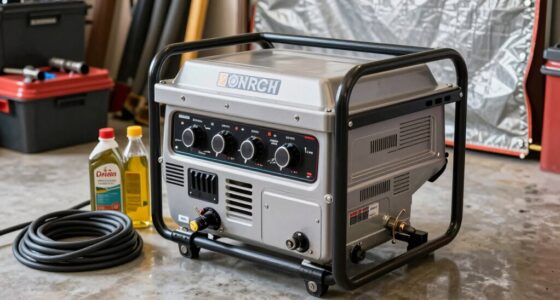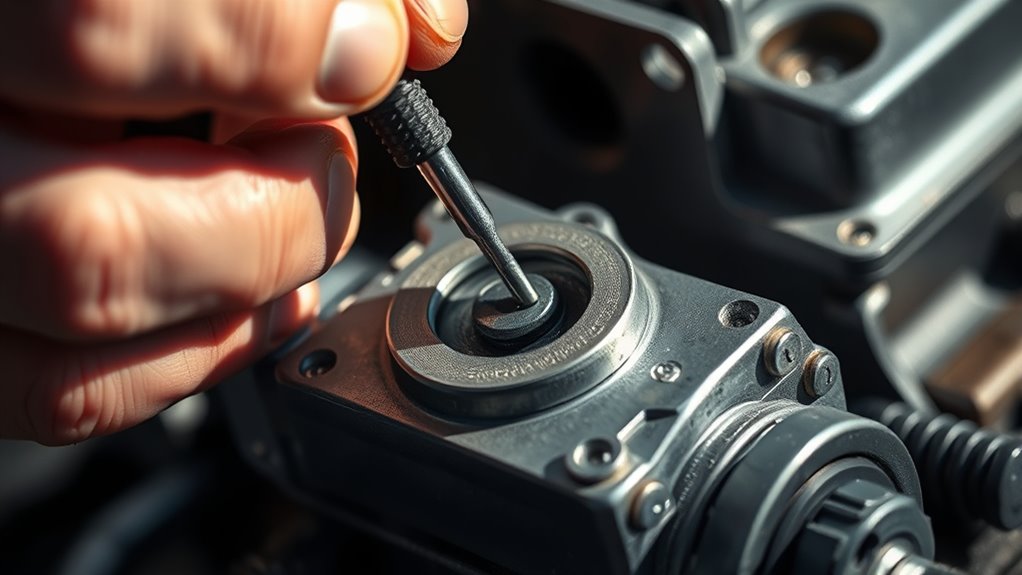

To adjust the idle speed and choke on your small engine, first verify the engine is warm. Turn the idle screw clockwise for higher RPM or counterclockwise to lower it, aiming for a steady, smooth idle without stalling. Check the choke to make sure it opens and closes freely; adjust if it sticks. Fine-tuning these settings helps your engine run smoothly and reliably, and you’ll find even better results as you learn more about proper adjustments.

Get backup power and energy gear delivered free — and shop member deals
- Fast, free delivery on millions of items
- Access to Prime Big Deal Days deals on October 6–7
- Prime Video, Amazon Music and more included
Key Takeaways
- Warm up the engine before making adjustments for accurate idle and choke settings.
- Turn the idle screw clockwise to increase RPM and counterclockwise to decrease it, aiming for a smooth, steady idle.
- Ensure the choke plate moves freely and closes fully during startup, then gradually opens as the engine warms.
- Adjust the choke for a proper rich mixture during cold starts; verify it fully closes and opens smoothly.
- Make small, incremental adjustments and test engine response to prevent stalling or racing.
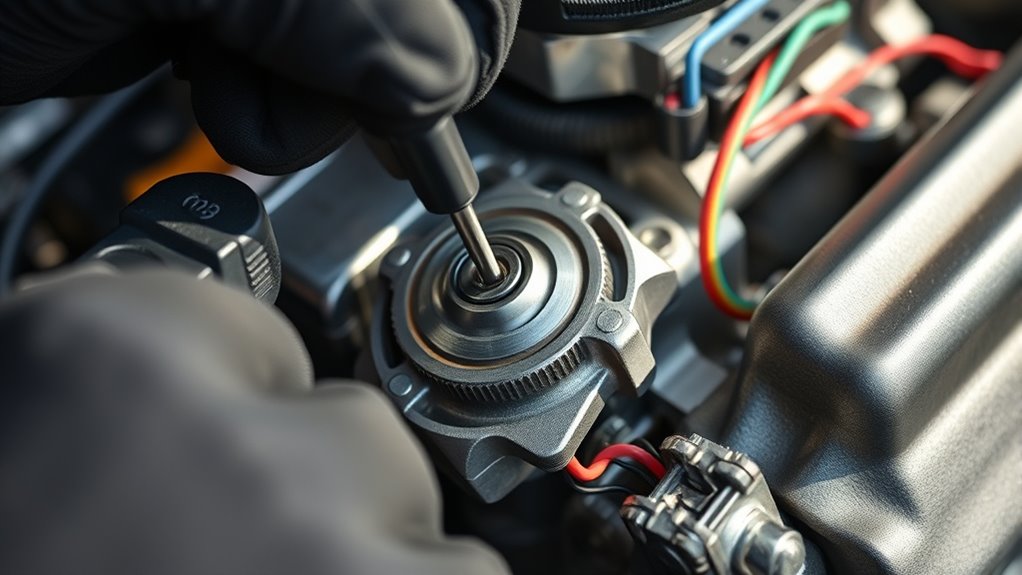
Adjusting small engine settings is essential for ideal performance and longevity. When it comes to your engine, proper tuning can make all the difference between smooth operation and frustrating stalls or poor power. One of the key aspects of this tuning involves managing the fuel mixture and carburetor settings, which directly influence how well your engine runs. If your engine runs roughly, stalls frequently, or consumes fuel excessively, it’s time to check and modify these components.
Start by focusing on the carburetor tuning, which controls the fuel flow into your engine. A well-tuned carburetor maintains the correct fuel mixture—neither too rich nor too lean—ensuring ideal combustion. To begin, locate the carburetor adjustment screws, usually marked as “high” and “low” speed screws. These screws regulate the air-fuel mixture at different engine speeds. Before making adjustments, warm up your engine for a few minutes. This ensures you’re tuning based on normal operational conditions, not cold start behavior.
Proper carburetor tuning ensures optimal fuel mixture and smooth engine performance.
Adjust the idle speed screw first. Turning it clockwise increases the engine’s idle RPM, making it run faster at idle, while turning it counterclockwise slows it down. Your goal is to find the highest RPM without the engine racing or causing the chain or blades to turn uncontrollably. A steady, smooth idle indicates the engine is properly balanced. If the engine stalls when you try to engage the blades or load the engine, the idle speed might be set too low. Conversely, if it races or sounds strained, it’s too high. Adjust accordingly, making small turns and listening carefully to the engine’s response.
Next, turn your attention to the choke setting. The choke restricts airflow, enriching the fuel mixture during startup. If your engine struggles to start or runs poorly immediately after starting, check the choke operation. Make sure the choke plate moves freely and is fully closing when engaged. If it’s stuck open or not closing properly, your engine may not get the rich mixture it needs for cold starts. Once warmed up, you can gradually open the choke to prevent flooding or flooding the carburetor, which can cause difficulty restarting. Proper choke adjustment ensures easy starts and smooth running once warmed up. Additionally, understanding how essential oils can support overall engine health and maintenance might be beneficial for prolonged performance.
Frequently Asked Questions
How Often Should I Check the Idle Speed on My Small Engine?
You should check the idle speed on your small engine at least once a season or after every 25 hours of use, whichever comes first. Regularly inspecting your engine helps catch issues early, preventing costly repairs. Follow your maintenance schedule and keep an eye out for troubleshooting tips, like irregular idling or stalling. Consistent checks guarantee smooth operation and extend your engine’s lifespan.
Can Adjusting the Choke Affect Engine Performance During Operation?
Yes, adjusting the choke can affect engine performance during operation. If the choke malfunctions or is set improperly, you might experience engine hesitation or rough running. When you open or close the choke, it controls airflow and fuel mixture, so improper adjustments can cause poor acceleration, stalling, or increased emissions. Always guarantee the choke operates smoothly and is correctly adjusted to avoid these issues and maintain ideal engine performance.
What Tools Are Needed for Adjusting the Idle and Choke Settings?
Like a skilled surgeon, you need the right tools for precise adjustment procedures. To adjust the idle and choke settings, gather a flat-head screwdriver, a Phillips-head screwdriver, and a carburetor adjustment tool if necessary. These tools help you turn screws and levers smoothly, ensuring proper engine performance. Always consult your engine’s manual for specific tools and adjustment procedures, so your small engine runs efficiently and reliably.
Are There Safety Precautions to Consider Before Adjusting These Settings?
Before adjusting the idle speed and choke settings, you should wear safety gear like gloves and eye protection. Always make certain the engine is completely shut down and cooled to prevent burns or injuries. Disconnect the spark plug wire to avoid accidental starting. These precautions keep you safe during adjustments, reducing the risk of injury. Taking these steps ensures a safer, more effective tuning process.
How Do Temperature Changes Impact Idle Speed and Choke Adjustments?
Temperature effects can markedly impact your engine’s responsiveness, requiring you to adjust idle speed and choke settings accordingly. When it’s cold, your engine may need a richer choke setting to start smoothly, and you might need to increase idle speed for better performance. Conversely, in warmer weather, reduce the choke and lower the idle speed to prevent stalling. Always monitor engine behavior to optimize performance across temperature changes.
Conclusion
Tuning your small engine is like fine-tuning a musical instrument—when you get it just right, everything plays smoothly. With a little patience and care, you can keep your engine humming along like a well-oiled machine. Remember, each adjustment is a note in the symphony of your outdoor tools. Keep practicing, and soon, you’ll be the maestro of your small engine, ensuring it runs perfectly every time you need it.
Fall Picks
fall essentials
As an affiliate, we earn on qualifying purchases.