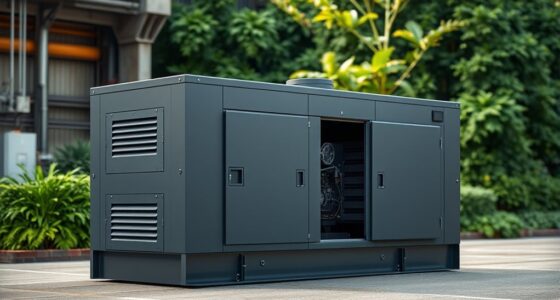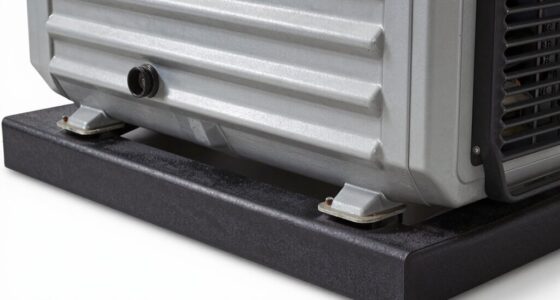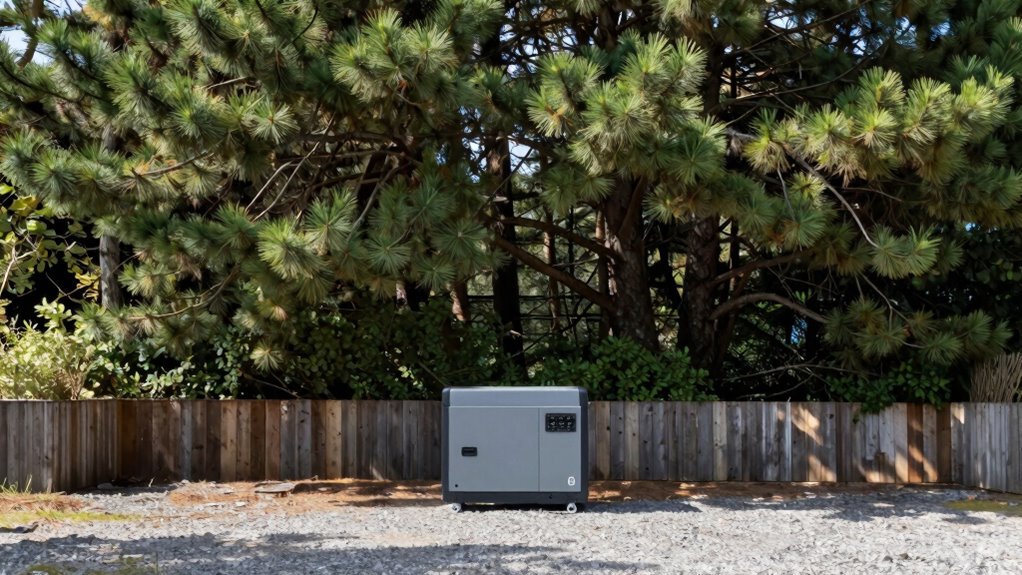

To place your generator for less annoying sound reflection, find a flat, stable spot away from windows, doors, and outdoor living areas. Use natural barriers like thick hedges or shrubs behind the generator to absorb sound, and position it near structures such as sheds or fences to create a “sound shadow.” Adding acoustic barriers and soundproofing materials can further reduce noise. Want to discover more effective placement tips? Keep exploring for advanced strategies.
Play games included with Prime
Start a Prime free trial and play with Amazon Luna on your devices.
As an affiliate, we earn on qualifying purchases.
Key Takeaways
- Position the generator on a flat, stable surface away from windows, doors, and outdoor living areas.
- Use natural barriers like thick hedges or shrubs behind the generator to absorb sound.
- Install dense acoustic barriers around the generator, facing reflective surfaces, to block sound paths.
- Place the generator near existing structures like sheds or fences to create a “sound shadow.”
- Incorporate sound-absorbing materials or enclosures to enhance noise reduction efforts.
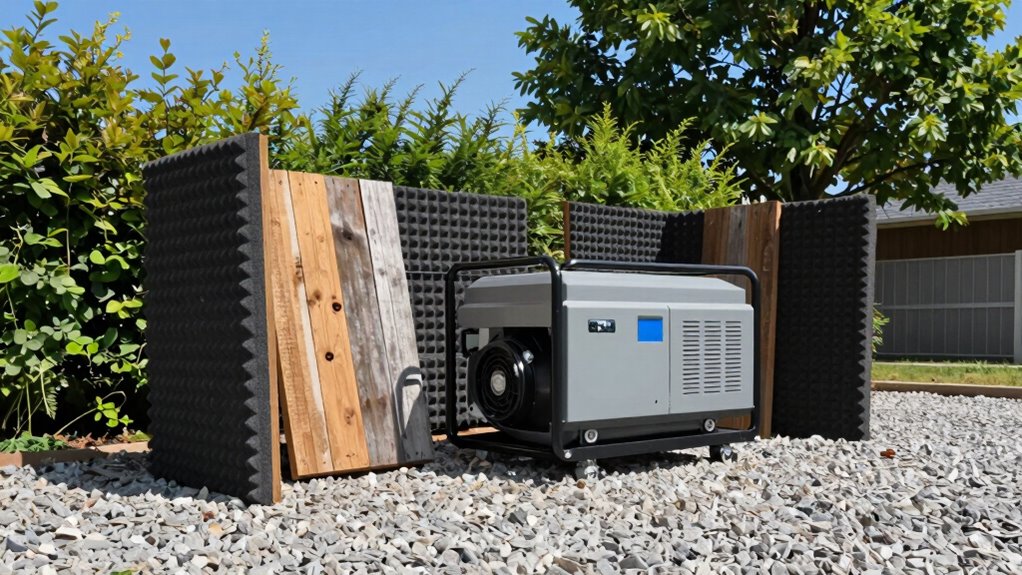
When operating a generator outdoors, you might notice that its sound echoes and amplifies, creating a disturbance not just for you but also for your neighbors. To minimize this noise reflection, you need to be strategic about where and how you place your generator. The goal is to reduce the sound’s ability to bounce off reflective surfaces and improve noise absorption around the unit. First, consider the location. Position your generator on a flat, stable surface that’s as far as possible from windows, doors, and outdoor living areas. The farther you are from these reflective surfaces, the less sound will travel and bother others.
Surfaces like concrete, metal, and smooth pavement tend to reflect sound waves, making the noise seem louder and more pervasive. To counteract this, you can create a buffer zone using natural or man-made noise absorbers. For example, placing the generator behind a thick hedge, shrubbery, or a specially designed sound barrier can help absorb some of the noise before it escapes into the environment. These natural barriers work by trapping sound waves, preventing them from bouncing back and forth, which reduces the overall reflection.
Using natural barriers like hedges and shrubs can effectively absorb and reduce generator noise reflections.
If you don’t have access to natural barriers, consider installing temporary or permanent acoustic barriers around your generator. These barriers are often made of dense, sound-absorbing materials like foam, mass-loaded vinyl, or specialized acoustic panels. Position these barriers so they face the reflective surfaces, like walls or fences, to absorb sound energy directly. Avoid placing the generator directly against reflective surfaces; instead, set it at an angle or distance to disrupt sound waves from bouncing directly back toward your living or neighbor’s space.
Another effective technique involves creating a “sound shadow” by positioning the generator relative to nearby structures. For example, placing it near a shed, garage, or fence can help block direct sound paths. The idea is to utilize existing structures as additional noise absorbers, breaking up sound reflection patterns and reducing the overall noise footprint. Additionally, considering the sound absorption properties of different materials can further enhance noise reduction efforts. Incorporating barriers made of absorptive materials can significantly reduce sound reflection, especially when combined with strategic placement. Using soundproofing techniques such as installing sound-dampening panels or enclosures can amplify the effectiveness of your placement strategies and help create a quieter environment.
Furthermore, paying attention to environmental factors like wind direction and ambient noise levels can influence how well your noise mitigation methods perform. In short, proper placement involves considering the environment, using natural or artificial barriers to absorb noise, and avoiding reflective surfaces that can amplify sound. By thoughtfully positioning your generator, you can enjoy its power without disturbing your peace or that of your neighbors.

Hudson Generator Box, SD Aluminum Generator Enclosure with Ventilation, Heat Dissipation & Reduce Noise, Accommodates The Maximum Size of 39.4"x32"x31.7", White
- Efficient Ventilation: Louvered vents and airflow openings for cooling
- Active Cooling System: High-speed fan boosts airflow and temperature control
- Quiet Operation: Phenolic foam lining reduces noise levels
As an affiliate, we earn on qualifying purchases.
As an affiliate, we earn on qualifying purchases.
Frequently Asked Questions
What Types of Generators Produce the Loudest Noise?
You’ll find that open-frame generators produce the loudest noise compared to enclosed models, due to less sound insulation. Regular generator maintenance helps keep noise levels in check, but the noise level comparison shows open designs are louder. To reduce your noise impact, choose enclosed or inverter generators, which are quieter. Placing your generator properly and maintaining it well can make a big difference in minimizing sound reflection and overall noise.
How Does the Surrounding Landscape Affect Sound Reflection?
Surprisingly, sound can reflect up to 50% more in open spaces compared to areas with natural barriers. Your surrounding landscape features, like hills, trees, or buildings, substantially influence sound reflection. Natural barriers can absorb or deflect noise, reducing reflections and making the generator quieter for you. By strategically placing your generator near these landscape features, you can minimize sound reflection and create a more comfortable environment.
Are There Specific Materials That Absorb Generator Noise Better?
Yes, certain materials are better at absorbing generator noise. Look for absorption materials like acoustic foam, mineral wool, or mass-loaded vinyl, which help dampen sound waves. Noise barriers made of dense, soundproof materials also block and absorb noise effectively. By combining absorption materials with well-placed noise barriers, you can considerably reduce the reflection and transmission of generator noise, creating a quieter environment around your setup.
Can Soundproof Barriers Completely Eliminate Generator Noise?
Think of soundproof barriers as a fortress around your generator, but even the strongest walls can’t fully silence a storm. They considerably reduce noise, yet some sound waves still sneak through, like whispers in a crowded room. Proper generator placement enhances this effect, minimizing reflection. While soundproof barriers greatly lower noise levels, they can’t completely eliminate generator noise, but they make it much more bearable for your surroundings.
How Often Should I Relocate My Generator for Optimal Sound Reduction?
You should relocate your generator every few months to maintain ideal sound reduction. Regular generator placement adjustments help minimize sound reflection, preventing noise from bouncing back to your living space. Consider changing the position whenever you notice increased noise levels or after significant environmental changes. By staying proactive with generator placement, you’ll keep sound reflection under control, ensuring quieter operation and less disruption to your neighbors or surroundings.
outdoor generator acoustic barrier
As an affiliate, we earn on qualifying purchases.
As an affiliate, we earn on qualifying purchases.
Conclusion
By carefully choosing your generator’s placement, you can substantially reduce annoying sound reflections. For instance, imagine placing your generator behind a shed or wrapped with soundproof fencing—this setup absorbs and deflects noise, making your outdoor space more peaceful. Think of it like shielding a speaker with a cushion; the sound disperses less. With these simple steps, you’ll enjoy the power you need without disturbing your peace or your neighbors.

TroyStudio Portable Sound Proof Box, 16" x 12" x 16.2" Noise Reduction Enclosure, Light Blocking Quiet Cover, Soundproof Barrier for Ultrasonic Cleaner, Air Pump, Rock Tumbler & Generator
- Dimensions and Components: 16x12x16.2-inch foldable design
- Noise Reduction Capability: Reduces noise up to 21.5dB
- Light Blocking Feature: Seals out light for peaceful sleep
As an affiliate, we earn on qualifying purchases.
As an affiliate, we earn on qualifying purchases.
sound absorbing materials for generator
As an affiliate, we earn on qualifying purchases.
As an affiliate, we earn on qualifying purchases.
Fall yard work Picks
leaf blowers
As an affiliate, we earn on qualifying purchases.