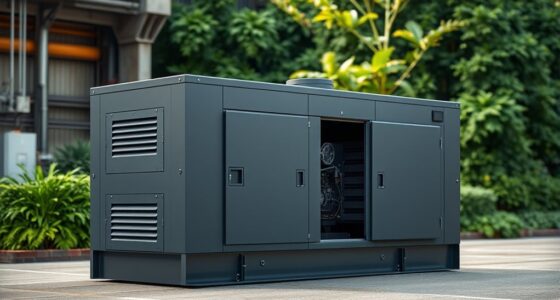

When the load level changes, you’ll notice the generator’s tone and loudness shift because its internal mechanics respond to electrical demand. Increasing load makes the engine rev higher, producing louder, strained sounds, while lighter loads cause lower RPMs and softer tones. These fluctuations happen as the generator adjusts fuel and excitation, leading to vibrations and tonal shifts. To understand how to manage these noise changes and keep your generator running smoothly, keep exploring this topic further.

Get backup power and energy gear delivered free — and shop member deals
- Fast, free delivery on millions of items
- Access to Prime Big Deal Days deals on October 6–7
- Prime Video, Amazon Music and more included
Key Takeaways
- Load fluctuations cause engine speed changes, affecting the generator’s tone and loudness.
- Increased load leads to higher engine RPM, resulting in louder and more strained sounds.
- Variations in load cause shifts in internal combustion and mechanical vibrations, altering noise quality.
- Control system adjustments during load changes generate transient tonal and loudness variations.
- Proper load management minimizes irregular noise changes and maintains consistent generator operation.
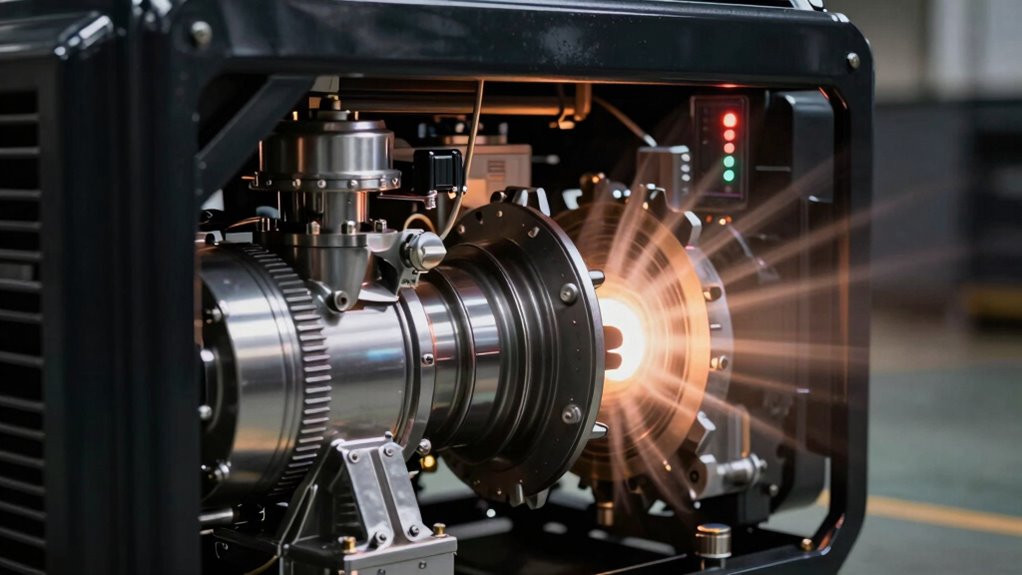
When the load level on a generator changes, you’ll notice shifts in both the tone and loudness of its operation. These fluctuations are common and directly linked to load fluctuation, which occurs when the amount of electrical demand varies. As the load increases or decreases, the generator’s internal mechanics respond, leading to noticeable changes in generator noise. You might observe the engine revving higher during heavy loads or quieting down when demand drops. This variation is a natural consequence of how generators regulate power output and manage internal components.
Generator noise varies with load, reflecting internal adjustments as engine speed and output change to meet electrical demand.
The reason behind these changes lies in how the generator’s engine and alternator work together to meet electrical demands. When the load is light, the engine runs at a lower speed, producing a softer sound and a more stable tone. Conversely, as the load ramps up, the engine accelerates to produce more power, which often results in a louder, more strained sound. This is because the engine’s internal combustion process has to work harder to supply the increased demand, causing the overall generator noise to rise. You may also notice a change in the pitch or tone, as the engine’s RPM fluctuates with load changes, affecting the sound characteristics.
Load fluctuation can cause the generator’s voltage and frequency to shift slightly, which also impacts noise levels. When the load increases suddenly, the generator’s control systems respond by adjusting fuel and excitation levels, leading to transient sounds or vibrations. These temporary shifts in tone and loudness are typical and generally indicate the generator is adapting to the new load conditions. If you hear a persistent, abnormal noise or a sudden spike in loudness, it might signal an issue with load regulation or mechanical components. Regular maintenance and monitoring can help ensure these fluctuations stay within normal ranges, preventing excessive wear and tear. Additionally, accurate load management can help minimize unnecessary noise fluctuations and prolong the lifespan of your generator.
Furthermore, understanding the internal mechanics of the generator can assist in diagnosing unusual noises or behavior during operation. Properly balancing the load and ensuring all components are functioning correctly can reduce vibrations and noise irregularities. In essence, the variation in generator noise as load changes is a reflection of its internal dynamics. Load fluctuation causes the engine to adjust speed, which directly influences the tone and loudness. Recognizing how load fluctuations impact generator performance helps operators anticipate and respond to potential issues more effectively. Understanding this relationship helps you anticipate how your generator will behave under different conditions. If you notice consistent, significant changes in noise that seem out of the ordinary, it’s wise to inspect the system or consult with a technician. Recognizing these patterns allows you to maintain your generator better, ensuring it runs smoothly regardless of load variations.
As an affiliate, we earn on qualifying purchases.
Frequently Asked Questions
How Does Load Level Impact Generator Maintenance Schedules?
Load level impacts your generator’s maintenance schedules because fluctuations in load stability cause stress on components, leading to wear and tear. When the load is high or unstable, maintenance intervals should be shortened to prevent failures. Conversely, stable loads allow for extended maintenance intervals. Monitoring load patterns helps you optimize maintenance timing, ensuring your generator remains reliable and efficient while reducing downtime and repair costs.
Can Load Fluctuations Cause Long-Term Damage to Generators?
Yes, load fluctuations can cause long-term damage to generators. When load stability isn’t maintained, power fluctuations put extra stress on the generator components. Frequent or sudden changes in load can accelerate wear and tear, leading to overheating or mechanical failures over time. To prevent this, you should aim for consistent load levels and monitor power fluctuations closely, ensuring your generator operates smoothly and lasts longer.
What Are the Best Practices for Managing Load Changes?
You need to master load management to prevent surprises. Implement load balancing strategies to evenly distribute power demands, ensuring seamless shift during load changes. Always monitor power stability closely; abrupt shifts can cause generator tone and loudness fluctuations, risking equipment health. Regularly calibrate your control systems, anticipate demand peaks, and communicate with your team. Staying proactive keeps the system running smoothly, avoiding potential damage and maintaining ideal performance.
How Does Load Level Affect Generator Fuel Efficiency?
Your load level directly impacts generator fuel efficiency. When the load is low or fluctuates rapidly, fuel consumption can increase due to inefficient engine operation. Maintaining a stable load helps maximize efficiency, reducing unnecessary fuel use. By managing load levels carefully, you can achieve better efficiency, lower operational costs, and extend your generator’s lifespan. Consistent load management is essential for peak fuel consumption and overall efficiency.
Are There Specific Industries More Affected by Load Level Changes?
You’re in a world where load level changes can shake industries to their core! Industries like manufacturing and data centers are especially sensitive, with load fluctuations impacting generator tone and loudness considerably. In renewable energy sectors, variability in power generation makes load level shifts even more critical. These industries must carefully manage load levels to prevent equipment stress, optimize efficiency, and maintain seamless operations amidst unpredictable power demands.
As an affiliate, we earn on qualifying purchases.
Conclusion
Understanding how load level changes affect generator tone and loudness helps you anticipate and manage noise levels effectively. Did you know that a sudden load increase can cause a generator’s sound level to spike by up to 10 decibels? This highlights the importance of smooth load shifts for maintaining consistent noise and performance. By controlling load fluctuations, you guarantee quieter operation and prolong your generator’s lifespan, keeping your environment comfortable and equipment reliable.
As an affiliate, we earn on qualifying purchases.
automatic load regulator for generators
As an affiliate, we earn on qualifying purchases.
As an affiliate, we earn on qualifying purchases.
Fall Picks
fall essentials
As an affiliate, we earn on qualifying purchases.