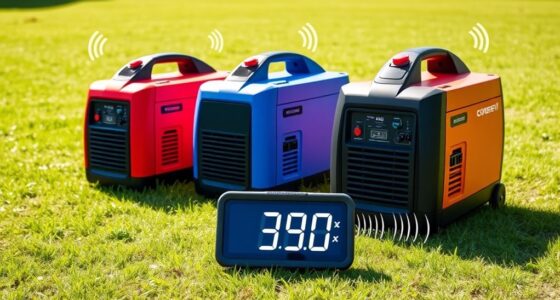

Yes, water-cooled generators tend to run quieter than air-cooled models because they eliminate the large, noisy fans needed for cooling. Water’s higher heat capacity improves cooling efficiency, which reduces mechanical stress and vibrations that cause noise. Plus, their design often incorporates sound-dampening features and vibration isolators. If you’d like to discover how these features further reduce noise and enhance performance, keep exploring the benefits of water-cooled generators.
Get ready for Prime Big Deal Days — try Prime free
Exclusive member deals on October 6–7, plus fast free delivery. Cancel anytime.
As an affiliate, we earn on qualifying purchases.
Key Takeaways
- Water-cooled generators operate more quietly than air-cooled units due to the absence of large fans.
- Higher cooling efficiency reduces mechanical stress and vibration, lowering noise levels.
- Sound-dampening features and vibration isolators further minimize operational noise.
- Effective water cooling decreases reliance on noisy cooling components, resulting in quieter performance.
- Overall, water-cooled generators are designed for quieter operation, ideal for noise-sensitive environments.
Water-cooled generators are vital for maintaining ideal performance and preventing overheating in large-scale power systems. They rely on water as a cooling medium to efficiently transfer heat away from the generator’s components, ensuring smooth operation even under heavy loads. One common question people have is whether water-cooled generators run quieter compared to other types. The answer depends on several factors, but generally, they can be designed to operate with significant noise reduction, thanks in part to their cooling efficiency.
Unlike air-cooled generators, which often produce more noise due to fan operation and airflow turbulence, water-cooled units tend to be quieter. The water-based cooling system eliminates the need for large fans, reducing the mechanical noise that can be disruptive, especially in sensitive environments. When you consider noise reduction, water-cooled generators often have an advantage because their cooling process is more contained and less reliant on noisy fans. This makes them suitable for settings where noise levels matter, such as hospitals, data centers, or residential areas near industrial facilities.
Water-cooled generators run quieter by eliminating noisy fans and airflow turbulence.
Cooling efficiency plays a vital role in how quiet these generators can be during operation. Because water has a higher heat capacity than air, it absorbs and carries away heat more effectively. This means the generator’s components stay cooler and more stable, which reduces the likelihood of thermal expansion and vibration that can generate additional noise. In practice, this improved cooling efficiency allows the generator to run at optimal temperatures with less mechanical stress, which further minimizes noise output. When the cooling system runs efficiently, the generator doesn’t need to work as hard to dissipate heat, leading to less operational noise overall.
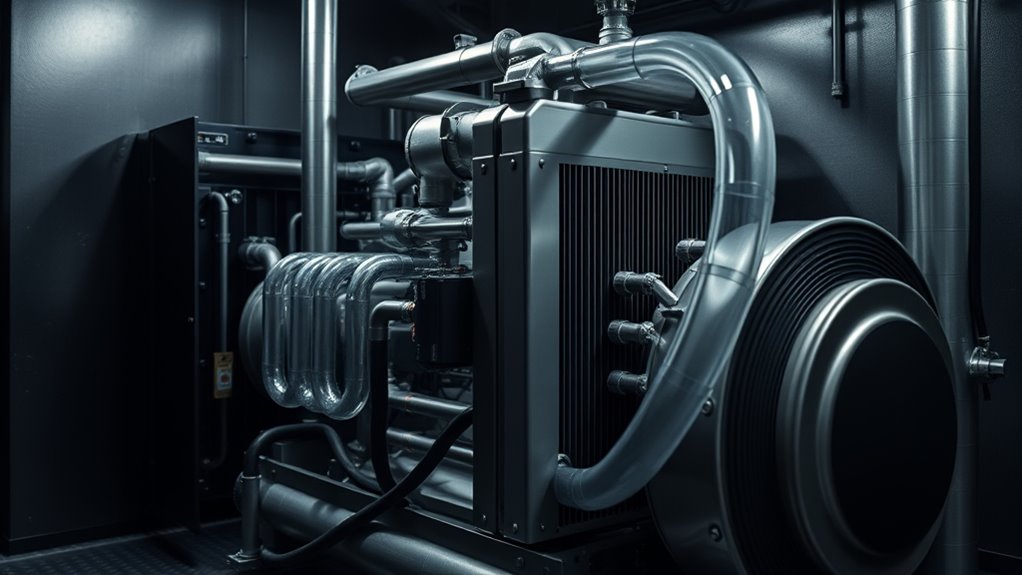
Another aspect that influences noise levels is the design of the water circulation system. Modern water-cooled generators incorporate sound-dampening features like insulated enclosures, vibration isolators, and low-noise pumps. These elements work together to keep noise emissions to a minimum, making water-cooled systems a quieter choice. When you choose a water-cooled generator, you’re also benefiting from these noise mitigation strategies, which improve the overall environment and reduce disturbance. Proper cooling system design also contributes significantly to reducing operational noise and enhancing overall reliability.
water cooled generator noise reduction
As an affiliate, we earn on qualifying purchases.
As an affiliate, we earn on qualifying purchases.
Frequently Asked Questions
How Does Water Cooling Impact Generator Lifespan?
Water cooling can extend your generator’s lifespan by maintaining ideal operating temperatures, which improves generator efficiency. This system helps prevent overheating and reduces wear on components, leading to fewer breakdowns. Additionally, water cooling contributes to noise reduction, making your generator run quieter. Overall, investing in water cooling not only boosts performance but also guarantees your generator stays reliable and lasts longer, saving you maintenance costs over time.
Are Water-Cooled Generators More Environmentally Friendly?
While water-cooled generators may not be the ultimate eco-friendly choice, they do promote a sense of responsible operation through noise reduction and cooling efficiency. By minimizing sound emissions and optimizing thermal management, you’re contributing to a quieter, more environmentally conscious environment. Their efficient cooling system reduces waste heat, lowering environmental impact, making them a thoughtful option for environmentally aware users seeking better noise control and sustainable performance.
What Maintenance Is Required for Water-Cooled Systems?
You need to regularly check and maintain your cooling system to keep it running efficiently. Follow a strict maintenance schedule that includes inspecting coolant levels, cleaning or replacing filters, and checking for leaks or corrosion. Make certain the water pump functions properly and monitor the temperature to prevent overheating. Proper maintenance helps your water-cooled system operate quietly and extends its lifespan, saving you time and costly repairs down the line.
Can Water-Cooled Generators Operate in Cold Climates?
Yes, water-cooled generators can operate in cold climates, but you need to address cold weather and insulation challenges. You might need to install antifreeze solutions, guarantee proper insulation, and use heated enclosures to prevent freezing. By taking these steps, you keep the cooling system functional, protect components from cold damage, and assure reliable operation, even when temperatures drop considerably. Proper preparation helps your generator run smoothly in cold conditions.
Do Water-Cooled Generators Have Higher Installation Costs?
Yes, water-cooled generators often have higher installation costs because they require additional components like cooling systems and plumbing. Your initial investment is typically higher compared to air-cooled models, since setting up water circulation and ensuring proper insulation adds to expenses. However, these costs can be offset over time by their quieter operation and better efficiency, especially in large or continuous-use settings.
As an affiliate, we earn on qualifying purchases.
Conclusion
So, if you’re worried that water-cooled generators might be noisy, rest assured—they actually run quieter than air-cooled ones. You might think the water system adds noise, but it’s designed to dampen vibrations and reduce sound. With proper maintenance, you’ll enjoy a quieter operation and fewer disruptions. Don’t let the cooling method hold you back—water-cooled generators are a smart, silent choice for reliable power when you need it most.
generator sound dampening enclosure
As an affiliate, we earn on qualifying purchases.
As an affiliate, we earn on qualifying purchases.
vibration isolators for generators
As an affiliate, we earn on qualifying purchases.
As an affiliate, we earn on qualifying purchases.
Fall Picks
fall essentials
As an affiliate, we earn on qualifying purchases.