
This guide helps you select a portable inverter generator for camping, backup power, or outdoor work, then connect loads and operate it safely. It is for beginners who can follow appliance labels and the generator’s manual. Plan 1–2 hours to compare models and prepare the equipment, then about 10–20 minutes to set up each time you use it. Generator models differ, so use the instructions supplied with your exact unit whenever they differ from general guidance here.

Get backup power and energy gear delivered free — and shop member deals
- Fast, free delivery on millions of items
- Access to Prime Big Deal Days deals on October 6–7
- Prime Video, Amazon Music and more included

WEN DF480iX 4800-Watt Dual Fuel Portable Inverter Generator
- ✔ Gasoline surge output: 4800 W
- ✔ Gasoline rated output: 4000 W
- ✔ Propane surge output: 4320 W

Oxseryn 4400 Watts Portable Inverter Generator
- ✔ Peak output: 4400 W
- ✔ Running output: 3400 W
- ✔ Weight: 56 lbs

Oxseryn 2800-Watt Portable Inverter Generator
- ✔ Peak output: 2800 W
- ✔ Running output: 2000 W
- ✔ Weight: 39 lbs
Difficulty: Beginner | Time: 1–2 hours for selection and setup; 10–20 minutes per use
What You’ll Need
Tools & Materials:
- Portable inverter generator with its owner’s manual
- Appliance labels or manuals showing running and starting wattage
- Outdoor-rated extension cords sized for the load and distance
- Fuel specified by the generator manufacturer
- Approved fuel container, if the generator uses gasoline
- Flashlight and basic hearing protection
Knowledge:
- Ability to read wattage and voltage labels
- Basic understanding that fuel-powered generators produce carbon monoxide
- Awareness of the generator’s controls and warning labels from its manual
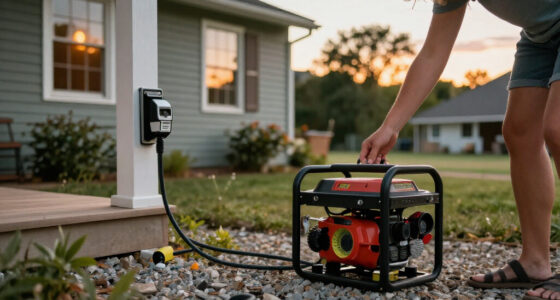
Choose an open outdoor location away from doors, windows, vents, and attached garages. Never run a fuel-powered generator indoors, in a garage, or in an enclosed or partly enclosed space. Check local rules, fire restrictions, and manufacturer instructions before use. If you want to supply household wiring, arrange a code-compliant transfer switch with a qualified electrician; never connect a generator to a household outlet or utility wiring directly.
WEN DF480iX 4800-Watt Dual Fuel Portable Inverter Generator
The WEN is the most adaptable choice in this group for buyers who want one generator to cover both trips and backup duties. Its 4000 rated watts on gasoline give it the strongest stated sustained output here, while propane operation offers another way to fuel it when gasoline storage or access is inconvenient. Propane output is lower—4320 surge watts compared with 4800 on gasoline—and that distinction matters when estimating what it can start and run. It remains important to size loads by rated output, not just the larger surge figure.Portability is handled differently from the Oxseryn models. At 56 pounds, the WEN is not described as a featherweight carry, but wheels and a telescoping handle make moving it across a campsite or driveway less dependent on lifting. The Oxseryn 4400 is also 56 pounds and offers an RV port, but the WEN adds dual-fuel choice, electric start, and a stated 62 dB noise level at quarter load. The 2800 is quieter by its specification and 17 pounds lighter, yet it cannot match the WEN’s output for larger combined loads.Its CO Shutdown Sensor, low-oil shutdown, and overload protection add useful safeguards, while clean inverter power is intended for sensitive electronics. A drawback is that the dual-fuel setup does not erase the need to plan around different output and runtime figures for each fuel. WEN specifies up to seven hours on gasoline at half load and up to 20 hours on a 20-pound propane tank at half load; those conditions differ from the Oxseryn models’ 25%-load runtime claims. The parallel connection kit is sold separately, so expanding capacity adds another purchase and setup step. This is our strongest all-rounder, but not the simplest pick for someone whose priority is low weight or the quietest listed operation.
Pros:
- Dual-fuel operation gives buyers gasoline and propane options.
- 4000 gasoline-rated watts lead this lineup for stated sustained output.
- Electric start, wheels, and telescoping handle ease routine operation and movement.
- CO Shutdown Sensor and other listed protections add safety features.
Cons:
- Propane-rated output is lower than its gasoline-rated output.
- Parallel connection kit is sold separately.
- Its stated runtimes use different fuel and load conditions, so they require careful interpretation.
Best for: Buyers who want stronger sustained output, gasoline-or-propane flexibility, and wheeled portability for mixed camping and backup use.
Not ideal for: Anyone who needs the lightest unit to lift into a vehicle, wants the lowest specified noise level, or expects parallel capability without a separate kit.
Bottom line: We recommend the WEN as the most capable all-rounder when fuel flexibility and safety features outweigh a focus on minimum weight.
“We recommend the WEN as the most capable all-rounder when fuel flexibility and safety features outweigh a focus on minimum weight.”
Oxseryn 4400 Watts Portable Inverter Generator
The Oxseryn 4400 occupies the useful middle ground between the WEN’s fuel flexibility and the compact Oxseryn’s easier carry. It provides 3400 running watts and a dedicated RV port in a 56-pound package, making it a plausible fit for RV trips and moderate backup needs. That running figure is below the WEN’s 4000 gasoline-rated watts, but the Oxseryn is a more straightforward option for buyers who do not need propane operation or the WEN’s electric start and wheeled handling.Its up to 14-hour runtime at 25% load may appeal to campers hoping to reduce refueling interruptions during lighter use. We should not compare that directly with WEN’s seven-hour gasoline figure: the stated loads differ, and the supplied details do not provide matching fuel or load conditions for both models. The 4400’s noise rating is under 72 dBA at 23 feet, while the WEN specifies 62 dB at quarter load and the Oxseryn 2800 specifies under 58 dBA at 23 feet. Those published figures suggest the 4400 is not the lineup’s quietest choice, especially for noise-sensitive campsites.Unlike the enclosed, lighter 2800, this is an open-frame generator. That design can suit buyers who value its combination of output and weight, but it offers less shelter from the elements; we would not treat it as weatherproof and would follow placement and protection instructions. The listing also notes a possible slight gasoline smell on arrival from factory testing. For RV owners who want more running capacity than the compact model and do not need dual fuel, this is the targeted pick. Buyers who value multiple fuel options or stronger stated output should move up to the WEN; buyers focused on a quieter, lighter campsite companion should look at the 2800.
Pros:
- 3400 running watts provide more capacity than the compact Oxseryn 2800.
- Dedicated RV-ready outlet suits compatible RV connections.
- 56-pound listed weight is relatively manageable for its output class.
- ECO-mode runtime is stated at up to 14 hours at 25% load.
Cons:
- Open-frame construction offers less weather protection than an enclosed design.
- Noise is specified below 72 dBA, higher than the other models’ listed figures.
- Gasoline-only operation lacks the WEN’s propane flexibility.
Best for: RV and camping buyers who want a dedicated RV outlet and 3400 running watts without stepping up to a different fuel system.
Not ideal for: People who need propane, an enclosed weather-resistant design, the lowest noise specification, or the greatest rated output in this lineup.
Bottom line: We’d choose the Oxseryn 4400 for RV-ready output and a comparatively manageable carry, provided its open frame and gasoline-only setup suit the trip.
“We’d choose the Oxseryn 4400 for RV-ready output and a comparatively manageable carry, provided its open frame and gasoline-only setup suit the trip.”
Oxseryn 2800-Watt Portable Inverter Generator
For buyers who can work within 2000 running watts, the Oxseryn 2800 is the most portable and quietest-on-paper option in this comparison. Its 39-pound weight and built-in handle make it easier to lift into a car or move around a campsite than either 56-pound alternative. The listed noise level is under 58 dBA at 23 feet, below the WEN’s 62 dB at quarter load and the 4400’s under-72-dBA specification. Because the stated measurement conditions are not identical, we treat those figures as guidance rather than a controlled ranking of actual sound in every setting.The limit is capacity. At 2000 running watts, it is better suited to selected essentials and smaller camping loads than to powering several high-demand appliances at once. The 4400 supplies 1400 more running watts, and the WEN supplies 2000 more on gasoline, so either is a better fit if a larger load plan is central. Buyers should add up running demand and allow for appliances with higher starting requirements before settling on the compact unit.For electronics, the specification lists less than 3% THD, and its outlets include USB and USB-C alongside standard AC connections. That can simplify charging smaller devices, though outlet convenience should not be mistaken for additional generator capacity. The 1.1-gallon tank is listed for up to nine hours at 25% load, a light-load figure rather than a guarantee during heavier use. The model may also need a separate high-altitude kit above 4000 feet, and the supplied product details note that factory testing may leave a slight gasoline smell at receipt. Choose it for carrying comfort and quieter operation; skip it if you need a broad backup source for demanding household loads.
Pros:
- 39-pound weight and built-in handle make it the easiest model here to carry.
- Lowest stated noise figure in the lineup: under 58 dBA at 23 feet.
- THD is specified below 3% for clean power suitable for sensitive electronics.
- USB and USB-C ports add convenient device-charging options.
Cons:
- 2000 running watts limit its usefulness for larger or combined loads.
- May require a separate high-altitude kit above 4000 feet.
- Gasoline-only operation offers less fuel flexibility than the WEN.
Best for: Campers and vehicle-based travelers who prioritize low weight, lower listed noise, and charging smaller electronics.
Not ideal for: Buyers who need to run large appliances, several substantial loads at once, or want dual-fuel operation.
Bottom line: We’d pick the Oxseryn 2800 when portability and quiet operation matter more than the higher output offered by the other two generators.
“We’d pick the Oxseryn 2800 when portability and quiet operation matter more than the higher output offered by the other two generators.”
As an Amazon Associate we earn from qualifying purchases.
Before You Start
Decide what you need to power and whether the generator is for occasional portable use or home backup. Check the model’s rated running watts, starting watts, voltage, outlets, and any limitations on parallel operation. Starting watts are temporary power for motor-driven equipment; they are not available continuously. Do not plan to run the generator at its maximum rated output for long periods unless the manual permits it.
Inspect the site before bringing out fuel. Place the generator outdoors on a firm, level, dry surface, with exhaust directed away from occupied areas. Keep it clear of combustible materials and leave the clearance specified by the manufacturer. Do not operate it in rain or standing water unless the manual specifically allows the conditions and the unit is protected as directed. A carbon monoxide alarm indoors is a useful additional safeguard, not permission to run the generator near openings.
Step-by-Step Instructions
Step 1: List the equipment you need to power
Write down each appliance or tool you expect to use at the same time. Find its running watts on the nameplate or in the manual. For equipment marked in volts and amps, estimate watts by multiplying volts by amps, but use the manufacturer’s stated wattage when available. Record starting watts for items with motors or compressors, such as refrigerators, pumps, and air conditioners. If the starting figure is missing, ask the appliance maker rather than guessing.
Tip: Separate essential loads from optional ones. A refrigerator and a few lights may fit a smaller unit than a refrigerator, microwave, space heater, and power tools running together.
Check: You have a written list with running watts for each planned load and starting information for motor-driven equipment.
Step 2: Choose a generator with enough usable output
Add the running watts for loads that will operate together. Compare that total with the generator’s rated running watts, not just its peak or starting-watt figure. Check that its starting capacity can handle the largest starting surge while other loads are running, following the manual’s guidance. Confirm the generator provides the voltage and outlet types your equipment needs. If the total is too high, choose a larger model or plan to switch appliances on one at a time and keep some loads off.
Compare fuel type, runtime at a stated load, weight, noise rating, and service requirements. Runtime varies with load and conditions, so do not treat a maximum runtime claim as a guarantee for your setup. If considering parallel operation, buy only compatible units and the manufacturer-approved connection kit.
Tip: A generator’s advertised peak output is not its continuous capacity. Size your plan around rated running watts and account for startup surges.
Check: The planned simultaneous running load is within rated output, starting demand is covered as directed by the manufacturer, and the outlets match your equipment.
Step 3: Prepare the site and inspect the generator
Set the generator outdoors on level ground, well away from buildings, openings, and occupied areas. Point the exhaust away from people and structures, and follow the manufacturer’s clearance instructions. Check the forecast and ground conditions. Inspect the frame, fuel system, cord outlets, and cables for damage, leaks, or loose parts. Verify that the air intake and exhaust are unobstructed.
With the engine off and cool, check the oil level and add only the oil grade specified in the manual. Check for other required pre-start items, such as a battery connection or fuel valve position. If anything is damaged, leaking, or abnormal, do not start the generator; follow the service instructions or contact an authorized technician.
Tip: Never refuel a hot or running generator. Store fuel in an approved container away from ignition sources and follow local storage rules.
Check: The unit is undamaged, level, outdoors in a suitable location, and has the required oil and other pre-start checks completed.
Step 4: Add fuel and start the generator
Read the manual’s starting procedure for your model. If it uses gasoline, confirm the generator is off and cool before filling it, and avoid overfilling. Wipe up any spilled fuel and move the container away before starting. Set the fuel valve, choke, engine switch, and other controls as the manual directs. Start the engine using the specified method, then let it warm up for the period stated in the manual.
Listen and look for signs of trouble, including fuel or oil leaks, unusual knocking, smoke, or a warning light. Stop the generator if you notice a problem. Do not bypass a warning or continue running a unit that appears unsafe.
Tip: Keep flames, cigarettes, and other ignition sources away during fueling. Gasoline vapors can ignite even when there is no visible spill.
Check: The engine runs steadily, warning indicators show normal status, and no leaks or unusual sounds are present.
Step 5: Connect loads in a controlled order
Keep appliances switched off while connecting them. Use intact, outdoor-rated cords with a wire size and length suitable for the load; follow the generator and cord ratings. Plug cords directly into the generator’s outlets unless the manual permits another arrangement. Avoid daisy-chaining extension cords or using damaged cords. Start with the largest motor-driven appliance, if needed, then add other loads one at a time, allowing each to start before adding the next.
Watch the generator’s load display or indicator and listen for changes in engine speed. Do not exceed the outlet rating, rated running capacity, or any per-outlet limit. If a breaker trips or the engine labors, switch off and disconnect loads before investigating.
Tip: Keep cords out of puddles, away from hot surfaces, and positioned so people will not trip over them. Do not use indoor-only cords outdoors.
Check: Each appliance operates normally, cords and plugs remain undamaged and dry, and the generator shows no overload warning.
Step 6: Monitor operation and respond to changing conditions
Stay close enough to check the generator periodically while keeping people, children, and pets away from hot surfaces and moving parts. Monitor fuel, oil alerts, load indicators, and the surrounding area. Stop and move away if anyone develops headache, dizziness, nausea, weakness, or confusion; these can be signs of carbon monoxide exposure. Get to fresh air and contact emergency services if exposure is suspected.
Before refueling, switch off and let the unit cool as directed. Disconnect loads and shut down the engine if the weather, ventilation, site, or generator condition becomes unsafe. Never leave a running generator unattended in a place where its exhaust could enter a building.
Tip: A changing wind can carry exhaust toward a door or window. Recheck exhaust direction and nearby openings during use, not only at startup.
Check: The generator remains stable, ventilation stays clear, loads operate within limits, and no warning signs or unsafe conditions develop.
Step 7: Shut down, disconnect, and store the unit
Turn off or unplug connected appliances, then follow the manual’s shutdown sequence. Allow the engine to stop before handling cords or controls. Let the generator cool before moving it, covering it, or refueling it. Clean off dirt and check for damage or leaks. Store the generator in a dry, ventilated location, following the manufacturer’s rules for fuel storage and indoor storage; do not keep gasoline in an unsuitable living space.
For longer storage, follow the manual’s directions for stabilizing or draining fuel, servicing the oil, and protecting the battery if fitted. Record any maintenance due before the next use. Store cords and accessories dry and check them again before the next operation.
Tip: Fuel-storage and carburetor instructions differ by model and storage period. Use the manual’s procedure rather than assuming fuel can remain in the tank indefinitely.
Check: The engine is off and cool, all loads are disconnected, the unit is stored as directed, and any maintenance needs are noted.
Common Mistakes to Avoid
- Sizing the generator using peak watts alone. — Compare the combined running load with rated running watts and account for startup surges using appliance and generator specifications.
- Running the generator in a garage, shed, or near a building opening. — Operate it outdoors in an open location, with exhaust directed away from people and openings, and follow the manual’s clearance requirements.
- Connecting too many loads at startup. — Switch appliances off before connection, start loads one at a time, and stop if an overload indicator appears or the engine struggles.
- Refueling while the generator is hot or running. — Shut the engine off and let it cool for the time specified by the manual before adding fuel; clean up spills before restarting.
Troubleshooting
Problem: The engine will not start.
Solution: Turn off connected loads. Check the manual’s starting sequence, fuel level, fuel valve, engine switch, choke position, oil level, and any low-oil shutdown indicator. Correct only the items specified by the manufacturer. If it still will not start or fuel is leaking, stop and seek qualified service.
Problem: The generator stops or an overload light comes on after connecting equipment.
Solution: Switch off and unplug the loads, then reset the breaker only as the manual directs. Check the combined running demand and motor startup surge. Reconnect fewer loads one at a time; use a generator with more rated capacity if the required combination exceeds its limits.
Problem: An appliance does not run even though the generator is operating.
Solution: Check that the appliance switch is on, its cord is rated and undamaged, and the generator outlet breaker has not tripped. Test the appliance with an appropriate known-good power source if safe. Check voltage and outlet compatibility in the manual; do not modify plugs or bypass protection.
Problem: The generator runs unevenly, smells of fuel, or shows a warning.
Solution: Switch off and disconnect the loads, then shut down the generator if safe. Move people away from fuel vapors and hot parts. Do not restart while a leak or warning remains. Check the manual’s fault guidance and contact an authorized service provider if the cause is unclear.
What Success Looks Like
The task is complete when you have selected a model whose rated output and outlets match your planned loads, operated it outdoors according to its manual, and confirmed that connected equipment runs without overloads, leaks, or warning indicators. After shutdown, the generator should be cool, disconnected, and stored according to its fuel and maintenance instructions. If any safety warning, damaged part, or suspected carbon monoxide exposure occurs, stop use and address the hazard before operating again.
Next Steps
Before each use, inspect the generator and cords, check oil and fuel as directed, and review the planned load. Follow the manual’s schedule for oil changes, air-filter service, spark-plug checks, and other maintenance. Keep a written list of essential appliances and their wattages near the generator. If you need to power household circuits, ask a qualified electrician to install and explain a compatible transfer switch. Repeat the site and load checks every time you move the generator or change the equipment being powered.
Frequently Asked Questions
Can I run a portable inverter generator inside a garage with the door open?
No. Do not operate a fuel-powered generator in a garage, even with the door open. Carbon monoxide can accumulate or enter the home. Place it outdoors in an open area, away from doors, windows, vents, and other openings, following the manual’s clearance instructions.
How do I know what size generator I need?
Add the running watts of the appliances you want to operate at the same time, then check the largest startup surge and the generator’s rated running and starting output. Confirm voltage and outlet compatibility. If a motor’s startup requirement is unknown, get the figure from its manufacturer rather than guessing.
Can I connect a portable generator to my home through a wall outlet?
No. Connecting through a household outlet can send power back into utility wiring and create a serious hazard. Have a qualified electrician install a compatible transfer switch and follow the local electrical code.
Can I use an inverter generator in the rain?
Only if the manufacturer explicitly permits the conditions and gives instructions for safe protection. Keep the unit dry as directed, never place it where water can collect, and do not improvise a cover that blocks ventilation or traps exhaust heat.
How often should I service the generator?
Use the maintenance schedule in the owner’s manual. Service intervals depend on the model and hours of operation. Track operating hours and complete oil, filter, spark-plug, and storage maintenance at the stated intervals.
Evergreen bestsellers Picks
bestsellers
As an affiliate, we earn on qualifying purchases.