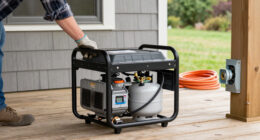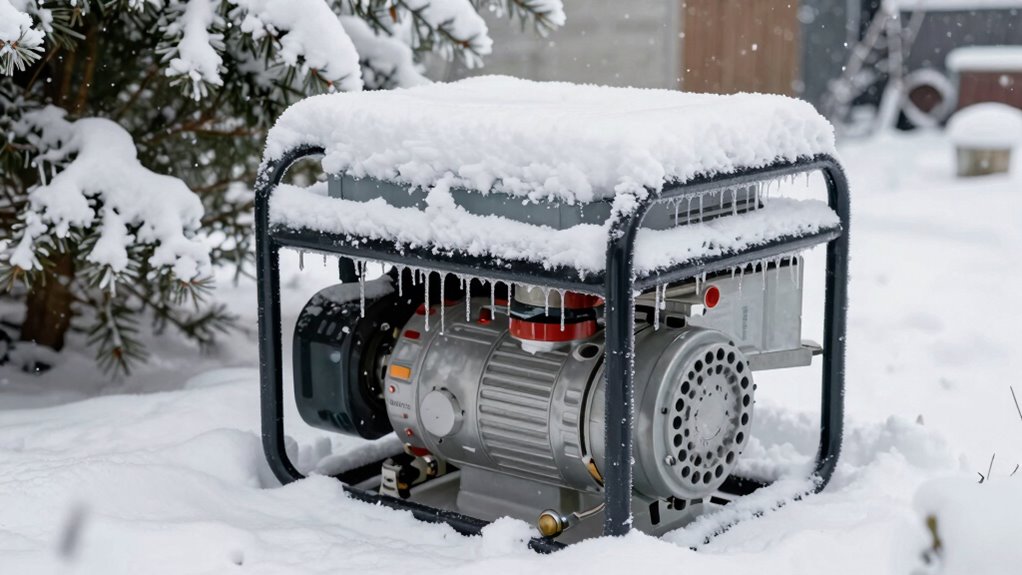

When using your generator during heavy snow, make sure it’s placed at least 20 feet from your home and on a flat, stable surface. Keep snow and ice cleared around the unit to maintain airflow and prevent ventilation blockages. Protect it with an appropriate shelter, but avoid using water or heat sources to melt snow. Regularly check fuel and moisture levels, and make certain it’s properly grounded. Learning more will help you keep safe and your generator reliable through winter storms.

Get backup power and energy gear delivered free — and shop member deals
- Fast, free delivery on millions of items
- Access to Prime Big Deal Days deals on October 6–7
- Prime Video, Amazon Music and more included
Key Takeaways
- Place the generator outdoors at least 20 feet from your home to prevent carbon monoxide buildup.
- Keep the generator on a flat, stable surface and clear of snow and ice for safe operation.
- Use weatherproof shelter to protect it from snow and rain while ensuring proper ventilation.
- Regularly inspect cords, connections, and fuel supply to prevent overloads and shutdowns.
- Seal vents and openings to prevent moisture intrusion and maintain the generator’s durability during storms.
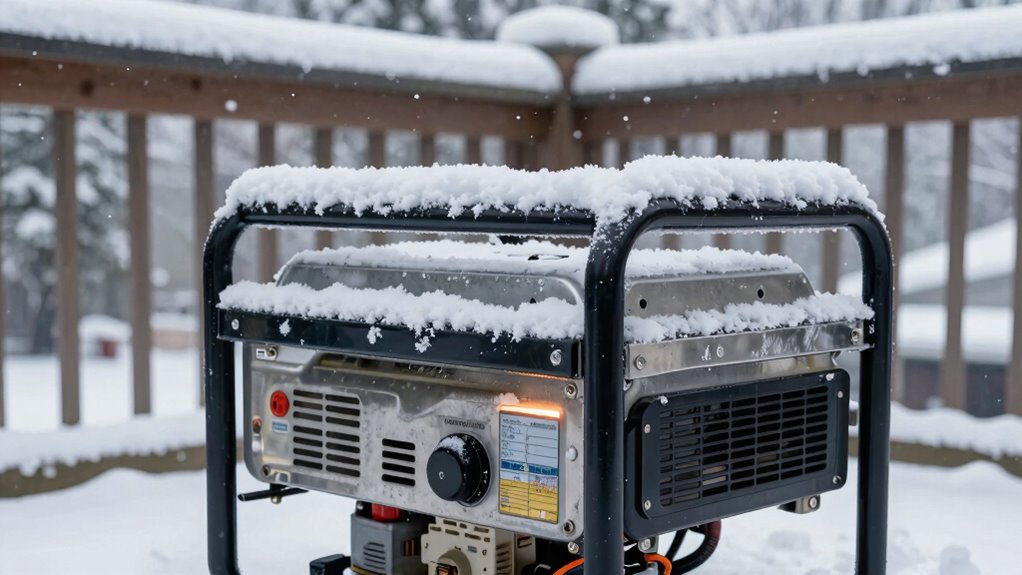
When heavy snow hits, a generator can be a crucial source of power, keeping your lights on and essential appliances running. During winter storms, staying prepared is vital, and understanding how to use your generator safely can make all the difference. Proper winter storm preparedness involves more than just having a generator; it means knowing how to operate it correctly and safely, especially in snowy conditions where risks increase.
First, ensure your generator is in good working order before the storm arrives. Check the fuel levels, oil, and overall condition. Store extra fuel safely outside your home, away from windows and vents, to prevent carbon monoxide poisoning. Never operate a generator indoors or in enclosed spaces, as the buildup of deadly fumes can quickly become a hazard. Always place the generator outdoors in a well-ventilated spot, sheltered from snow and rain, to keep it dry and functioning properly. Being aware of local regulations on generator placement can help prevent accidental hazards and ensure safe operation.
During use, keep a safe distance of at least 20 feet between the generator and your home. Use heavy-duty extension cords rated for outdoor use to connect appliances. Avoid overloading the generator, as it can cause damage or fire hazards. Instead, run only essential appliances and turn off non-essentials to prevent strain. Regularly inspect cords and connections for wear or damage, replacing any compromised parts immediately. Proper ventilation and generator placement are key factors in maintaining safe operation in snowy conditions. Additionally, monitoring the generator’s temperature can help prevent overheating during extended use in cold weather. It’s also important to keep the generator covered with a suitable shelter to protect it from snow while allowing proper airflow. Ensuring the proper grounding of your generator can also help prevent electrical hazards in winter weather.
In snowy conditions, ensure the area around your generator remains clear of snow and ice. A buildup of snow can block ventilation or cause the generator to overheat. If snow accumulates around the unit, gently brush it away with a dry broom or cloth, but never use water or attempt to melt snow with heat sources. Keep the generator on a flat, stable surface to prevent tipping or shifting during operation, especially if wind or snow causes instability. Regularly checking the fuel supply during prolonged use can help avoid unexpected shutdowns and ensure continuous power. Remember, weatherproofing the generator setup is crucial to prevent moisture damage and maintain safe operation. Properly sealing any openings or vents can also help protect against moisture intrusion during winter storms.
outdoor generator weatherproof shelter
As an affiliate, we earn on qualifying purchases.
As an affiliate, we earn on qualifying purchases.
Frequently Asked Questions
Can I Run My Generator Indoors During a Snowstorm?
No, you shouldn’t run your generator indoors during a snowstorm. Indoor ventilation is essential to prevent dangerous carbon monoxide buildup, which can cause poisoning or death. Always operate your generator outdoors in a well-ventilated area, away from windows and vents. Keep it on a dry, stable surface, and never attempt to run it inside your home or garage. Your safety depends on proper generator use.
How Does Cold Weather Affect Generator Performance?
Cold weather can turn your generator into a stubborn mule, making it harder to start and run efficiently. You need to prioritize generator maintenance, especially in winter, to prevent fuel gelling and battery issues. Keep it sheltered, warm, and regularly check fluids. When temperatures drop, your generator’s performance may dip, so taking these precautions guarantees it stays reliable, ready to power through even the coldest storms.
What Safety Precautions Should I Take When Using a Generator in Snow?
When using a generator in snow, keep safety in mind by placing it outdoors in a well-ventilated area to avoid carbon monoxide buildup. Be mindful of generator noise, which can disturb neighbors, and consider installing a muffler if needed. Store fuel safely in approved containers away from snow and moisture, and avoid refueling while the generator is running or hot to prevent fire hazards. Always follow manufacturer instructions for safe operation.
How Often Should I Test My Generator Before a Snowstorm?
Think of your generator as a trusted friend—regular check-ins keep it reliable. You should test your generator at least once a month before a snowstorm, making sure it runs smoothly and that fuel storage is adequate. Regular generator maintenance helps prevent surprises when you need it most. By staying proactive, you guarantee your backup power is ready to go, even when snow blankets the ground and power lines falter.
Is It Necessary to Use a Special Type of Fuel in Winter?
During winter, you should use a fuel stabilizer to maintain fuel stability and prevent gumming, especially if you’re storing your generator for winter. It’s recommended to use fresh, winter-grade fuel or add a stabilizer if storing for long periods. This guarantees the fuel remains reliable and your generator starts easily when needed. Proper winter storage also helps prevent fuel issues and prolongs your generator’s lifespan.
heavy-duty outdoor extension cords
As an affiliate, we earn on qualifying purchases.
As an affiliate, we earn on qualifying purchases.
Conclusion
Think of your generator as a trusty snow plow clearing the way through a winter storm. When used wisely, it keeps your home safe and warm, cutting through the cold like a clear path through snow. Just remember to follow safety tips, like maintaining proper ventilation and avoiding overloads. With your generator as your winter companion, you’ll navigate the storm with confidence, knowing you’ve got a reliable guide leading the way through the snow’s icy maze.
As an affiliate, we earn on qualifying purchases.
As an affiliate, we earn on qualifying purchases.
Fall Picks
fall essentials
As an affiliate, we earn on qualifying purchases.