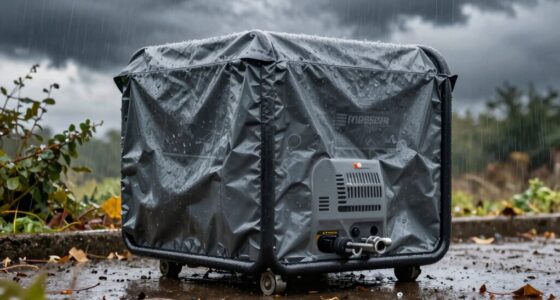
To establish a safe generator zone at home, place it outdoors on a flat, stable surface, at least 20 feet from your home and vents, with a clear surrounding area free of flammable materials. Store fuel safely, in approved containers, outside your home, and away from heat sources. Use outdoor-rated cords and guarantee proper ventilation to prevent dangerous fumes. Follow manufacturer instructions and safety guidelines to protect your family and property. The next steps can help you further secure your setup.

Get backup power and energy gear delivered free — and shop member deals
- Fast, free delivery on millions of items
- Access to Prime Big Deal Days deals on October 6–7
- Prime Video, Amazon Music and more included
Key Takeaways
- Place the generator outdoors at least 20 feet from the home and ventilation openings.
- Use a flat, stable surface and keep the area free of flammable materials and clutter.
- Store fuel in approved containers outside the home, away from heat sources and windows.
- Ensure proper ventilation by positioning the generator with open-sided canopies and avoiding enclosed spaces.
- Regularly inspect cords, connections, and the generator for leaks, corrosion, and safe operation practices.
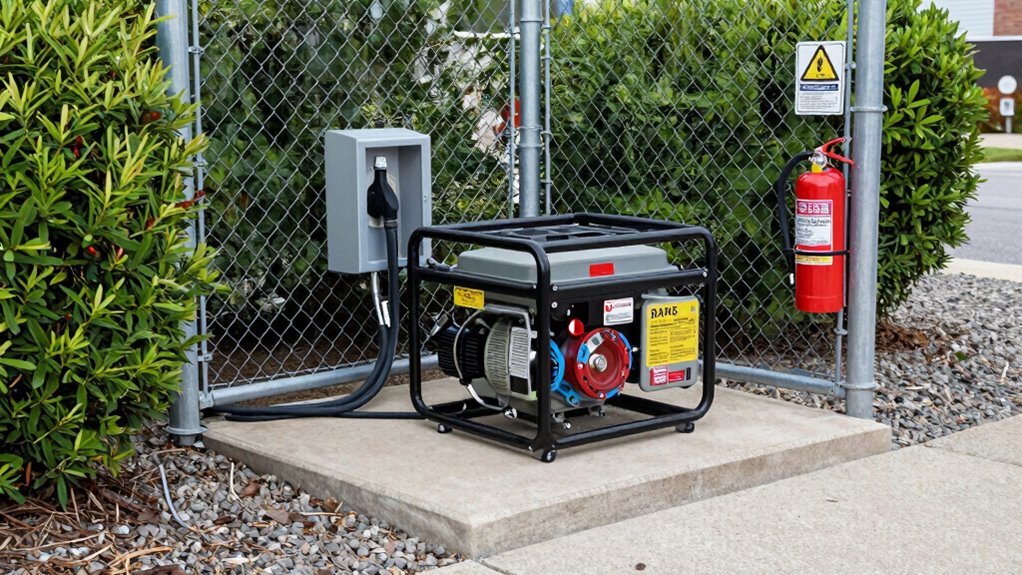
Ever wondered how to keep your home safe while using a generator? Setting up a proper generator zone isn’t just about placing the unit somewhere out of the way; it’s about creating a safe environment that prevents hazards and guarantees smooth operation. One of your top priorities should be managing fuel storage. Fuel is highly flammable, so you need to store it in approved containers, away from the generator and other heat sources. Keep the containers tightly sealed and stored outside your home, preferably in a shed or garage that’s well-ventilated and away from windows or vents. Never store large amounts of fuel indoors, as this increases the risk of fire or toxic fumes building up. Instead, if you need extra fuel, buy it in small quantities and rotate stock regularly to prevent deterioration.
Ventilation requirements are equally critical. Generators produce carbon monoxide — a deadly, colorless, odorless gas — that can quickly fill enclosed spaces and pose serious health risks. Hence, your generator should always be placed outdoors, at least 20 feet away from your home, windows, doors, and vents. This distance ensures that the exhaust fumes don’t seep into your living spaces. When setting up your zone, choose a flat, stable surface to prevent tipping or movement during operation. It’s equally important to keep the generator covered with a canopy or shelter that’s open on the sides, allowing airflow while protecting it from rain and debris. Never operate a generator inside a garage, basement, or enclosed porch, even if windows are open — the risk of carbon monoxide poisoning is too high.
In addition, you should establish a clear, clutter-free zone around your generator. Keep it away from flammable materials like leaves, paper, or gasoline cans. Be mindful of cords and connections, ensuring they’re rated for outdoor use and are in good condition. Regular maintenance, such as checking for leaks or corrosion, will keep your generator running safely and efficiently. It’s also essential to be aware of generator safety tips to prevent accidents and ensure proper operation. Incorporating proper ventilation is crucial for dispersing dangerous gases effectively. Additionally, understanding fuel storage safety can help you minimize fire hazards and ensure safe handling practices. Maintaining awareness of nail biology/hygiene can help you understand the importance of safety precautions and proper handling of equipment. Remember, the key to a safe generator zone is vigilance: always follow the manufacturer’s instructions, adhere to local codes, and never take shortcuts when it comes to fuel storage and ventilation. By doing so, you’re protecting your family and your property from potential hazards while guaranteeing your generator is ready to serve when you need it the most.
As an affiliate, we earn on qualifying purchases.
Frequently Asked Questions
What Type of Generator Is Safest for Home Use?
The safest generator for home use is an inverter generator. It produces cleaner power, has lower noise levels, and is more fuel-efficient. When choosing one, make sure it has a secure fuel storage system and operates quietly to prevent disturbances. Inverter generators are portable, easy to maintain, and ideal for powering essential appliances during outages, making them the best choice for safety and convenience at home.
How Often Should I Test My Generator Safety Measures?
You should test your generator safety measures at least once a month to guarantee emergency preparedness. Regular testing helps identify potential issues before an emergency occurs. Follow a maintenance checklist that includes inspecting cords, testing shut-off switches, and checking for leaks or corrosion. By staying proactive with these safety checks, you ensure your generator operates safely when you need it most, protecting your home and loved ones.
Can I Operate a Generator Indoors Safely?
You should never operate a generator indoors because it’s unsafe. Generators produce carbon monoxide, which can quickly build up without proper indoor ventilation, risking poisoning. Always operate your generator outdoors in a well-ventilated area and keep it away from windows and vents. Incorporating this practice into your emergency preparedness plan guarantees safety and prevents dangerous buildup of fumes. Remember, safety first—never compromise on ventilation when using a generator.
What Are the Signs of Generator Carbon Monoxide Poisoning?
Think of your body as a sensor alert system for danger. Signs of carbon monoxide poisoning include headache, dizziness, weakness, nausea, or confusion—like your body’s warning lights flickering. Regular generator maintenance and installing carbon monoxide detection devices help prevent poisoning. If you notice these symptoms, get fresh air immediately and seek medical help. Recognizing these signs quickly can save your life and keep your home safe.
How Do I Properly Dispose of Generator Fuel and Oil?
To properly dispose of generator fuel and oil, first store fuel safely in approved containers, away from heat sources. For oil disposal, take used oil to a recycling center or authorized disposal facility; never pour it down drains or onto the ground. Always follow local regulations for fuel storage and oil disposal to prevent environmental harm. Proper handling guarantees safety and helps protect your community and the environment.
generator fuel storage containers
As an affiliate, we earn on qualifying purchases.
As an affiliate, we earn on qualifying purchases.
Conclusion
By establishing a dedicated generator zone, you’re planting a sturdy tree of safety in your home’s landscape. This zone acts as your shield, rooted in careful planning and awareness, guarding your family through stormy times. Just as a tree stands tall against the wind, your prepared space stands resilient, ensuring peace of mind. With this safeguard in place, your home becomes a sanctuary where safety blossoms, no matter what the weather brings.
As an affiliate, we earn on qualifying purchases.
As an affiliate, we earn on qualifying purchases.
Evergreen bestsellers Picks
bestsellers
As an affiliate, we earn on qualifying purchases.